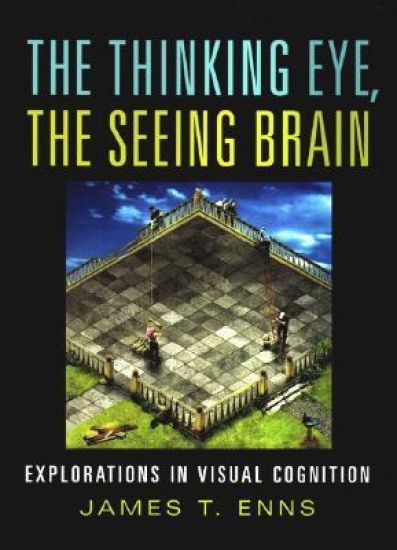
Ideal for courses in vision, perception, and cognitive science, this unique text conveys the excitement and promise of the field of visual cognition while emphasizing its vital relationship to cognitive science in general, exploring central philosophical and psychological issues such as imagination, consciousness, and perceptions of time. Instructors using The Thinking Eye, the Seeing Brain will have access to lecture-ready PowerPoint slides of art from the text, each of them carefully annotated by Professor Enns.
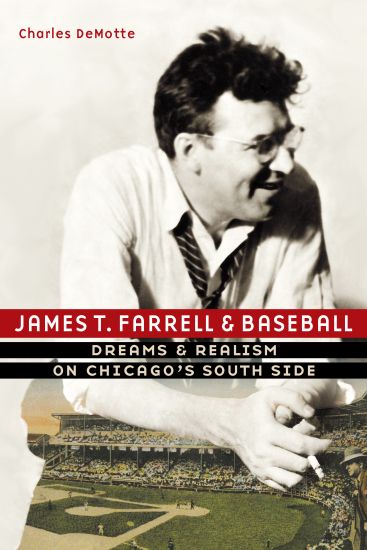
James T. Farrell and Baseball is a social history of baseball on Chicago’s South Side, drawing on the writings of novelist James T. Farrell along with historical sources. Charles DeMotte shows how baseball in the early decades of the twentieth century developed on all levels and in all areas of Chicago, America’s second largest city at the time, and how that growth intertwined with Farrell’s development as a fan and a writer who used baseball as one of the major themes of his work. DeMotte goes beyond Farrell’s literary focus to tell a larger story about baseball on Chicago’s South Side during this time-when Charles Comiskey’s White Sox won two World Series and were part of a rich baseball culture that was widely played at the amateur, semipro, and black ball levels. DeMotte highlights the 1919–20 Black Sox fix and scandal, which traumatized not only Farrell and Chicago but also baseball and the broader culture. By tying Farrell’s fictional and nonfictional works to Chicago’s vibrant baseball history, this book fills an important gap in the history of baseball during the Deadball Era.
James T. Farrell - American Writers 29 was first published in 1963. Minnesota Archive Editions uses digital technology to make long-unavailable books once again accessible, and are published unaltered from the original University of Minnesota Press editions.
Finally, the phoenix rises to bring his 27 years of experience rebuilding America's low income communities to the desk of President Donald Trump. Webb offers President Trump his 27 years of insight on how to REBUILD America's low income African American and other poor communities. Read the real life legal saga of Master Builder James T. Webb as he shows the President and the American people that struggles, challenges, and benefits of REBUILDING America's poorest and most frail communities in a very unique Real Estate Market. Webb makes his methods in The WAHM (Webb Affordable Housing Model) available to the Trump administration to help finally bring the CHANGE that America's poor communities have been waiting on for the past 100 years. While it has not been easy, Webb has purchased, renovated and sold close to 1000 previously vacant and condemned homes in these communities. (Many scheduled for demolition) But Webb stopped the demolition and put the citizens within the same communities to work REBUILDING their homes. In creating 10s of thousands of short term contract jobs, Webb helped to positively change the lives of the workers. While the benefits of rebuilding those communities are without limit, the social, political, regulatory, and legal challenges {though unnecessary} and many times very unfair, can break the spirits of the best men and women who attempt to bring the needed change. However, for Webb, despite the blood on his brow, his vision for these communities is unchanged and very clear. Webb believes that now and with President Trump in the White House, these communities can finally become greater than they have ever been over the past 100 years. Webb offers his assistance to President Trump in this unique and troubled Real Estate market. In his last book," Economic Justice", Webb asked the many stockholders in America that he knew to "HOLD ON", that "HELP IS ON THE WAY" Fellow Americans, that time has come. It is time to MAKE AMERICA GREAT AGAIN
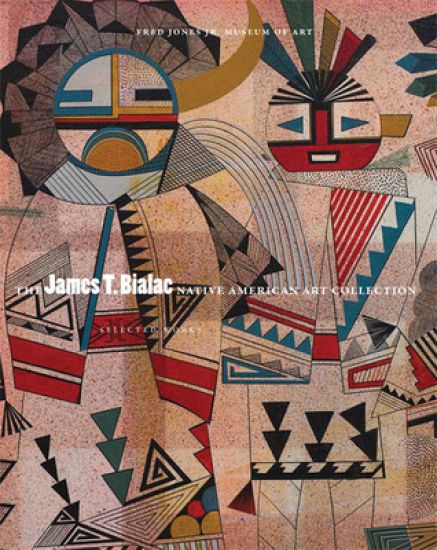
One of the most important collections of modern Native American art assembled by one individual, the James T. Bialac Native American Art Collection is an encyclopedic compilation of easel paintings and three-dimensional works. Showcased in this stunning catalogue, the collection comprises nearly four thousand items, including drawings, sculptures, prints, kachinas, jewelry, ceramics, rattles, baskets, and textiles.James T. Bialac began collecting art in the 1950s, when he was a student at the University of Arizona School of Law. It was then that he purchased the first of what would develop into a collection of more than one thousand kachina dolls. In 1964 he acquired his first painting, Robert Chee's Moccasin Game, and he went on to expand his collection to reflect the diversity of Native American art forms. Inspired by his connections with other collectors, Bialac learned the importance of documenting, cataloging, and preserving his collection. In 2010 he bequeathed the collection to the University of Oklahoma, where the art will be displayed at the Fred Jones Jr. Museum of Art, as well as at other locations, including Bialac's native Arizona.The Bialac Collection represents indigenous cultures across North America, especially the Pueblos of the Southwest, Navajos, Hopis, and many of the tribes of the Great Plains. It encompasses such important and innovative artists as Fred Kabotie, Alfonso Roybal, Fritz Scholder, Joe Hilario Herrera, Allan Houser, Jerome Tiger, Tonita Peña, Helen Hardin, Pablita Velarde, George Morrison, Walter Richard ""Dick"" West, and Patrick DesJarlait, all of whose work is featured in this volume.Along with its rich sampling of works from the Bialac Collection, this catalogue offers informative essays by art historians, who draw on their areas of expertise to explain the significance of the artwork. The volume also features a foreword by David L. Boren, President of the University of Oklahoma, a preface by Ghislain d'Humières, Director of the Fred Jones Jr. Museum of Art, and an introduction by Mary Jo Watson, Director of the School of Art and Art History.Published in cooperation with the Fred Jones Jr. Museum of Art, University of Oklahoma.
One of the most important collections of modern Native American art assembled by one individual, the James T. Bialac Native American Art Collection is an encyclopedic compilation of easel paintings and three-dimensional works. Showcased in this stunning catalogue, the collection comprises nearly four thousand items, including drawings, sculptures, prints, kachinas, jewelry, ceramics, rattles, baskets, and textiles.James T. Bialac began collecting art in the 1950s, when he was a student at the University of Arizona School of Law. It was then that he purchased the first of what would develop into a collection of more than one thousand kachina dolls. In 1964 he acquired his first painting, Robert Chee's Moccasin Game, and he went on to expand his collection to reflect the diversity of Native American art forms. Inspired by his connections with other collectors, Bialac learned the importance of documenting, cataloging, and preserving his collection. In 2010 he bequeathed the collection to the University of Oklahoma, where the art will be displayed at the Fred Jones Jr. Museum of Art, as well as at other locations, including Bialac's native Arizona.The Bialac Collection represents indigenous cultures across North America, especially the Pueblos of the Southwest, Navajos, Hopis, and many of the tribes of the Great Plains. It encompasses such important and innovative artists as Fred Kabotie, Alfonso Roybal, Fritz Scholder, Joe Hilario Herrera, Allan Houser, Jerome Tiger, Tonita Peña, Helen Hardin, Pablita Velarde, George Morrison, Walter Richard ""Dick"" West, and Patrick DesJarlait, all of whose work is featured in this volume.Along with its rich sampling of works from the Bialac Collection, this catalogue offers informative essays by art historians, who draw on their areas of expertise to explain the significance of the artwork. The volume also features a foreword by David L. Boren, President of the University of Oklahoma, a preface by Ghislain d'Humières, Director of the Fred Jones Jr. Museum of Art, and an introduction by Mary Jo Watson, Director of the School of Art and Art History.Published in cooperation with the Fred Jones Jr. Museum of Art, University of Oklahoma.