Kirjojen hintavertailu. Mukana 11 228 534 kirjaa ja 12 kauppaa.

Kirjahaku

Etsi kirjoja tekijän nimen, kirjan nimen tai ISBN:n perusteella.

1000 tulosta hakusanalla James-H

James H. Carson's California, 1847-1853

James H. Carson's California, 1847-1853

Doris Shaw Castro

Authorhouse
2006
pokkari
It is said that California has the most complete recorded history of any state in the Union. Contemporaries called James H. (Henry) Carson's "sketches" as the most correct eye-witness reports of early California. The U. S. Congress declared war on Mexico in May 1846, and sent four units to occupy and hold Alta California, with a view to its acquisition. Sgt. Carson's Co. F, 3d Reg., Artillery, the "pioneer company," arrived in California in January 1847, after a five-months' voyage around the Horn; the Panama Canal was not yet built. In 1847 Carson served as commissary sergeant at 10th Military District Headquarters. In this capacity he obtained food supplies from the Califor-nios and shared in their social life, making him an important person at Monterey, capital of Alta California. He was one of the few who did not desert his post when gold was discovered in January 1848. In June-July he accompanied R. B. Mason, Col. 1st Dragoons, and Lt. W. T. Sherman (later Gen. Sherman of Civil War fame) on the first official tour of the Northern Gold Mines. In August 1848, on furlough, he discovered Carson Hill, classic gold mining ground of California. In July 1849 he traveled with Gen. B. Riley, Acting Governor of California and Lt. G. H. Derby on a tour of the Southern Mines. Upon discharge from the Army in November 1849, he elected to remain in California, and became a miner. In May 1850 he served as guide to Lt. Derby, Topographical Engineers, on the first official survey of San Joaquin Valley. It was here he contracted a fatal disease. He wrote his "sketches" during this period of inactivity until his death at Stockton on Dec. 12, 1853, aged thirty-two years. Carson was a keen observer, and wrote about California's mineral and agricultural resources; land titles and public domain; establishing a state capital; the first State Legislature. He "saw the elephant." He learned to laugh at himself, and his writings reflected a broad humor as he wrote about his fellowmen
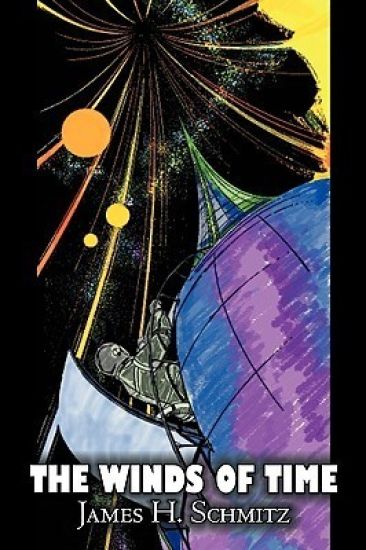
The Winds of Time by James H. Schmitz, Science Fiction, Adventure
John W. Campbell wrote this for a blurb for this tale when it appeared in Analog: He contracted for a charter trip -- but the man who hired his spacer wasn't quite a man, it turned out -- and he wanted more than service James H. Schmitz was a heck of a writer, and this story -- "The Winds of Time" -- is fascinating stuff. Star ships, aliens from the future, time travel, romance, cannibalism, pet humans, and mute-but-brilliant aliens. . . . and, of course, it's got a hero who solves every problem by being smarter and trickier and better-prepared than we'd ever imagine being. But what would you expect? This story first appeared in John W. Campbell's Analog. Analog heroes did it with their brains. Us? We have to work.
The Ethics Of Cooperation: (James H. Tufts Classics Collection)

The Ethics Of Cooperation: (James H. Tufts Classics Collection)

James H. Tufts

Createspace Independent Publishing Platform
2015
nidottu
ACCORDING to Plato's famous myth, two gifts of the gods equipped man for living: the one, arts and inventions to supply him with the means of livelihood; the other, reverence and justice to be the ordering principles of societies and the bonds of friendship and conciliation. Agencies for mastery over nature and agencies for co peration among men remain the two great sources of human power. But after two thousand years, it is possible to note an interesting fact as to their relative order of development in civilization. Nearly all the great skills and inventions that had been acquired up to the eighteenth century were brought into man's service at a very early date. The use of fire, the arts of weaver, potter, and metal worker, of sailor, hunter, fisher, and sower, early fed man and clothed him. These were carried to higher perfection by Egyptian and Greek, by Tyrian and Florentine, but it would be difficult to point to any great new unlocking of material resources until the days of the chemist and electrician. Domestic animals and crude water mills were for centuries in man's service, and until steam was harnessed, no additions were made of new powers.
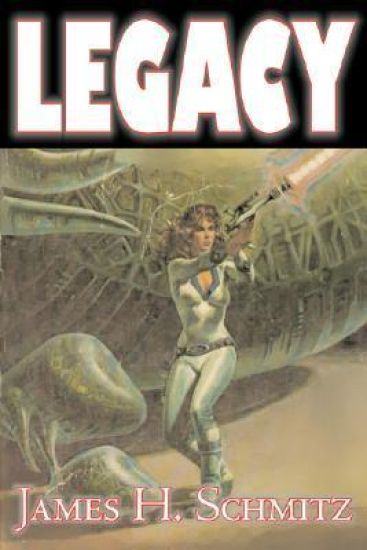
Legacy by James H. Shmitz, Science Fiction, Adventure, Space Opera
MEET TRIGGER ARGEE. . . . SHE'S ABOUT TO ENTER THE MYSTERY OF HER LIFE -- IN LEGACYAncient living machines that after millennia of stillness suddenly begin to move under their own power, for reasons that remain a mystery to men. Holati Tate discovered them -- then disappeared. Trigger Argee was his closest associate -- she means to find him. She's brilliant, beautiful, and skilled in every known martial art. She's worth plenty -- dead or alive -- to more than one faction in this obscure battle. And she's beginning to have a chilling notion that the long-vanished Masters of the Old Galaxy were wise when they exiled the plasmoids to the most distant and isolated world they knew. . . . SHE'S ABOUT TO ENTER THE MYSTERY OF HER LIFE -- IN LEGACYHalf a block from the shopping center, a row of spacers on planet-leave came rollicking cheerily toward her. . . . Trigger shifted toward the edge of the sidewalk to let them pass. As the line swayed up on her left, there was a shadowy settling of an aircar at the curb to her right.With loud outcries of glad recognition and whoops of laughter, the line swung in about her, close. Bodies crowded against her, a hand was clapped over her mouth. Other hands held her arms. Her feet came off the ground and she had a momentary awareness of being rushed expertly forward.There was a lurching twist as the aircar shot upward.
The Winds of Time by James H. Schmitz, Science Fiction, Adventure
John W. Campbell wrote this for a blurb for this tale when it appeared in Analog: He contracted for a charter trip -- but the man who hired his spacer wasn't quite a man, it turned out -- and he wanted more than service James H. Schmitz was a heck of a writer, and this story -- "The Winds of Time" -- is fascinating stuff. Star ships, aliens from the future, time travel, romance, cannibalism, pet humans and mute-but-brilliant aliens. . . . and, of course, it's got a hero who solves every problem by being smarter and trickier and better-prepared than we'd ever imagine being. But what would you expect? This story first appeared in John W. Campbell's Analog. Analog heroes did it with their brains. Us? We have to work.
James H. Schmitz Resurrected: Selected Stories of James H. Schmitz
James H. Schmitz and "Space Opera" were almost synonymous. He was best known for his tales of interstellar secret agents and, galactic criminals, and particularly for heroines like Telzey Amberdon and Trigger Argee. This collection of stories, while not lacking in cosmic adventures also shows that he was capable of showing other facets in his work. Find adventure, humor and fear in... Schmitz Resurrected Stories include: An Incident on Route 12Watch the SkyThe Other LikenessThe Star HyacinthsOnenessThe Winds of TimeHam SandwichGone Fishing
Selections From the Letters and Speeches of the Hon. James H. Hammond
Selections From the Letters and Speeches of the Hon. James H. Hammond - of South Carolina is an unchanged, high-quality reprint of the original edition of 1866. Hansebooks is editor of the literature on different topic areas such as research and science, travel and expeditions, cooking and nutrition, medicine, and other genres. As a publisher we focus on the preservation of historical literature. Many works of historical writers and scientists are available today as antiques only. Hansebooks newly publishes these books and contributes to the preservation of literature which has become rare and historical knowledge for the future.
Catalogue of the extensive dramatic collection of the late James H. Brown, esq., of Malden, Mass.
This book has been considered by academicians and scholars of great significance and value to literature. This forms a part of the knowledge base for future generations. So that the book is never forgotten we have represented this book in a print format as the same form as it was originally first published. Hence any marks or annotations seen are left intentionally to preserve its true nature.