

Kirjahaku
Etsi kirjoja tekijän nimen, kirjan nimen tai ISBN:n perusteella.
1000 tulosta hakusanalla Jameson Kooper
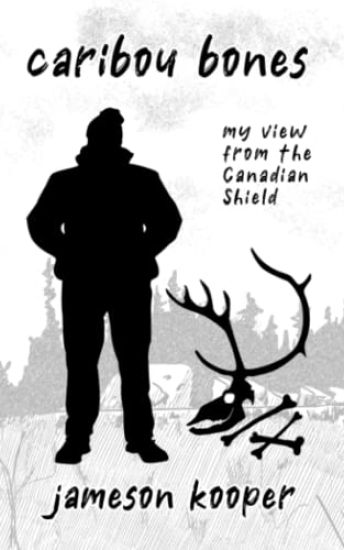
Caribou Bones, my view from the Canadian ShieldNo myths. No legends. Nothing. Fishy. This collection of essays is one man's insightful and unflinching view of the world from hisperspective in the heart of the Canadian Shield, in a unique place named after caribou bones.A town they call Atikokan.- - - - - - - - - - - - - - - - - - -Author Jameson Kooper grew up chasing tadpoles, swimming in the local river and dreaming of dinosaurs. Encouraged by his parents, he developed a great admiration for nature in all its fury and beauty. A gifted singer, he expresses love of his country by singing the national anthem at the town's yearly Canada Day celebrations. Jameson Kooper is the author of Lone Pine: North Woods, a collection of poetry published in 2017. Caribou Bones is his second book, a collection of essays from his column in the Atikokan Progress newspaper. His writing weaves introspective stories of childhood memories and seasonal observations, interwoven with gentle musings on the lives of delicate wild creatures.



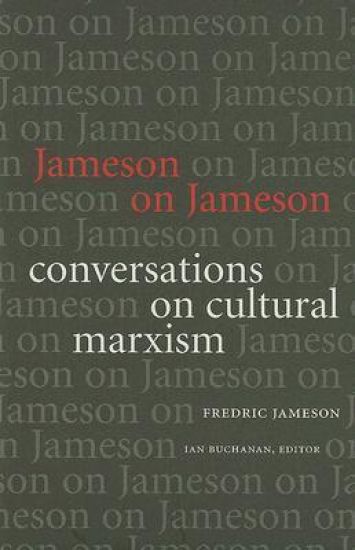
Fredric Jameson is one of the most influential literary and cultural critics writing today. He is a theoretical innovator whose ideas about the intersections of politics and culture have reshaped the critical landscape across the humanities and social sciences. Bringing together ten interviews conducted between 1982 and 2005, Jameson on Jameson is a compellingly candid introduction to his thought for those new to it, and a rich source of illumination and clarification for those seeking deeper understanding. Jameson discusses his intellectual and political preoccupations, most prominently his commitment to Marxism as a way of critiquing capitalism and the culture it has engendered. He explains many of his key concepts, including postmodernism, the dialectic, metacommentary, the political unconscious, the utopian, cognitive mapping, and spatialization.Jameson on Jameson displays Jameson’s extraordinary grasp of contemporary culture-architecture, art, cinema, literature, philosophy, politics, psychoanalysis, and urban geography-as well as the challenge that the geographic reach of his thinking poses to the Eurocentricity of the West. Conducted by accomplished scholars from United States, Egypt, Korea, China, Sweden, and England, the interviews elicit Jameson’s reflections on the broad international significance of his ideas and their applicability and implications in different cultural and political contexts, including the present phase of globalization.The volume includes an introduction by Jameson and a comprehensive bibliography of his publications in all languages.InterviewersMona Abousenna Abbas Al-TonsiSrinivas AravamudanJonathan CullerSara DaniusLeonard GreenSabry HafezStuart Hall Stefan JonssonRanjana KhannaRichard KleinHoracio MachinPaik Nak-chungMichael Speaks Anders StephansonXudong Zhang
Fredric Jameson is one of the most influential literary and cultural critics writing today. He is a theoretical innovator whose ideas about the intersections of politics and culture have reshaped the critical landscape across the humanities and social sciences. Bringing together ten interviews conducted between 1982 and 2005, Jameson on Jameson is a compellingly candid introduction to his thought for those new to it, and a rich source of illumination and clarification for those seeking deeper understanding. Jameson discusses his intellectual and political preoccupations, most prominently his commitment to Marxism as a way of critiquing capitalism and the culture it has engendered. He explains many of his key concepts, including postmodernism, the dialectic, metacommentary, the political unconscious, the utopian, cognitive mapping, and spatialization.Jameson on Jameson displays Jameson’s extraordinary grasp of contemporary culture-architecture, art, cinema, literature, philosophy, politics, psychoanalysis, and urban geography-as well as the challenge that the geographic reach of his thinking poses to the Eurocentricity of the West. Conducted by accomplished scholars from United States, Egypt, Korea, China, Sweden, and England, the interviews elicit Jameson’s reflections on the broad international significance of his ideas and their applicability and implications in different cultural and political contexts, including the present phase of globalization.The volume includes an introduction by Jameson and a comprehensive bibliography of his publications in all languages.InterviewersMona Abousenna Abbas Al-TonsiSrinivas AravamudanJonathan CullerSara DaniusLeonard GreenSabry HafezStuart Hall Stefan JonssonRanjana KhannaRichard KleinHoracio MachinPaik Nak-chungMichael Speaks Anders StephansonXudong Zhang

Jameson, Cowden Clarke, Kemble, Cushman
Continuum Publishing Corporation
2011
sidottu
This is a critical analysis of the most important Shakespearean critics, editors, actors and directors. This volume focuses on Shakespeare's reception by nineteenth-century female actors and scholars. "Great Shakespeareans" offers a systematic account of those figures who have had the greatest influence on the interpretation, understanding and cultural reception of Shakespeare, both nationally and internationally. In this volume, leading scholars assess the contribution of Anna Jameson, Mary Cowden Clarke, Charlotte Cushman and Fanny Kemble to the afterlife and reception of Shakespeare and his plays. Each substantial contribution assesses the double impact of Shakespeare on the figure covered and of the figure on the understanding, interpretation and appreciation of Shakespeare, provide a sketch of their subject's intellectual and professional biography and an account of the wider cultural context, including comparison with other figures or works within the same field.

Jameson Green
Derek Eller Gallery, Incorporated
2023
sidottu
Packed with allusions to art history and full of rambunctious cartoon energy, Green’s paintings eviscerate the gruesome imagery of racism Bronx-based painter Jameson Green (born 1992) creates psychological parables rendered in a visual language steeped in the grandeur of art history, inflected with comics and illustration and filtered through a highly introspective lens. Sampling art-historical references ranging from Jacob Lawrence and Bill Traylor to Crumb, Picasso, Goya, Guston, Kokoschka and Rubens, Green creates a form of visual hip-hop infused with tremendous momentum and energy. Since receiving his MFA from Hunter College in 2019, Green has refined his remarkably evolved practice over the course of just three years, boldly deploying the imagery of racism in what he describes as “a representation of corruption in pursuit of power, racial division, bigotry, and through these things personal suffering.” This book is the first to chronicle the artist’s recent creative output and features his most notable paintings, some of which now reside in permanent institutional collections such as the Dallas Museum of Art, Pérez Art Museum Miami and ICA Miami.

Jameson, Althusser, Marx
Routledge
2015
sidottu
Frederic Jameson is widely regarded as one of the most original and influential Marxist critics of the last decades. His most controversial work, The Political Unconscious, had an enormous impact on literary criticism and cultural studies. In Jameson, Althusser, Marx, first published in 1984, Professor Dowling sets out to provide the intellectual background needed for an understanding of Jameson’s argument and its broader implications. He elucidates the unspoken assumptions that are the foundation of Jameson’s thought – assumptions about how the nature of language, of interpretation and of culture – and shows how Jameson attempts to subsume in an expanded Marxism the critical theories of Derrida, Foucault, Deleuze, Lacan and of structuralism and poststructuralism in general. This lively, concise book will be welcomed by anyone interested in current theoretical debates, in Marxist criticism, and in the wide-ranging implications of Marxist cultural theory for the social sciences, the arts and the study of history.

Jameson, Althusser, Marx
Routledge
2016
nidottu
Frederic Jameson is widely regarded as one of the most original and influential Marxist critics of the last decades. His most controversial work, The Political Unconscious, had an enormous impact on literary criticism and cultural studies. In Jameson, Althusser, Marx, first published in 1984, Professor Dowling sets out to provide the intellectual background needed for an understanding of Jameson’s argument and its broader implications. He elucidates the unspoken assumptions that are the foundation of Jameson’s thought – assumptions about how the nature of language, of interpretation and of culture – and shows how Jameson attempts to subsume in an expanded Marxism the critical theories of Derrida, Foucault, Deleuze, Lacan and of structuralism and poststructuralism in general. This lively, concise book will be welcomed by anyone interested in current theoretical debates, in Marxist criticism, and in the wide-ranging implications of Marxist cultural theory for the social sciences, the arts and the study of history.




Jameson Satellite first appeared in July 1931 issue of Amazing Stories. The hero, Professor Jameson, was obsessed with the idea of perfectly preserving his body after death and succeeded by having it launched into space in a satellite. Jameson's cryopreserved body survived in suspended animation for 40,000,000 years, when it was found orbiting planet Earth by a passing cyborg exploration ship. The cyborgs, who descended from a race of biological beings achieved immortality by transferring their brains to neural-net circuitry inside machine bodies, like the Borg of the Star Trek series. The cyborgs discovered that Jameson's body had been so well preserved that they were able to repair his brain, incorporate it into a machine body and restart it. Jameson Satellite proved so popular with readers that later installments became some of the most popular and well-known of the 1930s pulps. Being cryopreserved and revived is an idea that would recur in hundreds of science fiction novels, movies, and television shows. One young science fiction fan who read Jameson Satellite and drew inspiration from the idea of cryonics was Robert Ettinger, who founded the Cryonics Institute and the related Immortalist Society. Ettinger, who once said "By working hard and saving my money, I intend to become an immortal superman." became cryopreserved after his death in July 2011. Jameson Satellite also inspired Woody Allen's "Sleeper" futuristic science fiction comedy. The plot involves the adventures of Miles Monroe who goes into the hospital for an ulcer in 1973 but when the surgery goes awry he is cryogenically frozen and defrosted 200 years later in an ineptly led police state. Isaac Asimov also read the story and cites Jameson Cyborgs as the "spiritual ancestors" of his positronic robot series and credits them as the origin of his attraction to the idea of benevolent robots. Masamune Shirow's cyborg-populated Ghost in the Shell saga where named Jameson-type cyborgs. Today we either bury dead brains or burn them which result in irreversible loss of personhood information due to the destruction of the brain tissue that houses a person's unique neural-net circuitry. So far the only practical alternative is to vitrify or cryopreserve the brain and store it indefinitely at -196 C using liquid nitrogen. Even the best vitrification techniques still produce massive cell damage that no current or even medium-term technology can likely reverse. But the shortcomings of early twenty-first century science and engineering hardly foreclose the technology options that will be available in a century and far less so in a millennium. Some future biocomputing technology may extract and thus back-up this defining neural information or wetware. Currently, there are more than 250 brains suspended in liquid nitrogen in the US and more than 3,000 people have already signed up to have their brains, or whole bodies, cryopreserved in suspended animation. Stanley Kubrick, director of "2001: A Space Odyssey" film hailed the promise of cryonic suspension in his 1968 Playboy interview. Kubrick cast death as a problem of bioengineering: "Death is no more natural or inevitable than smallpox or diphtheria. Death is a disease and as susceptible to cure as any other disease."

Jameson's Birthday Coloring Book Kids Personalized Books: A Coloring Book Personalized for Jameson that includes Children's Cut Out Happy Birthday Pos
Yolie Davis
Createspace Independent Publishing Platform
2018
nidottu
Jameson's Birthday Coloring Book Kids Personalized Books A Coloring Book Personalized for Jameson that includes Children's Cut Out Happy Birthday Posters


Military history.

Jameson Raid
Naval Military Press Ltd
2006
sidottu

The Jameson Raid was a defining event in the history of the British South Africa Police. What led Dr Leander Starr Jameson, Rhodes' right hand man in Rhodesia, to take most of the Police out of the country and invade the Transvaal with the aim of capturing Johannesburg? His public aim was to relieve the "Uitlanders" (foreigners) from the oppression of the government of the Transvaal Republic. Critics say it was really about seizing control of the goldfields, maybe even eventually annexing the country. Whatever the reasons, the Raid was a disaster and led to sever repercussions, one of those being the Imperial Government taking over control of the B.S.A. Police from the B.S.A. Company. Rhodes had to resign. The removal of most of the B.S.A.P. (who were the First Line of Defence) from the country was one of the causes of the Matabele Rebellion. Cliff Rogers (a former member of the B.S.A.P.) has extensively researched the circumstances of the Raid, how it was conducted and the men who took part. The Raid and the events of the next few years led inexorably to the Anglo-Boer War, in which the B.S.A.P. served with distinction. A brief account of this service is given, culminating in the award of a Banner by King Edward VII. A controversy has since arisen over whether this was a Banner or a Colour. The author has thoroughly researched this question including perusing original documents, some of which are reproduced here. The final section describes some of the memorials to the B.S.A.P including the 2010 unveiling of the Memorial at the National Memorial Arboretum in England.
