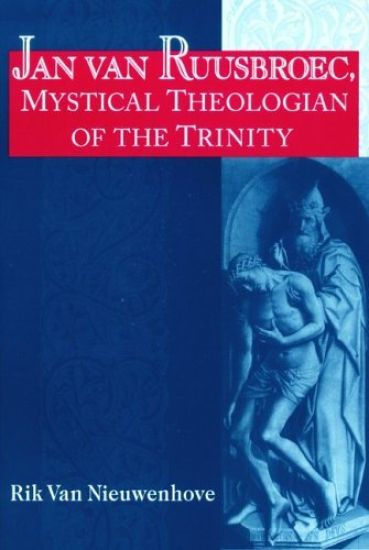
Jan van Ruusbroec (1293–1381), a Flemish mystical theologian, was one of the most original Trinitarian thinkers in the medieval West. Yet, his works—written in Middle-Dutch—have remained relatively unknown. In this book, Rik Van Nieuwenhove presents the first major study in English of Ruusbroec's thought. Van Nieuwenhove explores in detail Ruusbroec's theology of the Trinity, his anthropology, Christology, and his understanding of union with God. Van Nieuwenhove's study reveals that Ruusbroec, while incorporating aspects of the rich theological and spiritual tradition that preceded him, wrote at the beginning of a modern age in which mystical theology changed radically in nature. Ruusbroec claimed that the divine Persons are subject to an eternal dynamic of procession or out-going from the Father, on the one hand, and returning to the shared divine essence, on the other. The human person is called to participate in this continuous ebbing and flowing by leading a life that combines contemplation and charitable activity. Ruusbroec argued that mysticism should be interpreted in terms of a transformation of the human person rather than in terms of an immediate experience of God. Jan van Ruusbroec, Mystical Theologian of the Trinity is an innovative, original study of one of late medieval theology's undiscovered treasures. Written in clear, accessible language, this new interpretation of Ruusbroec's theology will appeal to all those interested in mysticism, medieval theology, and the doctrine of the Trinity.
Jan van Ruusbroec (1293–1381), a Flemish mystical theologian, was one of the most original Trinitarian thinkers in the medieval West. Yet, his works—written in Middle-Dutch—have remained relatively unknown. In this book, Rik Van Nieuwenhove presents the first major study in English of Ruusbroec's thought. Van Nieuwenhove explores in detail Ruusbroec's theology of the Trinity, his anthropology, Christology, and his understanding of union with God. Van Nieuwenhove's study reveals that Ruusbroec, while incorporating aspects of the rich theological and spiritual tradition that preceded him, wrote at the beginning of a modern age in which mystical theology changed radically in nature. Ruusbroec claimed that the divine Persons are subject to an eternal dynamic of procession or out-going from the Father, on the one hand, and returning to the shared divine essence, on the other. The human person is called to participate in this continuous ebbing and flowing by leading a life that combines contemplation and charitable activity. Ruusbroec argued that mysticism should be interpreted in terms of a transformation of the human person rather than in terms of an immediate experience of God. Jan van Ruusbroec, Mystical Theologian of the Trinity is an innovative, original study of one of late medieval theology's undiscovered treasures. Written in clear, accessible language, this new interpretation of Ruusbroec's theology will appeal to all those interested in mysticism, medieval theology, and the doctrine of the Trinity.
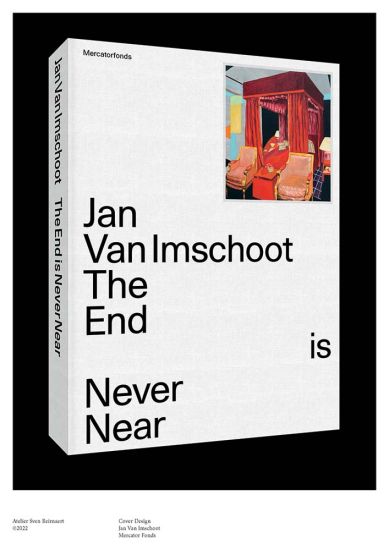
A comprehensive overview of the oeuvre of Belgian painter Jan Van Imschoot A comprehensive overview of the oeuvre of Belgian painter Jan Van Imschoot (b. 1963), whose contemporary work builds bridges to predecessors such as Caravaggio, Tintoretto, Goya, and Manet. Van Imschoot’s painting consciously opts for a clear, sometimes contradictory and ironic style. The directness of his decisive brushwork and his balanced yet audacious use of color is strikingly contemporary, while his work draws on historical themes from literature and art history. In this way, Van Imschoot engages in a continuous dialogue with the past, in which he, with a dose of cynicism, often targets phenomena or figures that find themselves on the fringes of (contemporary) society. Bringing together more than 220 works by Van Imschoot with five accompanying texts, this book gives fresh insight into the painting practice of this Belgian master.Distributed for Mercatorfonds
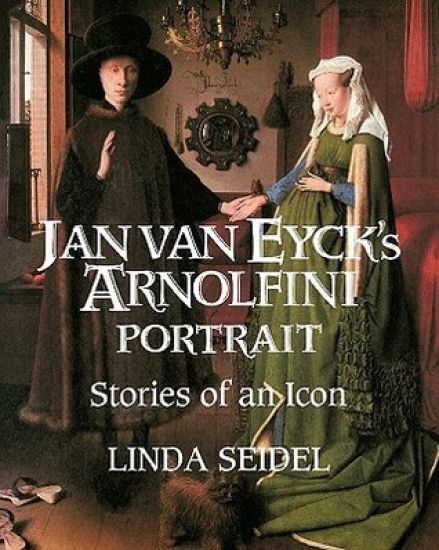
First published in 1993, Jan van Eyck's Arnolfini Portrait: Stories of an Icon examines one of the earliest and most celebrated paintings in the history of European art from a variety of perspectives. In her lucid analysis, Linda Seidel considers this famous double portrait as social record, legal document, material object, and poetic fiction. Each chapter of her study represents a distinct mode of inquiry and each situates the painting within a different discursive tradition. In this way, Seidel explores a variety of historical practices to illuminate the portrait's painted narrative. Through the implementation of a variety of interpretive strategies and in consultation with different types and categories of information, Stories of an Icon informs the viewer about the function and nature of early European painting, and invites the reader to reflect on the many ways in which works of art can be examined and reconfigured centuries after their creation.
Van Eyck's surviving work comprises a series of painstaking detailed oil-paintings of great verisimilitude. Aiming to recover the neglected human dimension present in these works, this book investigates the personal histories of the worldly participants of some of Van Eyck's masterpieces.
Jan van Eyck was one of the most inventive and influential artists in the entire European tradition. The phenomenal realism of his paintings, now six centuries old, still astounds observers in a world accustomed to high-resolution images. But other dimensions of his work are just as original and absorbing. Unlike any earlier artist, Van Eyck infused his paintings with himself. In addition to portraying, reflecting and implying his own presence in a variety of works, he also introduced his voice, hand and mind in an array of inscriptions, signatures and even a personal motto. Incorporating a wealth of new research and recent discoveries within a fresh exploration of the paintings themselves, this book reveals how profoundly Jan van Eyck transformed the very idea of what an artist could be.