Kirjojen hintavertailu. Mukana 11 244 527 kirjaa ja 12 kauppaa.

Kirjahaku

Etsi kirjoja tekijän nimen, kirjan nimen tai ISBN:n perusteella.

1000 tulosta hakusanalla Jan W. Gooch

Lead-Based Paint Handbook

Lead-Based Paint Handbook

Jan W. Gooch

Kluwer Academic/Plenum Publishers
1993
sidottu
Lead-based paint has become a national issue and will continue to be a hi- priority focus ofnational, state, and local agencies until there is no lead-based paint in the United States. Lead-based paint has become a tremendous health hazard for people and animals. Lead-based paint has been in widespread use throughout Europe and the United States. Lead has been known to be a health hazard since the time ofPliny the Elder (A. D. 23–79), but it was deemed that the advantages of lead in paint outweighed the health hazards. There has been a change in outlook, and in 1973 the U. S. Congress banned all lead paint from residential structures. A voluminous number of law suits have been initiated since, and continue to be litigated with the purpose of determining the parties responsible for the lead poisoning of children and others and to exact the indemnities. Lead-based paint is still authorized for use on bridges and nonresidential structures, and thousands of city, state, military, and federal government housing projects still contain lead-based paint. This paint must be removed if these dwellings are to be safe living quarters, especially for children. Aba- ment techniques continue to be evaluated; some have been used successfully. Lead-based paint abatement will continue into the next century, and it is hoped that this comprehensive volume will serve as a guide for those seriously interested in this important subject.
Analysis and Deformulation of Polymeric Materials

Analysis and Deformulation of Polymeric Materials

Jan W. Gooch

Kluwer Academic/Plenum Publishers
1997
sidottu
This book is designed for the chemist, formulator, student, teacher, forensic scientist, or others who wish to investigate the composition of polymeric materials. Theinformationwithinthesepagesisintendedtoarmthereaderwiththenecessary workingknowledgetoanalyze,characterize, anddeformulatematerials. ThestructureoftheContentsisintendedtoassistthereaderinquicklylocating the subject of interest and proceed to it with a minimum of expended time and effort. The Contents provides an outline of major topics and relevant materials char- terizedforthereader'sconvenience. Anintroductiontoanalysisanddeformulation is provided in Chapter 1 to acquaint the reader with analytical methods and their applications. Extensive references are provided as additional sources ofinfor- tion. All tables arelocatedin theAppendix, beginning onp. 235. GUIDE FOR USE This is a practical book structured to efficiently use the reader's time with a minimum effort of searching for entries and information by following these brief instructions: 1. Searchthe Contents and/orIndex fora subject withinthe text. 2. Analysis/deformulation principles are discussed at the outset to familiarize the reader with analysis methods and instruments; followed by formu- tions, materials, and analysis ofpaint, plastics, adhesives, and inks; and finally reformulation methods to test the results of analysis. 3. Materials and a wide assortment of formulations are discussed within the text by chapter/section number. 4. Materials are referred toby various names (trivial, trade, and scientific), and these are listed in tables and cross-referenced to aid the reader.
Emulsification and Polymerization of Alkyd Resins

Emulsification and Polymerization of Alkyd Resins

Jan W. Gooch

Kluwer Academic/Plenum Publishers
2002
sidottu
Emulsification of vegetable oil-based resins was a daunting task when the author began his research, but the subsequent technology spawned a generation of stable emulsions for waterborne coatings based on vegetable oil-based alkyd resins, oils and fatty acids. Autoxidative polymerization of emulsified alkyd resins is an innovative and original contribution to emulsion technology, because conventional emulsion-polymerization is not applicable to alkyd resins. Emulsified alkyd particles are polymerized while dispersed in stable aqueous media—an original and patented innovation. Smooth and fa- drying alkyd coatings are generated from non-polymerized emulsions and air-dried with conventional metal driers, and have met with marketing success. The pre-polymerization innovation for emulsified alkyd particles provides very fast air-drying coatings that have potential markets for interior architectural latex coatings and waterborne pressure-sensitive adhesives and inks. The author demonstrates his knowledge of chemical reaction kinetics by employing a combination of oxygen concentration, internal reactor pressure and other reactor variables to finely control the rate and degree of autoxidative polymerization. He meticulously calculates surfactant chemistry by measuring hydrophile-lipophile balance values, and solubility parameters to emulsify characterized resins. The relationship between hydrophi- lipophile values and solubility parameters is shown in explicit equations. Homogenization equipment used during the course of this research to generate emulsions is shown in detailed drawings together with concise particle size and distribution data. The author reports research spawned internationally by his research in the fields of alkyd-acrylic hybrids, polyester and oil-modifiedurethane resins.
Biocompatible Polymeric Materials and Tourniquets for Wounds

Biocompatible Polymeric Materials and Tourniquets for Wounds

Jan W. Gooch

Springer-Verlag New York Inc.
2010
sidottu
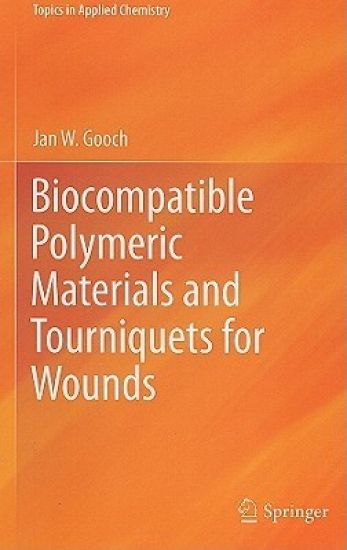
In recent years biocompatible polymers for injuries and wounds have seen advances and innovations that have outpaced the growing field's literature. In this book Dr. Jan W. Gooch, a National Research Council Research Associateship Award recipient, reveals how innovative polymer technology can be applied to the common combat and trauma wounds associated with damaged soft tissue and bleeding. The scope of his investigation spans four distinct devices for wounds, liquid and particulate barrier dressings for soft tissue wounds, sutureless tissue adhesives, antibacterial nanoemulsions, one-hand operated and automatic tourniquets for the battlefield.
Biocompatible Polymeric Materials and Tourniquets for Wounds

Biocompatible Polymeric Materials and Tourniquets for Wounds

Jan W. Gooch

Springer-Verlag New York Inc.
2012
nidottu
In recent years biocompatible polymers for injuries and wounds have seen advances and innovations that have outpaced the growing field's literature. In this book Dr. Jan W. Gooch, a National Research Council Research Associateship Award recipient, reveals how innovative polymer technology can be applied to the common combat and trauma wounds associated with damaged soft tissue and bleeding. The scope of his investigation spans four distinct devices for wounds, liquid and particulate barrier dressings for soft tissue wounds, sutureless tissue adhesives, antibacterial nanoemulsions, one-hand operated and automatic tourniquets for the battlefield.
Analysis and Deformulation of Polymeric Materials

Analysis and Deformulation of Polymeric Materials

Jan W. Gooch

Springer-Verlag New York Inc.
2013
nidottu
This book is designed for the chemist, formulator, student, teacher, forensic scientist, or others who wish to investigate the composition of polymeric materials. Theinformationwithinthesepagesisintendedtoarmthereaderwiththenecessary workingknowledgetoanalyze,characterize, anddeformulatematerials. ThestructureoftheContentsisintendedtoassistthereaderinquicklylocating the subject of interest and proceed to it with a minimum of expended time and effort. The Contents provides an outline of major topics and relevant materials char- terizedforthereader'sconvenience. Anintroductiontoanalysisanddeformulation is provided in Chapter 1 to acquaint the reader with analytical methods and their applications. Extensive references are provided as additional sources ofinfor- tion. All tables arelocatedin theAppendix, beginning onp. 235. GUIDE FOR USE This is a practical book structured to efficiently use the reader's time with a minimum effort of searching for entries and information by following these brief instructions: 1. Searchthe Contents and/orIndex fora subject withinthe text. 2. Analysis/deformulation principles are discussed at the outset to familiarize the reader with analysis methods and instruments; followed by formu- tions, materials, and analysis ofpaint, plastics, adhesives, and inks; and finally reformulation methods to test the results of analysis. 3. Materials and a wide assortment of formulations are discussed within the text by chapter/section number. 4. Materials are referred toby various names (trivial, trade, and scientific), and these are listed in tables and cross-referenced to aid the reader.
Lead-Based Paint Handbook

Lead-Based Paint Handbook

Jan W. Gooch

Springer-Verlag New York Inc.
2013
nidottu
Lead-based paint has become a national issue and will continue to be a hi- priority focus ofnational, state, and local agencies until there is no lead-based paint in the United States. Lead-based paint has become a tremendous health hazard for people and animals. Lead-based paint has been in widespread use throughout Europe and the United States. Lead has been known to be a health hazard since the time ofPliny the Elder (A. D. 23–79), but it was deemed that the advantages of lead in paint outweighed the health hazards. There has been a change in outlook, and in 1973 the U. S. Congress banned all lead paint from residential structures. A voluminous number of law suits have been initiated since, and continue to be litigated with the purpose of determining the parties responsible for the lead poisoning of children and others and to exact the indemnities. Lead-based paint is still authorized for use on bridges and nonresidential structures, and thousands of city, state, military, and federal government housing projects still contain lead-based paint. This paint must be removed if these dwellings are to be safe living quarters, especially for children. Aba- ment techniques continue to be evaluated; some have been used successfully. Lead-based paint abatement will continue into the next century, and it is hoped that this comprehensive volume will serve as a guide for those seriously interested in this important subject.

Emulsification and Polymerization of Alkyd Resins

Emulsification and Polymerization of Alkyd Resins

Jan W. Gooch

Springer-Verlag New York Inc.
2013
nidottu
Emulsification of vegetable oil-based resins was a daunting task when the author began his research, but the subsequent technology spawned a generation of stable emulsions for waterborne coatings based on vegetable oil-based alkyd resins, oils and fatty acids. Autoxidative polymerization of emulsified alkyd resins is an innovative and original contribution to emulsion technology, because conventional emulsion-polymerization is not applicable to alkyd resins. Emulsified alkyd particles are polymerized while dispersed in stable aqueous media—an original and patented innovation. Smooth and fa- drying alkyd coatings are generated from non-polymerized emulsions and air-dried with conventional metal driers, and have met with marketing success. The pre-polymerization innovation for emulsified alkyd particles provides very fast air-drying coatings that have potential markets for interior architectural latex coatings and waterborne pressure-sensitive adhesives and inks. The author demonstrates his knowledge of chemical reaction kinetics by employing a combination of oxygen concentration, internal reactor pressure and other reactor variables to finely control the rate and degree of autoxidative polymerization. He meticulously calculates surfactant chemistry by measuring hydrophile-lipophile balance values, and solubility parameters to emulsify characterized resins. The relationship between hydrophi- lipophile values and solubility parameters is shown in explicit equations. Homogenization equipment used during the course of this research to generate emulsions is shown in detailed drawings together with concise particle size and distribution data. The author reports research spawned internationally by his research in the fields of alkyd-acrylic hybrids, polyester and oil-modifiedurethane resins.
Electromagnetic Shielding and Corrosion Protection for Aerospace Vehicles

Electromagnetic Shielding and Corrosion Protection for Aerospace Vehicles

Jan W. Gooch; John K. Daher

Springer-Verlag New York Inc.
2007
sidottu
Civil and military aircraft – and aerospace vehicles in general – face two related problems:- They depend heavily upon electronic systems and thus must be shielded against electromagnetic interference (EMI). This interference may come in the form of lighting strikes, interference from radio emitters, nuclear electromagnetic pulses (EMP), or even high power microwave (HPM) threats- Environmental conditions including moisture, rain, and pollution from the atmosphere may corrode airframes, skin, and other bonded joints. Most importantly, this corrosion may damage the conductivity and electromagnetic shielding of the vehicle This book addresses both problems.
Electromagnetic Shielding and Corrosion Protection for Aerospace Vehicles

Electromagnetic Shielding and Corrosion Protection for Aerospace Vehicles

Jan W. Gooch; John K. Daher

Springer-Verlag New York Inc.
2011
nidottu
Civil and military aircraft – and aerospace vehicles in general – face two related problems:- They depend heavily upon electronic systems and thus must be shielded against electromagnetic interference (EMI). This interference may come in the form of lighting strikes, interference from radio emitters, nuclear electromagnetic pulses (EMP), or even high power microwave (HPM) threats- Environmental conditions including moisture, rain, and pollution from the atmosphere may corrode airframes, skin, and other bonded joints. Most importantly, this corrosion may damage the conductivity and electromagnetic shielding of the vehicle This book addresses both problems.
Defense Policy in the North Atlantic Alliance

Defense Policy in the North Atlantic Alliance

Jan W. Honig

Praeger Publishers Inc
1993
sidottu
Who defines defense policy in the North Atlantic Alliance? Is it NATO, the national government, or the national military? Dutch scholar Jan Willem Honig addresses this widely misunderstood issue. His conclusion--which runs counter to the conventional wisdom that NATO is highly influential--is that the decisive influence in defining defense policy lies neither with NATO nor the allied governments but with the individual national military establishments. He argues that the Alliance does not possess the powers or the institutional framework to effectively control or steer allied defense policies.Honig's important and timely conclusion challenges conventional wisdom. He analyzes the issue in a detailed case study of the Netherlands' defense policy between 1949 and 1991. Because the fabric of Western security is undergoing its most radical transformation since NATO's inception, this study is especially valuable for its analysis of the changing parameters of European defense requirements. Policy makers and academics interested in NATO will find this work illuminating.
Information Asymmetry in Online Advertising

Information Asymmetry in Online Advertising

Jan W. Wiktor; Katarzyna Sanak-Kosmowska

Routledge
2021
sidottu
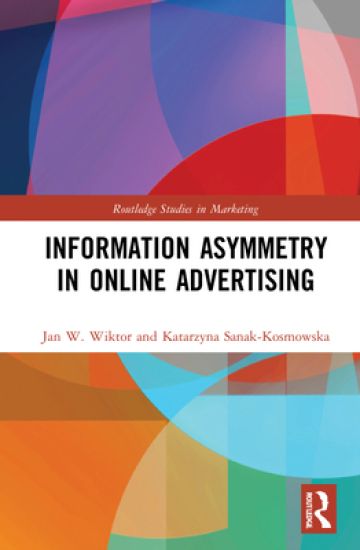
Advertising is a company’s major form of communication with the market; it is a component of the IMC system, having a special impact on the addressee, and is a form of persuasive communication affecting consumer behaviour. Advertising may reflect information asymmetry between an advertiser and recipients. This book presents an assessment of the forms and range of consumer behaviour manipulation through information asymmetry in online advertising and explores the possible causes, forms, and effects. The work offers a new approach to the role of advertising in the digital world, especially its forms and impact strategies.The theoretical framework presented is based on issues related to online advertising, information asymmetry, and social manipulation. The book describes the ways in which these areas can be explored, and it presents the results of empirical studies. Empirical research allows for identifying companies’ moral hazard strategies and their consequences – e-consumers’ adverse selection. The research provides an empirical answer to the question: to what extent is advertising a transparent form of communication, and to what extent does it represent the world of manipulation? Based on an interdisciplinary theoretical approach, empirical studies conducted by the authors, and theoretical and managerial implication, the book encourages its readers to find their own answers. Given the interdisciplinary nature of this work, it will be of interest to scholars and researchers within the fields of marketing, media and communication, economics, psychology, sociology, and ethics.
Information Asymmetry in Online Advertising

Information Asymmetry in Online Advertising

Jan W. Wiktor; Katarzyna Sanak-Kosmowska

TAYLOR FRANCIS LTD
2023
nidottu
Advertising is a company’s major form of communication with the market; it is a component of the IMC system, having a special impact on the addressee, and is a form of persuasive communication affecting consumer behaviour. Advertising may reflect information asymmetry between an advertiser and recipients. This book presents an assessment of the forms and range of consumer behaviour manipulation through information asymmetry in online advertising and explores the possible causes, forms, and effects. The work offers a new approach to the role of advertising in the digital world, especially its forms and impact strategies.The theoretical framework presented is based on issues related to online advertising, information asymmetry, and social manipulation. The book describes the ways in which these areas can be explored, and it presents the results of empirical studies. Empirical research allows for identifying companies’ moral hazard strategies and their consequences – e-consumers’ adverse selection. The research provides an empirical answer to the question: to what extent is advertising a transparent form of communication, and to what extent does it represent the world of manipulation? Based on an interdisciplinary theoretical approach, empirical studies conducted by the authors, and theoretical and managerial implication, the book encourages its readers to find their own answers. Given the interdisciplinary nature of this work, it will be of interest to scholars and researchers within the fields of marketing, media and communication, economics, psychology, sociology, and ethics.
Robert Boyle and the Limits of Reason

Robert Boyle and the Limits of Reason

Jan W. Wojcik

Cambridge University Press
2002
pokkari
In this study of Robert Boyle's epistemology, Jan W. Wojcik reveals the theological context within which Boyle developed his views on reason's limits. After arguing that a correct interpretation of his views on 'things above reason' depends upon reading his works in the context of theological controversies in seventeenth-century England, Professor Wojcik details exactly how Boyle's three specific categories of things which transcend reason - the incomprehensible, the inexplicable, and the unsociable - affected his conception of what a natural philosopher could hope to know. Also covered in detail is Boyle's belief that God had deliberately limited the human intellect in order to reserve a full knowledge of both theology and natural philosophy for the afterlife.
Robert Boyle and the Limits of Reason

Robert Boyle and the Limits of Reason

Jan W. Wojcik

Cambridge University Press
1997
sidottu
In this study of Robert Boyle's epistemology, Jan W. Wojcik reveals the theological context within which Boyle developed his views on reason's limits. After arguing that a correct interpretation of his views on 'things above reason' depends upon reading his works in the context of theological controversies in seventeenth-century England, Professor Wojcik details exactly how Boyle's three specific categories of things which transcend reason - the incomprehensible, the inexplicable, and the unsociable - affected his conception of what a natural philosopher could hope to know. Also covered in detail is Boyle's belief that God had deliberately limited the human intellect in order to reserve a full knowledge of both theology and natural philosophy for the afterlife.
Global Attractors in Abstract Parabolic Problems

Global Attractors in Abstract Parabolic Problems

Jan W. Cholewa; Tomasz Dlotko

Cambridge University Press
2000
pokkari
The study of dissipative equations is an area that has attracted substantial attention over many years. Much progress has been achieved using a combination of both finite dimensional and infinite dimensional techniques, and in this book the authors exploit these same ideas to investigate the asymptotic behaviour of dynamical systems corresponding to parabolic equations. In particular the theory of global attractors is presented in detail. Extensive auxiliary material and rich references make this self-contained book suitable as an introduction for graduate students, and experts from other areas, who wish to enter this field.
Hudson Valley Harvest: A Food Lover's Guide to Farms, Restaurants, and Open-Air Markets
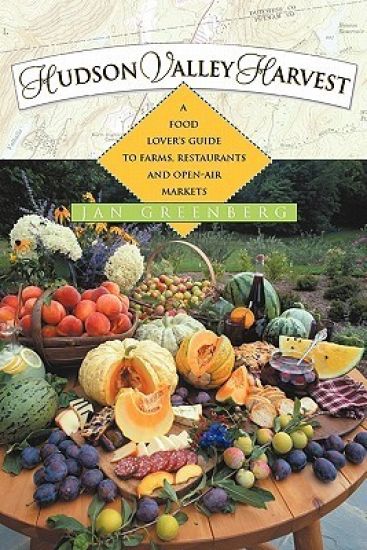
The only comprehensive guide to the foods, farms, and restaurants of the Hudson Valley: a food-lover's guide to the farms, local foods, open-air markets, restaurants, and regional cuisine of New York's historic and bountiful Hudson River Valley. New York's scenic Hudson Valley, a bucolic land of farms and vineyards, is often compared to California's Napa and Sonoma Valleys. Each year more than 1 million people visit the area, drawn as much by its culinary and agricultural attractions as its spectacular scenery, historic architecture, and opportunities for outdoor recreation. The small family farms, vineyards, and orchards of the Hudson Valley produce artisanal cheese, pasture-raised poultry and meats, handcrafted wines, and organic produce. They supply local restaurants and farmers' markets and the Culinary Institute of America in Hyde Park, as well as the restaurants and Greenmarkets of New York City, only 90 miles away. Hudson Valley Harvest is a sourcebook for those who live, weekend, and vacation in the Hudson Valley. Interviews and profiles of farmers and specialty producers round out specific information on farm festivals, events, and family activities. The author provides an up-to-date guide and schedule to farmers markets and seasonal farmstands, as well as a guide to regional restaurants. 10 black & white photographs, index.
The Lute in the Dutch Golden Age

The Lute in the Dutch Golden Age

Jan W. Burgers

TAYLOR FRANCIS LTD
2025
nidottu
The lute’s cultural impact throughout the Dutch Golden Age can be compared to that of the piano in the 19th century. It was the universal instrument for solo music-making, as well as in ensembles and to accompany singers, mainly associated with the social elite - the aristocracy and the prosperous burghers. This richly illustrated book is the first to showcase famous and obscure lutenists, professional musicians and amateurs, the lute music in books and manuscripts, the lute makers and the international lute trade, while also exploring the place of the instrument in the Dutch literature and art of the period.