

Kirjahaku
Etsi kirjoja tekijän nimen, kirjan nimen tai ISBN:n perusteella.
1000 tulosta hakusanalla Jan Willem Holtrop

Levensbericht Van Jonkheer Jan Willem Van Sypesteyn
BRILL
1869
sidottu

Punishment of offenders is one of the most universal features of human behavior. Throughout history, ranging across a multitude of cultures including the ancient hunter-gatherers to our contemporary courts of law, it is extraordinarily common for people to punish offenders within their groups. By the same token, it's important to understand that punishment is not only restricted to criminal offenders, but actually emerges within all spheres of our social life, including: corporations, our public institutions, in traffic, during sports matches, in our schools, and more. Punishment strongly influences what we think, how we feel, and what we do. The Moral Punishment Instinct asserts that people possess this exact instinct within themselves: a hard-wired tendency to aggress against those who violate the norms of their group. We have evolved this instinct because of its power to control our behavior by curbing selfishness and free-riding, thereby providing incentives to stimulate the mutual cooperation that our ancient ancestors needed in order to survive the challenging natural environments. In this book, Jan-Willem van Prooijen methodically describes how punishment originates from moral emotions, stimulates cooperation, and shapes the social life of human beings. Guided by a host of recognizable and relatable examples, this book illuminates how the moral punishment instinct manifests itself among a variety of modern human cultures, children, the hunter-gatherer tribes, and even non-human animals--all while accounting for the role of this instinct in religion, war, racial bias, restorative justice, gossip, torture, and radical terrorism.

The Forgotten Reign of the Emperor Jovian (363-364)
Jan Willem Drijvers
OXFORD UNIVERSITY PRESS INC
2022
sidottu
The Forgotten Reign of the Emperor Jovian (363-364): History and Fiction offers a new assessment of the Roman emperor's brief rule. A former imperial bodyguard, Jovian reinvigorated the Roman Empire militarily, administratively, and religiously. More than an imperial footnote, the years 363-364 restored the Roman empire after the failed reign of Julian. Jovian returned to the policies of Constantius II and Constantine the Great and his political legacy continued to endure with his successors Valentinian I and Valens, especially in the realm of religion. Jan Willem Drijvers' newest edition tracks the intricacies of Jovian's election, offers a novel evaluation of his peace agreement with Shapur II, and examines Jovian's self-representation. For an emperor who ruled only eight months, Jovian had an unexpected and surprising afterlife. In the rarely studied and largely unknown historical fiction piece The Julian Romance, Jovian is presented as the ideal Christian emperor and a new Constantine. In comparison with other sources, the Syriac Romance also offers a surprising and different perspective on his personal associations and reign. The Forgotten Reign challenges readers to rethink Jovian's reign and other imperial figures largely forgotten by history. Ultimately, the book reveals the legacy of Jovian's role in Roman-Persian relations and the positioning of Edessa in the late antique world of Christendom.

An in-depth analysis that demonstrates how and why there has been a resurgence of nativist logic. It was once thought that liberalism and globalization would consign nativist logics to the fringes of societies and eventually to history. But if it ever left, nativism has well and truly returned, spreading across nations, across the political spectrum, and from the fringes back into the mainstream. In The Return of the Native, Jan Willem Duyvendak, Josip Kesic, and Timothy Stacey explore how nativist logics have infiltrated liberal settings and discourses, primarily in the Netherlands as well as other countries with strong liberal traditions like the US and France. They deconstruct and explain the underlying logic of nativist narratives and show how these narratives are emerging in the discourses of secularism (a religious nativism that problematizes Islam and Muslims), racism (a racial nativism that problematizes black anti-racism), populism (a populist nativism that problematizes elites), and left-wing politics (a left nativism that sees religious, racial, and populist nativists themselves as a threat to national culture). By moving systematically through these key iterations of nativism, the authors show how liberal ideas themselves are becoming tools for claiming that some people do not belong to the nation. A unique analysis of the most fundamental political transformation of our days, this book illuminates the resurgence of the figure of the "native," who claims the country at the expense of those perceived as foreign.

An in-depth analysis that demonstrates how and why there has been a resurgence of nativist logic. It was once thought that liberalism and globalization would consign nativist logics to the fringes of societies and eventually to history. But if it ever left, nativism has well and truly returned, spreading across nations, across the political spectrum, and from the fringes back into the mainstream. In The Return of the Native, Jan Willem Duyvendak, Josip Kesic, and Timothy Stacey explore how nativist logics have infiltrated liberal settings and discourses, primarily in the Netherlands as well as other countries with strong liberal traditions like the US and France. They deconstruct and explain the underlying logic of nativist narratives and show how these narratives are emerging in the discourses of secularism (a religious nativism that problematizes Islam and Muslims), racism (a racial nativism that problematizes black anti-racism), populism (a populist nativism that problematizes elites), and left-wing politics (a left nativism that sees religious, racial, and populist nativists themselves as a threat to national culture). By moving systematically through these key iterations of nativism, the authors show how liberal ideas themselves are becoming tools for claiming that some people do not belong to the nation. A unique analysis of the most fundamental political transformation of our days, this book illuminates the resurgence of the figure of the "native," who claims the country at the expense of those perceived as foreign.

In this book, original essays by outstanding authors consider key issues in the external economic relations of developing countries.

In the turbulent years of the 1960s and 1970s, France, like other European countries and the United States, was rocked by a new wave of social movements. The early development of a strong antinuclear movement during the 1970s made France the prototypical country for new social movements (NSMs). However, in the 1980s, these French NSMs experienced a strong decline. In this book, Jan Willem Duyvendak compares the surprising development of these NSMs in France—for peace, the environment, an end to nuclear technology, solidarity, squatters' rights, women's rights, and gay rights—to the development of similar campaigns in Germany, Switzerland, and the Netherlands. Although all of these countries share more or less the same economic characteristics, they have different political traditions. Duyvendak finds that by the 1980s, the new social movements were weaker in France because of France's tradition of "old" political conflicts. He concludes that because France was still beset with political splits between center periphery and urban-country as well as religious and class strife, the development of French society during the 1980s took place at the expense of these new social movements

In the turbulent years of the 1960s and 1970s, France, like other European countries and the United States, was rocked by a new wave of social movements. The early development of a strong antinuclear movement during the 1970s made France the prototypical country for new social movements (NSMs). However, in the 1980s, these French NSMs experienced a strong decline. In this book, Jan Willem Duyvendak compares the surprising development of these NSMs in France—for peace, the environment, an end to nuclear technology, solidarity, squatters' rights, women's rights, and gay rights—to the development of similar campaigns in Germany, Switzerland, and the Netherlands. Although all of these countries share more or less the same economic characteristics, they have different political traditions. Duyvendak finds that by the 1980s, the new social movements were weaker in France because of France's tradition of "old" political conflicts. He concludes that because France was still beset with political splits between center periphery and urban-country as well as religious and class strife, the development of French society during the 1980s took place at the expense of these new social movements

Ammianus Marcellinus, Greek by birth but writing in Latin c. AD 390, was the last great Roman historian. His writings are an indispensable basis for our knowledge of the late Roman world. This book represents a collection of papers analysing Ammianus's writings from a variety of perspective, including Ammianus as historian of, and participant in, Julian's Persian campaign, his identification with traditional religious attitudes and values in Rome and his view of the Persian Magi. The contributors engage especially with the concept of self-identification. They address the tension of Ammianus' dual role as both 'outside' external narrator and at the same time and 'insider' to the contemporary experiences and events which make up his surviving history.

When wastewater infiltrates into the soil, groundwater may be contaminated. If the distance from source of pollution to point of groundwater abstraction is small, there is a real chance of abstracting pathogenic microorganisms. In this book, the transport of Escherichia coli in aquifers under saturated conditions is studied. Starting point is the well known colloid filtration theory. Straining or physical sieving, geochemical heterogeneity, variable deposition rate coefficients, and preferential flow mechanisms are then included in the theory. The case of Sana’a, the capital of Yemen, served to evaluate the importance of bacteria transport processes in a field situation. This book is useful for hydrogeologists concerned with microbiological contamination of aquifers.
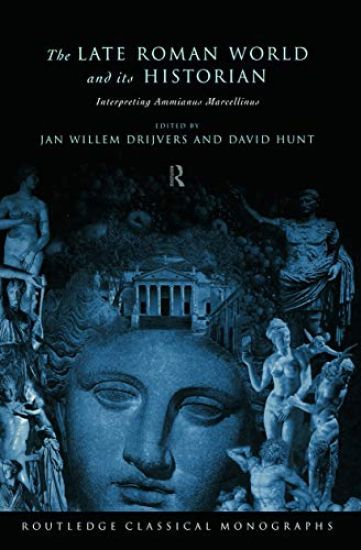
Ammianus Marcellinus, Greek by birth but writing in Latin c. AD 390, was the last great Roman historian. His writings are an indispensable basis for our knowledge of the late Roman world. This book represents a collection of papers analysing Ammianus's writings from a variety of perspective, including Ammianus as historian of, and participant in, Julian's Persian campaign, his identification with traditional religious attitudes and values in Rome and his view of the Persian Magi. The contributors engage especially with the concept of self-identification. They address the tension of Ammianus' dual role as both 'outside' external narrator and at the same time and 'insider' to the contemporary experiences and events which make up his surviving history.

Who believes in conspiracy theories, and why are some people more susceptible to them than others? What are the consequences of such beliefs? Has a conspiracy theory ever turned out to be true? The Psychology of Conspiracy Theories debunks the myth that conspiracy theories are a modern phenomenon, exploring their broad social contexts, from politics to the workplace. The book explains why some people are more susceptible to these beliefs than others and how they are produced by recognizable and predictable psychological processes. Updated throughout and now featuring examples from the Covid-19 pandemic and the 2021 Capitol Hill riots, this new edition of The Psychology of Conspiracy Theories shows us that while such beliefs are not always irrational and are not a pathological trait, they can be harmful to individuals and society.

Who believes in conspiracy theories, and why are some people more susceptible to them than others? What are the consequences of such beliefs? Has a conspiracy theory ever turned out to be true? The Psychology of Conspiracy Theories debunks the myth that conspiracy theories are a modern phenomenon, exploring their broad social contexts, from politics to the workplace. The book explains why some people are more susceptible to these beliefs than others and how they are produced by recognizable and predictable psychological processes. Updated throughout and now featuring examples from the Covid-19 pandemic and the 2021 Capitol Hill riots, this new edition of The Psychology of Conspiracy Theories shows us that while such beliefs are not always irrational and are not a pathological trait, they can be harmful to individuals and society.

Kumpel, J: Vaderlandsche Gedenkstukken (1783)
Jan Willem Kumpel
KESSINGER PUBLISHING, LLC
2009
nidottu

Liggers Van Openbare Wegen En Voetpaden (1888)
Jan Willem Constant Milders
KESSINGER PUBLISHING, LLC
2009
pokkari

Lijfstraffelijke Regtspleging In Gelderland
Jan Willem Staats Evers
KESSINGER PUBLISHING, LLC
2009
pokkari

Arsenic, manganese and iron in drinking water at concentrations exceeding recommended guideline values pose health risks and aesthetic defects. Batch and pilot experiments on manganese adsorption equilibrium and kinetics using iron-oxide coated sand (IOCS), Aquamandix and other media have been investigated and modeled. Effect of manganese and iron loading on manganese removal and rate of oxidation of adsorbed iron and manganese have been studied. Aquamandix and IOCS demonstrated iron and manganese adsorption capacity that increases with increasing pH under oxic and anoxic conditions. Manganese loading and low filtration rate using feedwater with no nitrite favour non-uniform development of catalytic manganese oxide on media that subsequently enhances manganese removal.

Who believes in conspiracy theories, and why are some people more susceptible to them than others?What are the consequences of such beliefs?Has a conspiracy theory ever turned out to be true?The Psychology of Conspiracy Theories debunks the myth that conspiracy theories are a modern phenomenon, exploring their broad social contexts, from politics to the workplace. The book explains why some people are more susceptible to these beliefs than others and how they are produced by recognizable and predictable psychological processes.Featuring examples such as the 9/11 terrorist attacks and climate change, The Psychology of Conspiracy Theories shows us that while such beliefs are not always irrational and are not a pathological trait, they can be harmful to individuals and society.

Who believes in conspiracy theories, and why are some people more susceptible to them than others?What are the consequences of such beliefs?Has a conspiracy theory ever turned out to be true?The Psychology of Conspiracy Theories debunks the myth that conspiracy theories are a modern phenomenon, exploring their broad social contexts, from politics to the workplace. The book explains why some people are more susceptible to these beliefs than others and how they are produced by recognizable and predictable psychological processes.Featuring examples such as the 9/11 terrorist attacks and climate change, The Psychology of Conspiracy Theories shows us that while such beliefs are not always irrational and are not a pathological trait, they can be harmful to individuals and society.