

Kirjahaku
Etsi kirjoja tekijän nimen, kirjan nimen tai ISBN:n perusteella.
1000 tulosta hakusanalla Jane D. Abbott






Emma does not want to tidy her room: Conflict resolution book for children and parents
Jane D
Createspace Independent Publishing Platform
2014
nidottu

The idea that it is possible to learn from history is fascinating, but also complex. What exactly can you learn from the past? Does it repeat itself? If it does, how can you prevent repetition of evil and ensure repetition of good? Livy's History of Rome is all about people learning or failing to learn from the past, so in many ways his work is an extended exploration of this problem. In this book Dr Chaplin starts from Livy's programmatic claim that history offers examples of good and bad conduct. Where previous studies have focused on the meaning of exemplary episodes and characters in isolation, this treatment traces the way historical figures try to interpret the past to their advantage. In doing so, the book demonstrates Livy's awareness of the shifting relevance of history and argues that a narrative organized around exempla allowed Livy, poised between the collapse of the Republic and the foundation of the Empire, to make the Romans' past meaningful for their future.

Emily Dickinson (1830-1886) was a mystery in her own lifetime, and her poems continue to challenge their readers. For many, she remains a mythic recluse always dressed in white. Although factual knowledge has corrected that image, it was firmly established in Amherst long before the poet's death. Her works were largely neglected during her lifetime as most of her poems were published posthumously. Since Poems by Emily Dickinson appeared in 1890, readers have been raising questions about the poet, her world, and the works that have established her as a famous literary figure. An innovative writer who blurred the distinctions between poetry and prose, Dickinson is attracting a growing amount of scholarly attention. Critics have found her works elusive to interpret, and therefore, focus much research on her artistry and the practices of her editors. Now that Emily Dickinson's poetry has taken its place at the heart of the American literary canon, readers continue to examine the poet herself, the environment that sustained and challenged her, her artistic choices, and the implications of her poems. This encyclopedia features several hundred entries on persons, places, and institutions connected with Dickinson; cultural influences affecting her; stylistic aspects of her poetry; editorial and publication history; reception of her poems; critical approaches to her art; and modern responses to her in other art forms as well as thoughtful commentaries on a representative selection of poems. Recommendations for further reading follow each entry, and the book includes a general bibliography of cited Dickinson scholarship. The volume also features a chronology, appendices, and a guide to centers for archival research.

Tunisian women have received significant attention for their active participation in preserving and extending women’s rights since 2011. However, their activism and latest achievements should be considered not a recent phenomenon but rather part and parcel of a distinctive local history that has included women as agents of change. This book examines Tunisian women’s lived experiences, as individuals and as a group, within a sociohistorical framework that uncovers the enduring feminine footprint over centuries and eventually underpins and defines their most recent fight for gender equality in postrevolutionary Tunisia. The historic and current presentation of Tunisian women’s public and civic engagement distinguishes between different types of women’s objectives in order to examine women’s activism holistically as it evolved in the local context. The Tunisian Women’s Rights Movement will be of interest to students and scholars of Tunisia, North African, and Middle East Studies and gender in the Arab world.
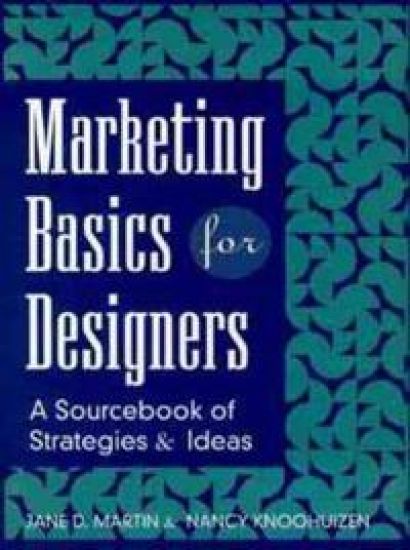
Business essentials and marketing strategies to help your firm survive and thrive . . . As a design professional running your own small firm, you expect to wear many hatsdesigner, office manager, project managerall in a day's work. But strategic marketer? No one prepared you for that! Marketing Basics for Designers is a long overdue resource for designers who need to become expert marketers fast. It provides solid practical advice on how to market your services, build your client base, and keep your customers coming back for more. You'll learn how to establish your design niche and develop your own marketing plan to reach potential clients. You'll find techniques for networking and using your contacts with other professionals. And you'll find inside tips from 30 leading designers who have had to develop their own marketing methods to survive. Positively packed with all the details you need, Marketing Basics for Designers helps you ensure your firm's future success and shows you how to: *Increase your firm's visibility within your community *Use past successes to generate future business *Perform beyond your clients' expectations *Utilize a show home to market your talents *Establish competitive and appropriate prices *Work successfully with other professionals *And much more If you are recently out on your own, planning to start your own practice, or already managing your own small firm, this is one of the most important books you will ever add to your professional library. Marketing Basics for Designers What makes running a small design practice so much more challenging than working for one of the big firms? You have to attract your own clients and keep them, you're working with limited resources and personnel, and once you finally pull yourself away from your drawing board to concentrate on marketing your services, where do you begin? You can't just sit there wondering why you didn't learn more about marketing in design school. Here's a book to help you out. With a clear, no-nonsense approach, Jane D. Martin and Nancy Knoohuizen address the full range of marketing problems and solutions from the unique perspective of the small design firm. They understand that you often find yourself short of the time, money, and know-how it takes to advertise your services effectively. Drawing on their own experience as well as interviews with more than 30 successful designers, Martin and Knoohuizen show you how to overcome these limitations and develop an effective marketing campaign. This incomparable guide will help you put together your marketing campaign, map out your strategy, and attract the attention of potential clients. Not everyone is a born salesperson, but Martin and Knoohuizen let you in on trade secrets that really work and offer suggestions that will help you feel more comfortable marketing yourself. You'll learn to build relationships by effective use of referrals and word of mouth. You'll master the subtleties of clinching the deal and discover how to keep your newfound clients coming back for more. You'll also receive sound advice from those who have been there before you. Charles Gandy, B. J. Peterson, Mark Hampton, and Cheryl P. Duvall are among the illustrious designers who share their wisdom, tips, and recommendations. You'll find out how these major designers have coped with many of the same problems you face now, and you'll learn from their mistakes as well as their triumphs. Whether you're just starting out in the design business, yearning to break free and become your own boss, or trying to create growth in an established firm, Marketing Basics for Designers helps you develop a successful marketing strategy based on your own needs, capabilities, and expectations.

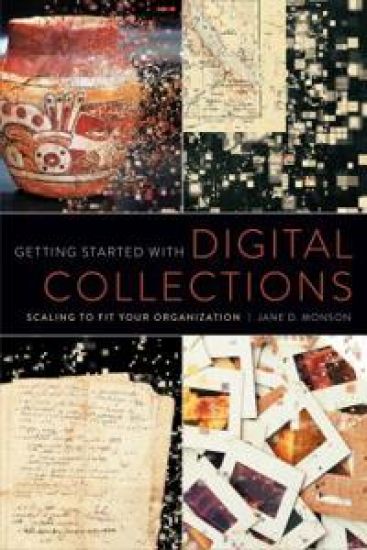
Digital collections have already changed the ways users access and interact with an institution's materials. And small or medium-sized libraries, archives, museums, and historical societies face a unique set of challenges in regards to digital collections. They may have been unable to jump on the digitization bandwagon at its beginning due to competing priorities or lack of resources, and may now be struggling to get a digitization program in place to meet the evolving needs and expectations of their own users. The good news is that digital projects can scale down to fit the size of any organization. Providing an entry point for librarians, archivists, and curators who are new to digitization, Monson's well-researched guide shows how even smaller institutions can successfully endeavor to make their content digitally accessible. Clearing aside the jargon and acronyms to hone in on the practicals, this book will help readers get a digitization program off the ground, offering guidance onhow to efficiently harness existing workflows, especially in departments seeing a decline in workload;the pros and cons of the two common service models for state and regional digital repositories;how to evaluate and choose among the digital asset management systems, comparing four proprietary and six open source systems;hardware options for image capture;choices in metadata models MODS, VRA Core, Dublin Core Element Set, and EAD;understanding the characteristics of various file formats and using them effectively to create master and derivative files;bitstream copying, data redundancy and other strategies to safeguard digital files against media degradation and technological obsolescence; andSection 108 copyright exemptions for cultural heritage institutions.This easy-to-follow guide to digitization fundamentals will ensure that readers gain a solid grasp of the knowledge and resources available for getting started on their own digital collection projects.
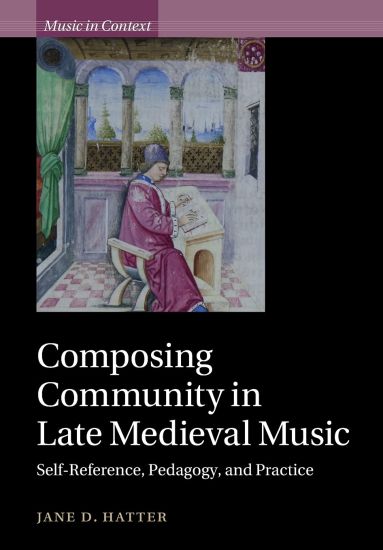
When we sing lines in which a fifteenth-century musician uses ethereal polyphony to complain mundanely about money or hoarseness, more than half a millennium melts away. Equally intriguing are moments in which we experience solmization puns. These familiar worries and surprising jests break down temporal distances, humanizing the lives and endeavors of our musical forebears. Yet many instances of self-reference occur within otherwise serious pieces. Are these simply in-jokes, or are there more meaningful messages we risk neglecting if we dismiss them as comic relief? Music historian Jane D. Hatter takes seriously the pervasiveness of these features. Divided into two sections, this study considers pieces with self-referential features in the texts separately from discussions of pieces based on musical self-referential elements. Examining connections between self-referential repertoire from the years 1450–1530 and similar self-referential creations for painters' guilds, reveals musicians' agency in forming the first communities of early modern composers.

When we sing lines in which a fifteenth-century musician uses ethereal polyphony to complain mundanely about money or hoarseness, more than half a millennium melts away. Equally intriguing are moments in which we experience solmization puns. These familiar worries and surprising jests break down temporal distances, humanizing the lives and endeavors of our musical forebears. Yet many instances of self-reference occur within otherwise serious pieces. Are these simply in-jokes, or are there more meaningful messages we risk neglecting if we dismiss them as comic relief? Music historian Jane D. Hatter takes seriously the pervasiveness of these features. Divided into two sections, this study considers pieces with self-referential features in the texts separately from discussions of pieces based on musical self-referential elements. Examining connections between self-referential repertoire from the years 1450–1530 and similar self-referential creations for painters' guilds, reveals musicians' agency in forming the first communities of early modern composers.

Tunisian women have received significant attention for their active participation in preserving and extending women’s rights since 2011. However, their activism and latest achievements should be considered not a recent phenomenon but rather part and parcel of a distinctive local history that has included women as agents of change. This book examines Tunisian women’s lived experiences, as individuals and as a group, within a sociohistorical framework that uncovers the enduring feminine footprint over centuries and eventually underpins and defines their most recent fight for gender equality in postrevolutionary Tunisia. The historic and current presentation of Tunisian women’s public and civic engagement distinguishes between different types of women’s objectives in order to examine women’s activism holistically as it evolved in the local context. The Tunisian Women’s Rights Movement will be of interest to students and scholars of Tunisia, North African, and Middle East Studies and gender in the Arab world.
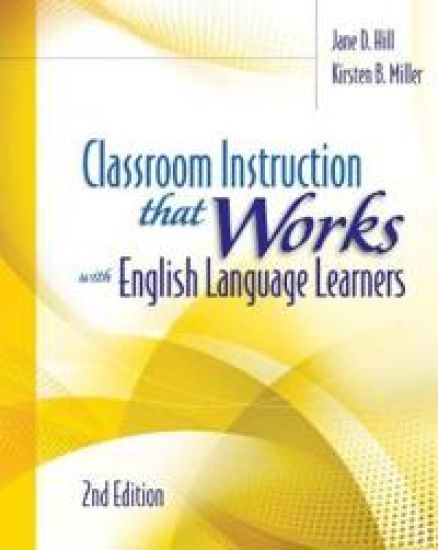
Classroom Instruction That Works with English Language Learners
Jane D. Hill; Kirsten B. Miller
Association for Supervision Curriculum Development
2013
nidottu
Language has always been the medium of instruction, but what happens when it becomes a barrier to learning? In this book, Jane Hill and Kirsten Miller take the reenergized strategies from the second edition of Classroom Instruction That Works and apply them to students in the process of acquiring English. New features in this edition include:The Thinking Language Matrix, which aligns Bloom's taxonomy with the stages of language acquisition and allows students at all levels to engage in meaningful learning.The Academic Language Framework, an easy-to-use tool for incorporating language-development objectives into content instruction.Suggestions for helping students develop oral language that leads to improved writing.Tips for Teaching that emphasize key points and facilitate instructional planning.Whether your students are learning English as a second language or are native English speakers who need help with their language development, this practical, research-based book provides the guidance necessary to ensure better results for all.


By producing literature in nontraditional forms—books made of cardboard trash, posters in subway stations, miniature shopping bags, digital publications, and even children’s toys—Chileans have made and circulated literary objects in defiance of state censorship and independent of capitalist definitions of value. In The Labor of Literature Jane D. Griffin studies amateur and noncommercial forms of literary production in Chile that originated in response to authoritarian state politics and have gained momentum throughout the postdictatorship period. She argues that such forms advance a model of cultural democracy that differs from and sometimes contradicts the model endorsed by the state and the market.By examining alternative literary publications, Griffin recasts the seventeen-year Pinochet dictatorship as a time of editorial experimentation despite widespread cultural oppression and shows how grassroots cultural activism has challenged government-approved corporate publishing models throughout the postdictatorship period. Griffin’s work also points to the growing importance of autogestión, or do-it-yourself cultural production, where individuals combine artisanal forms with new technologies to make and share creative work on a global scale.

By producing literature in nontraditional forms—books made of cardboard trash, posters in subway stations, miniature shopping bags, digital publications, and even children’s toys—Chileans have made and circulated literary objects in defiance of state censorship and independent of capitalist definitions of value. In The Labor of Literature Jane D. Griffin studies amateur and noncommercial forms of literary production in Chile that originated in response to authoritarian state politics and have gained momentum throughout the postdictatorship period. She argues that such forms advance a model of cultural democracy that differs from and sometimes contradicts the model endorsed by the state and the market.By examining alternative literary publications, Griffin recasts the seventeen-year Pinochet dictatorship as a time of editorial experimentation despite widespread cultural oppression and shows how grassroots cultural activism has challenged government-approved corporate publishing models throughout the postdictatorship period. Griffin’s work also points to the growing importance of autogestión, or do-it-yourself cultural production, where individuals combine artisanal forms with new technologies to make and share creative work on a global scale.