Kirjojen hintavertailu. Mukana 11 244 527 kirjaa ja 12 kauppaa.

Kirjahaku

Etsi kirjoja tekijän nimen, kirjan nimen tai ISBN:n perusteella.

1000 tulosta hakusanalla Jane F. Bolin Esq

No Shortcuts

No Shortcuts

Jane F. McAlevey

Oxford University Press Inc
2016
sidottu
The crisis of the progressive movement is so evident that nothing less than a fundamental rethinking of its basic assumptions is required. Today's progressives now work for professional organizations more comfortable with the inside game in Washington DC and capitals throughout the West, where they are outmatched and outspent by corporate interests. Labor unions now focus on the narrowest possible understanding of the interests of their members, and membership continues to decline in lockstep with the narrowing of their goals. Meanwhile, promising movements like Occupy Wall Street and Black Lives Matter lack sufficient power to accomplish meaningful change. Why do progressives keep losing on so many issues? In No Shortcuts, Jane McAlevey argues that progressives can win, but lack the organized power to enact significant change, to outlast their bosses in labor fights, and to hold elected leaders accountable. Drawing upon her experience as a scholar and longtime organizer in the student, environmental, and labor movements, McAlevey examines cases from labor unions and social movements to pinpoint the factors that helped them succeed - or fail - to accomplish their intended goals. McAlevey makes a compelling case that the great social movements of previous eras gained their power from mass organizing, a strategy today's progressives have mostly abandoned in favor of shallow mobilization or advocacy. She ultimately concludes that, in order to win, progressive movements need strong unions built from bottom-up organizing strategies that place the power for change in the hands of workers and ordinary people at the community level. Beyond the concrete examples in this book, McAlevey's arguments have direct implications for anyone involved in organizing for social change. Much more than cogent analysis, No Shortcuts explains exactly how progressives can go about rebuilding powerful movements at work, in our communities, and at the ballot box.
No Shortcuts

No Shortcuts

Jane F. McAlevey

Oxford University Press Inc
2018
nidottu
The crisis of the progressive movement is so evident that nothing less than a fundamental rethinking of its basic assumptions is required. Today's progressives now work for professional organizations more comfortable with the inside game in Washington DC (and capitols throughout the West), where they are outmatched and outspent by corporate interests. Labor unions now focus on the narrowest possible understanding of the interests of their members, and membership continues to decline in lockstep with the narrowing of their goals. Meanwhile, promising movements like Occupy Wall Street and Black Lives Matter lack sufficient power to accomplish meaningful change. Why do progressives in the United States keep losing on so many issues? In No Shortcuts, Jane McAlevey argues that progressives can win, but lack the organized power to enact significant change, to outlast their bosses in labor fights, and to hold elected leaders accountable. Drawing upon her experience as a scholar and longtime organizer in the student, environmental, and labor movements, McAlevey examines cases from labor unions and social movements to pinpoint the factors that helped them succeed - or fail - to accomplish their intended goals. McAlevey makes a compelling case that the great social movements of previous eras gained their power from mass organizing, a strategy today's progressives have mostly abandoned in favor of shallow mobilization or advocacy. She ultimately concludes that, in order to win, progressive movements need strong unions built from bottom-up organizing strategies that place the power for change in the hands of workers and ordinary people at the community level. Beyond the concrete examples in this book, McAlevey's arguments have direct implications for anyone involved in organizing for social change. Much more than cogent analysis, No Shortcuts explains exactly how progressives can go about rebuilding powerful movements at work, in our communities, and at the ballot box.
Rules to Win By

Rules to Win By

Jane F. McAlevey; Abby Lawlor

OXFORD UNIVERSITY PRESS INC
2023
sidottu
Rules to Win By: Participation and Power in Union Negotiations is a book for anyone who wants to understand how to build the power required to effectively challenge and reverse income inequality and attacks on democracy. Drawing insights from recent hard-won unionization and contract negotiation fights, Jane McAlevey and Abby Lawlor use lessons from some of the toughest fights today--preparing a durable, all-out strike in a union-hostile environment--to provide a masterclass in participatory social change, indispensable both within and beyond the workplaces where we spend half of our waking lives. In an era of polarization, big lies, and massive legislative setbacks, changemakers in every arena need to learn the skills and lessons honed in pitched battles against experienced and ruthless union busters. Rules to Win By is a book for workers, unionists, racial justice and climate campaigners, academics, policymakers and everyone who wants a more fair and democratic society.
Family and Familia in Roman Law and Life

Family and Familia in Roman Law and Life

Jane F. Gardner

Clarendon Press
1998
sidottu
Roman families were infinitely diverse, but the basis of Roman civil law was the familia, a strictly-defined group consisting of a head, paterfamilias, and his descendants in the male line. Recent work on the Roman family mainly ignores the familia, in favour of examining such matters as emotional relationships within families, the practical effects of control by a paterfamilias, and demographic factors producing families which did not fit the familia-pattern. This book investigates the interrelationship between family and familia, especially how families exploited the legal rules for their own ends, and disrupted the familia, by use of emancipation (release from patria potestas) and adoption. It also traces legal responses to the effects of demographic factors, which gave increased importance to maternal connections, and to social, such as the difficulties for ex-slaves in conforming to the familia-pattern. The familia as a legal institution remained virtually unchanged; nevertheless Roman family law underwent substantial changes, to meet the needs and desires of Roman society.
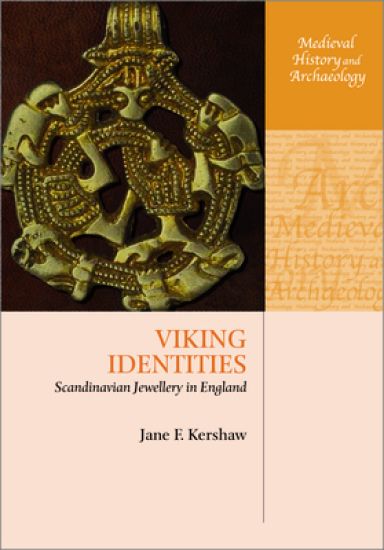
Viking Identities

Viking Identities

Jane F. Kershaw

Oxford University Press
2020
nidottu
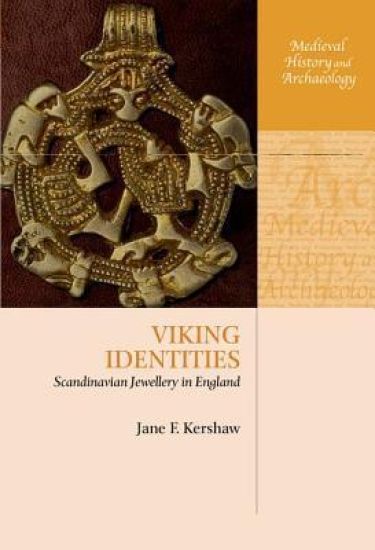
Viking Identities is the first detailed archaeological study of Viking-Age Scandinavian-style female dress items from England. Based on primary archival and archaeological research, including the analysis of hundreds of recent metal-detector finds, it presents evidence for over 500 brooches and pendants worn by women in the late ninth and tenth centuries. Jane F. Kershaw argues that these finds add an entirely new dimension to the limited existing archaeological evidence for Scandinavian activity in the British Isles, and make possible a substantial reassessment of the Viking settlements. In this volume, Kershaw offers an interpretation of the significance of the jewellery in a broad, historical context. The jewellery highlights locations of settlement not commonly associated with the Vikings. In contrast to claims of high levels of cultural assimilation, the jewellery suggests that incoming groups maintained a distinct Scandinavian identity which was sometimes appropriated by the indigenous population. The author also addresses one of the great unanswered questions in the study of Viking-Age settlements: what about the women? The interpretation of the jewellery challenges traditional perceptions of Viking conquest as an all-male affair and brings into focus a population group which has, until now, been almost invisible. Kershaw describes the objects and explores a number of themes related to their contemporary use, including their date, distribution, and function in costume. This body of material - unknown 30 years ago - is introduced to a public audience for the first time. Including many object images and maps, the study provides a practical guide to the identification of Scandinavian metalwork.
Viking Identities

Viking Identities

Jane F. Kershaw

Oxford University Press
2013
sidottu
Viking Identities is the first detailed archaeological study of Viking-Age Scandinavian-style female dress items from England. Based on primary archival and archaeological research, including the analysis of hundreds of recent metal-detector finds, it presents evidence for over 500 brooches and pendants worn by women in the late ninth and tenth centuries. Jane F. Kershaw argues that these finds add an entirely new dimension to the limited existing archaeological evidence for Scandinavian activity in the British Isles and make possible a substantial reassessment of the Viking settlements. Kershaw offers an interpretation of the significance of the jewellery in a broader, historical context. The jewellery highlights locations of settlement not commonly associated with the Vikings. In contrast to claims of high levels of cultural assimilation, the jewellery suggests that incoming groups maintained a distinct Scandinavian identity which was sometimes appropriated by the indigenous population. Kershaw also addresses one of the great unanswered questions in the study of Viking-Age settlements: what about the women? The interpretation of the jewellery challenges traditional perceptions of Viking conquest as an all-male affair and brings into focus a population group which has, until now, been almost invisible. Kershaw describes the objects and explores a number of themes related to their contemporary use, including their date, distribution, and function in costume. This body of material - unknown 30 years ago - is introduced to a public audience for the first time. Including many object images and maps, the study provides a practical guide to the identification of Scandinavian metalwork.
Being a Roman Citizen

Being a Roman Citizen

Jane F. Gardner

Routledge
1993
sidottu
The status of citizen was increasingly the right of the majority in the Roman empire and brought important privileges and exemption from certain forms of punishment. However, not all Roman citizens were equal; for example bastards, freed persons, women, the physically and mentally handicapped, under-25s, ex-criminals and soldiers were subject to restrictions and curtailments on their capacity to act. Being a Roman Citizen examines these forms of limitation and discrimination and thereby throws into sharper focus Roman conceptions of citizenship and society.
The Roman Household

The Roman Household

Jane F. Gardner; Thomas Wiedemann

Routledge
1991
nidottu
With the help of a wide variety of source material, particularly legal documents and inscriptions, some of it made available for the first time in English, this book illustrates the activities associated with the household, demonstrating the different and frequently conflicting roles and moral values expected from its various members: male and female, old and young, freedman and slave.
Women in Roman Law and Society

Women in Roman Law and Society

Jane F. Gardner

Routledge
1987
nidottu
The legal situation of the women of ancient Rome was extremely complex, and - since there was no sharp distinction between free woman, freedwoman and slave - the definition of their legal position is often heard. Basing her lively analysis on detailed study of literary and epigraphic material, Jane F. Gardner explores the provisions of the Roman laws as they related to women. Dr Gardner describes the ways in which the laws affected women throughout their lives - in families, as daughters, wives and parents; as heiresses and testators; as owners and controllers of property; and as workers. She looks with particular attention at the ways in which the strict letter of the law came to be modified, softened, circumvented, and even changed, pointing out that the laws themselves tell us as much about the economic situation of women and the range of opportunities available to them outside the home.
Being a Roman Citizen

Being a Roman Citizen

Jane F. Gardner

Routledge
2010
nidottu
The status of citizen was increasingly the right of the majority in the Roman empire and brought important privileges and exemption from certain forms of punishment. However, not all Roman citizens were equal; for example bastards, freed persons, women, the physically and mentally handicapped, under-25s, ex-criminals and soldiers were subject to restrictions and curtailments on their capacity to act. Being a Roman Citizen examines these forms of limitation and discrimination and thereby throws into sharper focus Roman conceptions of citizenship and society.
A Family Business?

A Family Business?

Jane F. Marceau

Cambridge University Press
2009
pokkari
First published in 1989, A Family Business? goes beyond purely national studies of class systems and discussions of the processes of social change in any one country and traces the development of an international elite in Europe. Professor Marceau analyses the micro-strategies developed by both individuals and families to achieve or maintain high positions in the emerging business world. Using a study of young managers from twelve countries, she indicates the extent to which they rely on social, economic and cultural resources provided by families of origin and marriage for success in the high-risk competition for top posts, and she shows how common education, adherence to technocratic managerial and political beliefs, and shared experience of transnational careers are creating a network of 'parallel families' across Europe. She suggests how the emerging European business class is distinctively shaped by its international experience.
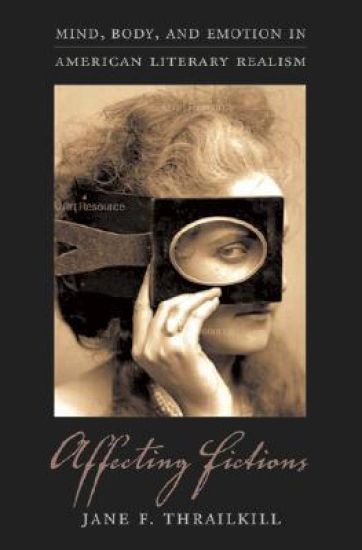
Affecting Fictions

Affecting Fictions

Jane F. Thrailkill

Harvard University Press
2007
sidottu
What happens when the cerebral--that is, theories of literature and of affect--encounters the corporeal, the human body? In this study by Jane Thrailkill, what emerges from the convergence is an important vision of late-nineteenth-century American realist literature and the role of emotion and physiology in literary criticism.Affecting Fictions offers a new understanding of American literary realism that draws on neuroscience and cognitive psychology. Thrailkill positions herself against the emotionless interpretations of the New Critics. Taking as her point of departure realist works of medicine, psychology, and literature, she argues that nineteenth-century readers and critics would have taken it for granted that texts engaged both mind and body. Feeling, she writes, is part of interpretation. Examining literary works by Henry James, Kate Chopin, Charlotte Perkins Gilman, and Oliver Wendell Holmes, Thrailkill explores the connections among the aesthetic, emotion, consciousness, and the body in readings that illuminate lesser-known works such as "Elsie Venner" and that resuscitate classics such as "The Yellow Wallpaper."Focusing on pity, fear, nervousness, pleasure, and wonder, Thrailkill makes an important contribution to the growing body of critical work on affect and aesthetics, presenting a case for the indispensability of emotions to the study of fiction.
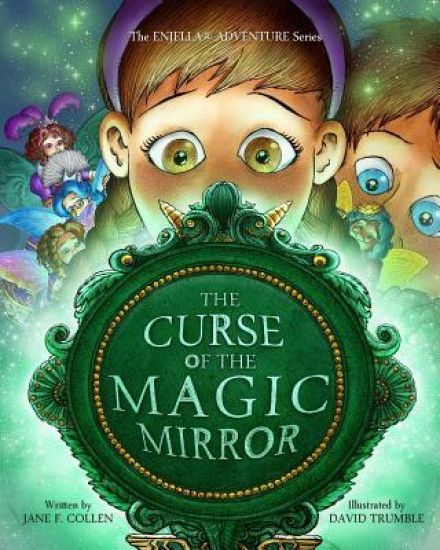
The Curse of the Magic Mirror

The Curse of the Magic Mirror

Jane F. Collen

Streamline Brands
2018
nidottu
What child does not face some form of bullying? What child does not grapple with self-esteem or body image issues? These real life problems are the subject of this fantasy tale. Magic and meanness are combined to create a compelling story that will resonate with all students. Two children, brought to a magical place by their Elbow Fairies, stumble upon a magic mirror. But the fun quickly turns to misery when Abigail looks into the mirror. The brilliant illustrations of David Trumble draw the reader into the drama and highlight the positive message. Another in the genre of social-emotional picture books in The Enjella(R) Adventure Series.
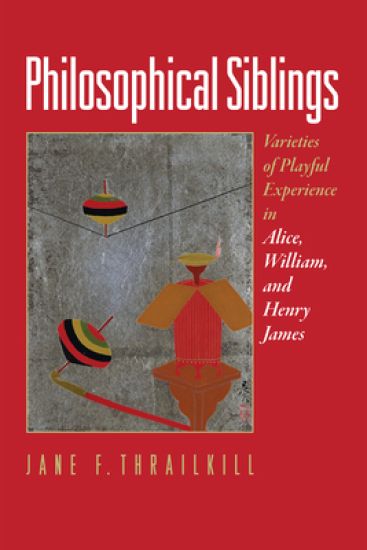
Philosophical Siblings

Philosophical Siblings

Jane F. Thrailkill

University of Pennsylvania Press
2022
sidottu
Alice James: an exemplary nineteenth-century neurasthenic and diarist. William James: a foundational figure for American psychology and philosophy. Henry James: a preeminent author and literary critic. These three iconic figures of nineteenth-century American culture and letters were also siblings, children of the storied James family, yet the diarist, the psychologist, and the novelist have seemed to occupy distinct realms of cultural authority and to speak to different audiences (or, in the case of Alice, to no audience at all). Their writings have rarely been considered together. In Philosophical Siblings Jane F. Thrailkill asks what new story is illuminated when we study their writings collectively. By approaching the Jameses as intimate thinkers operating on a common field of play, Thrailkill reveals the siblings' shared project-part psychological, part philosophical-of showing how minds meet in a world teeming with possibilities and risks. Scientists in nineteenth-century psychology labs were studying isolated individuals, tracking eye movements, and timing reactions to better understand the human machine. In contrast, the Jameses' models for discovery were philosophical toys: ludic devices that light up quirks of perception and are devilishly fun as well. With childlike humor, the siblings' intellectual playfulness is both message and medium, manifested in an expressive style that exploits incongruity, delights in absurdities, and sometimes, teasingly, inflicts the sting of critique. Most important, the Jameses' writings model how human beings accomplish high-wire acts of perception and creation. Alice, William, and Henry James did not merely present a new, interactive theory of mind; they dramatized it in their writings as a curiosity-based practice. Philosophical Siblings accepts their invitation to mindful play and offers a fresh way of thinking about literary encounters more generally, one that approaches even the weightiest texts with serious lightness.
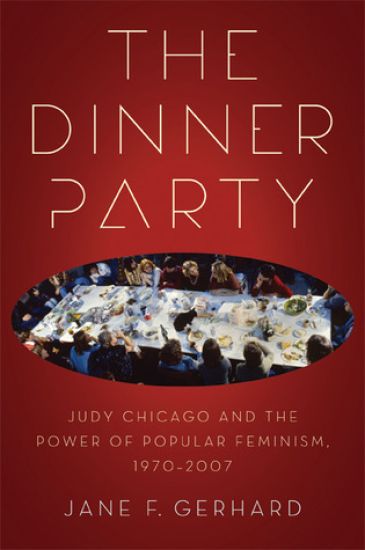
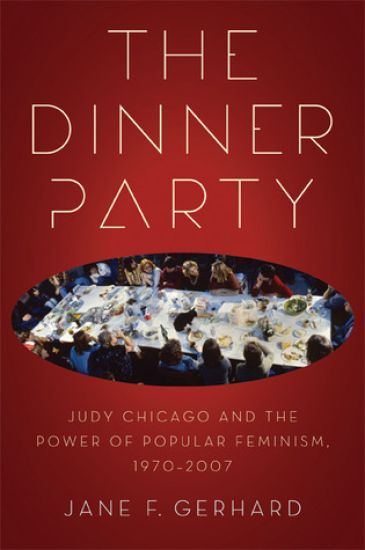
The Dinner Party

The Dinner Party

Jane F. Gerhard

University of Georgia Press
2013
sidottu
Judy Chicago's monumental art installation The Dinner Party was an immediate sensation when it debuted in 1979, and today it is considered the most popular work of art to emerge from the second-wave feminist movement. Jane F. Gerhard examines the piece's popularity to understand how ideas about feminism migrated from activist and intellectual circles into the American mainstream in the last three decades of the twentieth century.More than most social movements, feminism was transmitted and understood through culture—art installations, Ms. Magazine, All in the Family, and thousands of other cultural artifacts. But the phenomenon of cultural feminism came under extraordinary criticism in the late 1970s and 1980s Gerhard analyzes these divisions over whether cultural feminism was sufficiently activist in light of the shifting line separating liberalism from radicalism in post-1970s America. She concludes with a chapter on the 1990s, when The Dinner Party emerged as a target in political struggles over public funding for the arts, even as academic feminists denounced the piece for its alleged essentialism.The path that The Dinner Party traveled—from inception (1973) to completion (1979) to tour (1979-1989) to the permanent collection of the Brooklyn Museum (2007)—sheds light on the history of American feminism since 1970 and on the ways popular feminism in particular can illuminate important trends and transformations in the broader culture.
The Dinner Party

The Dinner Party

Jane F. Gerhard

University of Georgia Press
2013
pokkari
Judy Chicago's monumental art installation The Dinner Party was an immediate sensation when it debuted in 1979, and today it is considered the most popular work of art to emerge from the second-wave feminist movement. Jane F. Gerhard examines the piece's popularity to understand how ideas about feminism migrated from activist and intellectual circles into the American mainstream in the last three decades of the twentieth century.More than most social movements, feminism was transmitted and understood through culture—art installations, Ms. Magazine, All in the Family, and thousands of other cultural artifacts. But the phenomenon of cultural feminism came under extraordinary criticism in the late 1970s and 1980s Gerhard analyzes these divisions over whether cultural feminism was sufficiently activist in light of the shifting line separating liberalism from radicalism in post-1970s America. She concludes with a chapter on the 1990s, when The Dinner Party emerged as a target in political struggles over public funding for the arts, even as academic feminists denounced the piece for its alleged essentialism.The path that The Dinner Party traveled—from inception (1973) to completion (1979) to tour (1979-1989) to the permanent collection of the Brooklyn Museum (2007)—sheds light on the history of American feminism since 1970 and on the ways popular feminism in particular can illuminate important trends and transformations in the broader culture.
Removal Aftershock

Removal Aftershock

Jane F. Lancaster

University of Tennessee Press
1994
nidottu
A chronicle of hardship and persistence, Removal Aftershock centers on the Seminoles and their experiences in the West after the federal government forced them out of their Florida homelands during the early 1800s. Gaining control of Florida in 1819, the United States initiated a series of treaties that compelled the Native-American tribes to accept reduced territory, relocations, and finally removal to west of the Mississippi. Some Seminoles fought to stay in Florida, others, along with their black slaves, were sent west between 1834 and 1859. After enduring the trials of removal, the Western Seminoles faced a new struggle. As a small tribe, they had to fight to maintain their identity and land rather than be absorbed into the much larger Creek Nation, as the treaties seemingly required. The struggle for independence from the Creeks was aggravated by other problems. On the one hand, the Seminoles encountered government neglect, delayed annuities, and corrupt officials; on the, other, they were confronted by threatening Plains Indians, measles and smallpox epidemics, alcohol abuse, droughts, and crop failures. Following an 1856 treaty that brought them independence from the Creeks, the Seminoles were next drawn into the Civil War, which riddled the tribe with division and dispersal, property destruction, and death. In 1866, the Seminoles' cooperation with the Confederates was used to justify reduction of their land from more than 2 million acres to 200,000 acres. In telling the story of the Seminoles after removal, Jane Lancaster highlights a neglected area of Native-American studies and places the tribe in proper historical perspective. Despite their countless hardships and theinhumane policies of the government, the Seminoles have survived to the present day - an enduring testament to the stubbornness and determination of the early tribal leaders.