Kirjojen hintavertailu. Mukana 11 244 527 kirjaa ja 12 kauppaa.

Kirjahaku

Etsi kirjoja tekijän nimen, kirjan nimen tai ISBN:n perusteella.

1000 tulosta hakusanalla Jane M Gaines

Pink-Slipped

Pink-Slipped

Jane M Gaines

University of Illinois Press
2018
sidottu
Women held more positions of power in the silent film era than at any other time in American motion picture history. Marion Leonard broke from acting to cofound a feature film company. Gene Gauntier, the face of Kalem Films, also wrote the first script of Ben-Hur. Helen Holmes choreographed her own breathtaking on-camera stunt work. Yet they and the other pioneering filmmaking women vanished from memory. Using individual careers as a point of departure, Jane M. Gaines charts how women first fell out of the limelight and then out of the film history itself. A more perplexing event cemented their obscurity: the failure of 1970s feminist historiography to rediscover them. Gaines examines how it happened against a backdrop of feminist theory and her own meditation on the limits that historiography imposes on scholars. Pondering how silent era women have become absent in the abstract while present in reality, Gaines sees a need for a theory of these artists' pasts that relates their aspirations to those of contemporary women. A bold journey through history and memory, Pink-Slipped pursues the still-elusive fate of the influential women in the early years of film.
Pink-Slipped

Pink-Slipped

Jane M Gaines

University of Illinois Press
2018
nidottu
Women held more positions of power in the silent film era than at any other time in American motion picture history. Marion Leonard broke from acting to cofound a feature film company. Gene Gauntier, the face of Kalem Films, also wrote the first script of Ben-Hur. Helen Holmes choreographed her own breathtaking on-camera stunt work. Yet they and the other pioneering filmmaking women vanished from memory. Using individual careers as a point of departure, Jane M. Gaines charts how women first fell out of the limelight and then out of the film history itself. A more perplexing event cemented their obscurity: the failure of 1970s feminist historiography to rediscover them. Gaines examines how it happened against a backdrop of feminist theory and her own meditation on the limits that historiography imposes on scholars. Pondering how silent era women have become absent in the abstract while present in reality, Gaines sees a need for a theory of these artists' pasts that relates their aspirations to those of contemporary women. A bold journey through history and memory, Pink-Slipped pursues the still-elusive fate of the influential women in the early years of film.
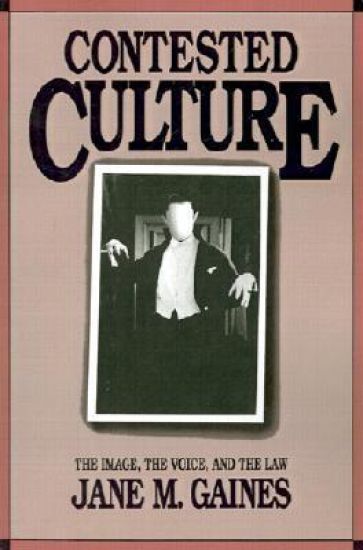
Contested Culture

Contested Culture

Gaines Jane M.

The University of North Carolina Press
1991
nidottu
Jane M. Gaines examines the phenomenon of images as property, focusing on the legal staus of mechanically produced visual and audio images from popular culture. Bridging the fields of critical legal studies and cultural studies, she analyzes copyright, trademark, and intellectual property law, asking how the law constructs works of authorship and who owns the country's cultural heritage.
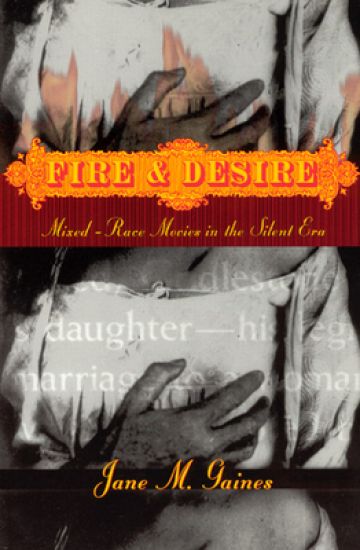
Fire and Desire

Fire and Desire

Jane M. Gaines

University of Chicago Press
2001
sidottu
In the silent era, American cinema was defined by two separate and parallel industries, with white and black companies producing films for their respective, segregated audiences. Jane Gaines's highly anticipated new book reconsiders the race films of this era with an ambitious historical and theoretical agenda.Fire and Desire offers a penetrating look at the black independent film movement during the silent period. Gaines traces the profound influence that D. W. Griffith's racist epic The Birth of a Nation exerted on black filmmakers such as Oscar Micheaux, the director of the newly recovered Within Our Gates. Beginning with What Happened in the Tunnel, a movie that played with race and sex taboos by featuring the first interracial kiss in film, Gaines also explores the cinematic constitution of self and other through surprise encounters: James Baldwin sees himself in the face of Bette Davis, family resemblance is read in Richard S. Robert's portrait of an interracial family, and black film pioneer George P. Johnson looks back on Micheaux. Given the impossibility of purity and the co-implication of white and black, Fire and Desire ultimately questions the category of "race movies" itself.
Fire and Desire

Fire and Desire

Jane M. Gaines

University of Chicago Press
2001
nidottu
In the silent era, American cinema was defined by two separate and parallel industries, with white and black companies producing films for their respective, segregated audiences. Jane Gaines's highly anticipated new book reconsiders the race films of this era with an ambitious historical and theoretical agenda.Fire and Desire offers a penetrating look at the black independent film movement during the silent period. Gaines traces the profound influence that D. W. Griffith's racist epic The Birth of a Nation exerted on black filmmakers such as Oscar Micheaux, the director of the newly recovered Within Our Gates. Beginning with What Happened in the Tunnel, a movie that played with race and sex taboos by featuring the first interracial kiss in film, Gaines also explores the cinematic constitution of self and other through surprise encounters: James Baldwin sees himself in the face of Bette Davis, family resemblance is read in Richard S. Robert's portrait of an interracial family, and black film pioneer George P. Johnson looks back on Micheaux. Given the impossibility of purity and the co-implication of white and black, Fire and Desire ultimately questions the category of "race movies" itself.
Lloyd & Jane: A Love Story

Lloyd & Jane: A Love Story

Jane M. Reece

Independently Published
2019
nidottu
Every love story has its hurdles and Jane and Lloyd Reece were no exception. Having fallen in love as pen pals during Lloyd's tour in Korea, he and Jane quickly decided they were meant for each other. But they also had to face the questions that their whirlwind Stateside romance brought to them. This third part of Jane and Lloyd's love story springs from the stories shared in the first two books in this trilogy, as they braved distance, snowstorms, triumph and tragedy to begin their life and work together as a married couple called to ministry.
Up Redcote

Up Redcote

Jane M E Fomes

Lulu.com
2017
sidottu
ORedcoteO is the name of our house and OupO is what goes on there. A series similar to this article was running in one of the national weekly newspapers, I believe but there the similarity ends.
Up Redcote 2

Up Redcote 2

Jane M E Fomes

Lulu.com
2018
pokkari
'Redcote' is the name of our house and 'up' is what goes on there. A series similar to this article is running in one of the national weekly newspapers, I believe - but there the similarity ends.
Up Redcote

Up Redcote

Jane M E Fomes

Lulu.com
2018
pokkari
The following is a collection of articles which I wrote for the village monthly newspaper The Medstead Times over a twenty year period. 'Redcote' is the name of our house and 'up' is what goes on there. A series similar to this article is running in one of the national weekly newspapers, I believe - but there the similarity ends.
Up Redcote 2

Up Redcote 2

Jane M E Fomes

Lulu.com
2017
sidottu
ORedcoteO is the name of our house and OupO is what goes on there. A series similar to this article was running in one of the national weekly newspapers, I believe but there the similarity ends.
Repossessing Shanland

Repossessing Shanland

Jane M. Ferguson

University of Wisconsin Press
2021
sidottu
Around five million people across Southeast Asia identify as Shan. Though the Shan people were promised an independent state in the 1947 Union of Burma constitution, successive military governments blocked their liberation. From 1958 onward, insurgency movements, including the Shan United Revolution Army, have fought for independence from Myanmar. Refugees numbering in the hundreds of thousands fled to Thailand to escape the conflict, despite struggling against oppressive citizenship laws there. Several decades of continuous rebellion have created a vacuum in which literati and politicians have constructed a virtual Shan state that lives on in popular media, rock music, and Buddhist ritual. Based on close readings of Shan-language media and years of ethnographic research in a community of soldiers and their families, Jane M. Ferguson details the origins of these movements and tells the story of the Shan in their own voices. She shows how the Shan have forged a homeland and identity during great upheaval by using state building as an ongoing project of resistance, resilience, and accommodation within both countries. In avoiding a good/bad moral binary and illuminating cultural complexities, Repossessing Shanland offers a fresh perspective on identity formation, transformation, and how people understand and experience borderlands today.
Repossessing Shanland

Repossessing Shanland

Jane M. Ferguson

UNIVERSITY OF WISCONSIN PRESS
2022
nidottu
Around five million people across Southeast Asia identify as Shan. Though the Shan people were promised an independent state in the 1947 Union of Burma constitution, successive military governments blocked their liberation. From 1958 onward, insurgency movements, including the Shan United Revolution Army, have fought for independence from Myanmar. Refugees numbering in the hundreds of thousands fled to Thailand to escape the conflict, despite struggling against oppressive citizenship laws there. Several decades of continuous rebellion have created a vacuum in which literati and politicians have constructed a virtual Shan state that lives on in popular media, rock music, and Buddhist ritual. Based on close readings of Shan-language media and years of ethnographic research in a community of soldiers and their families, Jane M. Ferguson details the origins of these movements and tells the story of the Shan in their own voices. She shows how the Shan have forged a homeland and identity during great upheaval by using state building as an ongoing project of resistance, resilience, and accommodation within both countries. In avoiding a good/bad moral binary and illuminating cultural complexities, Repossessing Shanland offers a fresh perspective on identity formation, transformation, and how people understand and experience borderlands today.
Laura Ingalls Wilder

Laura Ingalls Wilder

Jane M. Subramanian

Greenwood Press
1997
sidottu
With the publication of her first book, The Little House in the Big Woods (1932), Laura Ingalls Wilder became an almost overnight success as a writer of children's literature. This reference is a comprehensive compilation of works and research done on her from the first appearance of commentary to mid-1995. Citations are included for books, booklets, articles, theses, dissertations, and book reviews, and the annotations discuss the contents of these works. Entries are grouped in chapters devoted to critical works, biographical works, teaching studies and materials, teaching kits, serial publications, and book reviews. A brief introduction overviews the present state of Wilder studies, and detailed indexes conclude the volume.With the publication of her first book, The Little House in the Big Woods (1932), Laura Ingalls Wilder became an almost overnight success as a writer of children's literature. Her series of books consisting of autobiographical fiction have long been considered classics in the United States and have been translated into a large number of languages for their gradual migration into other countries as well. Early book reviews and articles began to comment on the importance and quality of her writings. The amount of criticism has escalated tremendously, and recent research and study have focused on the value of her works for all age groups. Because of Wilder's popularity as a children's author, her works are taught in schools and curriculum units have been designed to incorporate her writings.This reference book provides a comprehensive compilation of works and research done on Wilder from the first appearance of commentary to mid-1995. Included are citations for books, booklets, theses, dissertations, articles, and book reviews, and the annotations discuss the contents of the works. Entries are arranged in several sections to promote useful access to the materials. A brief introduction provides an overview of Wilder studies and indicates some areas where more research is needed, and several indexes enhance the accessibility of the information.
Confocal Microscopy, An Issue of Dermatologic Clinics

Confocal Microscopy, An Issue of Dermatologic Clinics

Jane M. Grant-Kels; Giovanni Pellacani; Caterina Longo

Elsevier - Health Sciences Division
2016
sidottu
This issue of Dermatologic Clinics, guest edited by Jane M. Grant-Kels, Giovanni Pellacani, and Caterina Longo, is devoted to Confocal Microscopy. Articles in this timely issue include: Basics of Confocal Microscopy and the Complexity of Diagnosing Skin Tumors: New Imaging Tools in Clinical Practice, Diagnostic Workflows, Cost-estimate and New Trends; Opening a Window Into Living Tissue: Histopathologic Features of Confocal Microscopic Findings in Skin Tumors; Addressing the Issue of Discriminating Nevi from Early Melanomas: Dues and Pitfalls; Melanoma Types and Melanoma Progression: The Different Faces; Lentigo Maligna, Macules of the Face and Lesions on Sun-damaged Skin: Confocal makes the Difference; Glowing in the dark: use of confocal microscopy in dark pigmented lesions; Enlightening the Pink: Use of Confocal Microscopy in Pink Lesions; Shining into the White: The Spectrum of Epithelial Tumors from Actinic Keratosis to SCC; Application of Wide-probe and Handy-probe for Skin Cancer Diagnosis: Pros and Cons; Confocal Microscopy for Special Sites and Special Uses; Confocal Algorithms for Inflammatory Skin Diseases and Hair Diseases; In Vivo and Ex Vivo Confocal Microscopy for Dermatologic and Mohs' Surgeons; Telediagnosis with Confocal Microscopy: A Reality or a Dream?; "Well-aging": Early Detection of Skin Aging Signs; The Role of Confocal Microscopy in Clinical Trials for Treatment Monitoring; and Fluorescence (multiwave) Confocal Microscopy.
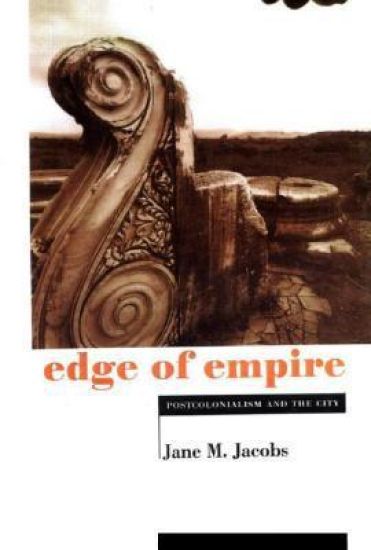
Edge of Empire

Edge of Empire

Jane M. Jacobs

Routledge
1996
sidottu
Edge of Empire examines struggles over urban space in three contemporary first world cities in an attempt to map the real geographies of colonialism and postcolonialism as manifest in modern society. From London, the one-time heart of the empire, to Perth and Brisbane, scenes of Aboriginal claims for the sacred in the space of the modern city, Jacobs emphasises the global geography of the local and unravels the spatialised cultural politics of postcolonial processes.Edge of Empire forms the basis for understanding imperialism over space and time, and is a recognition of the unruly spatial politics of race and nation, nature and culture, past and present.
Edge of Empire

Edge of Empire

Jane M. Jacobs

Routledge
1996
nidottu
Edge of Empire examines struggles over urban space in three contemporary first world cities in an attempt to map the real geographies of colonialism and postcolonialism as manifest in modern society. From London, the one-time heart of the empire, to Perth and Brisbane, scenes of Aboriginal claims for the sacred in the space of the modern city, Jacobs emphasises the global geography of the local and unravels the spatialised cultural politics of postcolonial processes.Edge of Empire forms the basis for understanding imperialism over space and time, and is a recognition of the unruly spatial politics of race and nation, nature and culture, past and present.
Managing the Monstrous Feminine

Managing the Monstrous Feminine

Jane M. Ussher

Routledge
2005
sidottu
Managing the Monstrous Feminine takes a unique approach to the study of the material and discursive practices associated with the construction and regulation of the female body. Jane Ussher examines the ways in which medicine, science, the law and popular culture combine to produce fictions about femininity, positioning the reproductive body as the source of women's power, danger and weakness.Including sections on 'regulation', 'the subjectification of women' and 'women's negotiation and resistance', this book describes the construction of the 'monstrous feminine' in mythology, art, literature and film, revealing its implications for the regulation and experience of the fecund female body. Critical reviews are combined with case studies and extensive interview material to illuminate discussions of subjects including:the regulation of women through the bodyregimes of knowledge associated with reproductionintersubjectivity and the bodywomen’s narratives of resistance.These insights into the relation between the construction of the female body and women's subjectivity will be of interest to those studying health psychology, social psychology, medical sociology, gender studies and cultural studies. The book will also appeal to all those looking for a high-level introduction to contemporary feminist thought on the female body.
Managing the Monstrous Feminine

Managing the Monstrous Feminine

Jane M. Ussher

Routledge
2005
nidottu
Managing the Monstrous Feminine takes a unique approach to the study of the material and discursive practices associated with the construction and regulation of the female body. Jane Ussher examines the ways in which medicine, science, the law and popular culture combine to produce fictions about femininity, positioning the reproductive body as the source of women's power, danger and weakness.Including sections on 'regulation', 'the subjectification of women' and 'women's negotiation and resistance', this book describes the construction of the 'monstrous feminine' in mythology, art, literature and film, revealing its implications for the regulation and experience of the fecund female body. Critical reviews are combined with case studies and extensive interview material to illuminate discussions of subjects including:the regulation of women through the bodyregimes of knowledge associated with reproductionintersubjectivity and the bodywomen’s narratives of resistance.These insights into the relation between the construction of the female body and women's subjectivity will be of interest to those studying health psychology, social psychology, medical sociology, gender studies and cultural studies. The book will also appeal to all those looking for a high-level introduction to contemporary feminist thought on the female body.