Kirjojen hintavertailu. Mukana 11 244 527 kirjaa ja 12 kauppaa.

Kirjahaku

Etsi kirjoja tekijän nimen, kirjan nimen tai ISBN:n perusteella.

1000 tulosta hakusanalla Janet L. Nelson

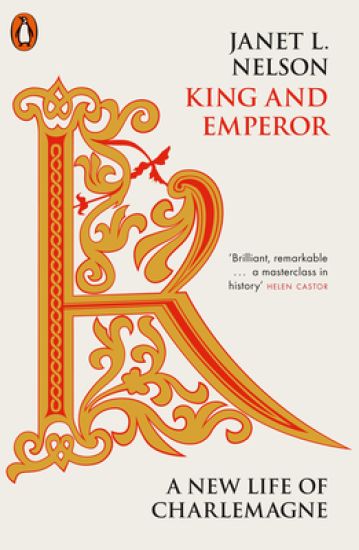
King and Emperor

King and Emperor

Janet L. Nelson

Penguin Books Ltd
2020
pokkari
A DAILY TELEGRAPH AND BBC HISTORY MAGAZINE BOOK OF THE YEAR 2019 'A remarkable book: the dramatic story of a truly extraordinary man ... brilliant' Helen Castor, author of She-Wolves A major new biography of one of the most extraordinary of all rulers, and the father of present-day EuropeCharles, King of the Franks, is one of the most remarkable figures ever to rule a European super-state. That is why he is so often called 'Charles the Great': by the French 'Charlemagne', and by the Germans 'Karl der Grosse'. His strength of character was felt to be remarkable from early in his long reign. Warfare and accident, vermin and weather have destroyed much of the evidence for his rule in the twelve centuries since his death, but a remarkable amount still survives. Janet L. Nelson's wonderful new book brings together everything we know about Charlemagne and sifts through the evidence to come as close as we can to understanding the man and his motives. Nelson has an extraordinary knowledge of the sources and much of the book is a sort of detective story, prying into and interpreting fascinating material and often obdurate scraps, from prayerbooks to skeletons, gossip to artwork. Above all, Charles' legacy lies in his deeds and their continuing resonance, as he shaped duchies and counties, rebuilt and founded towns and monasteries, and consciously set himself up not just as King of the Franks, but as the new 'Emperor governing the Roman Empire'. His successors - in some ways to the present day - have struggled to interpret, misinterpret, copy or subvert Charlemagne's legacy. Nelson gets us as close as we can ever hope to come to the real figure, as understood in his own time.
Rulers and Ruling Families in Early Medieval Europe
First published in 1999, the ideas and practices involved in early medieval royal family politics are the central theme of this collection of papers by Janet L. Nelson. She first examines King Alfred of Wessex (871-99) in the context of Anglo-Saxon conditions and in comparison with his Carolingian contemporaries. When tension and conflict within the royal family are highlighted, she argues that Alfred’s talents and political thought emerge the more impressively. A second group of papers deals with the reign of Charles the Bald (840-77): his patronage of learning and his interest in Spanish martyrs are set in political context, while contemporary historiography is considered as a form of counsel and critique. The third section reflects Nelson’s growing interest in the political importance and gendered roles of royal women. Consecration rites are analysed as ritual expressions and factors in the shaping of the queenship, while two final papers also examine the making and unmaking of Frankish kings and princes.
Rulers and Ruling Families in Early Medieval Europe
First published in 1999, the ideas and practices involved in early medieval royal family politics are the central theme of this collection of papers by Janet L. Nelson. She first examines King Alfred of Wessex (871-99) in the context of Anglo-Saxon conditions and in comparison with his Carolingian contemporaries. When tension and conflict within the royal family are highlighted, she argues that Alfred’s talents and political thought emerge the more impressively. A second group of papers deals with the reign of Charles the Bald (840-77): his patronage of learning and his interest in Spanish martyrs are set in political context, while contemporary historiography is considered as a form of counsel and critique. The third section reflects Nelson’s growing interest in the political importance and gendered roles of royal women. Consecration rites are analysed as ritual expressions and factors in the shaping of the queenship, while two final papers also examine the making and unmaking of Frankish kings and princes.
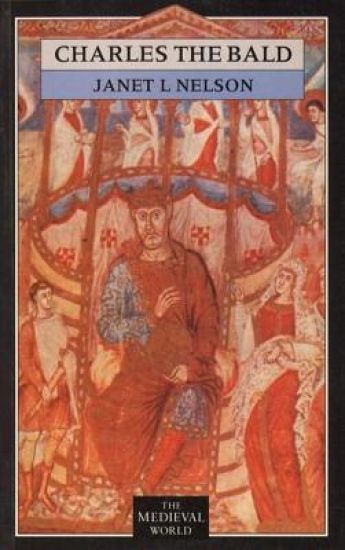
Charles The Bald

Charles The Bald

Janet L. Nelson

Routledge
1992
nidottu
This important and long-awaited study is the first full-scale biography of Charlemagne's grandson, King of the West Franks from 843 to 877, and Emperor from 875. Posterity has not been kind to Charles or his age, seeing him as a fatally weak ruler in decadent times, threatened by Viking invaders and overmighty subjects. Janet Nelson, however, reveals an able and resourceful ruler who, under challenging conditions, maintained and enhanced royal authority, and held together the kingdom that, outlasting the Carolingians themselves, in due course became France.
Courts, Elites, and Gendered Power in the Early Middle Ages

Courts, Elites, and Gendered Power in the Early Middle Ages

Janet L. Nelson

Ashgate Publishing Limited
2007
sidottu
A major theme in the volume of articles by Janet Nelson is the usefulness of gender as a category of historical analysis. Papers range widely across early medieval time and geographical as well as social space, but most focus on the Carolingian period and on royalty and elites. The workings of dynastic political power are viewed in social as well as political context, and the author explores the realities of gendered power, which while constraining women, gave them distinctive possibilities for agency. These papers offer new perspectives on the Carolingian world in general and on Charlemagne's reign in particular.
Rulers and Ruling Families in Early Medieval Europe
The ideas and practices involved in early medieval royal family politics are the central theme of this collection of papers by Janet L. Nelson. She first examines King Alfred of Wessex (871-99) in the context of Anglo-Saxon conditions and in comparison with his Carolingian contemporaries. When tension and conflict within the royal family are highlighted, she argues that Alfred’s talents and political thought emerge the more impressively. A second group of papers deals with the reign of Charles the Bald (840-77): his patronage of learning and his interest in Spanish martyrs are set in political context, while contemporary historiography is considered as a form of counsel and critique. The third section reflects Nelson’s growing interest in the political importance and gendered roles of royal women. Consecration rites are analysed as ritual expressions and factors in the shaping of the queenship, while two final papers also examine the making and unmaking of Frankish kings and princes.
Charles The Bald

Charles The Bald

Janet L. Nelson

Routledge
2016
sidottu
This important and long-awaited study is the first full-scale biography of Charlemagne's grandson, King of the West Franks from 843 to 877, and Emperor from 875. Posterity has not been kind to Charles or his age, seeing him as a fatally weak ruler in decadent times, threatened by Viking invaders and overmighty subjects. Janet Nelson, however, reveals an able and resourceful ruler who, under challenging conditions, maintained and enhanced royal authority, and held together the kingdom that, outlasting the Carolingians themselves, in due course became France.
King and Emperor

King and Emperor

Janet L Nelson

University of California Press
2020
sidottu
"King and Emperor takes on the compelling suspense of good detective work as well as good history."--The Wall Street Journal Charles I, often known as Charlemagne, is one of the most extraordinary figures ever to rule an empire. Driven by unremitting physical energy and intellectual curiosity, he was a man of many parts, a warlord and conqueror, a judge who promised "for each their law and justice," a defender of the Latin Church, a man of flesh and blood. In the twelve centuries since his death, warfare, accident, vermin, and the elements have destroyed much of the writing on his rule, but a remarkable amount has survived. Janet Nelson's wonderful new book brings together everything we know about Charles I, sifting through the available evidence, literary and material, to paint a vivid portrait of the man and his motives. Building on Nelson's own extraordinary knowledge, this biography is a sort of detective story, prying into and interpreting fascinating and often obdurate scraps of evidence, from prayer books to skeletons, gossip to artwork. Charles's legacy lies in his deeds and their continuing resonance, as he shaped counties, countries, and continents; founded and rebuilt towns and monasteries; and consciously set himself up not just as King of the Franks, but as the head of the renewed Roman Empire. His successors--even to the present day--have struggled to interpret, misinterpret, copy, or subvert his legacy. Janet Nelson gets us as close as we can hope to come to the real figure of Charles the man as he was understood in his own time.
King and Emperor

King and Emperor

Janet L Nelson

University of California Press
2021
pokkari
"King and Emperor takes on the compelling suspense of good detective work as well as good history."--The Wall Street Journal Charles I, often known as Charlemagne, is one of the most extraordinary figures ever to rule an empire. Driven by unremitting physical energy and intellectual curiosity, he was a man of many parts, a warlord and conqueror, a judge who promised "for each their law and justice," a defender of the Latin Church, a man of flesh and blood. In the twelve centuries since his death, warfare, accident, vermin, and the elements have destroyed much of the writing on his rule, but a remarkable amount has survived. Janet Nelson's wonderful new book brings together everything we know about Charles I, sifting through the available evidence, literary and material, to paint a vivid portrait of the man and his motives. Building on Nelson's own extraordinary knowledge, this biography is a sort of detective story, prying into and interpreting fascinating and often obdurate scraps of evidence, from prayer books to skeletons, gossip to artwork. Charles's legacy lies in his deeds and their continuing resonance, as he shaped counties, countries, and continents; founded and rebuilt towns and monasteries; and consciously set himself up not just as King of the Franks, but as the head of the renewed Roman Empire. His successors--even to the present day--have struggled to interpret, misinterpret, copy, or subvert his legacy. Janet Nelson gets us as close as we can hope to come to the real figure of Charles the man as he was understood in his own time.
Mammalian Development: Networks, Switches, and Morphogenetic Processes

Mammalian Development: Networks, Switches, and Morphogenetic Processes

Patrick P L Tam; W James Nelson; Janet Rossant

Cold Spring Harbor Laboratory Press,U.S.
2013
sidottu
During the last decade, research in developmental biology has undergone a dramatic change brought about by the availability of whole genome sequences from diverse organisms, the availability of transcriptomes and epigenomes, advanced imaging techniques and the increased understanding of the role of stem cells in organ and tissue development and regeneration. These advances have been integrated with traditional approaches of genetic manipulations and detailed phenotypic analyses in experimental model organisms such as the mouse. This book provides a contemporary overview of the conceptual framework of molecular and cellular mechanisms of mammalian development, and a glimpse into future directions in mammalian developmental biology and its relevance to cellular and tissue therapy. Major areas of focus are transcriptional and epigenetic switches and the activity of genetic networks in cell differentiation, the role of signaling pathways, and tissue modeling and organ formation. Another major focus is on the translation of basic knowledge of developmental processes into stem cell biology, directed differentiation of pluripotent or lineage- biased progenitors, and the potential for regenerative medicine. This book is aimed at senior undergraduates interested in the scope of modern developmental biology, graduate students and post- doctoral fellows who are beginning to explore the mouse as a model system for studying vertebrate development and its relevance to human diseases, and established scientists in fields outside the traditional areas of developmental biology who are looking to apply their knowledge and expertise in new ways.
An Analysis of Janet L. Abu-Lughod's Before European Hegemony
The modern vision of the world as one dominated by one or more superpowers begs the question of how best to understand the world-system that existed before the rise of the first modern powers. Janet Abu-Lughod's solution to this problem, in this highly influential work, is that Before European Hegemony, a predominantly insular, agrarian world was dominated by groups of mercantile city-states that traded with one another on equal terms across a series of interlocking areas of influence. In this reading of history, China and Japan, the kingdoms of India, Muslim caliphates, the Byzantine Empire and European maritime republics alike enjoyed no absolute dominance over their neighbours and commercial partners – and the egalitarian international trading network that they built endured until European advances in weaponry and ship types introduced radical instability to the system. Abu-Lughod's portrait of a more balanced world is a masterpiece of synthesis driven by one highly creative idea: her world system of interlocking spheres of influence quite literally connected masses of evidence together in new ways. A triumph of fine critical thinking.
Before European Hegemony

Before European Hegemony

Janet L. Abu-Lughod

Oxford University Press Inc
1991
nidottu
In this important study, Janet Abu-Lughod presents a groundbreaking reinterpretation of global economic evolution and provides a new paradigm for understanding the evolution of world systems by tracing the rise of a system that, at its peak in the opening decades of the fourteenth century, involved a vast region stretching between northwest Europe and China. Writing in a clear and lively style, Abu-Lughod explores the reasons for the eventual decay of this system and the rise of European hegemony. She concludes with a provocative analysis of our current world economy, suggesting that we may be moving towards a pluralistic world similar in important respects to that of the thirteenth century.
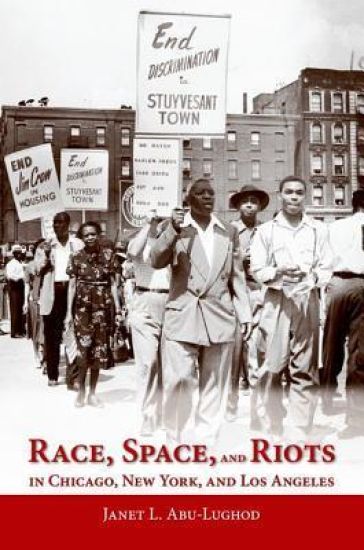
Race, Space, and Riots in Chicago, New York, and Los Angeles

Race, Space, and Riots in Chicago, New York, and Los Angeles

Janet L. Abu-Lughod

Oxford University Press Inc
2007
sidottu
Janet Abu-Lughod for the first time weaves together detailed narratives of major riots with the changing contexts in which they have occurred to show how urban space, political regimes, and economic conditions--not simply an abstract "race conflict"--all structure the nature and extent of urban rebellions. New York's race riots, for instance, have been shorter, more confined, less destructive and less lethal, than those in Chicago and Los Angeles. Abu-Lughod attributes these differences to social diversity, lack of segregation, and a political system that responds to grievances. This book compares six major race riots that occurred in the three largest American metropolitan centers over the course of the twentieth century: in Chicago in 1919 and in 1968; in New York in 1935/1943 and in 1964; and in Los Angeles in 1965 and 1992. Abu-Lughod draws upon archival research, primary and secondary sources, and field work to reconstruct events--especially for the 1964 Harlem riot and Chicago's 1968 riots where no single study currently exists. By focusing on the mechanisms of exclusion and marginalization of African Americans and successful common trends in fostering racial harmony in each city, this work points the way towards alleviating existing and potentially mounting ethnic and racial tensions brought on by globally influenced changes in the economy and demographics of major American cities. Sadly, the author concludes that outbreaks of racial violence may again occur in major urban centers, and foresees a "tectonic" shift from white/black violence to ethnic competition and conflict between poor blacks and incoming Latinos, especially along shared social and physical boundaries.
Just Practice

Just Practice

Janet L. Finn

Oxford University Press Inc
2021
nidottu
Just Practice: A Social Justice Approach to Social Work provides a foundation for critical and creative social work that integrates theory, history, ethics, skills, and rights to respond to the complex terrain of 21st century social work. Just Practice puts the field of social work's expressed commitment to social justice at center stage with a framework that builds upon five key concepts: meaning, context, power, history, and possibility. How do we give meaning to the experiences and conditions that shape our lives? What are the contexts in which those experiences and conditions occur? How do structures and relations of power shape people's lives and the practice of social work? How might a historical perspective help us to grasp the ways in which struggles over meaning and power have played out and to better appreciate the human consequences of those struggles? Taken together, these concepts provide a guide for integrative social work that bridges direct practice and community building. The text prepares readers with the theoretical knowledge and practice skills to address the complex challenges of contemporary social work from direct practice with individuals and families, to group work, organizational and community change, and policy analysis and advocacy. Each chapter includes learning activities, reflection moments, practice examples, and the stories and voices of practitioners and service users to engage students as critical thinkers and practitioners. The author encourages teachers and students alike to take risks, move from safe, familiar, pedagogical spaces and practices, challenge assumptions, and embrace uncertainty.
Oxford Handbook of Medical Statistics

Oxford Handbook of Medical Statistics

Janet L. Peacock; Phil J. Peacock

Oxford University Press
2020
muu
A good understanding of medical statistics is essential to evaluate medical research and to choose appropriate ways of implementing findings in clinical practice. The Oxford Handbook of Medical Statistics has been written to provide doctors and medical students with a comprehensive yet concise account of this often difficult subject. Described by readers as a 'statistical Bible', this new edition maintains the accessibility and thoroughness of the original, and includes comprehensive updates including new sections on transitional medicine, cluster designs, and modern statistical packages. The Handbook promotes understanding and interpretation of statistical methods across a wide range of topics, from study design and sample size considerations, through t- and chi-squared tests, to complex multifactorial analyses, all using examples from published research. References and further reading are included, to allow deeper understanding on specific topics. Featuring a new chapter on how to use this book in different medical contexts, the Oxford Handbook of Medical Statistics helps readers to conduct their own research and critically appraise others' work.
Presenting Medical Statistics from Proposal to Publication

Presenting Medical Statistics from Proposal to Publication

Janet L. Peacock; Sally M. Kerry; Raymond R. Balise

Oxford University Press
2017
nidottu
As many medical and healthcare researchers have a love-hate relationship with statistics, the second edition of this practical reference book may make all the difference. Using practical examples, mainly from the authors' own research, the book explains how to make sense of statistics, turn statistical computer output into coherent information, and help decide which pieces of information to report and how to present them. The book takes you through all the stages of the research process, from the initial research proposal, through ethical approval and data analysis, to reporting on and publishing the findings. Helpful tips and information boxes, offer clear guidance throughout, including easily followed instructions on how to: -develop a quantitative research proposal for ethical/institutional approval or research funding -write up the statistical aspects of a paper for publication -choose and perform simple and more advanced statistical analyses -describe the statistical methods and present the results of an analysis. This new edition covers a wider range of statistical programs - SAS, STATA, R, and SPSS, and shows the commands needed to obtain the analyses and how to present it, whichever program you are using. Each specific example is annotated to indicate other scenarios that can be analysed using the same methods, allowing you to easily transpose the knowledge gained from the book to your own research. The principles of good presentation are also covered in detail, from translating relevant results into suitable extracts, through to randomised controlled trials, and how to present a meta-analysis. An added ingredient is the inclusion of code and datasets for all analyses shown in the book on our website (http://medical-statistics.info). Written by three experienced biostatisticians based in the UK and US, this is a step-by-step guide that will be invaluable to researchers and postgraduate students in medicine, those working in the professions allied to medicine, and statisticians in consultancy roles.
Race, Space, and Riots in Chicago, New York, and Los Angeles

Race, Space, and Riots in Chicago, New York, and Los Angeles

Janet L. Abu-Lughod

Oxford University Press Inc
2012
nidottu
American society has been long plagued by cycles of racial violence, most dramatically in the 1960s when hundreds of ghetto uprisings erupted across American cities. Though the larger, underlying causes of contentious race relations have remained the same, the lethality, intensity, and outcomes of these urban rebellions have varied widely. What accounts for these differences? And what lessons can be learned that might reduce the destructive effects of riots and move race relations forward? This impressive, meticulously detailed study is the first attempt to compare six major race riots that occurred in the three largest American urban areas during the course of the twentieth century: in Chicago in 1919 and 1968; in New York in 1935/1943 and 1964; and in Los Angeles in 1965 and 1992. Race, Space, and Riots in Chicago, New York, and Los Angeles weaves together detailed narratives of each riot, placing them in their changing historical contexts and showing how urban space, political regimes, and economic conditions--not simply an abstract "race conflict"--have structured the nature and extent of urban rebellions. Building on her previous groundbreaking comparative history of these three cities, Janet Abu-Lughod draws upon archival research, primary sources, case studies, and personal observations to reconstruct events--especially for the 1964 Harlem-Bedford Stuyvesant uprising and Chicago's 1968 riots where no documented studies are available. By focusing on the similarities and differences in each city, identifying the unique and persisting issues, and evaluating the ways political leaders, law enforcement, and the local political culture have either defused or exacerbated urban violence, this book points the way toward alleviating long-standing ethnic and racial tensions. A masterful analysis from a renowned urbanist, Race, Space, and Riots in Chicago, New York, and Los Angeles offers a deeper understanding of past--and future--urban race relations while emphasizing that until persistent racial and economic inequalities are meaningfully resolved, the tensions leading to racial violence will continue to exist in America's cities and betray our professed democratic values. "Well researched, clearly written, and even more comprehensive than it claims...offers readers a concise study of twentieth-century urban racial violence in the three selected cities and serves as a good starting point for those interested in researching urban racial violence in more depth."--African American Review "[Abu-Lughod] brings to this new book on riots an enormous amount of knowledge about the economic context of [New York, Chicago, and Los Angeles]...[this book] provide[s] good fodder for debate...[and] contains some provocative commentary and thoughtful discussion of riots, American style."--Political Science Quarterly "Seeks to shed light on the ever changing nature of race relations in American cities and in America at large... The individual chapters on politics, race relations and civil unrest in Chicago, New York, and Los Angeles are masterful, describing the long-term transformations of the each city's spatial, racial, and political character and locating each riot event within those transformative moments... ultimately a rewarding read."--Urban Affairs "In this new book, she [Abu-Lughod] neatly balances the historical facts of each of these cities with a deeply informed interpretation that clearly advances our knowledge of how both large and small riots unfold... rich with evidence and insight... As an urbanist, the author is without parallel when she dissects the U.S. federal effort to address the housing needs of the population."--Anthropological Quarterly "Abu-Lughod should be commended for her scholarly contribution and for drawing attention to these pivotal events as important signs or indicators of "tectonic shifts" (pp. 255, 260) taking place in the racial and political landscape of American cities...As Abu-Lughod convincingly argues, the future of urban areas, and the likelihood of future riots, will indeed depend on how American society chooses to deal with the enduring issues of racial and spatial inequality."--City & Community "Interesting and provocative... Abu-Lughod provides a detailed and compelling analysis of the grim consequences of racism in US society. Well-written and accessible, this book is a "must buy" for all university libraries. Summing Up: Essential."--Choice "Professor Abu-Lughod's well-documented study offers an unbiased historical account of six major American race riots. But this book is so much more... Race, Space, and Riots is not only superb scholarship, it is valuable wisdom on pragmatic strategies to prevent and cope with urban racial unrest."--The Journal of Blacks in Higher Education "Janet Abu-Lughod, a luminary in the field of urban sociology, has published a compelling comparative analysis of twentieth-century race riots in the nations' three largest cities... adroitly synthesizes enormous amounts of historical data from the three cities in question, and her comparative method is illuminating."--H-Net Reviews "With the drama of a storyteller and the rigor of a social scientist, Janet Abu-Lughod bares the institutional underbelly of ethnic conflict in America's three largest cities. She shows how long-standing patterns of repressive policing and unresponsive politicians can drive African Americans to riot--and how efforts at 'containment' have moved to prisons from the streets. This is not just a comparative history of urban conflict, but a call for new national priorities. It should be required reading for all students, teachers, and elected officials."--Sharon Zukin, author of The Cultures of Cities "Marshalling her unparalleled knowledge of the ecology, economy, culture and politics of New York, Los Angeles, and Chicago, Janet Abu-Lughod has produced the first in-depth comparative analysis of the major race riots that rocked America during the sweep of the twentieth century. Construing black-white clashes as 'urban disasters,' she skillfully reveals how the ramifying fissures of caste, class, and power were angled and entangled differently in these three cities. Her historically grounded case comparison invites us to move beyond structural accounts of collective violence to map the varied configurations of time, space, and conflict that cause, dampen, or thwart rioting. A fitting capstone to the lifework of the leading urban scholar of her generation, this bold book will stimulate scholars to revise their models of racial domination and urban protest."--Loic Wacquant, author of Body and Soul and Urban Outcasts "Janet Abu-Lughod, a truly original thinker among urbanists, offers a well-crafted analysis probing decades of riot and rebellion in Chicago, Los Angeles, and New York City. Abu-Lughod provides rich detail on riot contexts and trajectories, traces innovatively critical patterns (riots of control versus riots of rebellion) and explores sagely the racialized ecology and demography of major U.S. uprisings."--Joe R. Feagin, author of Ghetto Revolts and Systemic Racism "This profound examination of race and violence in America's three most important and global urban sites deepens our understanding of how distinctive spatial situations and political cultures affect the expression of discontent. Written by a brilliant scholar of cities, the book's learned comparisons of six racial conflagrations offer a model of engaged and systematic historical social science concerned with the deepest vectors of inequality in the United States."--Ira Katznelson, author of When Affirmative Action Was White "Janet Abu-Lughod's new book provides a superb scholarly study that compares and contrasts race riots through time and across cities. A penetrating look into the causes and consequences of American race riots, Abu-Lughod's study may well jolt readers by her somber conclusion that we should expect future race riots in our major cities, the breeding grounds for past riots, where problems are festering unabated. Abu-Lughod makes clear that if fundamental racial inequalities are not addressed, violent racial confrontations will flare once again, claming lives, destroying property, and sowing seeds of racial hatred that will make the pursuit of the American Dream appear to be pure folly. This is a scientific work that should influence public policy."--Aldon Morris, author of The Origins of the Civil Rights Movement
Zarzuela

Zarzuela

Janet L. Sturman

University of Illinois Press
2000
sidottu
Once a wildly popular form of Spanish entertainment, the zarzuela boasts a long history of bridging classical and popular art. Yet its contradictions make it a theatrical chameleon. Neither opera nor serious drama, the staging still requires trained singers and good actors. Neither purely folkloric nor high art, the music is too popular for some and too classical for others. Janet L. Sturman traces the zarzuela's colorful history from its origins as a Spanish court entertainment to Cuba's pivotal role in transmitting it to Latin America and the Caribbean. Ranging from Argentina, Mexico, and Puerto Rico to El Paso, Miami, and New York, Sturman draws distinctions among the ways various Spanish-speaking communities have reformulated zarzuela by combining the traditional model with local characters, music, dances, and politics. She also explores two theaters in New York, Repertorio Español and the Thalia Spanish Theatre, that have fostered the zarzuela by mounting innovative productions that cultivate both audiences and a network of donors. Vivid and revealing, Zarzuela recognizes the enduring cultural and social relevance of a genre at once resilient, adaptable, and temptingly elusive.