Kirjojen hintavertailu. Mukana 11 244 527 kirjaa ja 12 kauppaa.

Kirjahaku

Etsi kirjoja tekijän nimen, kirjan nimen tai ISBN:n perusteella.

1000 tulosta hakusanalla Janet M. Conway

Edges of Global Justice

Edges of Global Justice

Janet M. Conway

Routledge
2012
sidottu
This book analyzes the World Social Forum (WSF) in a context of crisis and transition in the history of Western capitalist modernity. Based on ten years of fieldwork on three continents, this book treats social movements as knowledge producers. It pays attention to what movements are doing and saying on the terrain of the WSF over time and from place to place, and to how they theorize its significance.Framed by the Latin American modernity-coloniality perspective, the book critically engages with discourses of global civil society, autonomism, and transnational feminism toward a reading of the WSF through the lens of ‘colonial difference’. Each chapter outlines a set of contestations and contributions with relevance beyond debates about the WSF. It will be of strong interest to students and scholars of social movement studies; international politics; post-colonial studies; gender studies; sociology; political theory and social work.
Edges of Global Justice

Edges of Global Justice

Janet M. Conway

Routledge
2013
nidottu
This book analyzes the World Social Forum (WSF) in a context of crisis and transition in the history of Western capitalist modernity. Based on ten years of fieldwork on three continents, this book treats social movements as knowledge producers. It pays attention to what movements are doing and saying on the terrain of the WSF over time and from place to place, and to how they theorize its significance.Framed by the Latin American modernity-coloniality perspective, the book critically engages with discourses of global civil society, autonomism, and transnational feminism toward a reading of the WSF through the lens of ‘colonial difference’. Each chapter outlines a set of contestations and contributions with relevance beyond debates about the WSF. It will be of strong interest to students and scholars of social movement studies; international politics; post-colonial studies; gender studies; sociology; political theory and social work.
Praxis and Politics

Praxis and Politics

Janet M. Conway

Routledge
2010
nidottu
Praxis and Politics explores the knowledge arising from activist praxis and its significance for reimagining radical and democratic politics. It is based on five years of direct involvement in the Toronto-based Metro Network for Social Justice and their work in coalition building, campaign-organizing and 'economic and political literacy' work in the aftermath of the signing of the Canada-US Free Trade Agreement. The book breaks new theoretical and methodological ground in social movement studies in drawing on a wide range of traditions including cultural studies, urban studies, political economy and feminism.
Praxis and Politics

Praxis and Politics

Janet M. Conway

Routledge
2005
sidottu
Praxis and Politics explores the knowledge arising from activist praxis and its significance for reimagining radical and democratic politics. It is based on five years of direct involvement in the Toronto-based Metro Network for Social Justice and their work in coalition building, campaign-organizing and 'economic and political literacy' work in the aftermath of the signing of the Canada-US Free Trade Agreement. The book breaks new theoretical and methodological ground in social movement studies in drawing on a wide range of traditions including cultural studies, urban studies, political economy and feminism.
Identity, Place, Knowledge

Identity, Place, Knowledge

Janet M. Conway

Fernwood Publishing Co Ltd
2004
nidottu
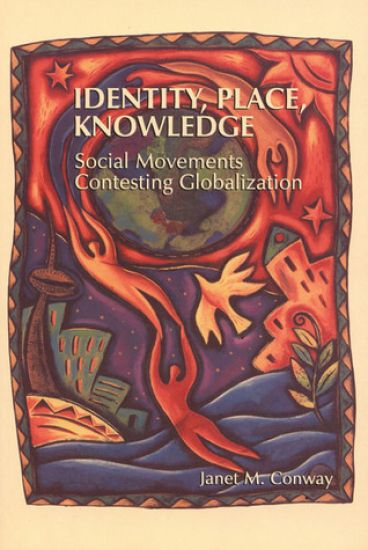
Coalition formation, broad-based campaign organizing, and activist education are among the methods discussed in this practical text for grassroots organizations attempting to advance their goals. The execution of social movements on a day-to-day basis is explained with attention to how social justice organizations struggle because many of the groups are disparate and poorly organized. The specific experiences of a leader of the Metro Network for Social Justice in Toronto are analyzed in detail to provide a practical discusssion of the key challenges facing social organizations: representation structures, decision making, democratic governance, and power in activist politics. The application of these issues illustrates methods and best practices for social change in other similar organizations.
Janet M'Laren

Janet M'Laren

William H G Kingston

Hansebooks
2017
pokkari
Janet M'Laren - Or, The Faithful Nurse is an unchanged, high-quality reprint of the original edition of 1873. Hansebooks is editor of the literature on different topic areas such as research and science, travel and expeditions, cooking and nutrition, medicine, and other genres. As a publisher we focus on the preservation of historical literature. Many works of historical writers and scientists are available today as antiques only. Hansebooks newly publishes these books and contributes to the preservation of literature which has become rare and historical knowledge for the future.
The Gospel of Kindness

The Gospel of Kindness

Janet M. Davis

Oxford University Press Inc
2020
nidottu
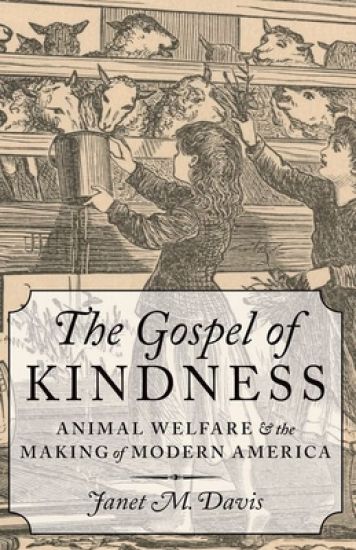
When we consider modern American animal advocacy, we often think of veganism, no-kill shelters, Internet campaigns against trophy hunting, or celebrities declaring that they would "rather go naked" than wear fur. Contemporary critics readily dismiss animal protectionism as a modern secular movement that privileges animals over people. Yet the movement's roots are deeply tied to the nation's history of religious revivalism and social reform. In The Gospel of Kindness, Janet M. Davis explores the broad cultural and social influence of the American animal welfare movement at home and overseas from the Second Great Awakening to the Second World War. Dedicated primarily to laboring animals at its inception in an animal-powered world, the movement eventually included virtually all areas of human and animal interaction. Embracing animals as brethren through biblical concepts of stewardship, a diverse coalition of temperance groups, teachers, Protestant missionaries, religious leaders, civil rights activists, policy makers, and anti-imperialists forged an expansive transnational "gospel of kindness," which defined animal mercy as a signature American value. Their interpretation of this "gospel" extended beyond the New Testament to preach kindness as a secular and spiritual truth. As a cultural product of antebellum revivalism, reform, and the rights revolution of the Civil War era, animal kindness became a barometer of free moral agency, higher civilization, and assimilation. Yet given the cultural, economic, racial, and ethnic diversity of the United States, its empire, and other countries of contact, standards of kindness and cruelty were culturally contingent and potentially controversial. Diverse constituents defended specific animal practices, such as cockfighting, bullfighting, songbird consumption, and kosher slaughter, as inviolate cultural traditions that reinforced their right to self-determination. Ultimately, American animal advocacy became a powerful humanitarian ideal, a touchstone of inclusion and national belonging at home and abroad that endures to this day.
The Gospel of Kindness

The Gospel of Kindness

Janet M. Davis

Oxford University Press Inc
2016
sidottu
When we consider modern American animal advocacy, we often think of veganism, no-kill shelters, Internet campaigns against trophy hunting, or celebrities declaring that they would "rather go naked" than wear fur. Contemporary critics readily dismiss animal protectionism as a modern secular movement that privileges animals over people. Yet the movement's roots are deeply tied to the nation's history of religious revivalism and social reform. The Gospel of Kindness explores the broad cultural and social influence of the American animal welfare movement at home and overseas from the Second Great Awakening to the Second World War. Dedicated primarily to laboring animals at its inception in an animal-powered world, the movement eventually included virtually all areas of human and animal interaction. Embracing animals as brethren through biblical concepts of stewardship, a diverse coalition of temperance groups, teachers, Protestant missionaries, religious leaders, civil rights activists, policy makers, and anti-imperialists forged an expansive transnational "gospel of kindness," which defined animal mercy as a signature American value. Their interpretation of this "gospel" extended beyond the New Testament to preach kindness as a secular and spiritual truth. As a cultural product of antebellum revivalism, reform, and the rights revolution of the Civil War era, animal kindness became a barometer of free moral agency, higher civilization, and assimilation. Yet given the cultural, economic, racial, and ethnic diversity of the United States, its empire, and other countries of contact, standards of kindness and cruelty were culturally contingent and potentially controversial. Diverse constituents defended specific animal practices, such as cockfighting, bullfighting, songbird consumption, and kosher slaughter, as inviolate cultural traditions that reinforced their right to self-determination. Ultimately, American animal advocacy became a powerful humanitarian ideal, a barometer of inclusion and national belonging at home and abroad that endures to this day.
Russia, 1762-1825

Russia, 1762-1825

Janet M. Hartley

Praeger Publishers Inc
2008
sidottu
A study of the Russian Empire at the peak of its military power and success (1762-1825), this important book examines how a country with none of the obvious trappings of modernization was able to significantly expand its territory. Russia's military and naval victories culminated in the triumphal entrance of Russian forces into Paris in 1814 in celebration of the defeat of Napoleon. Hartley's treatment is wide-ranging and discusses many aspects of the nature of the Russian state and society-not merely issues such as recruitment, but also institutional, legal, and fiscal structures of the state, the unique nature of Russian industrialization and social organization at the urban and village level, as well as the impact on cultural life. She covers the reign of two of Russia's most prominent rulers: Catherine II (1762-1796) and Alexander I (1801-25).How could a country lacking modernized structures-political, institutional, social, fiscal, economic, industrial, and cultural-sustain this level of military effort and support the largest standing army in Europe? What impact did the strain of this commitment of men and money, including the invasion of 1812, have on the state and society-particularly on those who were either conscripted or the dependents they left behind? Despite the success of the Russian state, by 1825 the strains would become almost unsustainable.
Blossoms on the Olive Tree

Blossoms on the Olive Tree

Janet M. Powers

Praeger Publishers Inc
2006
sidottu
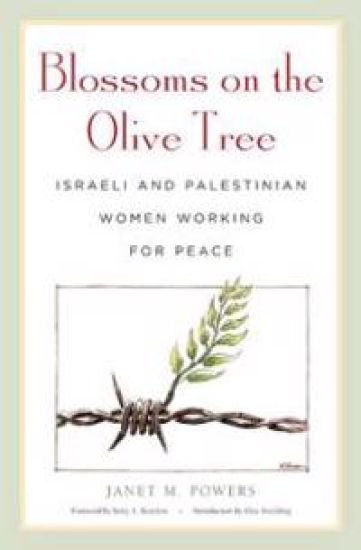
Blossoms on the Olive Tree is an American woman's account of work that Israeli and Palestinian women are doing to educate themselves and their societies about militarization, human rights, women's rights, and the democratic process. The book highlights women on both sides of the political divide who reach out to each other, engage in bi-national dialogue, and challenge ongoing violence.Blossoms on the Olive Tree is an American woman's account of work that Israeli and Palestinian women are doing to educate themselves and their societies about militarization, human rights, women's rights, and the democratic process. The book highlights women on both sides of the political divide who reach out to each other, engage in bi-national dialogue, and challenge ongoing violence. Despite severe societal restraints in carving out political space for themselves, women in both societies have devised creative opportunities. Powers documents the women's working committees attached to Palestinian political parties and the creativity of Israeli women striving to civil-ize their society. Ironically, it is their marginalization that offers women space to engage in their peace-building efforts. The book ends with a clarion call for the implementation of UN Resolution 1325, which requires the presences of women at the highest levels of peace negotiations. Women, with their commitment to reconciliation and healing, bring a significant vision to the enterprise of peace-building, and Powers suggests that it's high time they be taken seriously.In the course of researching this book, Powers stayed in Jewish homes, Muslim homes, and Christian homes, observing women going about their daily tasks. She shared Shabbat dinners and Christmas dinners, Muslim family celebrations, herbal tea and Arab coffee, benefiting from extraordinary hospitality, and learning that Israeli and Palestinian are more alike than they are different. Like women everywhere, Jewish and Arab women care deeply for their children, put up with anger and abuse from their husbands, and try to negotiate a path between societal expectations and personal convictions. Virtually all of them yearn to live in peace, to raise their families without fear, and to enjoy the small pleasures of life without anxiety for the future. These are their stories, and they impart a measure of humanity to the occupation, the Separation Wall, and living with the fear of suicide bombings that is difficult to glean from nightly news reports. Most important, these remarkable women are succeeding in changing from within the way in which their own societies think about themselves.
The Wanano Indians of the Brazilian Amazon

The Wanano Indians of the Brazilian Amazon

Janet M. Chernela

University of Texas Press
1996
pokkari
The Wanano Indians of the northwest Amazon have a social system that differs from those of most tropical forest tribes. Neither stratified by wealth nor strictly egalitarian, Wanano society is "ranked" according to rigidly bound descent groups. In this pioneering ethnographic study, Janet M. Chernela decodes the structure of Wanano society.In Wanano culture, children can be "grandparents," while elders can be "grandchildren." This apparent contradiction springs from the fact that descent from ranked ancestors, rather than age or accumulated wealth, determines one's standing in Wanano society. But ranking's impulse is muted as senior clans, considered to be succulent (referring to both seniority and resource abundance), must be generous gift-givers. In this way, resources are distributed throughout the society.In two poignant chapters aptly entitled "Ordinary Dramas," Chernela shows that rank is a site of contest, resulting in exile, feuding, personal shame, and even death. Thus, Chernela's account is dynamic, placing rank in historic as well as personal context.As the deforestation of the Amazon continues, the Wanano and other indigenous peoples face growing threats of habitat destruction and eventual extinction. If these peoples are to be saved, they must first be known and valued. The Wanano Indians of the Brazilian Amazon is an important step in that direction.
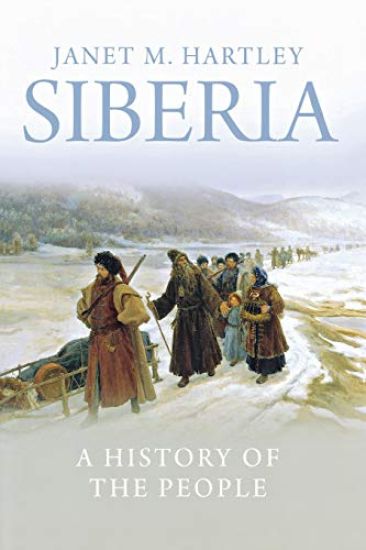
Siberia

Siberia

Janet M. Hartley

Yale University Press
2018
pokkari
Larger in area than the United States and Europe combined, Siberia is a land of extremes, not merely in terms of climate and expanse, but in the many kinds of lives its population has led over the course of four centuries. Janet M. Hartley explores the history of this vast Russian wasteland—whose very name is a common euphemism for remote bleakness and exile—through the lives of the people who settled there, either willingly, desperately, or as prisoners condemned to exile or forced labor in mines or the gulag. From the Cossack adventurers’ first incursions into “Sibir” in the late sixteenth century to the exiled criminals and political prisoners of the Soviet era to present-day impoverished Russians and entrepreneurs seeking opportunities in the oil-rich north, Hartley’s comprehensive history offers a vibrant, profoundly human account of Siberia’s development. One of the world’s most inhospitable regions is humanized through personal narratives and colorful case studies as ordinary—and extraordinary—everyday life in “the nothingness” is presented in rich and fascinating detail.
The Volga

The Volga

Janet M. Hartley

YALE UNIVERSITY PRESS
2022
pokkari
A rich and fascinating exploration of the Volga River and its vital place in Russian history—named a Best Book of 2021 by the Financial Times “A memorable journey into the heart of Russian social, political, and cultural history.”—Jennifer Eremeeva, Moscow Times “‘Without the Volga, there would be no Russia.’ The final words of Janet Hartley’s book sound sweeping. But its 400 pages make the case powerfully.”—The Economist The longest river in Europe, the Volga stretches more than three and a half thousand km from the heart of Russia to the Caspian Sea, separating west from east. The river has played a crucial role in the history of the peoples who are now a part of the Russian Federation—and has united and divided the land through which it flows. Janet Hartley explores the history of Russia through the Volga from the seventh century to the present day. She looks at it as an artery for trade and as a testing ground for the Russian Empire’s control of the borderlands, at how it featured in Russian literature and art, and how it was crucial for the outcome of the Second World War at Stalingrad. This vibrant account unearths what life on the river was really like, telling the story of its diverse people and its vital place in Russian history.
Kites over the Mango Tree

Kites over the Mango Tree

Janet M. Powers

Praeger Publishers Inc
2008
sidottu
Hindu nationalists in the west Indian state of Gujarat repudiate the pluralist vision of Gandhi and Nehru and foment state-sponsored violence and ethnic cleansing against Muslims and Christians. In 2002, the burning to death of 59 rightwing Hindu militants in a train in Gujarat set off waves of state-condoned communal riots in which as many as 2,000 predominantly Muslim Gujaratis were murdered and 200,000 made homeless. In the wake of these atrocities, secular peace-building organizations have redoubled their efforts to heal the rift between Hindus and Muslims in Gujarat. A certified mediator, Janet Powers bases her book on interviews with workers in twenty of these peace-building NGOs and grassroots peace organizations, which are locked in struggle with politicized Hindu religious organizations largely funded by money raised in the United States. This is the first book to examine Hindu-Muslim relations in Gujarat in the frame of ongoing peace and conflict resolution efforts. Gujarat is the state of origin of most of the entrepreneurial Indians who own motels, convenience stores, and gas stations in the United States and United Kingdom. Much of the funding for the rightwing Hindu parties that foment extremist violence, ethnic cleansing, and re-conversion campaigns against the Muslim and Christian minorities in Gujarat comes from Gujarati expatriates in the U.S. and UK. Gujarat is the home of Mahatma Gandhi, who was assassinated in 1948 by an agent of the RSS, a violently anti-Muslim Hindu nationalist organization that flourishes today in Gujarat in virulent association with the ruling BJP and VHP parties. Equally dangerous to the peace of Gujarat are violent Wahhabist organizations based in Pakistan but operating in India. Powers assesses the prospects for long-term healing in Gujarat based on historical precedents, and she applies the lessons of Gujarati grassroots peace-building organizations in Gujarat to zones of state-sponsored religious conflict in other parts of the world.
Poincaré and the Philosophy of Mathematics

Poincaré and the Philosophy of Mathematics

Janet M. Folina

Palgrave Macmillan
1992
sidottu
This book is a sympathetic reconstruction of Henri Poincar's anti-realist philosophy of mathematics. Although Poincar is recognized as the greatest mathematician of the late 19th century, his contribution to the philosophy of mathematics is not highly regarded. Many regard his remarks as idiosyncratic, and based upon a misunderstanding of logic and logicism. This book argues that Poincar's critiques are not based on misunderstanding; rather, they are grounded in a coherent and attractive foundation of neo-Kantian constructivism.
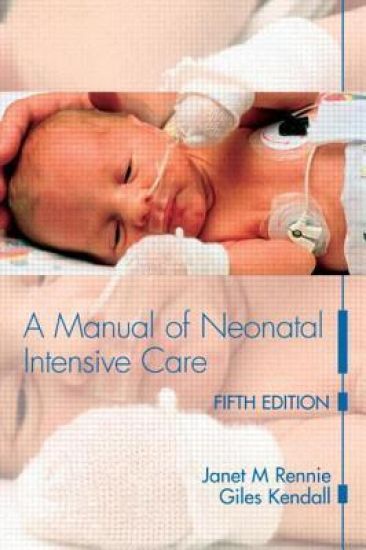
A Manual of Neonatal Intensive Care

A Manual of Neonatal Intensive Care

Janet M Rennie; Giles Kendall

Hodder Arnold
2013
nidottu
Highly Commended, BMA Medical Book Awards 2014The fifth edition of this highly successful and well-regarded book continues to provide those working in neonatal intensive care units with precise instructions on the diagnosis and management of common neonatal problems. This edition has been extensively updated and revised, while retaining the background physiology, key references, and diagrams that made previous editions so successful. Several new chapters have been added, including the subjects of fetal medicine, antenatal diagnosis, and obstetrics for the neonatologist. Using a clear, accessible style, this edition features discussions of evidence-based medicine and the introduction of additional easy-to-digest lists. The text has been made more internationally applicable, including a re-focus of the chapter on organization of neonatal care away from UK-specific admission criteria and more towards general reasons for admitting a baby to the intensive care ward.A Manual for Neonatal Intensive Care provides invaluable guidance for trainees in pediatrics, neonatology, and neonatal nursing and forms a useful ready-reference for the practicing pediatrician and nurse.
Endangered Spaces, Enduring Places

Endangered Spaces, Enduring Places

Janet M. Fitchen

Routledge
2019
sidottu
Rural America as a place and a way of life is undergoing major transformation. The farm crisis and the decline of manufacturing dealt a double blow to the rural economy in the 1980s. Rural communities continue to lose farms, factories, and young people. Rural lands are increasingly being sought as places for vacation homes, state prisons, and waste dumps. Rural people are ambivalent about new residents and activities that are coming in and unsure of their own rural identity. Old assumptions about rural life and rural community are now open to question. Based on years of field observations and hundreds of interviews in fifteen rural counties in upstate New York, Fitchen's book explores these interconnected changes. It describes the financial stress in dairy farming and the efforts families made to hold onto their farms. It records the stunned disbelief and difficult adjustment of rural factory workers and small communities as local plants shut down. The author chronicles the struggles of communities plagued by toxic chemicals in their drinking water and of young families slipping farther into poverty. She reports on some communities that are campaigning to "win" a state prison and others that are protesting against a proposed radioactive waste dump. The book illustrates the persistence of rural ingenuity and determination but argues that these alone cannot solve the problems of rural America. A well-informed federal and state commitment is necessary. With policies and programs appropriate for rural situations, most communities could adapt creatively to the changes, integrate around a new rural identity, and survive into the twenty-first century as enduring social settings for their residents.