Kirjahaku
Etsi kirjoja tekijän nimen, kirjan nimen tai ISBN:n perusteella.
1000 tulosta hakusanalla Jay D Evans
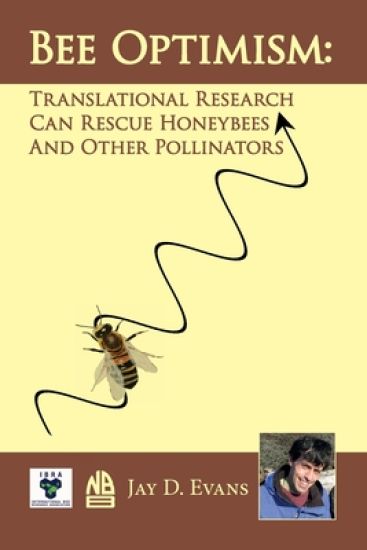
The title of this book reveals all: Jay Evans approaches science and life with clarity and optimism. Every essay in this book is concise yet funny, and rich in content. Each cleverly-worded chapter uncovers exciting findings from complicated research. Some topics covered in these 34 short essays include how bees' fat bodies may hold clues to new mite control strategies (the "Fats Domino Effect"), an aerial view of helicopter beekeepers and burned out foragers, why bees drink dirty water, chasmogamy in soybeans, "trait rot", genetic signatures described as chords composed of eight genetic notes, and winter bees as the third worker form. The essay "Magic Bullets for Mites" is a great example of Jay's ability to communicate complex topics with compelling, accessible prose. Even though he muses that "we are attempting to manage a social organism that is affected by rules we do not yet fully understand" Jay remains firmly rooted in the #Beeoptimism movement: for his scientific mind, the unknown is full of possibilities. I thoroughly enjoyed this book and devoured it in one sitting, although I recommend savoring it more slowly.Marla SpivakSt. Paul, Minnesota
The title of this book reveals all: Jay Evans approaches science and life with clarity and optimism. Every essay in this book is concise yet funny, and rich in content. Each cleverly-worded chapter uncovers exciting findings from complicated research. Some topics covered in these 34 short essays include how bees' fat bodies may hold clues to new mite control strategies (the "Fats Domino Effect"), an aerial view of helicopter beekeepers and burned out foragers, why bees drink dirty water, chasmogasmy in soybeans, "trait rot", genetic signatures described as chords composed of eight genetic notes, and winter bees as the third worker form. The essay "Magic Bullets for Mites" is a great example of Jay's ability to communicate complex topics with compelling, accessible prose.Even though he muses that "we are attempting to manage a social organism that is affected by rules we do not yet fully understand" Jay remains firmly rooted in the #Beeoptimism movement: for his scientific mind, the unknown is full of possibilities. I thoroughly enjoyed this book and devoured it in one sitting, although I recommend savoring it more slowly.This title is also available in softback
Auditory System
Moshe Abeles; Göran Bredberg; Robert A. Butler; John H. Casseday; John E. Desmedt; Irving T. Diamond; Solomon D. Erulkar; E. F. Evans; Jay M. Goldberg; Moise H. Goldstein; David M. Green; Ivan M. Hunter-Duvar; Lloyd A. Jeffress; William D. Neff; William A. Yost; E. Zwicker
Springer-Verlag Berlin and Heidelberg GmbH Co. K
2011
nidottu
nerve; subsequently, however, they concluded that the recordings had been from aberrant cells of the cochlear nucleus lying central to the glial margin of the VIII nerve (GALAMBOS and DAVIS, 1948). The first successful recordmgs from fibres of the cochlear nerve were made by TASAKI (1954) in the guinea pig. These classical but necessarily limited results were greatly extended by ROSE, GALAMBOS, and HUGHES (1959) in the cat cochlear nucleus and by KATSUKI and co-workers (KATSUKI et at. , 1958, 1961, 1962) in the cat and monkey cochlear nerve. Perhaps the most significant developments have been the introduction of techniques for precise control of the acoustic stimulus and the quantitative analysis of neuronal response patterns, notably by the laboratories of KIANG (e. g. GERSTEIN and KIANG, 1960; KIANG et at. , 1962b, 1965a, 1967) and ROSE (e. g. ROSE et at. , 1967; HIND et at. , 1967). These developments have made possible a large number of quanti tative investigations of the behaviour of representative numbers of neurons at these levels of the peripheral auditory system under a wide variety of stimulus conditions. Most of the findings discussed herein have been obtained on anaesthetized cats. Where comparative data are available, substantially similar results have been obtained in other mammalian species (e. g. guinea pig, monkey, rat). Certain significant differences have been noted in lizards, frogs and fish as would be expect ed from the different morphologies of their organs of hearing (e. g.
Raynaud's Phenomenon is an auto-immune disorder which causes poor circulation in the digits and may affect up to 10% of all women. It is characterized by episodic blanching or cyanosis of one or more digits on exposure to cold; the phenomenon may occur with or without an underlying disease. This monograph presents the most up-to-date knowledge concerning Raynaud's Phenomenon, both as a primary disease and as the secondary result of an underlying disease, drug therapy or occupational exposure. The book reviews anatomy, physiology, the clinical picture, prevalance of the disease, diagnosis, prognosis, physiology and pathophysiology, and treatment.
This text for bioengineering students taking a course on cardiovascular solid mechanics or soft tissue biomechanics focuses on the response of the heart and arteries to mechanical loads from the perspective of nonlinear solid mechanics.
After September 11, with New Yorkers reeling from the World Trade Center attack, Chief Medical Examiner Charles Hirsch proclaimed that his staff would do more than confirm the identity of the individuals who were killed. They would attempt to identify and return to families every human body part recovered from the site that was larger than a thumbnail. As Jay D. Aronson shows, delivering on that promise proved to be a monumentally difficult task. Only 293 bodies were found intact. The rest would be painstakingly collected in 21,900 bits and pieces scattered throughout the skyscrapers’ debris.This massive effort—the most costly forensic investigation in U.S. history—was intended to provide families conclusive knowledge about the deaths of loved ones. But it was also undertaken to demonstrate that Americans were dramatically different from the terrorists who so callously disregarded the value of human life.Bringing a new perspective to the worst terrorist attack in U.S. history, Who Owns the Dead? tells the story of the recovery, identification, and memorialization of the 2,753 people killed in Manhattan on 9/11. For a host of cultural and political reasons that Aronson unpacks, this process has generated endless debate, from contestation of the commercial redevelopment of the site to lingering controversies over the storage of unclaimed remains at the National 9/11 Memorial and Museum. The memory of the victims has also been used to justify military activities in the Middle East that have led to the deaths of an untold number of innocent civilians.
The chapters in this latest edition of China Briefing reflect broadly on China's transformation in the twentieth century. The authors not only examine developments in China over the 1997-1999 period, but also place these events in a wider historical perspective by addressing the following questions: Where has China traveled over the course of the century? To what extent has it been transformed, and how? What are the enduring themes or points of continuity, even during a century of great change and transformation? And what are China's prospects for the future?
This first-of-its-kind survey covers both the basics of information technology and the managerial and political issues surrounding the use of these technologies. Unlike other works on information systems, this book is written specifically for the public sector and addresses unique public sector issues and concerns. The technical basics are explained in clear English with as little technical jargon as possible so that readers can move on to informed analysis of the public policy issues surrounding government's use of MIS. This practical tool includes end of chapter summaries with bridges to upcoming chapters, numerous boxed exhibits, thorough end-of-chapter notes and a bibliography for further reading.
Holy Hullabaloos: A Road Trip to the Battlegrounds of the Church/State Wars
Jay D. Wexler
BEACON PRESS
2009
nidottu
After ten years spent riddling over the intricacies of church/state law from the ivory tower, law professor Jay Wexler decided it was high time to hit the road to learn what really happened in some of the most controversial Supreme Court cases involving this hot-button issue. In Holy Hullabaloos, he takes us along for the ride, crossing the country to meet the people and visit the places responsible for landmark decisions in recent judicial history, from a high school football field where fans once recited prayers before kickoff to a Santeria church notorious for animal sacrifice, from a publicly funded Muslim school to a creationist museum. Wexler's no-holds-barred approach to investigating famous church/state brouhahas is as funny as it is informative.
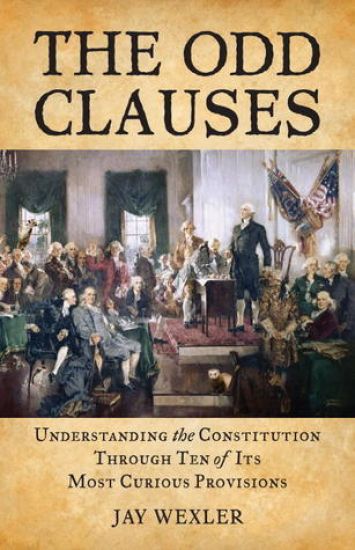
The Odd Clauses: Understanding the Constitution through Ten of Its Most Curious Provisions
Jay D. Wexler
BEACON PRESS
2012
nidottu
An innovative, insightful, often humorous look at the Constitution''s lesser-known clauses, offering a fresh perspective on the document's relevance today For a variety of reasons, many of the Constitution's more obscure passages never make it to any court and therefore never make headlines or even law school classrooms, which teach from judicial decisions. In this captivating and witty book, Jay Wexler draws on his extensive professional and educational backgrounds in constitutional law to demonstrate how these "odd clauses" have incredible relevance to our lives, our government's structure, and the integrity of our democracy.
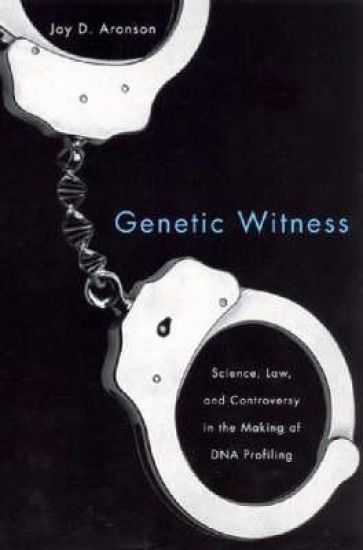
When DNA profiling was first introduced into the American legal system in 1987, it was heralded as a technology that would revolutionize law enforcement. As an investigative tool, it has lived up to much of this hype—it is regularly used to track down unknown criminals, put murderers and rapists behind bars, and exonerate the innocent. Yet, this promise took ten turbulent years to be fulfilled. In Genetic Witness, Jay D. Aronson uncovers the dramatic early history of DNA profiling that has been obscured by the technique’s recent success. He demonstrates that robust quality control and quality assurance measures were initially nonexistent, interpretation of test results was based more on assumption than empirical evidence, and the technique was susceptible to error at every stage. Most of these issues came to light only through defense challenges to what prosecutors claimed to be an infallible technology. Although this process was fraught with controversy, inefficiency, and personal antagonism, the quality of DNA evidence improved dramatically as a result. Aronson argues, however, that the dream of a perfect identification technology remains unrealized.
The Chinese State in the Era of Economic Reform : the Road to Crisis: Asia and the Pacific
Jay D. White
M.E. Sharpe
1991
sidottu
Presents ten tales featuring Lord Bau, a wise judge who was a champion of righteousness and protector of the weak against the powerful.
The logic of research in public administration, argues Jay D. White, may be more like that of storytelling than of conventional social science research. In "Taking Language Seriously", he examines the linguistic, discursive, and narrative foundations of public administration research and develops a narrative theory of knowledge development and use for the field. White builds his case for this narrative theory by showing how research on complex problems is grounded in language and discourse. He then explains how a variety of recent developments in philosophy and the humanities - positivism, postpositivism, hermeneutics, critical and legal theory, postmodernism, and poststructuralism - can contribute to our understanding of public administration research. Focusing on the logical structures of three modes of research - explanatory, interpretive, and critical - White shows how each is equally legitimate, depending on the nature of the research questions. This comprehensive yet clear discussion of the philosophical foundations of research in public administration advances an alternative theory of knowledge development that will be valuable for everyone in fields seeking to affect social, political, economic, and organizational change.
Busted! The Big Con: How the Media, Politicians, and Wall Street's Game of Charades Are Destroying Our Country
Jay D. Glass Ph. D.
Donington Press
2011
nidottu
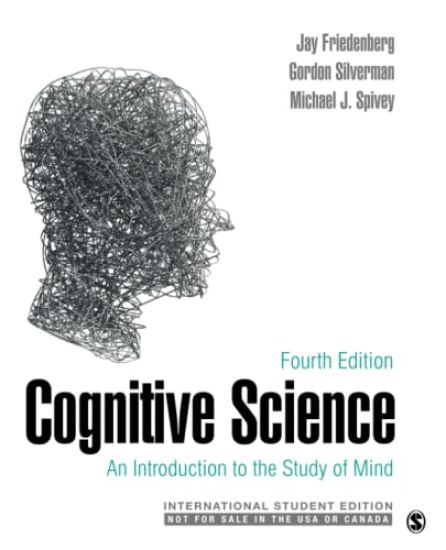
Cognitive Science - International Student Edition
Jay D. Friedenberg; Gordon W. Silverman; Michael J. Spivey
SAGE PUBLICATIONS INC
2021
nidottu
Cognitive Science provides a comprehensive and up-to-date introduction to the study of the mind. The authors examine the mind from the perspective of different fields, including philosophy, psychology, neuroscience, networks, evolution, emotional and social cognition, linguistics, artificial intelligence, robotics, and the new framework of embodied cognition. Each chapter focuses on a particular disciplinary approach and explores methodologies, theories, and empirical findings. Substantially updated with new and expanded content, the Fourth Edition reflects the latest research in this rapidly evolving field.