Kirjahaku
Etsi kirjoja tekijän nimen, kirjan nimen tai ISBN:n perusteella.
1000 tulosta hakusanalla Jay David Atlas
This fresh look at the philosophy of language focuses on the interface between a theory of literal meaning and pragmatics--a philosophical examination of the relationship between meaning and language use and its contexts. Here, Atlas develops the contrast between verbal ambiguity and verbal generality, works out a detailed theory of conversational inference using the work of Paul Grice on Implicature as a starting point, and gives an account of their interface as an example of the relationship between Chomsky's Internalist Semantics and Language Performance. Atlas then discusses consequences of his theory of the Interface for the distinction between metaphorical and literal language, for Grice's account of meaning, for the Analytic/Synthetic distinction, for Meaning Holism, and for Formal Semantics of Natural Language. This book makes an important contribution to the philosophy of language and will appeal to philosophers, linguists, and cognitive scientists.
In this book, a set of problems which overlap philosophy, linguistics, cognitive psychology, and artificial intelligence are examined from the point of view of Chomsky's linguistics. The author uses linguistic analysis to shed new light on the philosophical and logical problems of meaning, ambiguity, truth, falsity, negation and existence. He shows that visual and verbal symbols have ways of meaning in common.
Enzo was a busy little boy who simply couldn't settle down at bedtime. In his mind, there was a never-ending list of things that just HAD to be done before he could drift off to dreamland. Each task was as crucial as the next Despite knowing his mummy might not be thrilled to see his extensive bedtime to-do list, Enzo decided to explain why each item was of utmost importance. Would mummy understand, or would she insist that sleep come first? Join Enzo on his quest to tackle his bedtime tasks as he tries to convince mummy that staying awake is the only way. Will he complete everything, or will mummy help him embrace the magic of a good night's sleep? Follow Enzo as he tries his best to explain to mummy why he CAN'T SLEEP
How the creative abundance of today's media culture was made possible by the decline of elitism in the arts and the rise of digital media.Media culture today encompasses a universe of forms-websites, video games, blogs, books, films, television and radio programs, magazines, and more-and a multitude of practices that include making, remixing, sharing, and critiquing. This multiplicity is so vast that it cannot be comprehended as a whole. In this book, Jay David Bolter traces the roots of our media multiverse to two developments in the second half of the twentieth century: the decline of elite art and the rise of digital media. Bolter explains that we no longer have a collective belief in "Culture with a capital C." The hierarchies that ranked, for example, classical music as more important than pop, literary novels as more worthy than comic books, and television and movies as unserious have broken down. The art formerly known as high takes its place in the media plenitude. The elite culture of the twentieth century has left its mark on our current media landscape in the form of what Bolter calls "popular modernism." Meanwhile, new forms of digital media have emerged and magnified these changes, offering new platforms for communication and expression.Bolter outlines a series of dichotomies that characterize our current media culture: catharsis and flow, the continuous rhythm of digital experience; remix (fueled by the internet's vast resources for sampling and mixing) and originality; history (not replayable) and simulation (endlessly replayable); and social media and coherent politics.
A new framework for considering how all media constantly borrow from and refashion other media.Media critics remain captivated by the modernist myth of the new: they assume that digital technologies such as the World Wide Web, virtual reality, and computer graphics must divorce themselves from earlier media for a new set of aesthetic and cultural principles. In this richly illustrated study, Jay David Bolter and Richard Grusin offer a theory of mediation for our digital age that challenges this assumption. They argue that new visual media achieve their cultural significance precisely by paying homage to, rivaling, and refashioning such earlier media as perspective painting, photography, film, and television. They call this process of refashioning "remediation," and they note that earlier media have also refashioned one another: photography remediated painting, film remediated stage production and photography, and television remediated film, vaudeville, and radio.
The experience of digital art and how it is relevant to information technology.In Windows and Mirrors: Interaction Design, Digital Art, and the Myth of Transparency, Jay David Bolter and Diane Gromala argue that, contrary to Donald Norman's famous dictum, we do not always want our computers to be invisible "information appliances." They say that a computer does not feel like a toaster or a vacuum cleaner; it feels like a medium that is now taking its place beside other media like printing, film, radio, and television. The computer as medium creates new forms and genres for artists and designers; Bolter and Gromala want to show what digital art has to offer to Web designers, education technologists, graphic artists, interface designers, HCI experts, and, for that matter, anyone interested in the cultural implications of the digital revolution.In the early 1990s, the World Wide Web began to shift from purely verbal representation to an experience for the user in which form and content were thoroughly integrated. Designers brought their skills and sensibilities to the Web, as well as a belief that a message was communicated through interplay of words and images. Bolter and Gromala argue that invisibility or transparency is only half the story; the goal of digital design is to establish a rhythm between transparency-made possible by mastery of techniques-and reflection-as the medium itself helps us understand our experience of it.The book examines recent works of digital art from the Art Gallery at SIGGRAPH 2000. These works, and their inclusion in an important computer conference, show that digital art is relevant to technologists. In fact, digital art can be considered the purest form of experimental design; the examples in this book show that design need not deliver information and then erase itself from our consciousness but can engage us in an interactive experience of form and content.
This second edition of Jay David Bolter's classic text expands on the objectives of the original volume, illustrating the relationship of print to new media, and examining how hypertext and other forms of electronic writing refashion or "remediate" the forms and genres of print. Reflecting the dynamic changes in electronic technology since the first edition, this revision incorporates the Web and other current standards of electronic writing. As a text for students in composition, new technologies, information studies, and related areas, this volume provides a unique examination of the computer as a technology for reading and writing.
Controlling Voices
TyAnna K. Herrington; Jay David Bolter
Southern Illinois University Press
2001
nidottu
TyAnna K. Herrington explains current intellectual property law and examines the effect of the Internet and ideological power on its interpretation. Promoting a balanced development of our national culture, she advocates educators' informed participation in ensuring egalitarian public access to information. She discusses the control of information and the creation of knowledge in terms of the way control functions under current property law.
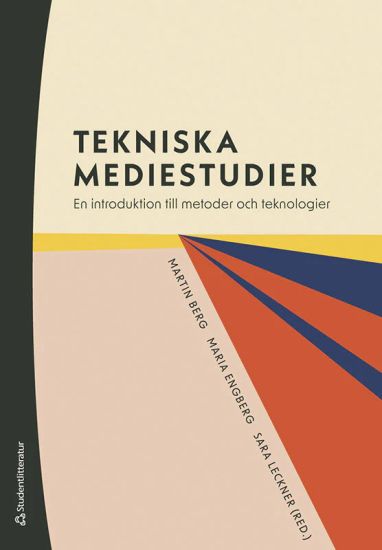
Tekniska mediestudier : en introduktion till metoder och teknologier
Martin Berg; Maria Engberg; Sara Leckner; Jonas Andersson; Jay David Bolter; Òscar Coromina Rodriguez; Jutta Haider; Fredrik Håland Jensen; Simon Lindgren; Lars Nyre; Linda Paxling; Olof Sundin; Jakob Svensson; Pontus Wärnestål
Studentlitteratur AB
2023
nidottu
I en tid då medielandskapet är i ständig förändring och traditionell medieforskning konstant utmanas ökar behovet av att förena teknik, humaniora och samhällsvetenskap. Medie- och teknikforskning kräver innovativa angreppssätt för att navigera bland komplexa relationer mellan kultur, samhälle, ekonomi och teknologi.I den här boken bjuder ledande forskare in till samtal om teknologins utmaningar och möjligheter. Här presenteras redskap för att utforska, beskriva, begreppsliggöra och förstå nya relationer mellan medieteknologier och deras omvärld - en kunskap som förbereder läsaren att på egen hand kombinera samhällsvetenskapernas kritiska analyser med teknikvetenskapernas tradition att utveckla tillförlitliga och effektiva system. Tekniska mediestudier riktar sig till studenter inom ämnen som medieteknik, medie- och kommunikationsvetenskap, kulturvetenskap, data- och systemvetenskap, interaktionsdesign och informatik.
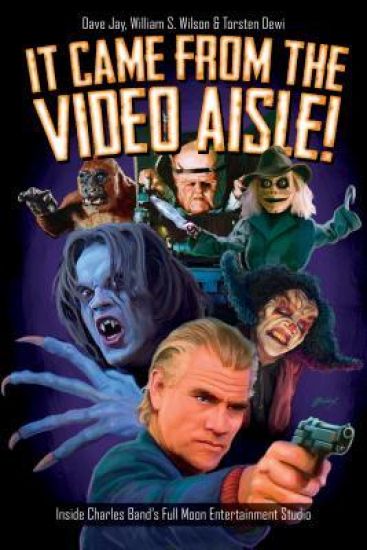
It Came From the Video Aisle!
David Jay; William Wilson; Torsten Dewi
Schiffer Publishing Ltd
2017
nidottu
Charles Band's Full Moon Entertainment was the most remarkable B-movie studio of the 1990s, responsible for a barrage of sci-fi, fantasy, and horror classics during the last true "golden age" of the home video era. From Puppetmaster to Trancers and beyond, Full Moon transformed the VHS experience for fans worldwide, bringing the inner workings of the movie-making process into the living room, and in turn creating a ravenous fanbase that remains to this day. This book tracks the history of the company, from its late '80s birth among the ruins of the American drive-in through to its bid to survive in the modern digital world. Featuring rare artwork, behind-the-scenes photos, and over 60 exclusive interviews with the cast and crew who helped to create the legendary B-movie studio, this is an essential read for any cult film fan still lamenting the death of the "mom 'n pop" video store.
The Korean War represented a series of firsts for Canadian soldiers - their first military action under UN auspices, their first under U.S. corps and army command, their first in Asia as ground troops, and their first in which people at home initially ignored their efforts, and then forgot about them. David Bercuson evokes the tastes and smells, the frustrations, the unfamiliar terrain, the international complexities, and the heroism that made the Korean War an unforgettable experience for those who fought there. Caught by surprise with only a phantom army, the Canadian government in the summer of 1950 was forced by its major allies to promise a ground combat contribution to the UN effort to push back the Communist invasion of South Korea from the north. The Canadian Army Special Force, as the Korean contingent was first called, was hurriedly raised, trained, and sent to Korea, ill-prepared for a mountain war against a determined, well-armed enemy. Canadian soldiers fought bravely, often against impossible odds, to carry out their mission, but they were hindered by several factors - cautious UN Command strategy, poor British and Canadian defence doctrine, uneven leadership, and inadequate equipment and training. They did their duty, and more, in stopping Communist aggression in its tracks, but the Canadian army chose not to remember the lessons of Korea, even though that conflict, as a limited war, set the pattern for virtually all those that followed. Blood on the Hills is the first full, non-official history of the Canadian army's operations in the Korean War. The book covers the period from the start of that war to the cease-fire in July 1953 and describes and analyses the mobilization of the Canadian contingent, its training, manning, and equipment, and its efforts in combat. David Bercuson focuses on the many consequences of the army's unreadiness for combat in Korea and on the army's lack of success in learning lessons from its experience in an active theatre of war.
Matt Tompkins, a reserved gay man, has always played by the rules and has created a comfortable but unfulfilling life for himself. When his bold best friend Greg reaps unexpected rewards for standing up for himself in a very public display, Matt's jealousy leads him to risk everything when he's confronted by two attackers. Determined to be more like Greg, a split-second reaction brings astonishing changes to Matt's life--for better and for worse.Set in Chicago's Lakeview neighborhood, Gaybash explores the boundaries of love and friendship and the unintended consequences of wanting to be somebody else.
Four gay men. Four addictions. One landlord from Hell. Welcome to Summerdale, the beginning of a horror novel series set in Chicago's Andersonville neighborhood. The landlord of Summerdale House is Mr. McGreevy, a charismatic sociopath who enables addiction and isolates his tenants until the only place they feel safe is inside his house. Throughout the series, Summerdale will focus on issues in the gay community including racism, misogyny, substance abuse, and domestic abuse.