Kirjahaku
Etsi kirjoja tekijän nimen, kirjan nimen tai ISBN:n perusteella.
1000 tulosta hakusanalla Jay M. Feinman
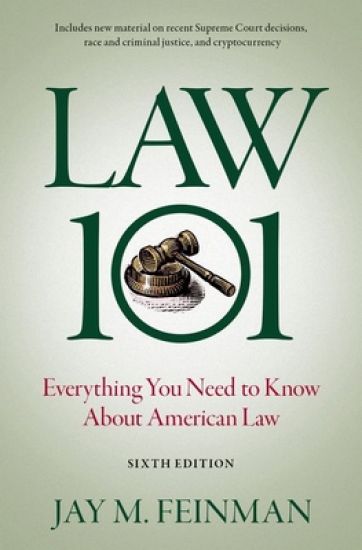
An authoritative and up-to-date introduction to the American legal system. In this sixth edition of his bestselling classic, Jay Feinman provides an authoritative and up-to-date overview of the American legal system. In the years since the publication of the fifth edition, there have been many important developments on the legal front. The Supreme Court has become more conservative and is in the process of handing down important decisions that will change the law on affirmative action, abortion, gun rights, presidential power, and religious rights. Feinman covers all of this and expands his discussion of originalism, the guiding philosophy of many conservative jurists serving on the federal bench now. He also addresses the rapidly changing legal landscape in a variety of issue areas: race and the criminal justice system, cryptocurrency, and tort reform, among others. This fully updated edition of Law 101 accounts for all these developments and more, as Feinman once again covers all the main subjects taught in the first year of law school. Drawing from noteworthy, infamous, and even outrageous examples and cases, he discusses every facet of the American legal tradition, including constitutional law, the litigation process, and criminal, property, tort, and contract law. A key to learning about the law is understanding legal vocabulary, and Feinman helps by clarifying terms like "due process" and "equal protection," as well as by drawing distinctions between terms like "murder" and "manslaughter." Above all, Feinman reveals to readers of all kinds that despite its complexities and quirks, the law can be understood by everyone. Perfect for students contemplating law school, journalists covering legislatures, or even casual fans of "court-television" shows, Law 101 is a clear and accessible introduction to the American legal system.
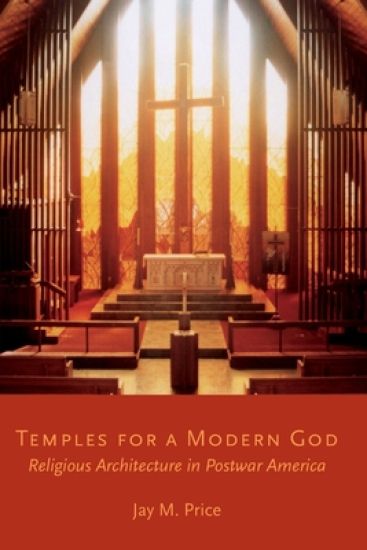
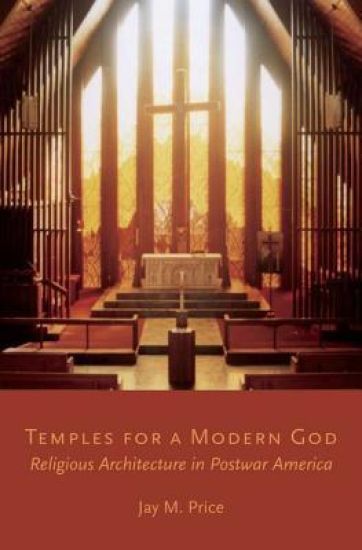
Temples for a Modern God is one of the first major studies of American religious architecture in the postwar period, and it reveals the diverse and complicated set of issues that emerged just as one of the nation's biggest building booms unfolded. Jay Price tells the story of how a movement consisting of denominational architectural bureaus, freelance consultants, architects, professional and religious organizations, religious building journals, professional conferences, artistic studios, and specialized businesses came to have a profound influence on the nature of sacred space. Debates over architectural style coincided with equally significant changes in worship practice. Meanwhile, suburbanization and the baby boom required a new type of worship facility, one that had to attract members and serve a social role as much as honor the Divine. Price uses religious architecture to explore how Mainline Protestantism, Catholicism, Judaism, and other traditions moved beyond their ethnic, regional, and cultural enclaves to create a built environment that was simultaneously intertwined with technology and social change, yet rooted in a fluid and shifting sense of tradition. Price argues that these structures, as often mocked as loved, were physical embodiments of a significant, if underappreciated, era in American religious history.
The Vestibular System
Jay M. Goldberg; Victor J. Wilson; Kathleen E. Cullen; Dora E. Angelaki; Dianne M. Broussard; Jean Buttner-Ennever; Kikuro Fukushima; Lloyd B. Minor
Oxford University Press Inc
2012
sidottu
In The Vestibular System: A Sixth Sense, leading experts present an integrative, comprehensive and innovative look at the sense that Aristotle missed. The vestibular system plays a vital role in everyday life, contributing to a surprising range of functions from reflexes to the highest levels of perception and consciousness. This text not only offers a thorough and fresh review of the basicssensory transduction, the neurophysiology of peripheral and central pathwaysand how vestibular signals are processed in the control of gaze and posture; it significantly moves the discussion forward with its attention to the current research and the field's revolutionary advances, such as the understanding of neural correlates of self-motion and the basis of clinical disorders. In addition, the objective presentation of existing controversies is exciting reading and an extremely important contribution to the text's completeness. Dynamic, intellectually challenging, and unique in its level of integration of the material, this book is essential for anyone interested in understanding the vestibular system.
Temples for a Modern God is one of the first major studies of American religious architecture in the postwar period, and it reveals the diverse and complicated set of issues that emerged just as one of the nation's biggest building booms unfolded. Jay Price tells the story of how a movement consisting of denominational architectural bureaus, freelance consultants, architects, professional and religious organizations, religious building journals, professional conferences, artistic studios, and specialized businesses came to have a profound influence on the nature of sacred space. Debates over architectural style coincided with equally significant changes in worship practice. Meanwhile, suburbanization and the baby boom required a new type of worship facility, one that had to attract members and serve a social role as much as it had to to honor the Divine. Price uses religious architecture to explore how Mainline Protestantism, Catholicism, Judaism, and other traditions moved beyond their ethnic, regional, and cultural enclaves to create a built environment that was simultaneously intertwined with technology and social change, yet rooted in fluid and shifting sense of tradition. Price argues that these structures, as often mocked as loved, were physical embodiments of a significant, if underappreciated, era in American religious history.
Cases in Public Policy and Administration
Jay M Shafritz; Christopher Borick
Routledge Member of the Taylor and Francis Group
2010
nidottu
Writing the perfect complement to their bestseller, Introducing Public Administration, Shafritz and Borick highlight the great drama inherent in public policy -- and the ingenuity of its makers and administrators -- in this new casebook that brings thrilling, true life adventures in public administration to life in an engaging, witty style. Drawing on a unique assortment of literary, historic, and modern examples, Cases in Public Policy and Administration exposes students to public administration in practice by telling the tales of: How Thurgood Marshall led the legal fight for civil rights and made it possible for Barack Obama to become presidentHow the ideas of an academic economist and a famous novelist led to the recession that started in 2008How Al Gore really deserves just a little bit of credit for inventing the InternetHow the decision was made by President Harry Truman to drop the first atomic bomb on Japan in order to end World War IIHow the current American welfare state was inspired by a German chancellorHow a Nazi war criminal inadvertently provided the world with a lesson in bureaucratic ethics How Napoleon Bonaparte encouraged the job of chief of staff to escape from the military and live in contemporary civilian officesHow an obscure state department bureaucrat wrote the policy of containment that allowed the United States to win the Cold War with the Soviet Union How Dwight D. Eisenhower was started on the road to the presidency by a mentor he found in the Panamanian rain forestHow Florence Nightingale gathered statistics during the Crimean War that helped lead to contemporary program evaluation.
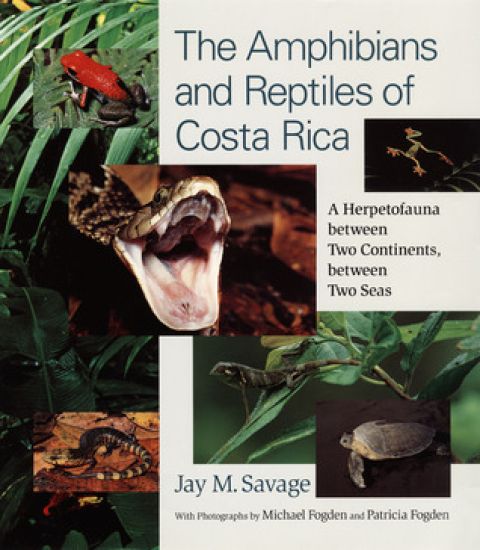
World-renowned for its biological diversity and model conservation system, Costa Rica is home to a wide variety of amphibians and reptiles, from the golden toad to the scorpion lizard to the black-headed bushmaster. Jay M. Savage has studied these fascinating creatures for more than forty years, and in "The Amphibians and Reptiles of Costa Rica" he provides the most comprehensive, up-to-date treatment of their biology and evolution ever produced. Costa Rica has played, and continues to play, a pivotal role in the study of tropical biology as well as the development of ecotourism and ecoprospecting, in part because more than half of the amphibians and reptiles in Costa Rica are also found elsewhere in Central America. "The Amphibians and Reptiles of Costa Rica" will be an essential book for a wide audience of nature lovers, naturalists, ecotourists, field biologists, conservationists, government planners, and those interested in Central America more generally.
Quality Of Life In American Neighborhoods
Jay M Gould; Alice Tepper Marlin
TAYLOR FRANCIS LTD
2024
nidottu
Information, never before available, on levels of affluence and the quality of life in every Zip code area in which Americans reside is contained in this book. The Council On Economic Priorities (CEP), a non-profit research agency committed to the exploration of issues of corporate social responsibility, has been engaged in a study of the relationship between the generation and disposal of toxic waste and the regional variation in cancer mortality rates for some time. A CEP study, Toxic Waste and Cancer: The Link ls Getting Stronger (published in September, 1984), established a small but statistically significant association between cancer and toxic waste at the county level. For small counties with petrochemical concentrations, the association appeared to be particularly high. CEP chose therefore to continue its studies at the 5 digit Zip code level, because the average 5 digit Zip code area is one-tenth the size of the typical county.
Fundamentals of Building Construction Materials and Methods Second Edition Edward Allen This remarkably complete introduction to the art of building sets the materials and building systems in an historical context. This unique evolutionary approach to building construction includes a description of how materials are obtained and processed, an outline of the people and organizations who work with each material, their tools and working methods, and the role of one building system in relation to others. Chapters include a listing of key terms and concepts useful in enlarging a technical vocabulary, review questions that underscore key concepts, and exercises that apply lessons to real-life situations. 1990 (0 471-50911-6) 803 pp. Understanding Infrastructure A Guide for Architects and Planners George Rainer This landmark referencewritten for concerned professionalsdescribes the basic mechanisms essential to city function. Each element of infrastructure is discussedfrom water supply, sewers and storm drainage, solid and hazardous wastes, energy, telecommunication, streets, bridges, to water-front infrastructure, rail/transit and aviation, buses, and parksand set in a context familiar to the design professional. Includes an extensive discussion of standard and innovative solutions as well as relevant environmental, legal, and economic considerations. 1990 (0 471-50546-3) 278 pp. Construction Specifications Writing Principles and Procedures Third Edition Harold J. Rosen and Tom Heineman The classic guide to the principles and practice of specifications writing has been fully updated to reflect the latest AIA and CSI standards, the newest computer applications to spec writing, and the linkage of key databases to specifications. Retaining the format of its successful predecessors, this Third Edition outlines the basic principles, concepts and uses of specifications, showing how they relate to contract documents developed by the architect and engineer. Specific guidelines include methods for establishing the scope and general requirements of the project specification, evaluating and specifying building materials, and writing specifications that conform to industry standards in style and format. 1990 (0 471-61892-6) 286 pp.
The eighteenth century's critique of privilege and its commitment to the idea of advancement by merit are widely regarded as sources of modernity. But if meritocratic values were indeed the product of the Enlightenment and the French Revolution, how do we explain earlier attention to merit--especially the nobility whose values the Revolution rejected? The Culture of Merit probes this paradox by analyzing changing perceptions of merit among the old nobility from the age of Louis XIII to the eve of the French Revolution.Jay M. Smith argues that the early modern nobility instinctively drew a correlation between the meaning of merit and an image of the "sovereign's gaze." In the early seventeenth century, merit meant the qualities traditionally associated with aristocratic values: generosity, fidelity, and honor. Nobles sought to display those qualities before the appreciative gaze of the king himself. But the expansion of the monarchy forced the routinization of the sovereign's gaze, and Louis XIV began to affirm and reward new qualities--talent and application--besides those thought innately noble.The contradictions implicit within the absolute monarchy's culture of merit are demonstrated by the eighteenth-century French army, which was dominated by the nobility, but also committed to efficiency and expertise. Smith shows that the army's continuous efforts to encourage and reward "merit" led to a clash of principles. The ever-growing emphasis on talent and discipline led reformers--the great majority of them noble--to attack the most egregious examples of privilege and favoritism in the army. Smith's analysis of the long-term evolution in conceptions of royal service suggests a new explanation for the shift in values signified by the French Revolution. The transition away from the "personal" gaze of the king toward the "public" gaze of the monarchy and nation foretold the triumph of a new culture of merit in which noble birth would have no meaning.The Culture of Merit will interest historians and other social scientists concerned with issues of aristocratic identity, state formation, professionalization, and the changing political culture of pre-Revolutionary France.Jay M. Smith is Assistant Professor of History, University of North Carolina, Chapel Hill.
The Farthest Things in the Universe
Jay M. Pasachoff; Hyron Spinrad; Patrick Osmer; Edward S. Cheng
Cambridge University Press
1994
sidottu
The quest for the farthest objects in the Universe remains one of the most challenging to modern astronomy. Peering deeper and deeper into space reveals the most distant and powerful objects known and so probes back to the embryonic epochs of the Universe not long after its birth in the Big Bang. Four world experts - chosen for their ability to communicate research astronomy to popular audiences - each contribute a chapter to this lucid survey. In clear terms they bring to the general audience the excitement and challenge of studying the Universe on the largest scales. They address the fundamental issues of scale in the Universe; the ghostly etchings seen on the cosmic background radiation; quasars and their evolution; and galaxy birth. This survey offers an exceptional chance for the general audience to share in the excitement of today’s forefront research of the early Universe in an accessible and stimulating way.
The Farthest Things in the Universe
Jay M. Pasachoff; Hyron Spinrad; Patrick Osmer; Edward S. Cheng
Cambridge University Press
1994
pokkari
The quest for the farthest objects in the Universe remains one of the most challenging to modern astronomy. Peering deeper and deeper into space reveals the most distant and powerful objects known and so probes back to the embryonic epochs of the Universe not long after its birth in the Big Bang. Four world experts - chosen for their ability to communicate research astronomy to popular audiences - each contribute a chapter to this lucid survey. In clear terms they bring to the general audience the excitement and challenge of studying the Universe on the largest scales. They address the fundamental issues of scale in the Universe; the ghostly etchings seen on the cosmic background radiation; quasars and their evolution; and galaxy birth. This survey offers an exceptional chance for the general audience to share in the excitement of today’s forefront research of the early Universe in an accessible and stimulating way.
The Peterson First Guide to Astronomy provides an introduction to astronomy for beginners, featuring photographs taken from the MESSENGER spacecraft and predictions for meteor showers, comets, and eclipses. The book encourages readers to go out into the field, using the maps that show the positions of the stars throughout the year as a guide. This edition maintains the easy-to-use condensed format of the original, and makes it easy to proceed to the full-fledged Peterson Field Guide to Stars and Planets for more in-depth information.
Strategic Jaywalking Cover IntroductionIn a world where the pace of change is faster than ever, leaders at all levels must find new and better ways to innovate, create, and adapt. Strategic Jaywalking is a practical, common-sense approach to leadership and life in a world where being at the top of your game will lead to success, while staying with the status quo risks mediocrity or even obsolescence.Having led and coached hundreds of business leaders across the spectrum, Jay McDonald gets leadership from the C-suite to the board room to the trenches...and now, you can, too. Written in a conversational style, Strategic Jaywalking is like sitting down with Jay for a few hours of conversation on leadership, life, and how you can practice both at higher levels.Leaders have multiple challenges today including ongoing talent wars, supply chain issues, inflation growing at a rapid rate, changing workspaces, and five generations in our workforce with different values and expectations. Strategic Jaywalking is a book for both young and old, from new to experienced leaders. It's for the aspiring leader as well as the accomplished business owner, CEO, or non-profit executive.Jaywalking is a term for pedestrians walking in or crossing a roadway with traffic at a place other than a suitable crosswalk or traffic signal...or otherwise in disregard of traffic rules. Applied to business and life, it is a metaphor for coloring outside the lines and being positively disruptive through innovative thinking.Strategic Jaywalking is about measuring risk and finding the best way to solve problems and explore critical thinking. It's designed to provoke thought in how each of us can be our best as humans and as leaders.This book provides Jay's observations, experiences, successes, and failures gained from his leadership career as a serial entrepreneur, business owner, CEO, board member, and coach of professional leaders. It's straight talk from someone who not only talks the talk, but more importantly, has walked it as well.Through vivid stories, it explores the qualities of great leaders, as well as the not so great. While cast in a business context, Strategic Jaywalking contains life leadership lessons for everyone. It's full of valuable action points in the form of "What?", "So What?", and "Now What?", providing readers with a road map of quality steps to consider in their leadership journey.Who are Jaywalkers? Examples include Martin Luther King, Jr.; Albert Einstein; Oprah Winfrey; Mother Teresa; Steve Jobs; Sara Blakely; and Jeff Bezos, to name a few.One of the best advertising campaigns in history was Apple's "Think Different" ad. Its theme, "Here's to the crazy ones...because the people who are crazy enough to think they can change the world, are the ones who do." -Steve Jobs, 1997Strategic Jaywalking is your recipe for "thinking differently." Jay McDonald's willingness to share his lifetime of first-hand experiences is a wonderful opportunity for you to gain valuable insights into the essentials of life and leadership excellence from someone whom top business leaders turn to for advice.
Water Rights Determination from an Engineering Standpoint
Jay M Whitham
Trieste Publishing
2018
nidottu
Water Rights Determination from an Engineering Standpoint
Jay M Whitham
Trieste Publishing
2018
nidottu
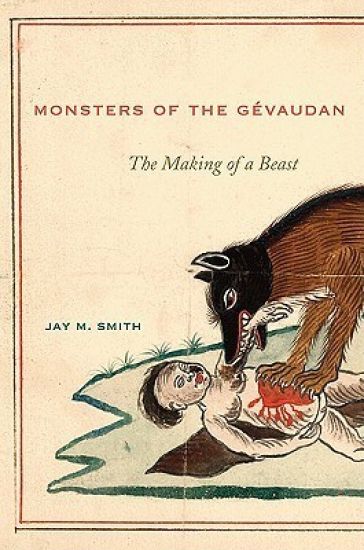
In a brilliant, original rendition, Monsters of the Gévaudan revisits a spellbinding French tale that has captivated imaginations for over two hundred years, and offers the definitive explanation of the strange events that underlie this timeless story.In 1764 a peasant girl was killed and partially eaten while tending a flock of sheep. Eventually, over a hundred victims fell prey to a mysterious creature, or creatures, whose cunning and deadly efficiency terrorized the region and mesmerized Europe. The fearsome aggressor quickly took on mythic status, and the beast of the Gévaudan passed into French folklore.What species was this killer, why did it decapitate so many of its victims, and why did it prefer the flesh of women and children? Why did contemporaries assume that the beast was anything but a wolf, or a pack of wolves, as authorities eventually claimed, and why is the tale so often ignored in histories of the ancien régime? Smith finds the answer to these last two questions in an accident of timing. The beast was bound to be perceived as strange and anomalous because its ravages coincided with the emergence of modernity itself.Expertly situated within the social, intellectual, cultural, and political currents of French life in the 1760s, Monsters of the Gévaudan will engage a wide range of readers with both its recasting of the beast narrative and its compelling insights into the allure of the monstrous in historical memory.
Situated in the heart of the Great Plains, Wichita has been a city of energy and change. The Great Depression and World War II brought both challenges and opportunities. During the postwar years, commercial and business activities downtown thrived, while shopping malls and drive-ins appeared in new suburbs. Meanwhile, African Americans, countercultural figures, and other groups struggled to reshape local affairs. Urban renewal transformed whole sections of the city, while redevelopment brought new life into older structures. Events such as Riverfest and a host of museums have improved the quality of life. A strong entrepreneurial tradition has remained, and populations from Asia and Latin America have brought new perspectives. Aviation has remained the economy's heart, although health care, higher education, and other ventures have made their mark as well. Through it all, the rhythms of everyday life have continued, creating a vibrant, complex community facing the dawn of the 21st century.