

Kirjahaku
Etsi kirjoja tekijän nimen, kirjan nimen tai ISBN:n perusteella.
1000 tulosta hakusanalla Jay P. Spenser
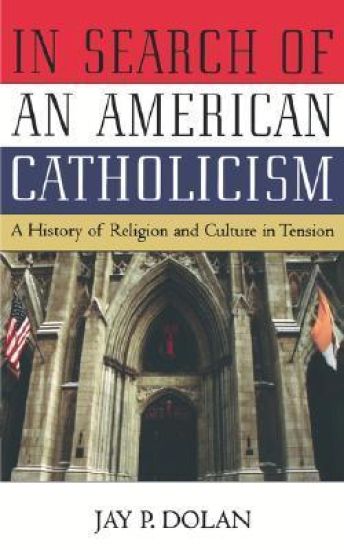
For more than two hundred years American Catholics have struggled to reconcile their national and religious values. In this incisive and accessible account, distinguished Catholic historian Jay P. Dolan explores the way American Catholicism has taken its distinctive shape and follows how Catholics have met the challenges they have faced as New World followers of an Old World faith. Dolan argues that the ideals of democracy, and American culture in general, have deeply shaped Catholicism in the United States as far back as 1789, when the nation's first bishop was elected by the clergy (and the pope accepted their choice.) Dolan looks at the tension between democratic values and Catholic doctrine from the conservative reaction after the fall of Napoleon to the impact of the Second Vatican Council. Furthermore, he explores grassroots devotional life, the struggle against nativism, the impact and collision of different immigrant groups, and the disputed issue of gender. Today Dolan writes, the tensions remain, as we see signs of a resurgent traditionalism in the church in response to the liberalizing trend launched by John XXIII, and also a resistance to the conservatism of John Paul II. In this lucid account, the unfinished story of Catholicism in America emerges clearly and compellingly, illuminating the inner life of the church and of the nation. For more than two hundred years American Catholics have struggled to reconcile their national and religious values. In this incisive and accessible account, distinguished Catholic historian Jay P. Dolan explores the way American Catholicism has taken its distinctive shape and follows how Catholics have met the challenges they have faced as New World followers of an Old World faith. Dolan argues that the ideals of democracy, and American culture in general, have deeply shaped Catholicism in the United States as far back as 1789, when the nation's first bishop was elected by the clergy and approved by the pope. He also examines the tension between democratic values and Catholic doctrine from the conservative reaction after the fall of Napoleon to the impact of the Second Vatican Council. Dolan explores grassroots devotional life, the struggle against nativism, the impact and collision of different immigrant groups, and the disputed issue of gender. In this lucid account, the unfinished story of Catholicism in America emerges clearly and compellingly, illuminating the inner life of the church and of the nation.
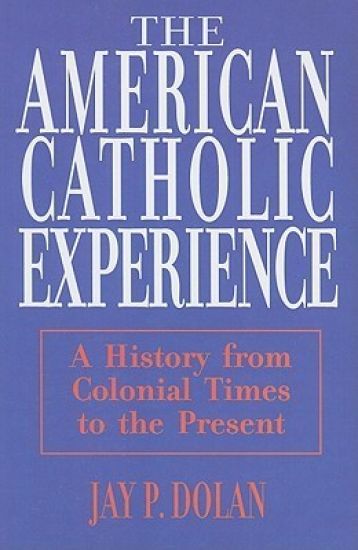
Spanning nearly 500 years, The American Catholic Experience describes the Catholic experience from the arrival of Columbus and the other European explorers to the present day. Jay P. Dolan discusses Catholicism as it spread across the New World, transforming—and being transformed by—the land and its people. The book traces the evolution of the urban ethnic communities by examining the vital contributions of the immigrant church to Catholicism. Finally, Dolan examines the controversy of the modern church and the extraordinary changes in the Catholic consciousness as it comes to grips with such contemporary social and theological issues as war and peace, the arms race, abortion, social justice, the ordination of women, and a married clergy.
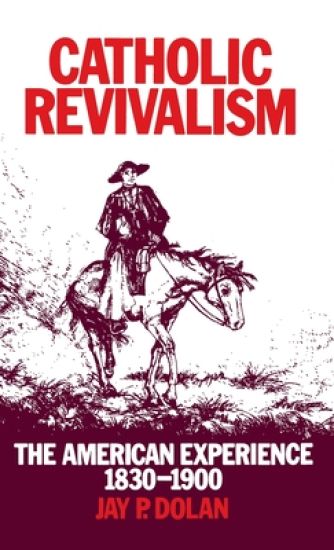
Catholic Revivalism: The American Experience, 1830-1900
Jay P. Dolan
UNIVERSITY OF NOTRE DAME PRESS
1978
sidottu
Jay P. Dolan's Catholic Revivalism: The American Experience, 1830-1900 details the history of the Catholic Church in America by showing that revivalism, traditionally viewed as a Protestant phenomenon, was also a central feature of Catholic life and activity in the 19th century. To cope with the widespread social disorganization caused by large numbers of Catholic immigrants, the Church sponsored parish missions during which famous preachers gave a series of emotional sermons aimed at calling sinners back to their God and their Church. Dolan documents the extent of Catholic revivalism, its European roots, and its success in reaching the working class.
**Catholic Revivalism is a groundbreaking book that casts new light on the history of the Catholic Church in America. ** Drawing on a wide variety of published and unpublished sources, Dolan has succeeded in showing that revivalism, traditionally viewed as a Protestant phenomenon, was also a central feature of Catholic life and activity in the nineteenth century. Dolan suggests that the religion of revivalism not only found a home among Catholics, but indeed was a major force in forming their piety and building up their church. He proves that any history of American Catholicism must include a look at the revival phenomenon.
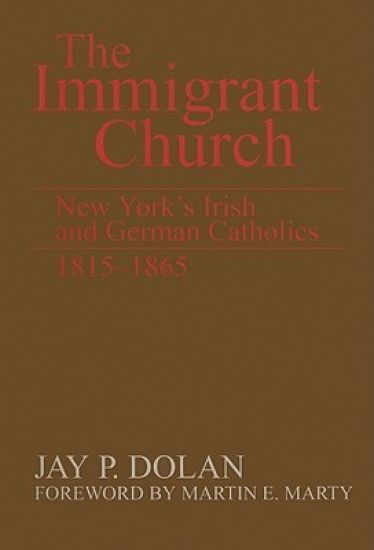
A view of urban Catholicism, The Immigrant Church focuses on the people in the pews and furnishes a comparison of Irish and German Catholic life in mid-nineteenth-century New York City. Nearly one-half of the city's population in 1865 consisted of Irish and German Catholics. Singling out three parishes (one Irish, one German, and one a mixed group of Germans and Irish), Dolan examines the role of religion in strengthening group life in these ethnic communities, traces the development of the Catholic Church in the city, and reveals the relationship between urban and church growth.
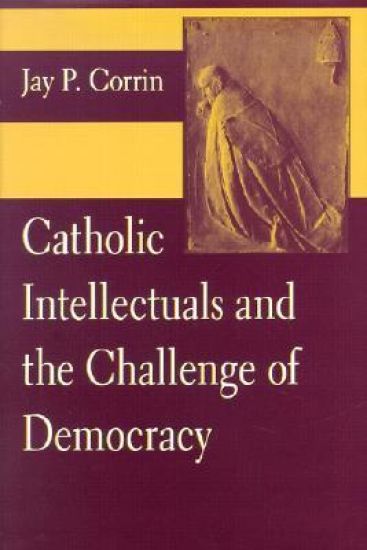
Catholic Intellectuals and the Challenge of Democracy
Jay P. Corrin
University of Notre Dame Press
2010
sidottu
Tracing the development of progressive Catholic approaches to political and economic modernization, Catholic Intellectuals and the Challenge of Democracy disputes standard interpretations of the Catholic response to democracy and modernity in the English-speaking world—particularly the conventional view that the Church was the servant of right-wing reactionaries and authoritarian, patriarchal structures. Starting with the writings of Bishop Wilhelm von Ketteler of Germany, the Frenchman Frédérick Ozanam, and England's Cardinal Henry Edward Manning, whose pioneering work laid the foundation of the Catholic "third way," Corrin reveals a long tradition within Roman Catholicism that championed social activism. These visionary writers were the forerunners of Pope John XXIII's aggiornamento, a call for Catholics to broaden their historical perspectives and move beyond a static theology fixed to the past. By examining this often overlooked tradition, Corrin attempts to confront the perception that Catholicism in the modern age has invariably been an institution of reaction that is highly suspicious of liberalism and progressive social reform. Catholic Intellectuals and the Challenge of Democracy charts the efforts of key Catholic intellectuals, primarily in Britain and the United States, who embraced the modern world and endeavored to use the legacies of their faith to form an alternative, pluralistic path that avoided both socialist collectivism and capitalism. In this sweeping volume, Corrin discusses the influences of Cecil and G. K. Chesterton, H. A. Reinhold, Hilaire Belloc, and many others on the development of Catholic social, economic, and political thought, with a special focus on Belloc and Reinhold as representatives of reactionary and progressive positions, respectively. He also provides an in-depth analysis of Catholic Distributists' responses to the labor unrest in Britain prior to World War I and later, in the 1930s, to the tragedy of the Spanish Civil War and the forces of fascism and communism.
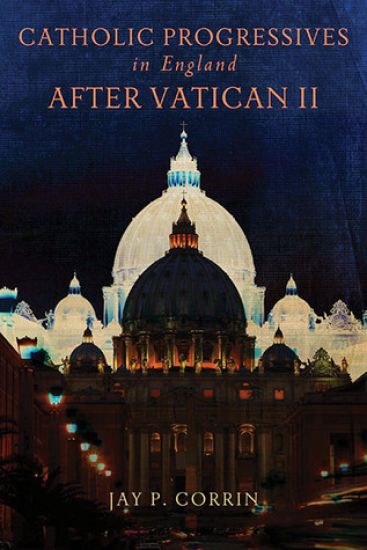
Catholic Progressives in England After Vatican II
Jay P. Corrin
University of Notre Dame Press
2013
nidottu
In Catholic Progressives in England after Vatican II, Jay P. Corrin traces the evolution of Catholic social and theological thought from the end of World War II through the 1960s that culminated in Vatican Council II. He focuses on the emergence of reformist thinking as represented by the Council and the corresponding responses triggered by the Church's failure to expand the promises, or expectations, of reform to the satisfaction of Catholics on the political left, especially in Great Britain. The resistance of the Roman Curia, the clerical hierarchy, and many conservative lay men and women to reform was challenged in 1960s England by a cohort of young Catholic intellectuals for whom the Council had not gone far enough to achieve what they believed was the central message of the social gospels, namely, the creation of a community of humanistic socialism. This effort was spearheaded by members of the English Catholic New Left, who launched a path-breaking journal of ideas called Slant. What made Slant revolutionary was its success in developing a coherent philosophy of revolution based on a synthesis of the "New Theology" fueling Vatican II and the New Left's Marxist critique of capitalism. Although the English Catholic New Left failed to meet their revolutionary objectives, their bold and imaginative efforts inspired many younger Catholics who had despaired of connecting their faith to contemporary social, political, and economic issues. Corrin's analysis of the periodical and of such notable contributors as Terry Eagleton and Herbert McCabe explains the importance of Slant and its associated group within the context of twentieth-century English Catholic liberal thought and action.
A view of urban Catholicism, The Immigrant Church focuses on the people in the pews and furnishes a comparison of Irish and German Catholic life in mid-nineteenth-century New York City. Nearly one-half of the city's population in 1865 consisted of Irish and German Catholics. Singling out three parishes (one Irish, one German, and one a mixed group of Germans and Irish), Dolan examines the role of religion in strengthening group life in these ethnic communities, traces the development of the Catholic Church in the city, and reveals the relationship between urban and church growth.
Catholic Intellectuals and the Challenge of Democracy
Jay P. Corrin
University of Notre Dame Press
2010
nidottu
Tracing the development of progressive Catholic approaches to political and economic modernization, Catholic Intellectuals and the Challenge of Democracy disputes standard interpretations of the Catholic response to democracy and modernity in the English-speaking world—particularly the conventional view that the Church was the servant of right-wing reactionaries and authoritarian, patriarchal structures. Starting with the writings of Bishop Wilhelm von Ketteler of Germany, the Frenchman Frédérick Ozanam, and England's Cardinal Henry Edward Manning, whose pioneering work laid the foundation of the Catholic "third way," Corrin reveals a long tradition within Roman Catholicism that championed social activism. These visionary writers were the forerunners of Pope John XXIII's aggiornamento, a call for Catholics to broaden their historical perspectives and move beyond a static theology fixed to the past. By examining this often overlooked tradition, Corrin attempts to confront the perception that Catholicism in the modern age has invariably been an institution of reaction that is highly suspicious of liberalism and progressive social reform. Catholic Intellectuals and the Challenge of Democracy charts the efforts of key Catholic intellectuals, primarily in Britain and the United States, who embraced the modern world and endeavored to use the legacies of their faith to form an alternative, pluralistic path that avoided both socialist collectivism and capitalism. In this sweeping volume, Corrin discusses the influences of Cecil and G. K. Chesterton, H. A. Reinhold, Hilaire Belloc, and many others on the development of Catholic social, economic, and political thought, with a special focus on Belloc and Reinhold as representatives of reactionary and progressive positions, respectively. He also provides an in-depth analysis of Catholic Distributists' responses to the labor unrest in Britain prior to World War I and later, in the 1930s, to the tragedy of the Spanish Civil War and the forces of fascism and communism.
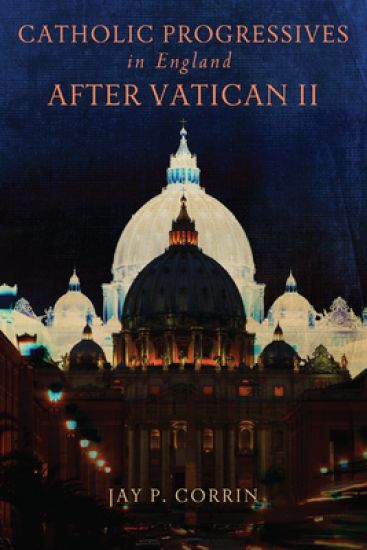
Catholic Progressives in England After Vatican II
Jay P. Corrin
UNIVERSITY OF NOTRE DAME PRESS
2022
sidottu
In Catholic Progressives in England after Vatican II, Jay P. Corrin traces the evolution of Catholic social and theological thought from the end of World War II through the 1960s that culminated in Vatican Council II. He focuses on the emergence of reformist thinking as represented by the Council and the corresponding responses triggered by the Church's failure to expand the promises, or expectations, of reform to the satisfaction of Catholics on the political left, especially in Great Britain. The resistance of the Roman Curia, the clerical hierarchy, and many conservative lay men and women to reform was challenged in 1960s England by a cohort of young Catholic intellectuals for whom the Council had not gone far enough to achieve what they believed was the central message of the social gospels, namely, the creation of a community of humanistic socialism. This effort was spearheaded by members of the English Catholic New Left, who launched a path-breaking journal of ideas called Slant. What made Slant revolutionary was its success in developing a coherent philosophy of revolution based on a synthesis of the "New Theology" fueling Vatican II and the New Left's Marxist critique of capitalism. Although the English Catholic New Left failed to meet their revolutionary objectives, their bold and imaginative efforts inspired many younger Catholics who had despaired of connecting their faith to contemporary social, political, and economic issues. Corrin's analysis of the periodical and of such notable contributors as Terry Eagleton and Herbert McCabe explains the importance of Slant and its associated group within the context of twentieth-century English Catholic liberal thought and action.
It has become a common complaint among academics and community leaders that citizens today are not what they used to be. Nowhere is this decline seen to be more troubling than when the focus is on young Americans. Compared to the youth of past generations, today’s young adults, so the story goes, spend too much time watching television, playing video games, and surfing the Internet. As a result, American democracy is in trouble.The Evolving Citizen challenges this decline thesis and argues instead that democratic engagement has not gotten worse—it has simply changed. Through an analysis of seven high school newspapers from 1965 to 2010, this book shows that young people today, according to what they have to say for themselves, are just as enmeshed in civic and political life as the adolescents who came before them. American youth remain good citizens concerned about their communities and hopeful that they can help make a difference. But as The Evolving Citizen demonstrates, today’s youth understand and perform their roles as citizens differently because the world they live in has changed remarkably over the last half century.
It has become a common complaint among academics and community leaders that citizens today are not what they used to be. Nowhere is this decline seen to be more troubling than when the focus is on young Americans. Compared to the youth of past generations, today’s young adults, so the story goes, spend too much time watching television, playing video games, and surfing the Internet. As a result, American democracy is in trouble.The Evolving Citizen challenges this decline thesis and argues instead that democratic engagement has not gotten worse—it has simply changed. Through an analysis of seven high school newspapers from 1965 to 2010, this book shows that young people today, according to what they have to say for themselves, are just as enmeshed in civic and political life as the adolescents who came before them. American youth remain good citizens concerned about their communities and hopeful that they can help make a difference. But as The Evolving Citizen demonstrates, today’s youth understand and perform their roles as citizens differently because the world they live in has changed remarkably over the last half century.

Nearly every effort to reform American public education during the past half-century has involved the law. Partnerships and tensions between lawyers, educators, parents, and scholars have never been more central to the future shape and direction of our schools. This powerful book examines six of the most important and controversial school reform initiatives: school desegregation, school finance reform, special education, education of immigrant children, integration of youth services, and enforceable performance mandates. The contributors—leading authorities in the fields of education and law—examine these reform efforts from the perspectives of law, education, research, and practice. The authors trace the evolution of these reform strategies over time. They also explore ways in which lawyers, educators, scholars, and parents, through improved collaboration, and promising new approaches, can promote school reform and educational equity more effectively in the future. Assuming no special background, this engaging and accessible book has been written for educators, lawyers, policymakers, parents, and all readers concerned with education in America. Contributors to this volume: Jay P. Heubert; Gary Orfield; Molly McUsic; Carola and Marcelo Suarez-Orozco; Peter Roos; Thomas Hehir; Sue Gamm; Martin Gerry; Paul Weckstein.
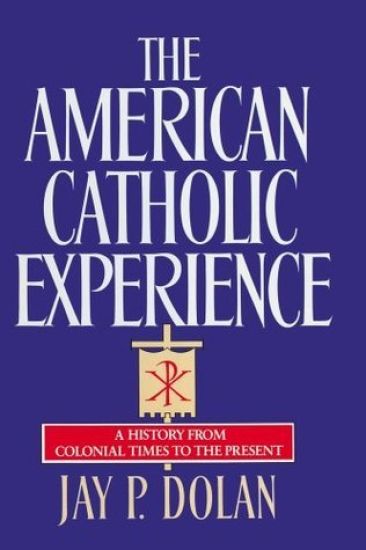
Catholicism has had a profound and lasting influence on the shape, the meaning, and the course of American history. Now, in the first book to reflect the new communal and social awakening which emerged from Vatican Council II, here is a vibrant and compelling history of the American Catholic experience one that will surely become the standard volume for this decade, and decades to come. Spanning nearly five hundred years, the narrative eloquently describes the Catholic experience from the arrival of Columbus and the other European explorers to the present day. It sheds fascinating new light on the work of the first vanguard of missionaries, and on the religious struggles and tensions of the early settlers. We watch Catholicism as it spread across the New World, and see how it transformed and was transformed by the land and its people. We follow the evolution of the urban ethnic communities and learn about the vital contributions of the immigrant church to Catholicism. And finally, we share in the controversy of the modern church and the extraordinary changes in the Catholic consciousness as it comes to grips with such contemporary social and theological issues as war and peace and the arms race, materialism, birth control and abortion, social justice, civil rights, religious freedom, the ordination of women, and married clergy. The American Catholic Experience is not just the history of an institution, but a chronicle of the dreams and aspirations, the crises and faith, of a thriving, ever-evolving religious community. It provides a penetrating and deeply thoughtful look at an experience as diverse, as exciting, and as powerful as America itself."
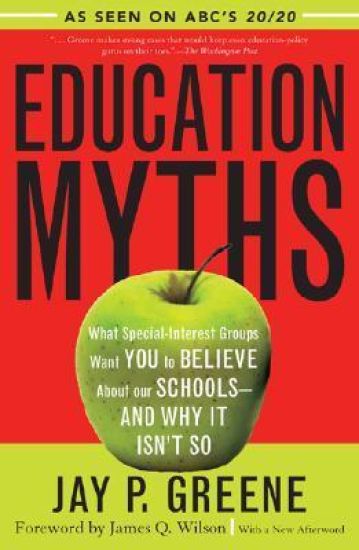
How can we fix America's floundering public schools? Conventional wisdom says that schools and teachers need a lot more money, that poor and immigrant children can't do as well as most American kids, that high-stakes tests just produce teaching to the test, and that vouchers do little to help students while undermining our democracy. But what if the conventional wisdom is wrong? Jay Greene provocatively shows that much of what people believe about education policy is little more than a series of myths advanced by the special interest groups dominating public education.
Enhancing Battlespace Awareness for Tactical Ground Forces
Jay P Jones
Hutson Street Press
2025
sidottu

Enhancing Battlespace Awareness for Tactical Ground Forces
Jay P Jones
Hutson Street Press
2025
pokkari

Deja la Metanfetamina (cristal) Ahora: Una guía de autoayuda para Eliminar tu adicción a la cocaína y al cristal met
Jay P. Hotrum
Independently Published
2019
nidottu
La cura para la adicci n a las drogas radica en la comprensi n de c mo el cuerpo y la mente est n influenciados simult neamente por un problema de dependencia qu mica. Solo despu s de obtener este conocimiento, el adicto puede comenzar el proceso de revertir el ciclo de adicci n y comenzar a abordar los factores desencadenantes en la mente que lo mantienen adicto hasta este punto. Dejar los Opioides, Ahora es el nico programa de tratamiento de drogas en el mundo que lleva al adicto desde el auge de la adicci n a una auto desintoxicaci n en 14 d as, mientras le ense a al adicto c mo dejar de consumir drogas en su propio ritmo y tiempo, cuando decide que est listo para dejar de consumir. Este es un programa de tratamiento contra el consumo de drogas 100% efectivo, y viene con esta garant a sin precedentes; cualquier adicto que empiece a leer desde la primera p gina de este libro, y contin e leyendo cada palabra y siga todas las recomendaciones en su contenido, estar libre de drogas cuando termine de leerlo (un compromiso incre ble).

Indian Forest and Range: A History of the Administration and Conservation of the Redman's Heritage
Jay P. Kinney
Literary Licensing, LLC
2011
sidottu
Indian Forest and Range: A History of the Administration and Conservation of the Redman's Heritage is a book written by Jay P. Kinney. The book is a comprehensive account of the history of the administration and conservation of the forest and range resources of the Native American people. The author explores the relationship between the Native American people and their environment, and how they have managed and protected their natural resources over the centuries. The book covers the period from the arrival of the Europeans in North America to the present day, and provides a detailed account of the policies, laws, and practices that have shaped the management of forest and range resources. The author also examines the role of the federal government, state governments, and other organizations in the management and conservation of these resources. The book is divided into several chapters, each focusing on a different aspect of the history of forest and range management. The author discusses the traditional practices of the Native American people, their relationship with the land, and the impact of European settlement on their way of life. The book also covers the establishment of the United States Forest Service, the creation of national parks and forests, and the development of modern conservation practices. Overall, Indian Forest and Range: A History of the Administration and Conservation of the Redman's Heritage is a comprehensive and informative book that provides a unique perspective on the history of forest and range management in North America. It is a must-read for anyone interested in the history of conservation and environmentalism, as well as those interested in Native American history and culture.This scarce antiquarian book is a facsimile reprint of the old original and may contain some imperfections such as library marks and notations. Because we believe this work is culturally important, we have made it available as part of our commitment for protecting, preserving, and promoting the world's literature in affordable, high quality, modern editions, that are true to their original work.