Royers Round Top Cafe has elevated home cooking for decades. Often when people hear something described as elevated, they think it will be hard to achieve, but JB and Jamie Royer have mastered the art of simple recipes packed with flavor and fun-the best two ingredients to bring family and friends together. The recipes in this cookbook deliver long-time Cafe favorites to your home so you can enjoy cooking good food for your own family and community continuing to build cherished memories around the table.
Royers Round Top Cafe has elevated home cooking for decades. Often when people hear something described as elevated, they think it will be hard to achieve, but JB and Jamie Royer have mastered the art of simple recipes packed with flavor and fun-the best two ingredients to bring family and friends together. The recipes in this cookbook deliver long-time Cafe favorites to your home so you can enjoy cooking good food for your own family and community continuing to build cherished memories around the table.
Essai sur les arguments du materialisme dans Lucrece / par J.-B. Royer, ...Date de l'edition originale: 1883Ce livre est la reproduction fidele d'une oeuvre publiee avant 1920 et fait partie d'une collection de livres reimprimes a la demande editee par Hachette Livre, dans le cadre d'un partenariat avec la Bibliotheque nationale de France, offrant l'opportunite d'acceder a des ouvrages anciens et souvent rares issus des fonds patrimoniaux de la BnF.Les oeuvres faisant partie de cette collection ont ete numerisees par la BnF et sont presentes sur Gallica, sa bibliotheque numerique.En entreprenant de redonner vie a ces ouvrages au travers d'une collection de livres reimprimes a la demande, nous leur donnons la possibilite de rencontrer un public elargi et participons a la transmission de connaissances et de savoirs parfois difficilement accessibles.Nous avons cherche a concilier la reproduction fidele d'un livre ancien a partir de sa version numerisee avec le souci d'un confort de lecture optimal. Nous esperons que les ouvrages de cette nouvelle collection vous apporteront entiere satisfaction.Pour plus d'informations, rendez-vous sur www.hachettebnf.fr
Young Blood is a collection of plays for young people with the following aims: • to publish some of the most interesting, challenging, contemporary writing for young performers in one volume. • to extend the life of the plays beyond their first production. • to make them available to young people throughout the UK To develop performing skills young people need to work on the best scripts available; to have the opportunity to explore the ideas, form and language of exceptional writers. Young people in schools, youth theatres and colleges need to work on plays that excite, stretch and inspire them. The response from young people to the final selection has been remarkable. Several have been chosen by students to be performed as part of their GCSE practical exams. This collection doesn’t include production or teachers' notes. There are no fixed rules about how to use the plays. Produce the whole play to a paying audience or work on scenes. Play about with the casting. Double parts or have six people playing the same character. The most important thing is to have fun with the language, characters and staging so that young people enjoy working on the plays. All of the plays in this collection have a unique theatrical vision. Combine that with the energy, commitment and imagination of a group of young people and the results will definitely be worth watching! Includes the plays The Girl who fell through a hole in her jumper by Naomi Wallace and Bruce Mcleod, The Search for Odysseus by Charles Way, Darker The Berry by J.B.Rose, Geraniums by Sheila Yeger, and, Out of their Heads by Marcus Romer.
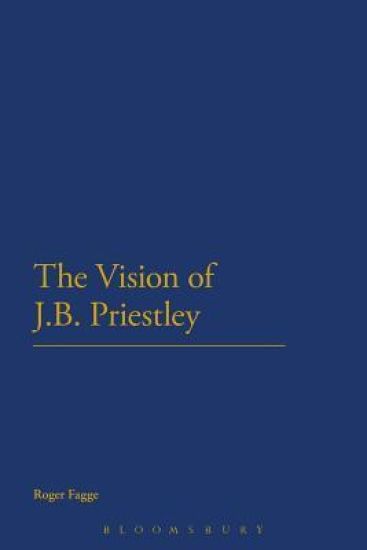
Drawing on private and published sources, Roger Fagge takes an in-depth look at J.B. Priestley's work, seeking to reclaim him as an important English thinker. Priestley grew up in Bradford, and served on the front line in the First World War, before attending Cambridge and embarking on a career as a writer. A committed radical, he wrote widely for the press, as well as producing autobiographies, social criticism and plays. This work revealed a growing interest in the meaning of Englishness and the start of a long-running relationship with America. Priestley achieved even greater influence during the early years of World War II via his popular BBC radio 'postscripts'. His later career, however, saw his faith in the people give way to a disillusionment with the spread of the Americanised mass society, although his critical response to the latter maintained a perceptive engagement with world. The Vision of J.B. Priestley charts the continuities, strengths and weaknesses in the author's long career, and his vision of an outward looking radical Englishness.
Drawing on private and published sources, Roger Fagge takes an in-depth look at J.B. Priestley's work, seeking to reclaim him as an important English thinker. Priestley grew up in Bradford, and served on the front line in the First World War, before attending Cambridge and embarking on a career as a writer. A committed radical, he wrote widely for the press, as well as producing autobiographies, social criticism and plays. This work revealed a growing interest in the meaning of Englishness and the start of a long-running relationship with America. Priestley achieved even greater influence during the early years of World War II via his popular BBC radio 'postscripts'. His later career, however, saw his faith in the people give way to a disillusionment with the spread of the Americanised mass society, although his critical response to the latter maintained a perceptive engagement with world. The Vision of J.B. Priestley charts the continuities, strengths and weaknesses in the author's long career, and his vision of an outward looking radical Englishness.
This richly illustrated book introduces the subject of optimization to a broad audience with a balanced treatment of theory, models and algorithms. Through numerous examples from statistical learning, operations research, engineering, finance and economics, the text explains how to formulate and justify models while accounting for real-world considerations such as data uncertainty. It goes beyond the classical topics of linear, nonlinear and convex programming and deals with nonconvex and nonsmooth problems as well as games, generalized equations and stochastic optimization.The book teaches theoretical aspects in the context of concrete problems, which makes it an accessible onramp to variational analysis, integral functions and approximation theory. More than 100 exercises and 200 fully developed examples illustrate the application of the concepts. Readers should have some foundation in differential calculus and linear algebra. Exposure to real analysiswould be helpful but is not prerequisite.
This richly illustrated book introduces the subject of optimization to a broad audience with a balanced treatment of theory, models and algorithms. Through numerous examples from statistical learning, operations research, engineering, finance and economics, the text explains how to formulate and justify models while accounting for real-world considerations such as data uncertainty. It goes beyond the classical topics of linear, nonlinear and convex programming and deals with nonconvex and nonsmooth problems as well as games, generalized equations and stochastic optimization.The book teaches theoretical aspects in the context of concrete problems, which makes it an accessible onramp to variational analysis, integral functions and approximation theory. More than 100 exercises and 200 fully developed examples illustrate the application of the concepts. Readers should have some foundation in differential calculus and linear algebra. Exposure to real analysiswould be helpful but is not prerequisite.
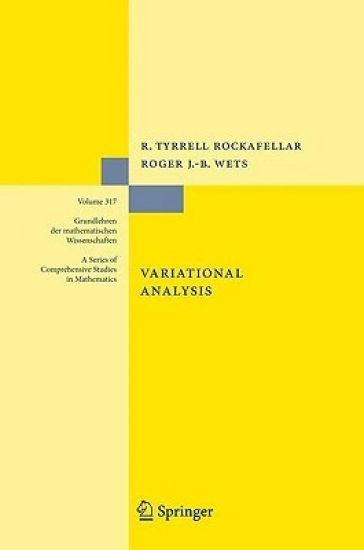
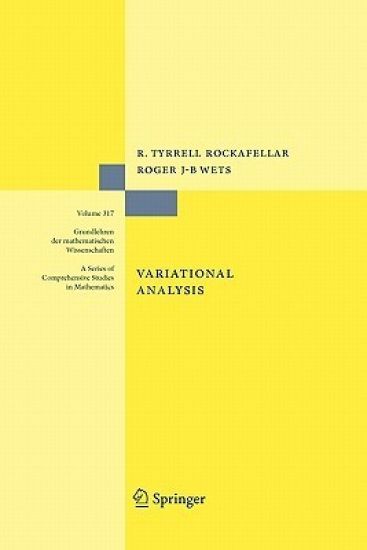
From its origins in the minimization of integral functionals, the notion of 'variations' has evolved greatly in connection with applications in optimization, equilibrium, and control. It refers not only to constrained movement away from a point, but also to modes of perturbation and approximation that are best describable by 'set convergence', variational convergence of functions and the like. This book develops a unified framework and, in finite dimension, provides a detailed exposition of variational geometry and subdifferential calculus in their current forms beyond classical and convex analysis. Also covered are set-convergence, set-valued mappings, epi-convergence, duality, maximal monotone mappings, second-order subderivatives, measurable selections and normal integrands. The changes in this 3rd printing mainly concern various typographical corrections, and reference omissions that came to light in the previous printings. Many of these reached the authors' notice through their own re-reading, that of their students and a number of colleagues mentioned in the Preface. The authors also included a few telling examples as well as improved a few statements, with slightly weaker assumptions or have strengthened the conclusions in a couple of instances.
From its origins in the minimization of integral functionals, the notion of 'variations' has evolved greatly in connection with applications in optimization, equilibrium, and control. It refers not only to constrained movement away from a point, but also to modes of perturbation and approximation that are best describable by 'set convergence', variational convergence of functions and the like. This book develops a unified framework and, in finite dimension, provides a detailed exposition of variational geometry and subdifferential calculus in their current forms beyond classical and convex analysis. Also covered are set-convergence, set-valued mappings, epi-convergence, duality, maximal monotone mappings, second-order subderivatives, measurable selections and normal integrands. The changes in this 3rd printing mainly concern various typographical corrections, and reference omissions that came to light in the previous printings. Many of these reached the authors' notice through their own re-reading, that of their students and a number of colleagues mentioned in the Preface. The authors also included a few telling examples as well as improved a few statements, with slightly weaker assumptions or have strengthened the conclusions in a couple of instances.
The Jerusalem Bible text is a version in modern English which keeps as close as possible to the literal meaning of the ancient texts from which it has been translated. Accurate and elegant Bible. In popular use for nearly 50 years. Ideal format for everyday use.
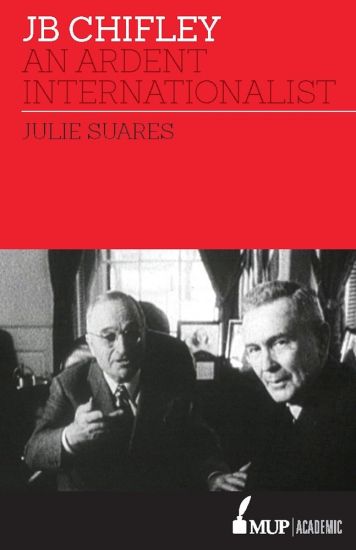
Joseph Benedict (Ben) Chifley, former train driver and Prime Minister of Australia from 1945 to 1949, lived through two economic depressions and two world wars. This, combined with his rural background and commitment to the labour movement, played a major role in the development of his internationalist perspective. Often overlooked by historians, Chifley believed that the only way to avoid war and economic depression was through the establishment of international rules-based economic and collective security institutions. These were beliefs he had held since the early 1930s.Chifley was a prime minister with a keen interest in post-war Asia, who understood that the old colonial order was ending. He was a great admirer of the Indian Prime Minister, Jawaharlal Nehru. This book reveals the extraordinary convergence of worldviews of two fellow internationalists, Chifley and Nehru. This convergence can be seen in their views on the need to adjust to a changing post-colonial world; their internationalism; their support for the United Nations; their opposition to Western colonialism; their anti-war attitudes and their animosity towards the American and British Cold War framework through which the post-war world was viewed.Historian Frank Bongiorno wrote on JB Chifley: "It is a tremendous achievement to produce such a new vision of a major political figure. It is an important contribution to Australian political, foreign policy and intellectual history."
Joseph Benedict (Ben) Chifley, former train driver and Prime Minister of Australia from 1945 to 1949, lived through two economic depressions and two world wars. This, combined with his rural background and commitment to the labour movement, played a major role in the development of his internationalist perspective. Often overlooked by historians, Chifley believed that the only way to avoid war and economic depression was through the establishment of international rules-based economic and collective security institutions. These were beliefs he had held since the early 1930s.Chifley was a prime minister with a keen interest in post-war Asia, who understood that the old colonial order was ending. He was a great admirer of the Indian Prime Minister, Jawaharlal Nehru. This book reveals the extraordinary convergence of worldviews of two fellow internationalists, Chifley and Nehru. This convergence can be seen in their views on the need to adjust to a changing post-colonial world; their internationalism; their support for the United Nations; their opposition to Western colonialism; their anti-war attitudes and their animosity towards the American and British Cold War framework through which the post-war world was viewed.Historian Frank Bongiorno wrote about Julie's work on Chifley: 'it is a tremendous achievement to produce such a new vision of a major political figure . it is an important contribution to Australian political, foreign policy and intellectual history'.