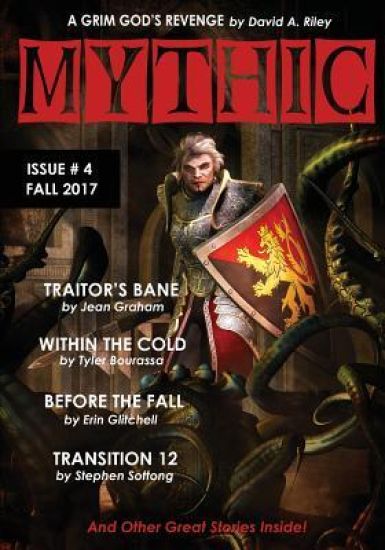
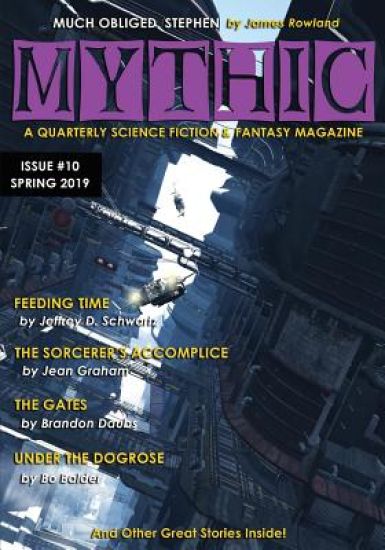
The fourth issue of MYTHIC brings together another selection of quality short fiction. Fantasy stories both dark and quirky mingle with tales of the future and thoughtful tales. Fiction by Jean Graham, Tyler Bourassa, Stephen Sottong, Erin Gitchell, Jill Hand, David A. Riley, E.J. Shumak, Scott Shank, S.L. Edwards, Caroline Friedel, D.B. Keele, Kaitlynn McShea, and Shaun Kilgore
The 18th century was a wealth of knowledge, exploration and rapidly growing technology and expanding record-keeping made possible by advances in the printing press. In its determination to preserve the century of revolution, Gale initiated a revolution of its own: digitization of epic proportions to preserve these invaluable works in the largest archive of its kind. Now for the first time these high-quality digital copies of original 18th century manuscripts are available in print, making them highly accessible to libraries, undergraduate students, and independent scholars.This collection reveals the history of English common law and Empire law in a vastly changing world of British expansion. Dominating the legal field is the Commentaries of the Law of England by Sir William Blackstone, which first appeared in 1765. Reference works such as almanacs and catalogues continue to educate us by revealing the day-to-day workings of society.++++The below data was compiled from various identification fields in the bibliographic record of this title. This data is provided as an additional tool in helping to insure edition identification: ++++Bodleian Library (Oxford)T213852Dated at head of the drop-head title: January 2. 1789 (in addition to the date incorporated in the title). Edinburgh, 1789]. 19, 1]p.; 4
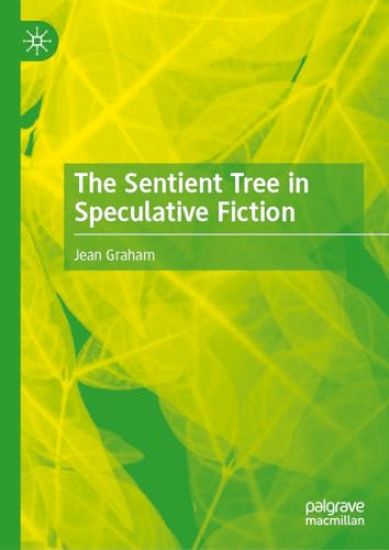
This book interrogates the theme of vegetal sentience and consciousness in the form of trees that move purposefully and/or speak, a theme which appears in everything from classical mythology to twentieth -century and contemporary literature, which draws on this earlier work. Graham's research includes literary and scientific works on vegetal consciousness and sentience, and applies this ecocritical lens in her analysis of various works of literature, television, and film. This book aims to illustrate how sentient trees in speculative fiction help readers better understand that other beings on Earth and/or the Universe are motivated and able to act on goals and desires, even when those goals may not coincide with those of humans.
Evita, Inevitably sheds new light on the history and culture of Argentina by examining the performances and reception of the country’s most iconic female figures, in particular, Eva Perón, who rose from poverty to become a powerful international figure. The book links the Evita legend to a broader pattern of female iconicity from the mid-nineteenth century onward, reading Evita against the performances of other female icons: Camila O’Gorman, executed by firing squad over her affair with a Jesuit priest; Difunta Correa, a devotional figure who has achieved near-sainthood; cumbia-pop performer Gilda; the country’s patron saint, the Virgin of Luján; and finally, Argentina’s president, Cristina Fernández de Kirchner. Employing the tools of discursive, visual, and performance analysis, Jean Graham-Jones studies theatrical performance, literature, film, folklore, Catholic iconography, and Internet culture to document the ways in which these “femicons” have been staged.
Evita, Inevitably sheds new light on the history and culture of Argentina by examining the performances and reception of the country’s most iconic female figures, in particular, Eva Perón, who rose from poverty to become a powerful international figure. The book links the Evita legend to a broader pattern of female iconicity from the mid-nineteenth century onward, reading Evita against the performances of other female icons: Camila O’Gorman, executed by firing squad over her affair with a Jesuit priest; Difunta Correa, a devotional figure who has achieved near-sainthood; cumbia-pop performer Gilda; the country’s patron saint, the Virgin of Luján; and finally, Argentina’s president, Cristina Fernández de Kirchner. Employing the tools of discursive, visual, and performance analysis, Jean Graham-Jones studies theatrical performance, literature, film, folklore, Catholic iconography, and Internet culture to document the ways in which these “femicons” have been staged.
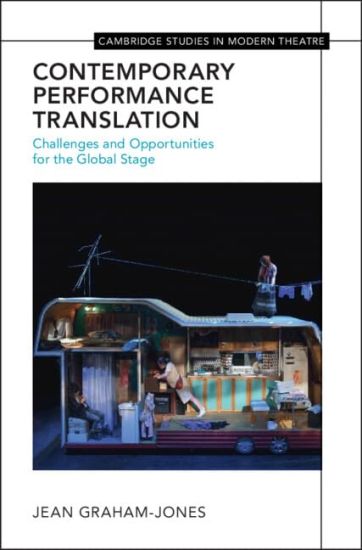
Radically rethinking translation for the contemporary international stage, Jean Graham-Jones interrogates standard linguistic and cultural categories and proposes an overhaul of the translation process itself, incorporating dramaturgical logic and staging, actor training and performance styles, gesture and embodiment, and performance aesthetics and reception. She demonstrates how a theory of translationality – in which translations do not erase the original but rather stand in relation to it and to other texts and performances – encapsulates the collaborative process between contemporary translators and theatre artists. Presenting multiple experiential cases and drawing on Graham-Jones's own career as a translator, actor, director and scholar working in Argentina, the US, and the UK, this richly interdisciplinary work extends a traditional understanding of contemporary performance translation and its potential in theatrical practice.
Radically rethinking translation for the contemporary international stage, Jean Graham-Jones interrogates standard linguistic and cultural categories and proposes an overhaul of the translation process itself, incorporating dramaturgical logic and staging, actor training and performance styles, gesture and embodiment, and performance aesthetics and reception. She demonstrates how a theory of translationality – in which translations do not erase the original but rather stand in relation to it and to other texts and performances – encapsulates the collaborative process between contemporary translators and theatre artists. Presenting multiple experiential cases and drawing on Graham-Jones's own career as a translator, actor, director and scholar working in Argentina, the US, and the UK, this richly interdisciplinary work extends a traditional understanding of contemporary performance translation and its potential in theatrical practice.
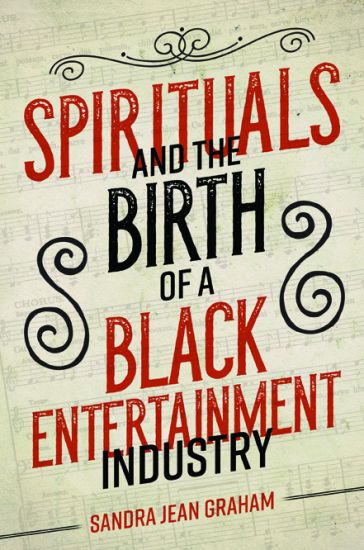
Spirituals performed by jubilee troupes became a sensation in post-Civil War America. First brought to the stage by choral ensembles like the Fisk Jubilee Singers, spirituals anchored a wide range of late nineteenth-century entertainments, including minstrelsy, variety, and plays by both black and white companies. In the first book-length treatment of postbellum spirituals in theatrical entertainments, Sandra Jean Graham mines a trove of resources to chart the spiritual's journey from the private lives of slaves to the concert stage. Graham navigates the conflicting agendas of those who, in adapting spirituals for their own ends, sold conceptions of racial identity to their patrons. In so doing they lay the foundation for a black entertainment industry whose artistic, financial, and cultural practices extended into the twentieth century. A companion website contains jubilee troupe personnel, recordings, and profiles of 85 jubilee groups. Please go to: http://www.press.uillinois.edu/books/graham/spirituals/
Spirituals performed by jubilee troupes became a sensation in post-Civil War America. First brought to the stage by choral ensembles like the Fisk Jubilee Singers, spirituals anchored a wide range of late nineteenth-century entertainments, including minstrelsy, variety, and plays by both black and white companies. In the first book-length treatment of postbellum spirituals in theatrical entertainments, Sandra Jean Graham mines a trove of resources to chart the spiritual's journey from the private lives of slaves to the concert stage. Graham navigates the conflicting agendas of those who, in adapting spirituals for their own ends, sold conceptions of racial identity to their patrons. In so doing they lay the foundation for a black entertainment industry whose artistic, financial, and cultural practices extended into the twentieth century. A companion website contains jubilee troupe personnel, recordings, and profiles of 85 jubilee groups. Please go to: http://www.press.uillinois.edu/books/graham/spirituals/
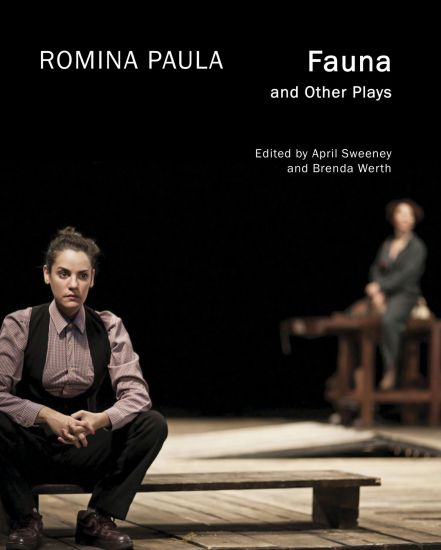
The best-known dramatic works of Paula in its first English translation. This volume brings together the best-known dramatic works of Argentine playwright Romina Paula for the first time in English translation. As a playwright, novelist, actor, and director of theater and film, Paula defies traditional boundaries between the arts, engaging different modes of production, and borrowing freely from the languages of theater, film, dance, photography, and music. In the four plays collected here—The Sound It Makes (2007), The Whole of Time (2009), Fauna (2013), and Rewilding (2016)—Paula moves us to think about how we tell the stories of people’s lives, exploring synergies between documentary and fiction, and the role of art in expressing ideas of love, family, gender, and sexuality. Paula’s plays imagine worlds that are both poetically expansive and intimate. Paula belongs to a new generation of Argentine artists influenced by feminist activism and the collective mobilization against gender violence that has revolutionized Latin America in the early twenty-first century. Her vision expressed through these moving plays collected in this volume will be welcome by literature enthusiasts and activists alike.
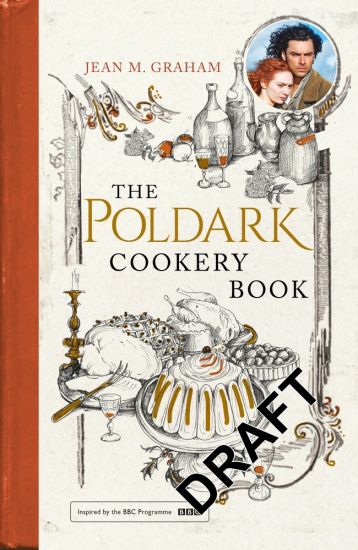
It was a meal worthy of the age, the house and the season . . . This beautiful edition of The Poldark Cookery Book, by author Winston Graham's wife, Jean M. Graham, presents the recipes and the wherewithal for you to cook up your very own Poldark feast. Along with dozens of festive treats inspired by the Poldark novels, here you will find ample homely recipes for traditional West Country fare. From Figgy ’Obbin Pudding to the Nampara staple of Baked Pilchards, there are both inventively thrifty and sumptuously indulgent recipes aplenty that will delight fans of the Poldark series starring Aidan Turner and food enthusiasts alike.
This book not only documents the authors’ own studies of real life social situations, but also provides an extensive review of other literature in this field. Michael Argyle and his colleagues are particularly concerned with the practical applications of situational analysis - to social skills training, mental health and deviance, intergroup behaviour, personnel selection and consumer research. In addition, by concentrating on situational variables, the volume makes an important contribution to the study of personality, since personality-situational interaction is at least as important in determining behaviour as are general personality traits. During recent years there has been extensive criticism of the conduct of research in social psychology. Social Situations points the way forward to a resolution of the crisis in the discipline. It marks an important advance in our understanding of social behaviour which will interest social and clinical psychologists and sociologists.
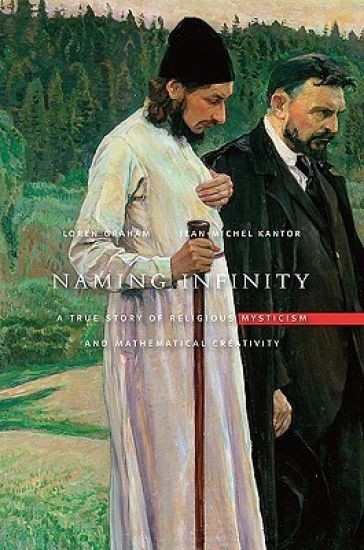
In 1913, Russian imperial marines stormed an Orthodox monastery at Mt. Athos, Greece, to haul off monks engaged in a dangerously heretical practice known as Name Worshipping. Exiled to remote Russian outposts, the monks and their mystical movement went underground. Ultimately, they came across Russian intellectuals who embraced Name Worshipping—and who would achieve one of the biggest mathematical breakthroughs of the twentieth century, going beyond recent French achievements.Loren Graham and Jean-Michel Kantor take us on an exciting mathematical mystery tour as they unravel a bizarre tale of political struggles, psychological crises, sexual complexities, and ethical dilemmas. At the core of this book is the contest between French and Russian mathematicians who sought new answers to one of the oldest puzzles in math: the nature of infinity. The French school chased rationalist solutions. The Russian mathematicians, notably Dmitri Egorov and Nikolai Luzin—who founded the famous Moscow School of Mathematics—were inspired by mystical insights attained during Name Worshipping. Their religious practice appears to have opened to them visions into the infinite—and led to the founding of descriptive set theory.The men and women of the leading French and Russian mathematical schools are central characters in this absorbing tale that could not be told until now. Naming Infinity is a poignant human interest story that raises provocative questions about science and religion, intuition and creativity.
This book aims to help the policymaker and development community in general to understand the nature of the problems and policy dilemmas that landlocked countries face to trade with the rest of the World. This volume presents an important breakthrough in the literature, by focusing on a new conceptual framework that challenges the previous paradigm based on physical infrastructure and state-led access solutions, embodied in many treaties. By recognizing that the main access problems for landlocked countries occur in the territory of the transit country, this volume provides a new approach to understand the set of incentives that drive the political economy and shape the institutions governing goods' transit along corridors. Overall, the policy levers available to overcome these barriers are based on universally applied principles, recognizing the need for re-engineering current transit regimes which have been implemented with little success outside Europe. A risk-approach to border control and technology use, along with trust building between private operators and public agencies, all point toward the need to encourage and formally recognize higher-quality trucking companies. Meanwhile, other modes of transportation represent an alternative to road transit, but they also entail disadvantages, suggesting that their role is likely to remain limited to niche segments, specific commodities and exceptional market circumstances.