Kirjojen hintavertailu. Mukana 12 390 323 kirjaa ja 12 kauppaa.

Kirjahaku

Etsi kirjoja tekijän nimen, kirjan nimen tai ISBN:n perusteella.

1000 tulosta hakusanalla Jean-Francois Lyotard

Jean-François Lyotard

Jean-François Lyotard

Simon Malpas

Routledge
2002
sidottu
Jean-François Lyotard is one of the most celebrated proponents of what has become known as the 'postmodern'. More than almost any other contemporary theorist, he has explored the relations between knowledge, art, politics and history, in ways that offer radical new possibilities for thinking about modern culture. Simon Malpas introduces students to issues at the heart of Lyotard's work, including *modernity and the postmodern *the sublime *ethics *history and representation *art and the unpresentable *knowledge, the university and the future. Lyotard's work is impossible to dismiss or ignore for anybody who is serious about contemporary literature and culture, and this guide provides the ideal companion to the wide variety of his critical texts.
Jean-François Lyotard

Jean-François Lyotard

Simon Malpas

Routledge
2002
nidottu
Jean-François Lyotard is one of the most celebrated proponents of what has become known as the 'postmodern'. More than almost any other contemporary theorist, he has explored the relations between knowledge, art, politics and history, in ways that offer radical new possibilities for thinking about modern culture. Simon Malpas introduces students to issues at the heart of Lyotard's work, including *modernity and the postmodern *the sublime *ethics *history and representation *art and the unpresentable *knowledge, the university and the future. Lyotard's work is impossible to dismiss or ignore for anybody who is serious about contemporary literature and culture, and this guide provides the ideal companion to the wide variety of his critical texts.
Jean-François Lyotard
Jean-François Lyotard's importance to modern philosophy cannot be overstated. Often associated with the concept of postmodernism, Lyotard was a central figure in the 'theory debates' during the 1970s, 1980s, and 1990s. His writings across the disciplines strongly influenced the current shape of contemporary continental philosophy and critical theory, with his posthumously published books and essays having a significant impact on current scholarly debates.This three-volume set is a collection of key critical responses by leading scholars to the philosophical and theoretical writings of the late postmodern philosopher. Organized thematically, the collection includes commentaries on Lyotard’s ‘life and early philosophical writings’, as well as on ethics, aesthetics, and politics. With a new introduction by the editor providing a comprehensive overview of Jean-François Lyotard’s life and works, this impressive collection provides students and scholars with a valuable resource for studying this important philosophical figure.
Jean-Francois Lyotard

Jean-Francois Lyotard

Jean-Francois Lyotard

Bloomsbury Academic
2020
sidottu
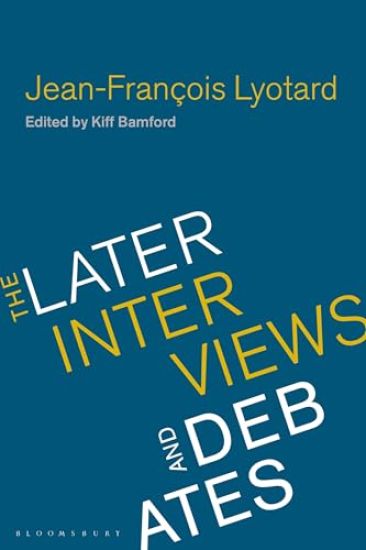
Jean-François Lyotard (1924-1998) was one of the most important French philosophers of the Twentieth Century. His impact has been felt across many disciplines: sociology; cultural studies; art theory and politics. This volume presents a diverse selection of interviews, conversations and debates which relate to the five decades of his working life, both as a political militant, experimental philosopher and teacher. Including hard-to-find interviews and previously untranslated material, this is the first time that interviews with Lyotard have been presented as a collection.Key concepts from Lyotard’s thought – the differend, the postmodern, the immaterial – are debated and discussed across different time periods, prompted by specific contexts and provocations. In addition there are debates with other thinkers, including Emmanuel Levinas and Jacques Derrida, which may be less familiar to an Anglophone audience. These debates and interviews help to contextualise Lyotard, highlighting the importance of Marx, Freud, Kant and Wittgenstein, in addition to the Jewish thought which accompanies the questions of silence, justice and presence that pervades Lyotard’s thinking.
Jean-Francois Lyotard

Jean-Francois Lyotard

Jean-Francois Lyotard

Bloomsbury Academic
2020
nidottu
Jean-François Lyotard (1924-1998) was one of the most important French philosophers of the Twentieth Century. His impact has been felt across many disciplines: sociology; cultural studies; art theory and politics. This volume presents a diverse selection of interviews, conversations and debates which relate to the five decades of his working life, both as a political militant, experimental philosopher and teacher. Including hard-to-find interviews and previously untranslated material, this is the first time that interviews with Lyotard have been presented as a collection.Key concepts from Lyotard’s thought – the differend, the postmodern, the immaterial – are debated and discussed across different time periods, prompted by specific contexts and provocations. In addition there are debates with other thinkers, including Emmanuel Levinas and Jacques Derrida, which may be less familiar to an Anglophone audience. These debates and interviews help to contextualise Lyotard, highlighting the importance of Marx, Freud, Kant and Wittgenstein, in addition to the Jewish thought which accompanies the questions of silence, justice and presence that pervades Lyotard’s thinking.
Jean-Francois Lyotard

Jean-Francois Lyotard

Jean-Francois Lyotard

BLOOMSBURY PUBLISHING PLC
2025
sidottu
With contributions selected from the last fifteen years of his life, this second volume of Jean-François Lyotard’s interviews and debates includes hard-to-find and previously untranslated material. Taking place between 1984 and 1997 they follow in the wake of Lyotard’s most notable publications, including The Postmodern Condition (1979) and The Differend (1983). Whilst continuing to contest and reconfigure the claims of these writings, Lyotard and his interlocutors help to contextualise the questions raised within the fields of art, philosophy, literature and politics.Discussions in Paris and London include contributions from thinkers such as Philippe Lacoue-Labarthe; Christine Buci-Glucksmann and Alain Badiou whilst significant interviews elsewhere in Europe, North and South America elucidate the consequences of the varied reception given to his work. The importance of Kant, Freud and Wittgenstein is readily apparent as are the themes now closely associated with Lyotard: the inhuman, infancy and resistance to ‘the system’. These interviews and debates record an evident delight in the activity of thinking which is not about rhetorical flourish or rehashing staid assumptions but of grappling with some of the most important questions confronting thought today.
Jean-François Lyotard

Jean-François Lyotard

Kiff Bamford

Reaktion Books
2017
nidottu
Jean-François Lyotard is one of the most important, and complex, French thinkers of the twentieth century. Best known in the English-speaking world for his book The Postmodern Condition, the multi-faceted nature of Lyotard’s work has often been obscured by its sometimes problematic association with the postmodern. His life refuses to follow the clear trajectory common to academics in France: it stalls and hesitates, with Lyotard’s first ‘career’ consisting of fifteen years of militant Marxist political engagement. Kiff Bamford traces this circuitous journey, unravelling the thrust of Lyotard’s main philosophical arguments, his struggle with thinking and his confrontation with the task of writing and thinking philosophy in a different way. These all take place within a series of very particular contexts: the Algerian war, the experimental university at Vincennes and a sustained engagement with the visual arts.Lyotard’s own tentative reflections on his intellectual life help to frame his suspicions of easy narratives and highlight his rejection of ‘the delusion that we are able to programme our life’. It is by following these cautions that Kiff Bamford is able to present a compelling portrait of a challenging subject.
Jean-François Lyotard

Jean-François Lyotard

Kirsten Locke

Springer Nature Switzerland AG
2022
nidottu
This book gives an introduction to Jean-François Lyotard (1924–1998) as an educational thinker whose philosophical encounters with politics and art offer a radical reconsideration of the aims of education and the nature of pedagogy. The book approaches Jean-François Lyotard’s contributions to educational thought by placing his changing intellectual career within its thematic and pedagogical context. Central chapters deal with Lyotard’s key concepts utilised throughout different phases of his intellectual career, providing new openings and perspectives to an affective form of pedagogy that questions the conditions and perimeters of the educational endeavour as a learning and teaching event. Within these discussions, Lyotard’s ideas about aesthetics and politics receive close attention. The book positions Lyotard’s pedagogical focus within key theoretical concepts traversed in his political and aesthetic writings, exploring his work on the political as an ethical activity, art as resistance, and his later work on childhood and infancy as a state of openness and receptivity.
Jean-Francois Lyotard

Jean-Francois Lyotard

André Keil

Grin Publishing
2010
pokkari
Studienarbeit aus dem Jahr 2007 im Fachbereich Philosophie - Philosophie des 20. Jahrhunderts / Gegenwart, Note: 2,0, Universit t Potsdam (Institut f r Philosophie), Veranstaltung: Philosophie gesellschaftlicher Kommunikation, Sprache: Deutsch, Abstract: Im Folgenden soll Jean-Francois Lyotards Hauptwerk Der Widerstreit einer genaueren Betrachtung unterzogen werden. Dabei erscheint es dem Autor notwendig das Werk in einen Kontext zu allgemeinen Tendenzen der westlichen Geisteswissenschaften im 20. Jahrhundert zu stellen und auch die Pers nlichkeit Lyotard n her zu beleuchten, denn sowohl der Ansatz als auch die Konsequenzen der Ausf hrungen im Widerstreit werden von Autor als kritischer Reflex auf die Krise der Moderne und ihrer Erz hlungen und Versprechen verstanden. Diese Kritik der Moderne kann aber nur richtig eingeordnet werden, wenn verstanden wird warum Lyotard eben dieser Moderne eine kritische Absage erteilt und ein gewisserma en postmodernes Konzept von diskursiver Gerechtigkeit an ihre Stelle setzt. Zum Abschluss sollen einige kritische Anmerkungen getroffen werden, insbesondere in Bezug auf die M glichkeiten der praktischen Umsetzbarkeit von Lyotards Konzepten.
Rereading Jean-François Lyotard

Rereading Jean-François Lyotard

Heidi Bickis

Routledge
2019
nidottu
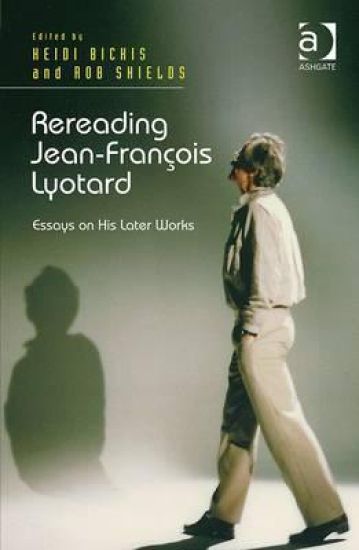
What does Lyotard's thought offer contemporary theory? By focusing on key concepts and themes from his later texts, such as affect, aesthetics, Andre Malraux, St Paul, nihilism, infancy, space and writing, Rereading Jean-François Lyotard: Essays on His Later Works explores the impact and relevance of Lyotard's largely undiscussed late philosophical works for contemporary theoretical debates. In his works produced from 1990 until his death in 1998, Lyotard addresses a number of themes that both revisit and move beyond those from his earlier work. These include: art and aesthetics; affect; ethics and politics; modernity and the subject. Despite designating these texts as part of a 'late period', the chapters do not exclude a wider engagement with Lyotard's thought and often seek to engage in connections, resonances and developments across his many texts. Each chapter within this book places Lyotard as a figure with much to offer current theoretical debates, reasserts Lyotard as an important thinker for developments in social thought, and draws out the many links between his philosophical work and broader social questions. This is the first work in English to focus on Lyotard's later writings and will therefore be a key text to all scholars of his ideas.
Rereading Jean-François Lyotard

Rereading Jean-François Lyotard

Heidi Bickis

Ashgate Publishing Limited
2013
sidottu
What does Lyotard's thought offer contemporary theory? By focusing on key concepts and themes from his later texts, such as affect, aesthetics, Andre Malraux, St Paul, nihilism, infancy, space and writing, Rereading Jean-François Lyotard: Essays on His Later Works explores the impact and relevance of Lyotard's largely undiscussed late philosophical works for contemporary theoretical debates. In his works produced from 1990 until his death in 1998, Lyotard addresses a number of themes that both revisit and move beyond those from his earlier work. These include: art and aesthetics; affect; ethics and politics; modernity and the subject. Despite designating these texts as part of a 'late period', the chapters do not exclude a wider engagement with Lyotard's thought and often seek to engage in connections, resonances and developments across his many texts. Each chapter within this book places Lyotard as a figure with much to offer current theoretical debates, reasserts Lyotard as an important thinker for developments in social thought, and draws out the many links between his philosophical work and broader social questions. This is the first work in English to focus on Lyotard's later writings and will therefore be a key text to all scholars of his ideas.
The Politics of Jean-Francois Lyotard
Jean-Francois Lyotard is still considered to be the father of postmodernism. An international range of contributors in the field of cultural and philosophical studies, including Barry Smart, John O' Neill and Victor J. Seidler consider Lyotard's writings on justice and politics of difference, feminism, youth and Judaism.
The Politics of Jean-Francois Lyotard
Jean-Francois Lyotard is still considered to be the father of postmodernism. An international range of contributors in the field of cultural and philosophical studies, including Barry Smart, John O' Neill and Victor J. Seidler consider Lyotard's writings on justice and politics of difference, feminism, youth and Judaism.
Inhuman Educations: Jean-François Lyotard, Pedagogy, Thought
In the first monograph on Lyotard and education, the author approaches Lyotard's thought as pedagogical in itself. The result is a novel, soft, and accessible study of Lyotard organized around two inhuman educations: that of "the system" and that of "the human." The former enforces an interminable process of development, dialogue and exchange, while the latter finds its force in the mute, secret, opaque, and inarticulable. Threading together a range of Lyotard's work through four pedagogical processes--reading, writing, voicing, and listening--the author insists on the distinct educational logics that can uphold or interrupt different ways of being-together in the world, touching on a range of topics from literacy and aesthetics to time and political-economy. While Inhuman Educations can serve as an introduction to Lyotard's philosophy, it also constitutes a singular, provocative, and fresh take on his thought.