
Kirjahaku
Etsi kirjoja tekijän nimen, kirjan nimen tai ISBN:n perusteella.
1000 tulosta hakusanalla Jean-Jacques Rousseau; Ligaran

Discours sur l'origine et les fondements de l'inégalité parmi les hommes
Ligaran; Jean-Jacques Rousseau
Ligaran
2014
nidottu
"Le Discours sur l'origine et les fondements de l'in galit parmi les hommes, crit par Jean-Jacques Rousseau, est une oeuvre majeure de la philosophie politique et sociale. Publi en 1755, ce livre propose une analyse profonde et provocante de la nature humaine et de la soci t . Rousseau commence par remettre en question l'id e que l'homme est naturellement bon, en soulignant que la civilisation et la soci t ont corrompu sa puret originelle. Il explore ensuite les origines de l'in galit entre les hommes, en remontant aux premiers stades de l'humanit . Selon Rousseau, l'in galit d coule de l' mergence de la propri t priv e et de l'apparition des diff rences de richesse et de pouvoir. Il critique vivement la soci t moderne, qui favorise l'accumulation de richesses et la comp tition, au d triment de la libert et de l' galit naturelle des individus. Le livre aborde galement la question de la libert et de la servitude. Rousseau soutient que la soci t moderne ali ne les individus en les soumettant des lois et des institutions qui ne servent que les int r ts des puissants. Il appelle un retour un tat de nature id alis , o les hommes vivraient en harmonie avec la nature et les uns avec les autres. Le Discours sur l'origine et les fondements de l'in galit parmi les hommes est un ouvrage complexe et dense, qui a suscit de nombreux d bats et controverses depuis sa publication. Il a profond ment influenc la pens e politique et sociale, en particulier dans le domaine de l' galit et de la justice. En explorant les racines de l'in galit et en critiquant les fondements de la soci t moderne, Rousseau nous invite r fl chir sur les valeurs fondamentales de notre existence et repenser notre relation avec la nature et avec nos semblables. Ce livre reste une lecture essentielle pour tous ceux qui s'int ressent la philosophie politique et la condition humaine. Extrait: ""(...) car comment conna tre la source de l'in galit parmi les hommes, si

Translated by Peter ConstantineEdited and with an new introduction by Leo Damrosch'Man is born free, and everywhere he is in chains' is the dramatic opening line of The Social Contract, published in 1762.
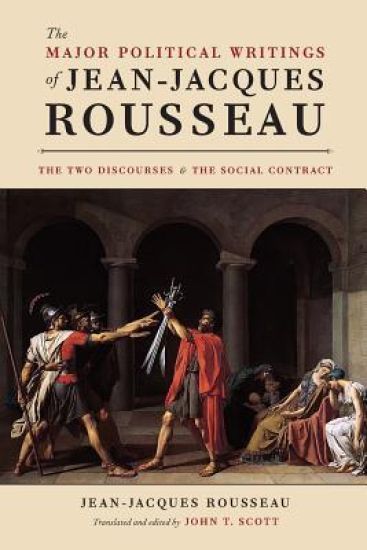
The Major Political Writings of Jean-Jacques Rousseau
Jean-Jacques Rousseau
University of Chicago Press
2014
nidottu
Few philosophers have been the subject of as much or as intense debate, yet almost everyone agrees on one thing: Jean-Jacques Rousseau is among the most important and influential thinkers in the history of political philosophy. This new edition of his major political writings renews attention to the perennial importance of his work. The book brings together superb new translations of three of Rousseau's works: the Discourse on the Sciences and the Arts, the Discourse on the Origin and Foundations of Inequality Among Men, and On the Social Contract. The two Discourses show Rousseau developing his well-known conception of the natural goodness of man and the problems posed by life in society. With the Social Contract, Rousseau became the first major thinker to argue that democracy is the only legitimate form of political organization. Translation and editorial notes clarify ideas and terms that might not be immediately familiar to most readers.
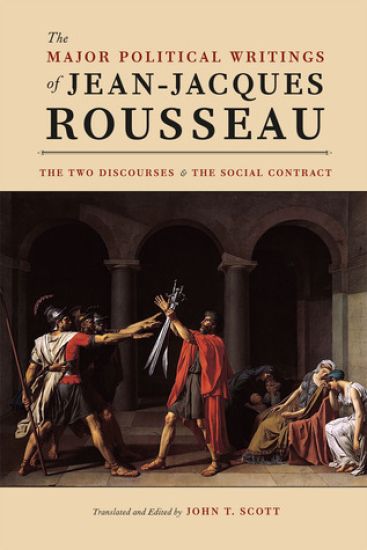
The Major Political Writings of Jean-Jacques Rousseau
Jean-Jacques Rousseau
University of Chicago Press
2012
sidottu
Individualist and communitarian. Anarchist and totalitarian. Classicist and romanticist. Progressive and reactionary. Since the eighteenth century, Jean-Jacques Rousseau has been said to be all of these things. Few philosophers have been the subject of as much or as intense debate, yet almost everyone agrees that Rousseau is among the most important and influential thinkers in the history of political philosophy. This new edition of his major political writings, published in the year of the three-hundredth anniversary of his birth, renews attention to the perennial importance of Rousseau's work. The book brings together superb new translations of three of Rousseau's works: the "Discourse on the Sciences and Arts", the "Discourse on the Origin and Foundations of Inequality Among Men", and "On the Social Contract". The two discourses show Rousseau developing his well-known conception of the natural goodness of man and the problems posed by life in society. With the "Social Contract", Rousseau became the first major thinker to argue that democracy is the only legitimate form of political organization. Translation and editorial notes clarify ideas and terms that might not be immediately familiar to most readers. The three works collected in "The Major Political Writings of Jean-Jacques Rousseau" represent an important contribution to eighteenth-century political theory that has exerted an extensive influence on generations of thinkers, beginning with the leaders of the French Revolution and continuing to the present day.


Rousseau juge de Jean-Jacques. Dialogues. ... of 2; Volume 1
Jean-Jacques Rousseau
Wentworth Press
2018
pokkari

Rousseau juge de Jean-Jacques. Dialogues. ... of 2; Volume 2
Jean-Jacques Rousseau
Wentworth Press
2018
pokkari

This book, first published in 1969, is a detailed consideration of Rousseau’s ideas on education, and an examination of how they grew out of his own experiences in childhood. With particular reference to the Confessions and Emile, this book emphasises the practical application of Rousseau’s theories and traces them through each stage of education. Professor Dobinson clearly analyses Rousseau’s views on the general upbringing of children from early infancy to late adolescence, and on the teaching of such subjects as science, history and religion. This book demonstrates throughout the relevance of Rousseau’s thought to the fundamental issues in contemporary education.

This book, first published in 1969, is a detailed consideration of Rousseau’s ideas on education, and an examination of how they grew out of his own experiences in childhood. With particular reference to the Confessions and Emile, this book emphasises the practical application of Rousseau’s theories and traces them through each stage of education. Professor Dobinson clearly analyses Rousseau’s views on the general upbringing of children from early infancy to late adolescence, and on the teaching of such subjects as science, history and religion. This book demonstrates throughout the relevance of Rousseau’s thought to the fundamental issues in contemporary education.

JEAN JACQUES ROUSSEAU
RowmanLittlefield
2035
sidottu

Jean-Jacques Rousseau
Routledge
2005
muu
Jean-Jacques Rousseau (1712-1778) was a pivotal thinker in the history of political philosophy, and in that of thought and literature more generally. Making major contributions in a variety of areas, he brought his political theory to bear on subjects such as the novel, music, education, and autobiography, amongst others.Bringing together critical assessments of the broad range of Rousseau’s thought, with a particular emphasis on his political theory, this important collection includes translations of a number of influential interpretations of Rousseau’s work that were not previously available in English and were prepared especially for this set, such as those of Lanson, de Jouvenal, Weil, Wahl, and Baczko.Organized thematically, and including an initial new introduction by the editor, as well as brief introductions to each individual volume, this systematic collection is undoubtedly an essential resource for a wide variety of students and scholars.

Rousseau is most often read either as a theorist of individual authenticity or as a communitarian. In this book, he is neither. Instead, Rousseau is understood as a theorist of the common person. In Strong's understanding, Rousseau's use of 'common' always refers both to that which is common and to that which is ordinary, vulgar, everyday. For Strong, Rousseau resonates with Kant, Hegel, and Marx, but he is more modern like Emerson, Nietzsche, Eittegenstein, and Heidegger. Rousseau's democratic individual is an ordinary self, paradoxically multiple and not singular. In the course of exploring this contention, Strong examines Rousseau's fear of authorship (though not of authority), his understanding of the human, his attempt to overcome the scandal that relativism posed for politics, and the political importance of sexuality.
Jean-Jacques Rousseau
Ashgate Publishing Limited
2007
sidottu
Jean-Jacques Rousseau (1712-1778) was hailed by Claude Lévi-Strauss as "the founder of the sciences of man". This collection of fourteen classic papers devoted to his work addresses the points of intersection between the moral and the political, the personal and the social. The volume is divided into five parts: The Critique of Progress and the Speculative Anthropology, The Naturalizing of Natural Law, The General Will and Totalitarianism, Anticipations of Game Theory and Strategies of Redemption. The articles are accompanied by an extensive, detailed introduction by the editor along with a selective bibliography.
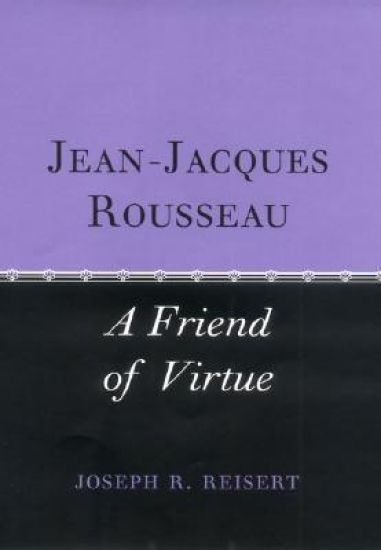
Scholars have long debated the contribution Rousseau has made to political thought. Is he a theorist of radical individualism, a reactionary advocate for authoritarianism, or just a brilliantly paradoxical but ultimately incoherent controversialist? In the first book devoted to discussion of Rousseau's conception of virtue, Joseph R. Reisert argues that Rousseau's work offers a coherent political theory that both complements and challenges key elements of contemporary liberalism.Drawing on his deep familiarity with Rousseau's work, Reisert maintains that Rousseau's primary concern was to discover the psychological foundations of virtue, which he understood as the strength of will needed to respect the rights of others. Reisert reconstructs the model of the human soul that underpins Rousseau's account of virtue, a model he considers superior to the alternatives conceived by Aristotle, Hobbes, Locke, Montesquieu, Kant, and Rawls. Rousseau, the author explains, believed that life in modern societies undermines virtue, but that for individuals to thrive, and for free societies to endure, all would require moral education. Rousseau, who styled himself "a friend of virtue," sought to impart virtue to his readers through the examples of his literary characters Emile and Julie.Reisert finds that Rousseau's thought poses a dilemma for modern politics: democratic governments can do little to cultivate virtue directly, yet liberal society continues to need it. The requisite moral teaching, Reisert concludes, should be provided instead by families, religious organizations, and other civil associations.

This book examines the philosophy of Rousseau and its contribution to our understanding of modernity. Strong notes that Rousseau has been associated with almost every school of thought and political movement of Western modernity - why is it that he has been read so divergently? The author suggests that Rousseau `gives us...our language for politics and personhood...Rousseau is not the whole story of modernity, but he is, in ways that others around and before him were not, modern.'

Jean-Jacques Rousseau is indisputably a major thinker in education. Jurgen Oelkers' volume offers the most coherent account of Rousseau's educational thought. This work is divided into: Intellectual biography; Critical exposition of Rousseau's work; The reception and influence of Rousseau's; and, The relevance of the work today.This is a major international reference series providing comprehensive accounts of the work of seminal educational thinkers from a variety of periods, disciplines and traditions. It is the most ambitious and prestigious such project ever published - a definitive resource for at least a generation. The thinkers include: Aquinas, Aristotle, Bourdieu, Bruner, Dewey, Foucault, Freire, Holt, Kant, Locke, Montessori, Neill, Newman, Owen, Peters, Piaget, Plato, Rousseau, Steiner, Vygotsky, West and Wollstonecraft.

