

Kirjahaku
Etsi kirjoja tekijän nimen, kirjan nimen tai ISBN:n perusteella.
1000 tulosta hakusanalla Jean-Luc Dupuis
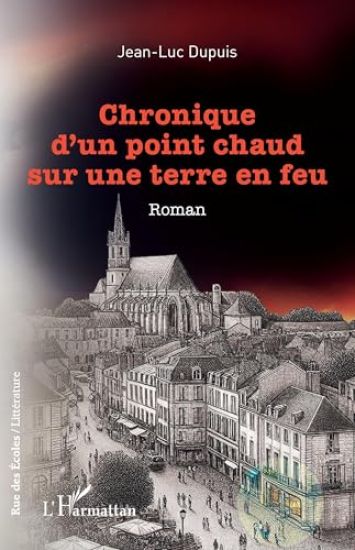
Amid, Taylor, Raju, Julien, Souleyman, Thierry, Emi, Sidiya, on conna t souvent leur seul pr nom qu'ils donnent en entrant au local. Ils ont froid l'hiver, ils ont toujours soif, souvent faim, de pain bien s r, mais de bien d'autres choses aussi pour calmer leur angoisse. Ils ne se plaignent pas, ou si peu, ils ne sortent de leur pais silence que pour de rudes salutations, des phrases en rafales, ou parfois d' mouvantes confidences qui voquent leur enfance massacr e, leur chute dans l'enfer des stup fiants, l'hostilit des compagnes d'une saison et les enfants dont ils sont sans nouvelles. Depuis un quartier n glig d'une petite ville de France jusqu'aux vastes horizons vers lesquels des foules de d racin s marchent en qu te d'une vie meilleure, cette chronique se veut un regard bienveillant port , jour apr s jour, sur une humanit toujours courageuse, mais moins que jamais assur e du chemin suivre.
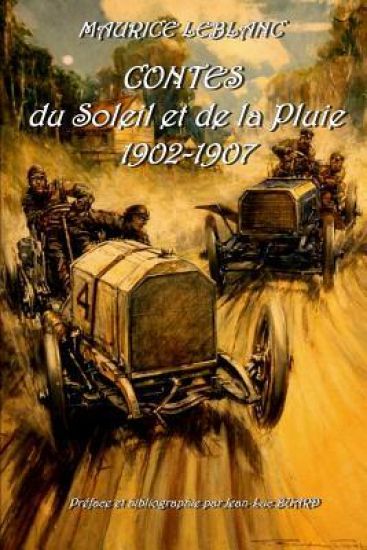
CONTES du Soleil et de la Pluie 1902-1907 Préface et bibliographie par Jean-Luc Buard
Jean-Luc BUARD; Maurice LEBLANC
Lulu.com
2018
nidottu
Conteur, collaborateur litteraire de journaux quotidiens, du Gil Blas puis du Journal avant d'etre engage en 1902 par L'Auto, Maurice Leblanc etait un admirateur du naturalisme de Maupassant. Mais sa carriere prit un brusque tournant en 1905, lorsqu'il crea le personnage d'Arsene Lupin dans le magazine Je sais tout.Ce recueil rassemble, pour la premiere fois, l'integralite des 110 contes et articles que Maurice Leblanc a publies, de 1902 a 1907, la plupart sous l'intitule " Contes du soleil et de la pluie ", dans le quotidien sportif L'Auto. Il y adapte ses themes favoris a un contexte particulier : les adulteres deviennent sportifs et sont aides par le moyen de la bicyclette ou de l'automobile, deux elements liberateurs des forces naturelles et instinctives des personnages.Presente par Jean-Luc Buard (co-fondateur et redacteur en chef du Rocambole, bulletin des amis du roman populaire), le volume est complete d'une bibliographie commentee des reproductions de ces contes, reeditions et traductions.

CONTES du Soleil et de la Pluie 1902-1907 Préface et bibliographie par Jean-Luc Buard
Jean-Luc BUARD; Maurice LEBLANC
Lulu.com
2018
nidottu
Conteur, collaborateur litteraire de journaux quotidiens, du Gil Blas puis du Journal avant d'etre engage en 1902 par L'Auto, Maurice Leblanc etait un admirateur du naturalisme de Maupassant. Mais sa carriere prit un brusque tournant en 1905, lorsqu'il crea le personnage d'Arsene Lupin dans le magazine Je sais tout.Ce recueil rassemble, pour la premiere fois, l'integralite des 110 contes et articles que Maurice Leblanc a publies, de 1902 a 1907, la plupart sous l'intitule " Contes du soleil et de la pluie ", dans le quotidien sportif L'Auto. Il y adapte ses themes favoris a un contexte particulier : les adulteres deviennent sportifs et sont aides par le moyen de la bicyclette ou de l'automobile, deux elements liberateurs des forces naturelles et instinctives des personnages.Presente par Jean-Luc Buard (co-fondateur et redacteur en chef du Rocambole, bulletin des amis du roman populaire), le volume est complete d'une bibliographie commentee des reproductions de ces contes, reeditions et traductions.

Henri Georges Jeanne dit H.-J. Magog debuta par des dialogues et des poesies. Il devint feuilletoniste en 1911 au Journal, a Excelsior et a L'Eclair, et fut conteur au quotidien Le Matin, a partir de 1923. Le Plus beau voyage, retrouve lors d'une exploration de " La Page du dimanche " du Matin, a ete compose pour les vacances de l'ete 1923. OEuvre de circonstance, roman de tourisme et de mystere, chaque episode fait l'objet d'une magnifique mise en image composee par Jacques Touchet (1887-1949).Hymne au tourisme hexagonal, au patrimoine et aux richesses archeologiques, architecturales, religieuses et naturelles de la France, a ses paysages, le roman de Magog invite a une decouverte hebdomadaire des differentes regions du pays : pour chaque jour, une etape, une visite, une aventure nouvelle vecues par les personnages et le lecteur, en temps reel.Ce court roman est precede par une introduction de Jean-Luc Buard (co-fondateur et redacteur en chef de la revue Le Rocambole).

Jean-Luc Godard, Cinema Historian
Indiana University Press
2013
pokkari
Originally released as a videographic experiment in film history, Jean-Luc Godard's Histoire(s) du cinéma has pioneered how we think about and narrate cinema history, and in how history is taught through cinema. In this stunningly illustrated volume, Michael Witt explores Godard's landmark work as both a specimen of an artist's vision and a philosophical statement on the history of film. Witt contextualizes Godard's theories and approaches to historiography and provides a guide to the wide-ranging cinematic, aesthetic, and cultural forces that shaped Godard's groundbreaking ideas on the history of cinema.
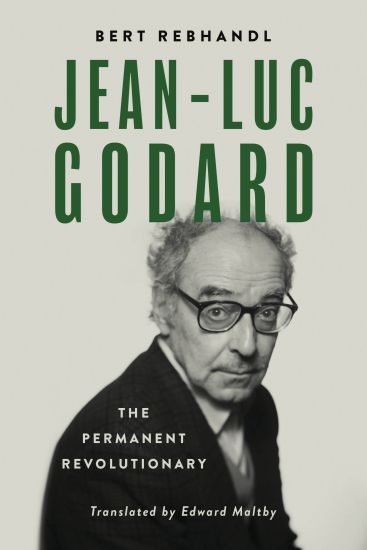
In this biography, now translated into English for the first time, Bert Rebhandl provides a balanced evaluation of the work of one of the most original and influential film directors of all time: Jean-Luc Godard (1930–2022). In this sympathetic yet critical overview, he argues that Godard's work captured the revolutionary spirit of Paris in the late 1960s as no other filmmaker has dared, and in fact reinvented the medium. Rebhandl skillfully weaves together biographical details; information about the cultural, intellectual, and cinematic milieu over the decades; and descriptions of Godard’s most significant films to support his assertion that the director was a permanent revolutionary—always seeking new ways to create, understand, and comment on film within a larger context. He views Godard as an artist consistently true to himself while never ceasing to change and evolve, often in unexpected, radical, and controversial ways. Rebhandl is known as a journalist with deep insights and lucid prose. Despite the wealth of material to analyze, he neither gets lost in the details nor offers a superficial gloss, even while directly tackling such topics as the long-standing charges of antisemitism against Godard and his oeuvre. This volume will be welcome to both casual fans and dedicated devotees.
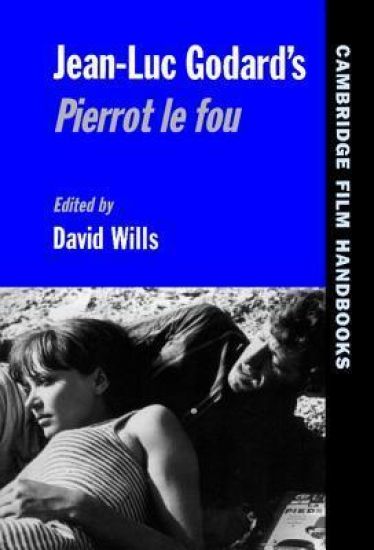
Jean-Luc Godard's Pierrot le Fou
Cambridge University Press
2000
sidottu
Jean-Luc Godard's Pierrot le fou, made at the height of the French New Wave, remains a milestone in French cinema. More accessible than his later films, it represents the diverse facets of Godard's concerns and themes: a bittersweet analysis of male-female relations; an interrogation of the image; personal and international politics; the existential dilemmas of consumer society. This volume, first published in 2000, brings together essays by five prominent scholars of French film. They approach Pierrot le fou from the perspectives of image-and-word-play, aesthetics and politics, history, and high and popular culture, offering thought-provoking insights into the film, while demonstrating its relevance for a new generation of students of film. Also included are a selection of reviews of the film, as well as a complete filmography of Godard's work.
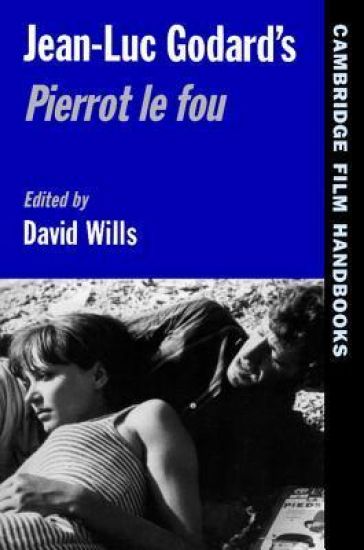
Jean-Luc Godard's Pierrot le Fou
Cambridge University Press
2000
pokkari
Jean-Luc Godard’s Pierrot le fou, made at the height of the French New Wave, remains a milestone in French cinema. More accessible than his later films, it represents the diverse facets of Godard’s concerns and themes: a bittersweet analysis of male-female relations; an interrogation of the image; personal and international politics; the existential dilemmas of consumer society. This volume brings together essays by five prominent scholars of French film. They approach Pierrot le fou from the perspectives of image-and-word-play, aesthetics and politics, history, and high and popular culture, offering thought-provoking insights into the film, while demonstrating its relevance for a new generation of students of film. Also included are a selection of reviews of the film, as well as a complete filmography of Godard’s work.
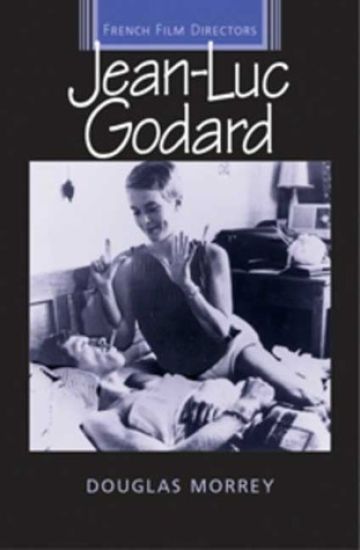
This volume offers a new interpretation of one of the most innovative directors in the history of cinema. It is the first book to cover the whole of Godard's career, from the French New Wave to the recent triumphs of Histoire(s) du cinéma and Eloge de l’amour. Drawing on a wide range of literary, filmic and philiosophical texts, the book places Godard's work within its intellectual context, examining how developments in French culture and thought since 1950 have been mirrored in - and sometimes anticipated by - Godard's films.Numerous sequences from Godard's films are singled out for close analysis, demonstrating how the director's radical approaches to narrative, editing, sound and shot composition have made the cinema into an analytical tool in its own right.The book will be essential to all students of Godard's films, and of interest to scholars of modern and contemporary French cinema, culture and thought.
Jean-Luc Nancy is one of the leading contemporary thinkers in France today. Through an inventive reappropriation of the major figures in the continental tradition, Nancy has developed an original ontology that impacts the way we think about religion, politics, community, embodiment, and art. Drawing from a wide range of his writing, Marie-Eve Morin provides the first comprehensive and systematic account of Nancy’s thinking, all the way up to his most recent work on the deconstruction of Christianity. Without losing sight of the heterogeneity of Nancy’s work, Morin presents a concise articulation of the organizing concepts, which structure Nancy’s body of work. The guiding thread is that of an essential rift at the heart of any “self” by which this self is exposed and relates to itself and other selves. Nancy’s ontology undercuts dichotomies between individual and community, interior and exterior, matter and spirit, thing and thought, not in the name of mere deconstruction, but in seeking to open a thinking of the “limit” or the “edge” as the locus of sense. While Nancy’s work has often been presented in relation to Heidegger or Derrida, Morin demonstrates the originality of Nancy’s work and argues that, despite the variety of its preoccupations and topics, it possesses its own rigorous internal logic. This book will be of interest to students and scholars of philosophy and related fields who seek a systematic and critical understanding of one of the most original contemporary thinkers.
Jean-Luc Nancy is one of the leading contemporary thinkers in France today. Through an inventive reappropriation of the major figures in the continental tradition, Nancy has developed an original ontology that impacts the way we think about religion, politics, community, embodiment, and art. Drawing from a wide range of his writing, Marie-Eve Morin provides the first comprehensive and systematic account of Nancy’s thinking, all the way up to his most recent work on the deconstruction of Christianity. Without losing sight of the heterogeneity of Nancy’s work, Morin presents a concise articulation of the organizing concepts, which structure Nancy’s body of work. The guiding thread is that of an essential rift at the heart of any “self” by which this self is exposed and relates to itself and other selves. Nancy’s ontology undercuts dichotomies between individual and community, interior and exterior, matter and spirit, thing and thought, not in the name of mere deconstruction, but in seeking to open a thinking of the “limit” or the “edge” as the locus of sense. While Nancy’s work has often been presented in relation to Heidegger or Derrida, Morin demonstrates the originality of Nancy’s work and argues that, despite the variety of its preoccupations and topics, it possesses its own rigorous internal logic. This book will be of interest to students and scholars of philosophy and related fields who seek a systematic and critical understanding of one of the most original contemporary thinkers.
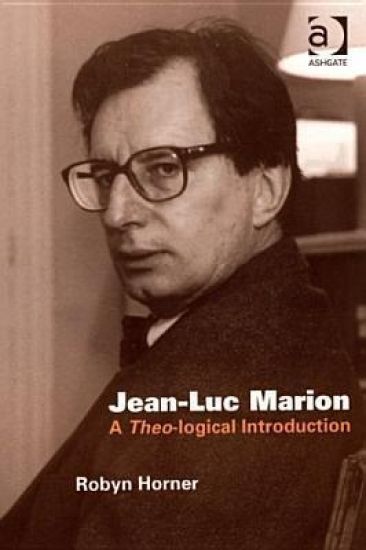
Jean-Luc Marion is one of the leading Catholic thinkers of our time: a formidable authority on Descartes and a major scholar in the philosophy of religion. This book presents a concise, accessible, and engaging introduction to the theology of Jean-Luc Marion. Described as one of the leading thinkers of his generation, Marion's take on the postmodern is richly enhanced by his expertise in patristic and mystical theology, phenomenology, and modern philosophy. In this first introduction to Marion's thought, Robyn Horner provides the essential background to Marion's work, as well as analysing the most significant themes for contemporary theology. This book serves as an ideal starting point for students of theology and philosophy, as well as for those seeking to further their knowledge of cutting-edge thinking in contemporary theology.
Jean-Luc Godard's Hail Mary
Maryel (EDT) Locke; Charles Warren
Southern Illinois Univ Pr
1993
sidottu
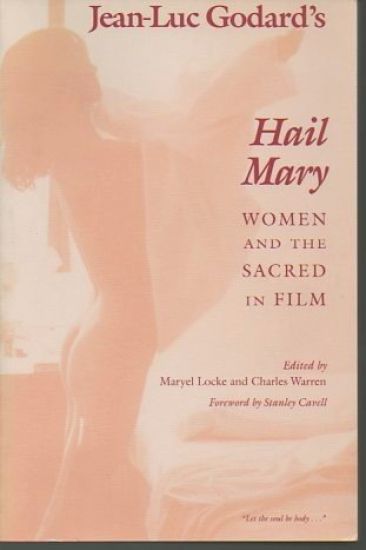
Jean-Luc Godard's Hail Mary
Maryel (EDT) Locke; Charles Warren
Southern Illinois Univ Pr
1993
pokkari

Jean-Luc Marion is one of the leading Catholic thinkers of our time: a formidable authority on Descartes and a major scholar in the philosophy of religion. This book presents a concise, accessible, and engaging introduction to the theology of Jean-Luc Marion. Described as one of the leading thinkers of his generation, Marion's take on the postmodern is richly enhanced by his expertise in patristic and mystical theology, phenomenology, and modern philosophy. In this first introduction to Marion's thought, Robyn Horner provides the essential background to Marion's work, as well as analysing the most significant themes for contemporary theology. This book serves as an ideal starting point for students of theology and philosophy, as well as for those seeking to further their knowledge of cutting-edge thinking in contemporary theology.
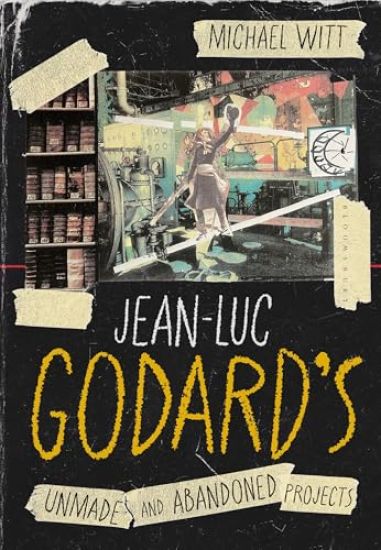
This book offers the first study of the French-Swiss filmmaker Jean-Luc Godard's vast body of over 380 unmade, unfinished and abandoned projects over the course of his career from the late 1940s to the 2020s. While Godard is widely recognised as one of the most important and influential filmmakers of the post-war period, extremely little has been written about his largely invisible and unknown corpus of unrealised works. This includes many unmade films, videos and television programmes alongside a wide range of unfinished non-audiovisual ventures such as plays, books, exhibitions, a CD, a camera, a film journal, and even an architectural maquette. Drawing on extensive research on the surviving traces of these projects in archives and private collections, Michael Witt's comprehensive survey establishes the extent and constitution of the Godardian corpus of unrealised and abandoned works for the first time and examines them in detail in six key perspectives: literature, cinema, theatre, television, politics and history. The volume includes in-depth case studies of numerous major unfinished initiatives by Godard and his collaborators in locations around the globe (France, the Middle East, the USA, Quebec, the People's Republic of Mozambique), charts the extensive connections between his abandoned projects and his completed works, casts in relief his creative process, and offers a fresh way of thinking about and approaching his practice and oeuvre as a whole. A full annotated list of his unrealised and abandoned projects is included as an appendix.
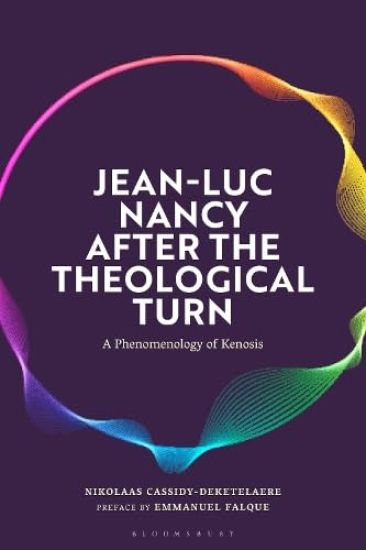
Jean-Luc Nancy after the Theological Turn
Nikolaas Cassidy-Deketelaere
BLOOMSBURY PUBLISHING PLC
2025
sidottu
A novel and profound reading of Jean-Luc Nancy’s deconstruction of Christianity in the context of French phenomenology’s ‘theological turn’, this is an important contribution to continental philosophy of religion. Deftly exploring Nancy’s work alongside major twentieth-century philosophers of religion including Jean-Luc Marion, Michel Henry, Jean-Louis Chrétien and Emmanuel Falque, Jean-Luc Nancy after the Theological Turn argues that only by turning to theology can phenomenology come into its own as philosophy. Following Derrida’s treatment of Nancy, Nikolaas Cassidy-Deketelaere thinks ‘after’ the theological turn by deconstructing phenomenology’s inherent theological structure which made that turn possible: starting from the theological turn phenomenology was structurally inclined to produce, this book seeks to move beyond it (i.e., to ‘de-theologise’ phenomenology). This parallels Nancy’s engagement with Christianity: drawing on Paul’s kenosis—according to which God empties himself of his divinity in the Incarnation—he understands Christianity as deconstructing or de-theologising itself. Written in elegant and clear prose, in elaborating Nancy’s little-discussed writing on Christianity this volume clarifies the philosophical project of one of the most influential contemporary thinkers. Cassidy-Deketelaere persuasively establishes the radical significance of theology for phenomenology and explains the consequences of that relationship for the recent history of contemporary philosophy.
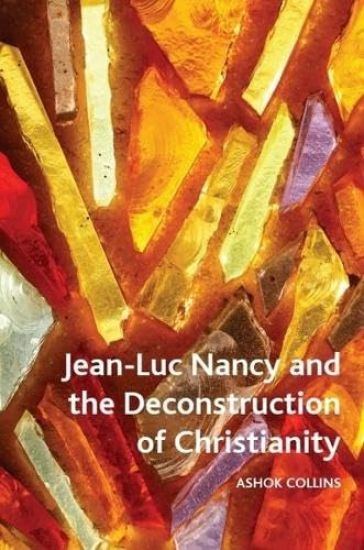
Jean-Luc Nancy and the Deconstruction of Christianity
Ashok Collins
EDINBURGH UNIVERSITY PRESS
2025
sidottu
In dialogue with Derridean deconstruction, this book highlights Nancy's distinctive figurative philosophical style which emerges as a transformative force, one that radicalises differance and draws out its creative potential. Through this generative logic, Nancy reconfigures how we conceptualise Christianity-not as an entity apart from philosophical reflection, but as intricately intertwined with it. Ashok Collins offers a bold new perspective on the 'turn to religion' within deconstruction, charting fresh pathways for debate and reflection far beyond its established boundaries.
Jean-Luc Nancy and Plural Thinking
State University of New York Press
2012
pokkari
Wide-ranging essays on Jean-Luc Nancy's thought.Jean-Luc Nancy is one of the leading voices in European philosophy of the last thirty years, and he has influenced a range of fields, including theology, aesthetics, and political theory. This volume offers the widest and most up-to-date responses to his work, oriented by the themes of world, finitude, and sense, with attention also given to his recent project on the "deconstruction of Christianity." Focusing on Nancy's writings on globalization, Christianity, the plurality of art forms, his materialist ontology, as well as a range of contemporary issues, an international group of scholars provides not just inventive interpretations of Nancy's work but also essays taking on the most pressing issues of today. The collection brings to the fore the originality of his thinking and points to the future of continental philosophy. A previously unpublished interview with Nancy concludes the volume.