

Kirjahaku
Etsi kirjoja tekijän nimen, kirjan nimen tai ISBN:n perusteella.
1000 tulosta hakusanalla Jeanette Shaw



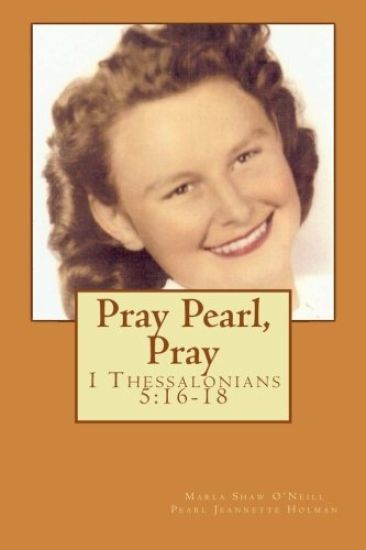
Pray Pearl, Pray
Pearl Jeannette Holman; Marla Shaw O'Neill
Createspace Independent Publishing Platform
2016
nidottu

In this comprehensive introduction to Winterson's work, Sonya Andermahr considers its significance in the context of contemporary British culture and literary history. Including an interview with the author, this guide offers an accessible reading of all Winterson's work and an overview of the varied critical reception this has received.

In this comprehensive introduction to Winterson's work, Sonya Andermahr considers its significance in the context of contemporary British culture and literary history. Including an interview with the author, this guide offers an accessible reading of all Winterson's work and an overview of the varied critical reception this has received.


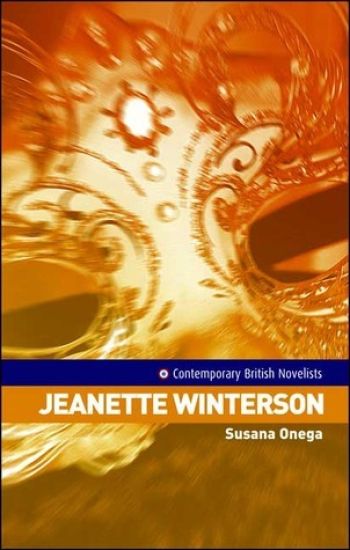
This is the first full-length study of Jeanette Winterson’s complete oeuvre, offering detailed analysis of her nine novels as well as addressing her non-fiction and minor fictional work. Susana Onega combines the study of formal issues such as narrative structure, perspective and point of view with thematic analyses approached from a variety of theoretical perspectives, from narratology and feminist theory to Hermetic and Kabalistic symbolism, to provide a comprehensive ‘vertical’ analysis of Winterson’s novels.Onega reveals the books as complex linguistic artefacts, crammed with intertextual echoes. She demonstrates the inseparability of form and meaning within Winterson’s work, and positions her within the wider context of contemporary British fiction alongside fellow visionaries such as Peter Ackroyd, Maureen Duffy and Marina Warner.
This is the first full-length study of Jeanette Winterson’s complete oeuvre, offering detailed analysis of her nine novels as well as addressing her non-fiction and minor fictional work. Susana Onega combines the study of formal issues such as narrative structure, perspective and point of view with thematic analyses approached from a variety of theoretical perspectives, from narratology and feminist theory to Hermetic and Kabalistic symbolism, to provide a comprehensive ‘vertical’ analysis of Winterson’s novels.Onega reveals the books as complex linguistic artefacts, crammed with intertextual echoes. She demonstrates the inseparability of form and meaning within Winterson’s work, and positions her within the wider context of contemporary British fiction alongside fellow visionaries such as Peter Ackroyd, Maureen Duffy and Marina Warner.
Jeanette Winterson
Continuum International Publishing Group Ltd.
2007
sidottu
"Jeanette Winterson: A Contemporary Vritical Guide" is a comprehensive introduction to Winterson's writing. It brings together new essays by leading critics writing on key topics across her work from early successes like "Oranges are Not the Only Fruit" to recent works like "Lighthousekeeping". The guide provides students with an accessible and up-to-date critical guide to Winterson's most commonly studied texts, covering major themes and developments, and issues of style, technique and genre, from a range of contemporary critical and theoretical perspectives. Chapters identify and explore the key topics and debates including: story-telling; feminism and women's writing; historiographic metafiction; literary realism and postmodernism; religion and spirituality; masculinity; lesbian romance; queer theory; and psychoanalytic approaches. Each chapter includes an introductory overview outlining key themes, approaches and the texts covered. This is an ideal introduction to the variety of critical approaches to Winterson and her work.
Jeanette Winterson
Continuum International Publishing Group Ltd.
2007
nidottu
"Jeanette Winterson: A Contemporary Vritical Guide" is a comprehensive introduction to Winterson's writing. It brings together new essays by leading critics writing on key topics across her work from early successes like "Oranges are Not the Only Fruit" to recent works like "Lighthousekeeping". The guide provides students with an accessible and up-to-date critical guide to Winterson's most commonly studied texts, covering major themes and developments, and issues of style, technique and genre, from a range of contemporary critical and theoretical perspectives. Chapters identify and explore the key topics and debates including: story-telling; feminism and women's writing; historiographic metafiction; literary realism and postmodernism; religion and spirituality; masculinity; lesbian romance; queer theory; and psychoanalytic approaches. Each chapter includes an introductory overview outlining key themes, approaches and the texts covered. This is an ideal introduction to the variety of critical approaches to Winterson and her work.

Jeanette Manuel: The Life and Legend of the Belle of Fabulous Florence
Herman Wiley Ronnenberg
Heritage Witness Reflections Publishing
2013
nidottu

Since the publication of her first novel, Oranges Are Not the Only Fruit, Jeanette Winterson quickly established herself as a powerful and insightful writer on sexuality and gender. However, the profound and persistent religious themes of her work have received much less critical attention. Jeanette Winterson and Religion is the first in-depth study of the ways in which Winterson navigates the sacred and the profane in the full range of her writing, from her first novel to later works such as The PowerBook and The Stone Gods. This book reads the author's work alongside the theological turn in the thought of such theorists as Alain Badiou, John D. Caputo and Julia Kristeva as well as feminist and queer theologians such as Catherine Keller and Marcella Althaus-Reid. In this way, Jeanette Winterson and Religion reveals how Jeanette Winterson stakes out a unique and intriguing post-secular literary form of the sacred.

Jeanette Winterson’s Narratives of Desire
Shareena Z. Hamzah-Osbourne
Bloomsbury Academic
2021
sidottu
Putting forward a new theory of fetishism - alternative fetishism - this book provides an up-to-date examination of the work of Jeanette Winterson, offering fresh perspectives and new insights on the topics of gender, sexuality, and identity in her writing. Combining contemporary theories in psychoanalytical and cultural studies, it proposes that a rethinking of fetishism allows Winterson’s works to be brought into sharper critical focus by repositioning fetishism as a daily practice in society. In so doing, it argues that Winterson's work challenges orthodox, normative, and contemporary views of fetishism to reveal her own alternative version. Containing the transcript of an email Q&A with Winterson herself and covering the majority of Winterson’s oeuvre, from her first novel, Oranges Are Not the Only Fruit (1985), up to the most recent, Frankissstein (2019), the book is divided into three main chapters that each discuss a particular theme in Winterson’s fiction: bodily fetishism, food fetishism, and sexual fetishism. While the book's focus is on Winterson, the theoretical framework it proposes can be applied to other authors and disciplines in the Arts and Humanities, such as theatre and film, offering new ways of thinking about topics such as fetishism, feminism, psychoanalytical theory, postmodernism, gender, and sexuality.
Jeanette Winterson’s Narratives of Desire
Shareena Z. Hamzah-Osbourne
BLOOMSBURY PUBLISHING PLC
2023
nidottu
Putting forward a new theory of fetishism - alternative fetishism - this book provides an up-to-date examination of the work of Jeanette Winterson, offering fresh perspectives and new insights on the topics of gender, sexuality, and identity in her writing. Combining contemporary theories in psychoanalytical and cultural studies, it proposes that a rethinking of fetishism allows Winterson’s works to be brought into sharper critical focus by repositioning fetishism as a daily practice in society. In so doing, it argues that Winterson's work challenges orthodox, normative, and contemporary views of fetishism to reveal her own alternative version. Containing the transcript of an email Q&A with Winterson herself and covering the majority of Winterson’s oeuvre, from her first novel, Oranges Are Not the Only Fruit (1985), up to the most recent, Frankissstein (2019), the book is divided into three main chapters that each discuss a particular theme in Winterson’s fiction: bodily fetishism, food fetishism, and sexual fetishism. While the book's focus is on Winterson, the theoretical framework it proposes can be applied to other authors and disciplines in the Arts and Humanities, such as theatre and film, offering new ways of thinking about topics such as fetishism, feminism, psychoanalytical theory, postmodernism, gender, and sexuality.

Since the publication of her first novel, Oranges Are Not the Only Fruit, Jeanette Winterson quickly established herself as a powerful and insightful writer on sexuality and gender. However, the profound and persistent religious themes of her work have received much less critical attention. Jeanette Winterson and Religion is the first in-depth study of the ways in which Winterson navigates the sacred and the profane in the full range of her writing, from her first novel to later works such as The PowerBook and The Stone Gods. This book reads the author's work alongside the theological turn in the thought of such theorists as Alain Badiou, John D. Caputo and Julia Kristeva as well as feminist and queer theologians such as Catherine Keller and Marcella Althaus-Reid. In this way, Jeanette Winterson and Religion reveals how Jeanette Winterson stakes out a unique and intriguing post-secular literary form of the sacred.
