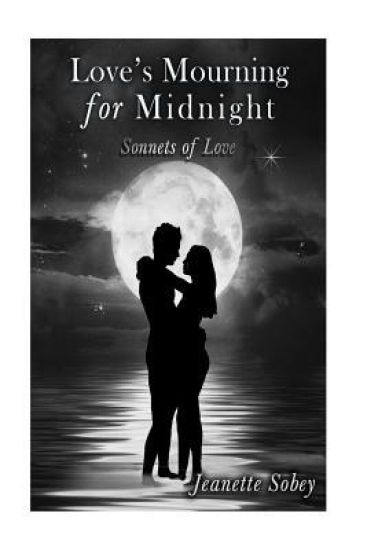
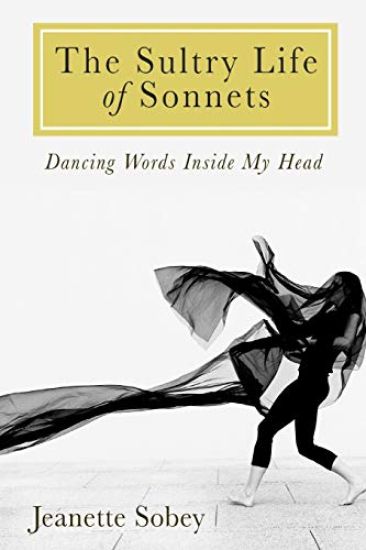
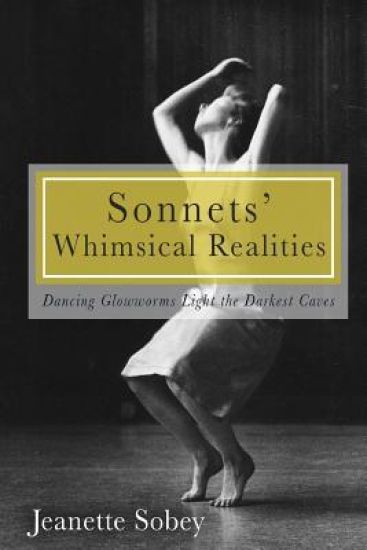
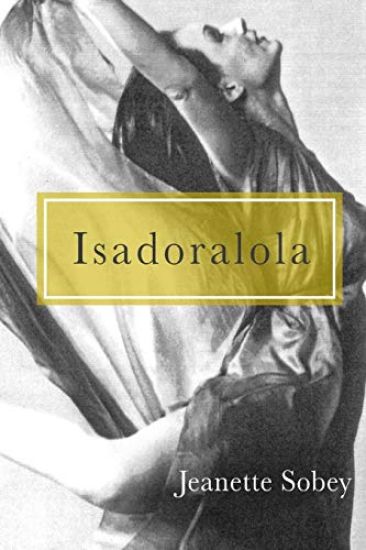
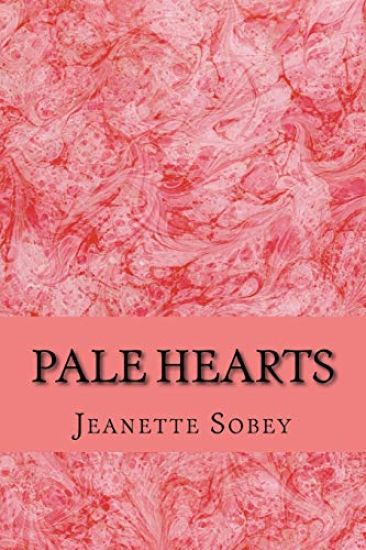
Author note: - The Dance that is life...one day filled with joy, the next immersed in pain. Who can ever predict the next day, or would wish to... There are 57 Sonnets in this book. Sonnets of love, Sonnets of joy, Sonnets of Pain...life and love entangled within the world of Dance. For whether sliding into the sensual world of the Tango, or executing a quick fox trot through a busy day, one might dream of a successful performance. Nevertheless, whether successful or not, participation has its own rewards. Participation, indeed complete immersion on some occasions, enriches lives. To remain outside and looking in at the main event, though safe, shall forever dampen and dull life's journey. Two ladies, Isadora Duncan and Lola Montez, always plunged into the main arena and embraced it all. Their bold voices proclaimed loudly their views about passionate love and political and artistic matters. They lived their lives to the full. 29 of my sonnets in this book, direct from my Novel, Isadoralola, seek to represent their voices. 28 other sonnets wander into love's disarrays and the world of dance. All sonnets in traditional iambic pentameter, producing a musical quality when read, and in the classic verse form.
This is a re-edited version of the original E-book. Section I and Section II of this book, begins with a dance performance by each of the lead characters ...and then retraces their lives to an earlier period. This is because of the importance of the dance to these two women, Isadora and Lola. It moves swiftly through chapter to chapter, telling the story of either highlights or lowlights of these two lives. The reader needs to take note of the date of each chapter, in order to understand the point the narrative is at. Isadoralola is an historical fiction book based upon the lives of Isadora Duncan and Lola Montez-two famous dancers from the 19th and 20th centuries. Both lived and danced throughout many countries around the world. They were outspoken and passionate about democratic rights for all. They were often frustrated at the subservient roles, that society deemed appropriate for women, during this period. Isadora and Lola loved freely and travelled widely, but also experienced great tragedies in their lives, and died far too young. This tale is written from an imagined point of view, written in the first person. It is not a biography. It is, however, written after detailed research into the lives of the two women and endeavours to portray their personalities. The writer calls upon her own experiences of theatre, to get inside the heads of the dancers. This book also features a Sonnet at the start of each chapter, which can then be reread at the end, for it's a poetic pr cis of the narrative, or feelings, contained within the chapter.
My favourite forms of poetry are the Sonnets, Sestinas and Coronas; however, I have explored other forms in this book too. Some are influenced by the beats and repeating line patterns of the 19thC French poet, Baudelaire, and others are freeform. My first poem, Homing Bodies, is written using a Baudelaire format. However, my heart and mind always seem to return to the Sonnet form, as you will note throughout the sections. Some of my poems are of a dark and bleak nature, and I've always loved the dark poems of Sylvia Plath. I think she was the first poet I really connected with. I believe she has had an influence upon me. Later, when studying for my Masters, I discovered the sonnets of Shakespeare and Petrarch, and loved them. This led me to complete a suite of sonnets as part of my degree. HOME - In this section, there's a theme that covers a wide ranging perspective of what is considered 'home'. From bugs at home in cracked walls, to those who have only doorways, streets, or parks, to call home. The Homeland poem reveals thoughts about my homeland of Australia. Being of Scottish/Irish ancestry, I have great respect for the traditional owners of this land. I reflect with sorrow, upon the hardships they have suffered since this country was colonized, or in fact, invaded. I have also included a ballad, The Republic of Australia, and I passionately hope that this country will become a Republic, sooner, rather than later. HEAT -In poems such as Steam Heat and Demon Fire, I use a Baudelaire format, comprising 12 beats to a line, instead of the 10 beats (iambic pentameter of the sonnets).There's also the repeating of certain lines eg. 2nd line becomes first, last line becomes third in the following section. Alternatively, Heatwave is freeform, and I just allow the emotions to run along and build. This section has poems which tell of the horrors of heat and bushfires, including arsonists, something that is never far from our minds in this country during summer. Universal Concepts - This section wanders through lust, longing, love and nature. The Coronas, Behind the Blinds and Outside the Blinds, are about the misconceptions we may have about other people's lives. Truth, whither do you go? - Truth and Lies is a topic that fascinates me. I explored it in my previous book and I do so again in this one.
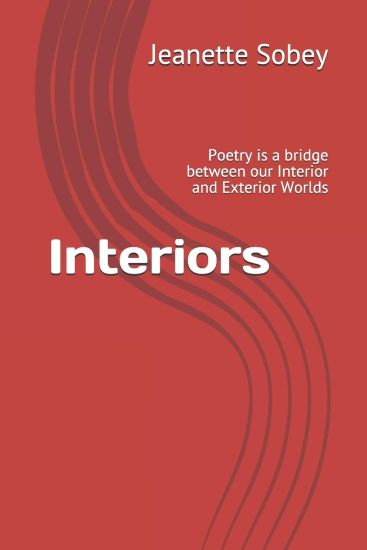
In this book of poetry, I have written in various forms and the book is divided into six sections.InteriorsFragmentsSonnetsSestinasCoronasWanderingsInteriors-Free verse poetical forms with the Theme of Love and Life.Fragments-Snippets of Insights and Themes of Love, with sensual imagery.Sonnets-Love and all its intricacies, joys, lust, pain.Sestinas-Three Sestinas-Flower-An allegory for a woman's first love and sexual encounter.-Practice the Craft-Plunging into love. Proceeding without caution, led by desires.-True Love-Follows the tale of gentle, poetic souls seeking true love.This is in stark contrast to the brash and bold images, and themes thatare often presented to us as love, in the digital age.Coronas-Two Coronas-Southern Land-Descriptions that are often filled with erotic imagery of the Australian outback territory. The vast and lonely land, sometimes the scene of brutal murders, has a special 'raw' quality about it. It may be beautiful, but it can also be frightening.-Reflections-Examines whether Art imitates Life or as Oscar Wilde opined, Life imitates Art.-Wanderings-Poems about a love for the Australian bushland
Sonnets, Sestinas and Coronas, are forms I love to write in. Structures tend to guide me forward in the creativity process, rather than inhibit. It's a bit like needing to choose a spot to stand in within a large world of words, ideas, thoughts, and feelings. This way, one is not lost within a realm of choices. Of course, I also choose a theme at the beginning of each work, but then I can indulge in the creativity process, harnessed by form. With the Sestina complex ordering of six words, I like to choose the words and theme, and then see where my journey takes me. Of course, it goes without saying, one needs to reread, reedit, rewrite, then reread, reedit, rewrite some more. Check, check, check. This is an essential, time consuming part of the process. However, I still love the traditional formats and believe they necessarily smooth the blunt edges of my work. The Corona comprises seven individual sonnets that are linked, to tell a story. The first line of the first sonnet is the last line of the last sonnet. I also like to write in iambic pentameter beat, which add a musical quality to the poems, when read aloud. I always believe poems need to be read aloud. A voice more powerfully delivers the message, in poetry. Hopefully, dear Reader, you will find a poem that you can relate to. The themes are about love, desire, pain, dark moods, and fragility of life.
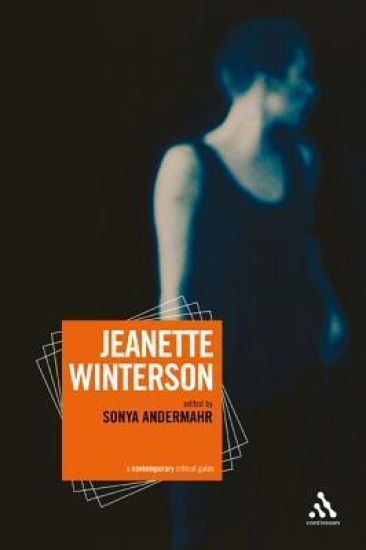
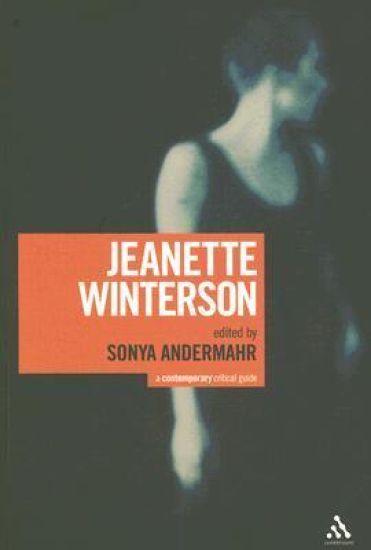
In this comprehensive introduction to Winterson's work, Sonya Andermahr considers its significance in the context of contemporary British culture and literary history. Including an interview with the author, this guide offers an accessible reading of all Winterson's work and an overview of the varied critical reception this has received.
In this comprehensive introduction to Winterson's work, Sonya Andermahr considers its significance in the context of contemporary British culture and literary history. Including an interview with the author, this guide offers an accessible reading of all Winterson's work and an overview of the varied critical reception this has received.
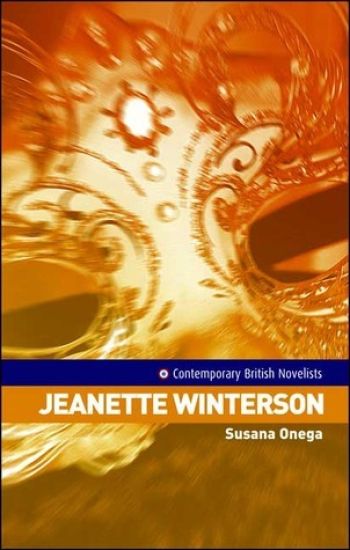
This is the first full-length study of Jeanette Winterson’s complete oeuvre, offering detailed analysis of her nine novels as well as addressing her non-fiction and minor fictional work. Susana Onega combines the study of formal issues such as narrative structure, perspective and point of view with thematic analyses approached from a variety of theoretical perspectives, from narratology and feminist theory to Hermetic and Kabalistic symbolism, to provide a comprehensive ‘vertical’ analysis of Winterson’s novels.Onega reveals the books as complex linguistic artefacts, crammed with intertextual echoes. She demonstrates the inseparability of form and meaning within Winterson’s work, and positions her within the wider context of contemporary British fiction alongside fellow visionaries such as Peter Ackroyd, Maureen Duffy and Marina Warner.
This is the first full-length study of Jeanette Winterson’s complete oeuvre, offering detailed analysis of her nine novels as well as addressing her non-fiction and minor fictional work. Susana Onega combines the study of formal issues such as narrative structure, perspective and point of view with thematic analyses approached from a variety of theoretical perspectives, from narratology and feminist theory to Hermetic and Kabalistic symbolism, to provide a comprehensive ‘vertical’ analysis of Winterson’s novels.Onega reveals the books as complex linguistic artefacts, crammed with intertextual echoes. She demonstrates the inseparability of form and meaning within Winterson’s work, and positions her within the wider context of contemporary British fiction alongside fellow visionaries such as Peter Ackroyd, Maureen Duffy and Marina Warner.
"Jeanette Winterson: A Contemporary Vritical Guide" is a comprehensive introduction to Winterson's writing. It brings together new essays by leading critics writing on key topics across her work from early successes like "Oranges are Not the Only Fruit" to recent works like "Lighthousekeeping". The guide provides students with an accessible and up-to-date critical guide to Winterson's most commonly studied texts, covering major themes and developments, and issues of style, technique and genre, from a range of contemporary critical and theoretical perspectives. Chapters identify and explore the key topics and debates including: story-telling; feminism and women's writing; historiographic metafiction; literary realism and postmodernism; religion and spirituality; masculinity; lesbian romance; queer theory; and psychoanalytic approaches. Each chapter includes an introductory overview outlining key themes, approaches and the texts covered. This is an ideal introduction to the variety of critical approaches to Winterson and her work.
"Jeanette Winterson: A Contemporary Vritical Guide" is a comprehensive introduction to Winterson's writing. It brings together new essays by leading critics writing on key topics across her work from early successes like "Oranges are Not the Only Fruit" to recent works like "Lighthousekeeping". The guide provides students with an accessible and up-to-date critical guide to Winterson's most commonly studied texts, covering major themes and developments, and issues of style, technique and genre, from a range of contemporary critical and theoretical perspectives. Chapters identify and explore the key topics and debates including: story-telling; feminism and women's writing; historiographic metafiction; literary realism and postmodernism; religion and spirituality; masculinity; lesbian romance; queer theory; and psychoanalytic approaches. Each chapter includes an introductory overview outlining key themes, approaches and the texts covered. This is an ideal introduction to the variety of critical approaches to Winterson and her work.
Since the publication of her first novel, Oranges Are Not the Only Fruit, Jeanette Winterson quickly established herself as a powerful and insightful writer on sexuality and gender. However, the profound and persistent religious themes of her work have received much less critical attention. Jeanette Winterson and Religion is the first in-depth study of the ways in which Winterson navigates the sacred and the profane in the full range of her writing, from her first novel to later works such as The PowerBook and The Stone Gods. This book reads the author's work alongside the theological turn in the thought of such theorists as Alain Badiou, John D. Caputo and Julia Kristeva as well as feminist and queer theologians such as Catherine Keller and Marcella Althaus-Reid. In this way, Jeanette Winterson and Religion reveals how Jeanette Winterson stakes out a unique and intriguing post-secular literary form of the sacred.
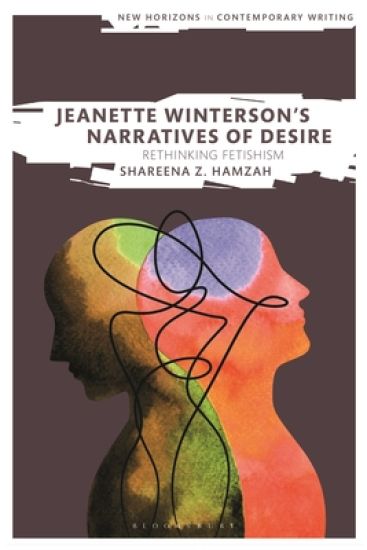
Putting forward a new theory of fetishism - alternative fetishism - this book provides an up-to-date examination of the work of Jeanette Winterson, offering fresh perspectives and new insights on the topics of gender, sexuality, and identity in her writing. Combining contemporary theories in psychoanalytical and cultural studies, it proposes that a rethinking of fetishism allows Winterson’s works to be brought into sharper critical focus by repositioning fetishism as a daily practice in society. In so doing, it argues that Winterson's work challenges orthodox, normative, and contemporary views of fetishism to reveal her own alternative version. Containing the transcript of an email Q&A with Winterson herself and covering the majority of Winterson’s oeuvre, from her first novel, Oranges Are Not the Only Fruit (1985), up to the most recent, Frankissstein (2019), the book is divided into three main chapters that each discuss a particular theme in Winterson’s fiction: bodily fetishism, food fetishism, and sexual fetishism. While the book's focus is on Winterson, the theoretical framework it proposes can be applied to other authors and disciplines in the Arts and Humanities, such as theatre and film, offering new ways of thinking about topics such as fetishism, feminism, psychoanalytical theory, postmodernism, gender, and sexuality.
Putting forward a new theory of fetishism - alternative fetishism - this book provides an up-to-date examination of the work of Jeanette Winterson, offering fresh perspectives and new insights on the topics of gender, sexuality, and identity in her writing. Combining contemporary theories in psychoanalytical and cultural studies, it proposes that a rethinking of fetishism allows Winterson’s works to be brought into sharper critical focus by repositioning fetishism as a daily practice in society. In so doing, it argues that Winterson's work challenges orthodox, normative, and contemporary views of fetishism to reveal her own alternative version. Containing the transcript of an email Q&A with Winterson herself and covering the majority of Winterson’s oeuvre, from her first novel, Oranges Are Not the Only Fruit (1985), up to the most recent, Frankissstein (2019), the book is divided into three main chapters that each discuss a particular theme in Winterson’s fiction: bodily fetishism, food fetishism, and sexual fetishism. While the book's focus is on Winterson, the theoretical framework it proposes can be applied to other authors and disciplines in the Arts and Humanities, such as theatre and film, offering new ways of thinking about topics such as fetishism, feminism, psychoanalytical theory, postmodernism, gender, and sexuality.
Since the publication of her first novel, Oranges Are Not the Only Fruit, Jeanette Winterson quickly established herself as a powerful and insightful writer on sexuality and gender. However, the profound and persistent religious themes of her work have received much less critical attention. Jeanette Winterson and Religion is the first in-depth study of the ways in which Winterson navigates the sacred and the profane in the full range of her writing, from her first novel to later works such as The PowerBook and The Stone Gods. This book reads the author's work alongside the theological turn in the thought of such theorists as Alain Badiou, John D. Caputo and Julia Kristeva as well as feminist and queer theologians such as Catherine Keller and Marcella Althaus-Reid. In this way, Jeanette Winterson and Religion reveals how Jeanette Winterson stakes out a unique and intriguing post-secular literary form of the sacred.