

Kirjahaku
Etsi kirjoja tekijän nimen, kirjan nimen tai ISBN:n perusteella.
1000 tulosta hakusanalla Jeanette Young Norton

Mrs. Norton's cook-book; selecting, cooking, and serving for the home table
Jeannette Young Norton
Alpha Edition
2020
pokkari
This book has been considered by academicians and scholars of great significance and value to literature. This forms a part of the knowledge base for future generations. So that the book is never forgotten we have represented this book in a print format as the same form as it was originally first published. Hence any marks or annotations seen are left intentionally to preserve its true nature.
American Indian Corn, Maize
Charles J. Murphy; Jeannette Young Norton
KESSINGER PUBLISHING, LLC
2008
pokkari
A Double Life A Story of Jeanette Young Haddad: A Teacher's Memoire
Jeanette Young Haddad
Createspace Independent Publishing Platform
2017
nidottu
A story that details the rise of the Young brewing dynasty and places it against the political and social background of Hertford and it's surrounding areas where the brewers were active during the 18th and 19th centuries. Of particular interest, is the surprisingly crucial role played by the women in the family (at a time when women were thought to be mainly inactive in business) in providing capital, premises and the support needed to further the dynasty's interests in a volatile and competitive market.

Bringing Mysteries Alive for Children and Young Adults
Jeanette Larson
Linworth Publishing, Incorporated
2004
nidottu
Kids love mysteries, and you will love promoting learning and literacy with this guide to the mystery genre! This book presents an introduction and a guide to using the various types of mysteries, including true crime, detective stories, ghosts and gothics, suspense, and many, many more! Engage learners and teach concepts within all subject areas! Content is ideal for public librarians as well as school librarians.
Young Children Visit Museums
Margaret Carr; Brenda Soutar; Leanne Clayton; Bronwen Cowie; Jeanette Clarkin-Phillips; Shelley Butler
TAYLOR FRANCIS LTD
2022
sidottu
Bringing different cultural perspectives on creativity with them, teachers and children in two early childhood education sites in Aotearoa New Zealand were using museum visits as jumping off places to hone their creative capacity building. As a contribution to Tim Ingold’s discussion of anthropology and/as education, and also finding John Dewey’s writing valuable (specifically his framing of ‘enduring attitudes’), the authors employ a navigation metaphor throughout the discussion. They describe a coming together of four Cultural Anchors (thinking from materials) with four Coordinates (creative capacity builders) to describe ways in which the children were making creative sense of the museum exhibits, while at the same time gathering information about them. They take these travel metaphors from a star cluster in the southern hemisphere night sky, Matariki, which provided early sea-going Maori with guidance as they navigated wide stretches of ocean in their sea-going canoes to reach Aotearoa New Zealand. A Maori immersion early childhood centre and school, and a New Zealand kindergarten provided lively examples of children’s and teachers’ responses to the treasured artefacts (taonga) in their local museums. The book describes an ecosocial framing, from ‘little to big’, and illustrates the different cultural perspectives on creativity. The Mana Tamariki kaiako (teachers) gifted us a title—He taonga, he rerenga arorangi (Where there are treasured objects, the spirit is nurtured and creativity will be inspired).
Young Children Visit Museums
Margaret Carr; Brenda Soutar; Leanne Clayton; Bronwen Cowie; Jeanette Clarkin-Phillips; Shelley Butler
TAYLOR FRANCIS LTD
2024
nidottu
Bringing different cultural perspectives on creativity with them, teachers and children in two early childhood education sites in Aotearoa New Zealand were using museum visits as jumping off places to hone their creative capacity building. As a contribution to Tim Ingold’s discussion of anthropology and/as education, and also finding John Dewey’s writing valuable (specifically his framing of ‘enduring attitudes’), the authors employ a navigation metaphor throughout the discussion. They describe a coming together of four Cultural Anchors (thinking from materials) with four Coordinates (creative capacity builders) to describe ways in which the children were making creative sense of the museum exhibits, while at the same time gathering information about them. They take these travel metaphors from a star cluster in the southern hemisphere night sky, Matariki, which provided early sea-going Maori with guidance as they navigated wide stretches of ocean in their sea-going canoes to reach Aotearoa New Zealand. A Maori immersion early childhood centre and school, and a New Zealand kindergarten provided lively examples of children’s and teachers’ responses to the treasured artefacts (taonga) in their local museums. The book describes an ecosocial framing, from ‘little to big’, and illustrates the different cultural perspectives on creativity. The Mana Tamariki kaiako (teachers) gifted us a title—He taonga, he rerenga arorangi (Where there are treasured objects, the spirit is nurtured and creativity will be inspired).
Instructional Leadership for Systemic Change
Linda Darling-Hammond; Amy M. Hightower; Jennifer L. Husbands; Jeanette R. LaFors; Viki M. Young
Rowman Littlefield Education
2004
nidottu
Instructional quality is one of the most important factors in effective teaching. Without it, school reform is impossible. How can leaders develop and implement strategies to improve faculty quality and then manage the process of school reform in today's complex school environments? The authors answer this question through the study of a systemic reform initiative that was launched in San Diego, California in the late 1990s. San Diego was selected for the study because of its proactive attempts to address the quality of teaching, while simultaneously incorporating California's complex, multi-faceted policies directed at education reform. Instructional Leadership for Systemic Change: Provides a rich, comprehensive description of how a major urban school reform initiative was undertaken, Describes political conflicts and implementation issues that occur in real world reform, Describes the changes undertaken to revise the reform each year, Details the various outcomes that occurred for schools and students at different levels. Will be useful to administrators in training, students of leadership and reform, and researchers and policy analysts interested in the anatomy of school change and improvement.
The book focusses on the challenges faced in the digital age, and the increasing demands for continuous change in an inter-connected digital world. The book presents stories about how leaders have faced significant challenges and pressure, and how they have used these experiences as catalysts to transform, flourish, and develop personal resilience. The book explores the digital journey, ethical issues, teamwork, styles of leadership, agile, collaboration, trust, culture, psychological safety, self-awareness, vulnerability, conversation, positivity, emotional intelligence, creativity, inner knowing and the dark side of leadership. Drawing on the experiences of leaders in the creative, digital and technology sectors in the UK, and using their voice throughout, has resulted in proposing several internal and external strategic solutions to help the reader become more personally resilient. The book explores the impact of continuous change within a digital age, presenting the facets necessary to become a Digital Sage in an increasingly chaotic world. With a focus on creativity, innovation and mind and body awareness the leader as a Digital Sage arises to encourage resilience in a digital age. The book does not assume prior knowledge of the field of resilience and is ideal for executive education courses, and for leaders and managers seeking personal and professional transformation.
The book focusses on the challenges faced in the digital age, and the increasing demands for continuous change in an inter-connected digital world. The book presents stories about how leaders have faced significant challenges and pressure, and how they have used these experiences as catalysts to transform, flourish, and develop personal resilience. The book explores the digital journey, ethical issues, teamwork, styles of leadership, agile, collaboration, trust, culture, psychological safety, self-awareness, vulnerability, conversation, positivity, emotional intelligence, creativity, inner knowing and the dark side of leadership. Drawing on the experiences of leaders in the creative, digital and technology sectors in the UK, and using their voice throughout, has resulted in proposing several internal and external strategic solutions to help the reader become more personally resilient. The book explores the impact of continuous change within a digital age, presenting the facets necessary to become a Digital Sage in an increasingly chaotic world. With a focus on creativity, innovation and mind and body awareness the leader as a Digital Sage arises to encourage resilience in a digital age. The book does not assume prior knowledge of the field of resilience and is ideal for executive education courses, and for leaders and managers seeking personal and professional transformation.
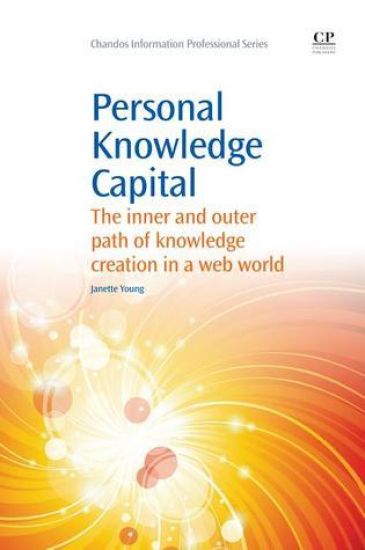
Intangible value leads to new insights and ideas, and higher levels of creativity and innovative thinking. Personal knowledge capital focuses on the knowledge worker, knowledge creation, and third generation knowledge management. A focus on the ‘inner and outer’ aspects of personal knowledge capital creates a balanced approach in order to produce creative solutions. As such this forms part of a synthesis of mind versus body thinking in relation to knowledge creation theory within knowledge management. This title is divided into two sections: the inner and outer path. The inner path focuses on tacit knowledge in knowledge creation, and highlights the importance of inner value, resulting in a model for personal knowledge awareness. The outer path explores how to effectively communicate and exploit knowledge in a modern business world, both online and offline. This section focuses on valuing intangibles including social capital, relationships and trust, exploring community, conversation, infrastructure and ecologies for a web world. You can manage your own assets through your communities and networks, exploiting the latest technologies around you.

In this comprehensive introduction to Winterson's work, Sonya Andermahr considers its significance in the context of contemporary British culture and literary history. Including an interview with the author, this guide offers an accessible reading of all Winterson's work and an overview of the varied critical reception this has received.

In this comprehensive introduction to Winterson's work, Sonya Andermahr considers its significance in the context of contemporary British culture and literary history. Including an interview with the author, this guide offers an accessible reading of all Winterson's work and an overview of the varied critical reception this has received.


This is the first full-length study of Jeanette Winterson’s complete oeuvre, offering detailed analysis of her nine novels as well as addressing her non-fiction and minor fictional work. Susana Onega combines the study of formal issues such as narrative structure, perspective and point of view with thematic analyses approached from a variety of theoretical perspectives, from narratology and feminist theory to Hermetic and Kabalistic symbolism, to provide a comprehensive ‘vertical’ analysis of Winterson’s novels.Onega reveals the books as complex linguistic artefacts, crammed with intertextual echoes. She demonstrates the inseparability of form and meaning within Winterson’s work, and positions her within the wider context of contemporary British fiction alongside fellow visionaries such as Peter Ackroyd, Maureen Duffy and Marina Warner.
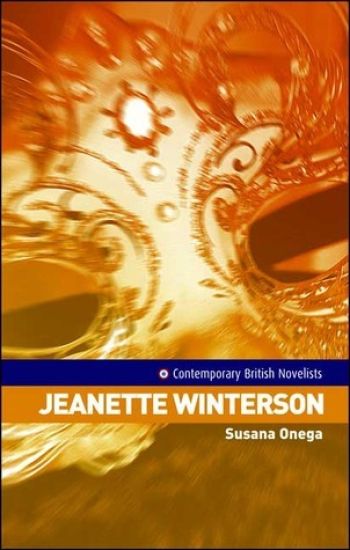
This is the first full-length study of Jeanette Winterson’s complete oeuvre, offering detailed analysis of her nine novels as well as addressing her non-fiction and minor fictional work. Susana Onega combines the study of formal issues such as narrative structure, perspective and point of view with thematic analyses approached from a variety of theoretical perspectives, from narratology and feminist theory to Hermetic and Kabalistic symbolism, to provide a comprehensive ‘vertical’ analysis of Winterson’s novels.Onega reveals the books as complex linguistic artefacts, crammed with intertextual echoes. She demonstrates the inseparability of form and meaning within Winterson’s work, and positions her within the wider context of contemporary British fiction alongside fellow visionaries such as Peter Ackroyd, Maureen Duffy and Marina Warner.
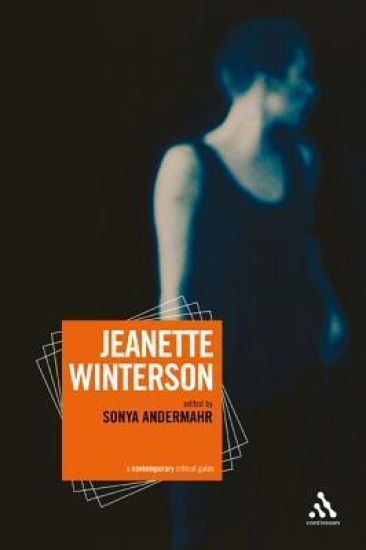
Jeanette Winterson
Continuum International Publishing Group Ltd.
2007
sidottu
"Jeanette Winterson: A Contemporary Vritical Guide" is a comprehensive introduction to Winterson's writing. It brings together new essays by leading critics writing on key topics across her work from early successes like "Oranges are Not the Only Fruit" to recent works like "Lighthousekeeping". The guide provides students with an accessible and up-to-date critical guide to Winterson's most commonly studied texts, covering major themes and developments, and issues of style, technique and genre, from a range of contemporary critical and theoretical perspectives. Chapters identify and explore the key topics and debates including: story-telling; feminism and women's writing; historiographic metafiction; literary realism and postmodernism; religion and spirituality; masculinity; lesbian romance; queer theory; and psychoanalytic approaches. Each chapter includes an introductory overview outlining key themes, approaches and the texts covered. This is an ideal introduction to the variety of critical approaches to Winterson and her work.
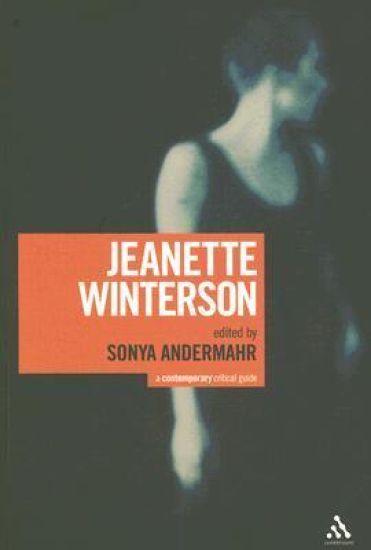
Jeanette Winterson
Continuum International Publishing Group Ltd.
2007
nidottu
"Jeanette Winterson: A Contemporary Vritical Guide" is a comprehensive introduction to Winterson's writing. It brings together new essays by leading critics writing on key topics across her work from early successes like "Oranges are Not the Only Fruit" to recent works like "Lighthousekeeping". The guide provides students with an accessible and up-to-date critical guide to Winterson's most commonly studied texts, covering major themes and developments, and issues of style, technique and genre, from a range of contemporary critical and theoretical perspectives. Chapters identify and explore the key topics and debates including: story-telling; feminism and women's writing; historiographic metafiction; literary realism and postmodernism; religion and spirituality; masculinity; lesbian romance; queer theory; and psychoanalytic approaches. Each chapter includes an introductory overview outlining key themes, approaches and the texts covered. This is an ideal introduction to the variety of critical approaches to Winterson and her work.

Jeanette Manuel: The Life and Legend of the Belle of Fabulous Florence
Herman Wiley Ronnenberg
Heritage Witness Reflections Publishing
2013
nidottu