Kirjahaku
Etsi kirjoja tekijän nimen, kirjan nimen tai ISBN:n perusteella.
1000 tulosta hakusanalla Jeffrey Arnett
Heavy metal is a violent, head-bashing music complete, in its live performances, with its own arena of rage and celebration, the mosh pit. It is a music in the red corner of society, loud, angry, and, to a well-tuned ear, practically intolerable. And yet, the art form radiates a message about American adolescents well worth examining and comprehend
Heavy metal is a violent, head-bashing music complete, in its live performances, with its own arena of rage and celebration, the mosh pit. It is a music in the red corner of society, loud, angry, and, to a well-tuned ear, practically intolerable. And yet, the art form radiates a message about American adolescents well worth examining and comprehending: Its devotees, primarily adolescent boys, are alienated from their world and angry about its future. Heavy metal speaks throbbingly the message of rage, loneliness, and cynicism.In this sensitive book, Jeffrey Jensen Arnett synthesizes the stories and experiences of seventy male and thirty-eight female metalheads" in a successful attempt to understand the often crippling results of a society and an image of the nuclear family steeped in conformity, self-denial, and obedience. The vacuum such an atmosphere creates in the individual can be temporarily obliterated by a heavy metal concert, which Arnett sees as a substitute manhood ritual. This conclusion is just one of the many striking hypotheses the author advances in this dynamic study of a music and its followers.Of the one hundred metalheads interviewed for this volume, ten have allowed themselves to be profiled in depth,the reader becomes fully acquainted with Jack, for instance, and with the multiple crosses decorating his body, his black rose tattoo, and his tumultuous family life or with slim and well-groomed Jean dressed entirely in black, her favourite colour, and wearing the temperament of withdrawal.This is a unique study filled with compassion for a disenfranchised subculture and the respect to want to understand it.
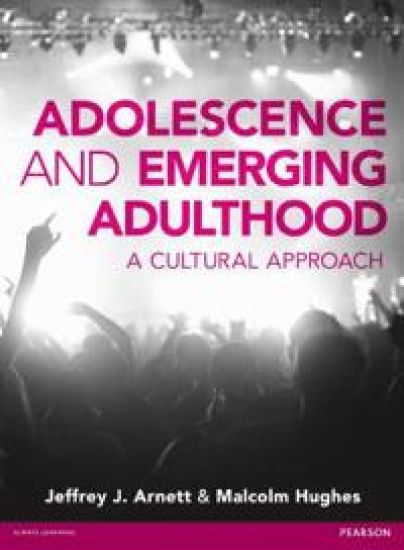
Focused on a global cultural perspective that incorporates research on adolescence through emerging adulthoodgrounded in a global cultural perspective, this text includes a considerable amount of anthropology, sociology,international research in addition to the compelling psychological research on adolescent development.
Revel for Child Development
Jeffrey Arnett; Jeffery Jensen Arnett; Lene Jensen
PEARSON EDUCATION (US)
2021
lisenssiavain
For courses in Child Development Help students understand how culture impacts development — and why it matters Revel™ Child Development: A Cultural Approach helps students learn how to think culturally about human development throughout our diverse, increasingly globalized world. Author Jeffrey Jensen Arnett and new co-author Lene Arnett Jensen weave an engaging chronological narrative that traces development from birth through emerging adulthood, integrating current research and cross-cultural examples from around the globe throughout. For the 3rd Edition, the authors utilize an expanded chapter organization and a fresh approach — characterized by additional cross-cultural perspectives — to better highlight the cultural aspects of development. Revel is Pearson’s newest way of delivering our respected content. Fully digital and highly engaging, Revel replaces the textbook and gives students everything they need for the course. Informed by extensive research on how people read, think, and learn, Revel is an interactive learning environment that enables students to read, practice, and study in one continuous experience — for less than the cost of a traditional textbook. NOTE: Revel is a fully digital delivery of Pearson content. This ISBN is for the standalone Revel access card. In addition to this access card, you will need a course invite link, provided by your instructor, to register for and use Revel.
Adolescence and Emerging Adulthood
Jeffrey Arnett; Malcolm Hughes
Pearson Education Limited
2012
pokkari
Focused on a global cultural perspective that incorporates research on adolescence through emerging adulthoodgrounded in a global cultural perspective, this text includes a considerable amount of anthropology, sociology,international research in addition to the compelling psychological research on adolescent development.
Revel for Adolescence and Emerging Adulthood
Jeffery Jensen Arnett; Jeffrey Arnett
Pearson
2017
lisenssiavain
Help students understand how culture impacts development in adolescence and emerging adulthood Revel™ Adolescence and Emerging Adulthood: A Cultural Approach helps students examine this dynamic and complex age period through the lens of culture. Utilizing a multidisciplinary approach, author Jeffrey Jensen Arnett seeks to frame not only how students understand themselves, but how they understand others and how they think about the world around them. The text is distinguished by its emphasis on the period of “emerging adulthood” (ages 18–25), a term coined by the author and a growing area of study. The Sixth Edition includes the latest data as well as fresh content that ensures an up-to-date learning experience. Revel is Pearson’s newest way of delivering our respected content. Fully digital and highly engaging, Revel replaces the textbook and gives students everything they need for the course. Informed by extensive research on how people read, think, and learn, Revel is an interactive learning environment that enables students to read, practice, and study in one continuous experience — for less than the cost of a traditional textbook. NOTE: Revel is a fully digital delivery of Pearson content. This ISBN is for the standalone Revel access card. In addition to this access card, you will need a course invite link, provided by your instructor, to register for and use Revel.
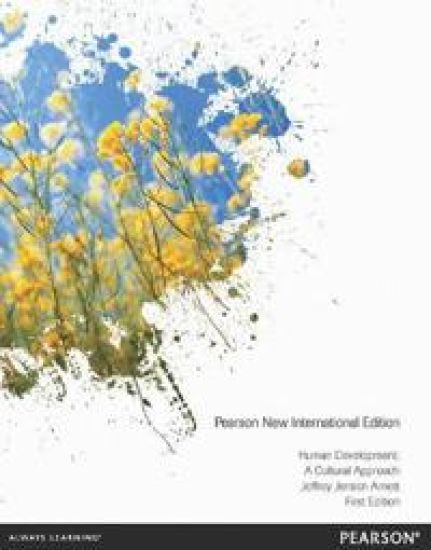
For courses in Lifespan DevelopmentHelp students understand how culture impacts development — and why it mattersHuman Development: A Cultural Approach leads students to examine all stages of development through the engaging lens of culture. Jeffrey Jensen Arnett and new coauthor Lene Arnett Jensen integrate cross-cultural examples throughout the narrative to reveal the impact of cultural factors both in the US and around the world. The 3rd Edition includes thoroughly updated research and data for a learning experience that best prepares students to face challenges in our diverse and globalized world — whether they travel the globe or remain in their hometowns.Human Development: A Cultural Approach, 3rd Edition is also available via RevelTM, an interactive learning environment that enables students to read, practice, and study in one continuous experience.
In recent decades, the lives of people in their late teens and twenties have changed so dramatically that a new stage of life has developed. In his provocative work, Jeffrey Jensen Arnett has identified the period of emerging adulthood as distinct from both the adolescence that precedes it and the young adulthood that comes in its wake. Arnett's new paradigm has received enormous worldwide scholarly attention due to his book that launched the field, Emerging Adulthood. On the 20th anniversary of the publication of his groundbreaking work, this third edition of Emerging Adulthood fully updates and expands Arnett's findings, and adds a new chapter on cultural and international variations. Merging stories from the lives of diverse emerging adults with decades of research, Arnett covers a wide range of topics, including love and sex, relationships with parents, experiences at college and work, and views of what it means to be an adult. As the nature of American youth and the meaning of adulthood further evolve, Emerging Adulthood will continue to be essential reading for understanding the face of modern America.
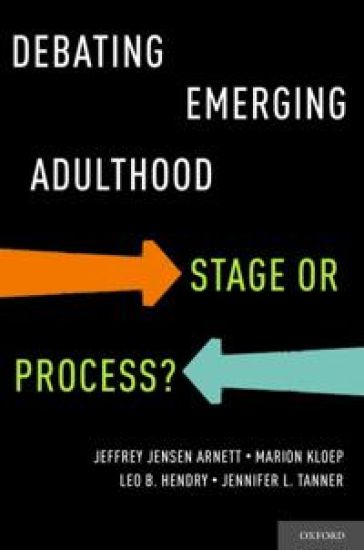
Debating Emerging Adulthood
Jeffrey Jensen Arnett; Marion Kloep; Leo B. Hendry; Jennifer L. Tanner
Oxford University Press Inc
2011
sidottu
The transition from adolescence to adulthood has undergone significant changes in recent decades. Unlike a half century ago, when young people in industrialized countries moved from adolescence into young adulthood in relatively short order at around age 20, now the decade from the late teens to the late twenties is seen as an extended time of self-focused exploration and education in pursuit of optimally fulfilling relationships and careers. Recognition of this new period is stronger than ever, but an important question remains: should emerging adulthood be considered a developmental stage, or a process? In Debating Emerging Adulthood: Stage or Process? two pairs of developmental psychologists take sides in a debate that is central to the very concept of emerging adulthood. Arnett and Tanner argue that as young people around the world share demographic similarities, such as longer education and later marriage, the years between the ages 18 and 25 are best understood as entailing a new life stage. However, because the experiences of emerging adults worldwide vary according to cultural context, educational attainment, and social class, these two scholars suggest that there may not be one but many different emerging adulthoods. An important issue for this burgeoning area of inquiry is to explore and describe this variation. In contrast, Hendry and Kloep assert that stage theories have never been able to explain individual transitions across the life course; in their view, stage theories-including the theory of emerging adulthood-ought to be abolished altogether, and explanations found for the processes and mechanisms that govern human change at any age. This engaging book maps out the argument of "stage or process" in detail, with vigorous disagreements, conflicting alternatives, and some leavening humor, ultimately even finding some common ground. Debating Emerging Adulthood is an absolute must-read for developmental psychologists as well as anyone interested in this indisputably important time of life.
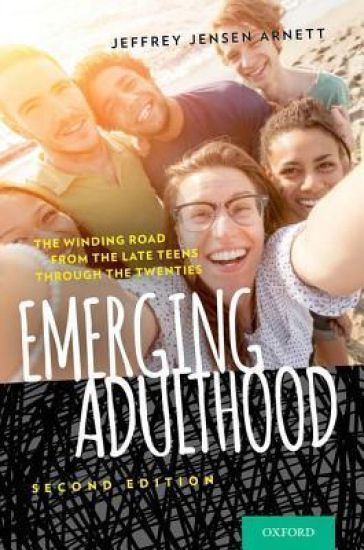
In recent decades, the lives of people in their late teens and twenties have changed so dramatically that a new stage of life has developed. In his provocative work, Jeffrey Jensen Arnett has identified the period of emerging adulthood as distinct from both the adolescence that precedes it and the young adulthood that comes in its wake. Arnett's new paradigm has received a surge of scholarly attention due to his book that launched the field, Emerging Adulthood. On the 10th Anniversary of the publication of his groundbreaking work, the second edition of Emerging Adulthood fully updates and expands Arnett's findings and includes brand new chapters on media use, social class issues, and the distinctive problems of this life stage. In spite of the challenges they face, Arnett explains that emerging adults are particularly skilled at maintaining contradictory emotions--they are confident while being wary, and optimistic in the face of large degrees of uncertainty. Merging stories from the lives of emerging adults themselves with decades of research, Arnett covers a wide range of topics, including love and sex, relationships with parents, experiences at college and work, and views of what it means to be an adult. He also refutes many of the negative stereotypes about emerging adults today, finding that they are not "lazy" but remarkably hard-working in most cases, and not "selfish" but rather concerned with making a contribution to improving the world. As the nature of American youth and the meaning of adulthood further evolve, Emerging Adulthood will continue to be essential reading for understanding the face of modern America.
Why do people believe the unbelievable? Why do fictional ideas so often inspire real-world action-sometimes joyful, sometimes destructive-while the people inspired by them never recognize that they are fictional? In Imaginary Realities, Jeffrey Jensen Arnett explores the psychological and cultural forces that lead people to embrace beliefs that defy logic yet shape lives, societies, and history. From religious and magical thinking to conspiracy theories and superstitions, Arnett reveals how these "imaginary realities" help us make sense of a chaotic world and why we adhere to them even when they mislead us. This groundbreaking book examines the psychological roots of irrational beliefs and how they soothe anxiety and foster social cohesion; how they underlie the double-edged sword of moral egoism, which motivates many of our best and worst behavior; the surprising role of imaginary realities in joy, humor, and group celebration; and the looming threats posed by modern myths surrounding AI, ecological collapse, and genetic engineering. With clarity, insight, and cultural depth, Imaginary Realities challenges readers to rethink what we believe and why.
For courses in Child Development which take a topical approach An expansive, topical approach to how culture impacts developmentChild Development Worldwide presents a topical examination of all stages of development — from prenatal development through middle childhood, adolescence, and emerging adulthood — through the engaging lens of culture. Cross-cultural examples integrated throughout the narrative reveal the impact of cultural factors both in the US and around the world. Authors Lene Arnett Jensen and Jeffrey Jensen Arnett emphasize culture to foster a thorough, balanced view of development that prepares students to face challenges in our diverse and globalized world — whether they travel the globe or remain in their hometowns.Child Development Worldwide is also available via RevelTM, an interactive learning environment that enables students to read, practice, and study in one continuous experience.
Great Myths of Adolescence
Jeremy D. Jewell; Michael I. Axelrod; Mitchell J. Prinstein; Stephen Hupp; Jeffrey Jensen Arnett
Wiley-Blackwell
2018
sidottu
A research-based guide to debunking commonly misunderstood myths about adolescence Great Myths of Adolescence contains the evidence-based science that debunks the myths and commonly held misconceptions concerning adolescence. The book explores myths related to sex, drugs and self-control, as well as many others. The authors define each myth, identify each myth's prevalence and present the latest and most significant research debunking the myth. The text is grounded in the authors’ own research on the prevalence of belief in each myth, from the perspective of college students. Additionally, various pop culture icons that have helped propagate the myths are discussed. Written by noted experts, the book explores a wealth of topics including: The teen brain is fully developed by 18; Greek life has a negative effect on college students academically; significant mood disruptions in adolescence are inevitable; the millennial generation is lazy; and much more. This important resource: Shatters commonly held and topical myths relating to gender, education, technology, sex, crime and moreBased in empirical and up-to-date research including the authors' ownLinks each myth to icons of pop culture who/which have helped propagate themDiscusses why myths are harmful and best practices related to the various topicsA volume in the popular Great Myths of Psychology series Written for undergraduate students studying psychology modules in Adolescence and developmental psychology, students studying childhood studies and education studies, Great Myths of Adolescence offers an important guide that debunks misconceptions about adolescence behavior. This book also pairs well with another book by two of the authors, Great Myths of Child Development.
Great Myths of Adolescence
Jeremy D. Jewell; Michael I. Axelrod; Mitchell J. Prinstein; Stephen Hupp; Jeffrey Jensen Arnett
Wiley-Blackwell
2018
nidottu
A research-based guide to debunking commonly misunderstood myths about adolescence Great Myths of Adolescence contains the evidence-based science that debunks the myths and commonly held misconceptions concerning adolescence. The book explores myths related to sex, drugs and self-control, as well as many others. The authors define each myth, identify each myth's prevalence and present the latest and most significant research debunking the myth. The text is grounded in the authors’ own research on the prevalence of belief in each myth, from the perspective of college students. Additionally, various pop culture icons that have helped propagate the myths are discussed. Written by noted experts, the book explores a wealth of topics including: The teen brain is fully developed by 18; Greek life has a negative effect on college students academically; significant mood disruptions in adolescence are inevitable; the millennial generation is lazy; and much more. This important resource: Shatters commonly held and topical myths relating to gender, education, technology, sex, crime and moreBased in empirical and up-to-date research including the authors' ownLinks each myth to icons of pop culture who/which have helped propagate themDiscusses why myths are harmful and best practices related to the various topicsA volume in the popular Great Myths of Psychology series Written for undergraduate students studying psychology modules in Adolescence and developmental psychology, students studying childhood studies and education studies, Great Myths of Adolescence offers an important guide that debunks misconceptions about adolescence behavior. This book also pairs well with another book by two of the authors, Great Myths of Child Development.
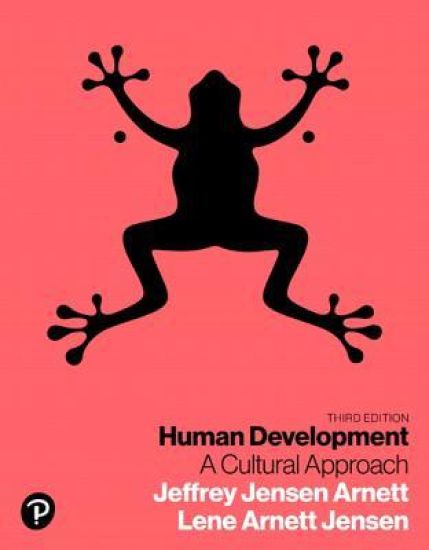
For courses in Child Development Help students understand how culture impacts development - and why it mattersChild Development: A Cultural Approach helps students learn how to think culturally about human development throughout our diverse, increasingly globalized world. Author Jeffrey Jensen Arnett and new co-author Lene Arnett Jensen weave an engaging chronological narrative that traces development from birth through emerging adulthood, integrating current research and cross-cultural examples from around the globe throughout. For the 3rd Edition, the authors utilize an expanded chapter organization and a fresh approach - characterized by additional cross-cultural perspectives - to better highlight the cultural aspects of development. Child Development: A Cultural Approach, 3rd Edition is also available via Revel (TM), an interactive digital learning environment that replaces the print textbook, enabling students to read, practice, and study in one continuous experience.
Learning how to carry out research projects using participant observation and in-depth interviews has become a priority for scholars in a wide range of fields, including anthropology, sociology, education, social work, nursing, and psychology. This book, a collection of well-known fieldwork accounts covering the qualitative research process, aims t
Learning how to carry out research projects using participant observation and in-depth interviews has become a priority for scholars in a wide range of fields, including anthropology, sociology, education, social work, nursing, and psychology. This book, a collection of well-known fieldwork accounts covering the qualitative research process, aims to help undergraduate students, graduate students, and scholars in the social sciences understand common problems in the research process and learn strategies for resolving them.Unlike methods books that treat research issues in a superficial or prescriptive fashion, this book realistically portrays, through researchers own accounts, the process of discovery and resolution of conflicts involved in fieldwork. It also shows the costs involved in the choice of solutions. Students and seasoned scholars alike will find the collection a source of knowledge, inspiration, and comfort concerning the complexity of conducting fieldwork.
Inequality is skyrocketing. In this world of vast riches, millions of people live in extreme poverty, barely surviving from day to day. All over the world, the wealthy's increasing political power is biasing policy away from the public interest and toward the financial interests of the rich. At the same time, many countries are facing financial fragility and diminished well-being. On top of it all, the global economy, driven by fossil fuels, has proven to be a collective act of self-sabotage with the poor on the front lines. In a new foreword to his book, Anthony M. Annett examines the Biden administration's economic policies and discusses reactions to Cathonomics. A growing chorus of economists and politicians is demanding a new paradigm to create a global economy that seeks the common good. In Cathonomics, Annett unites insights in economics with those from theology, philosophy, climate science, and psychology, exposing the failures of neoliberalism while offering us a new model rooted in the wisdom of Catholic social teaching and classical ethical traditions. Drawing from the work of Pope Leo XIII, Pope Francis, Thomas Aquinas, and Aristotle, Annett applies these teachings to discuss current economic challenges, such as inequality, unemployment and underemployment, climate change, and the roles of business and finance.Cathonomics is an ethical and practical guide for readers of all faiths and backgrounds seeking to create a world economy that is more prosperous, inclusive, and sustainable for all.
Inequality is skyrocketing. In this world of vast riches, millions of people live in extreme poverty, barely surviving from day to day. All over the world, the wealthy's increasing political power is biasing policy away from the public interest and toward the financial interests of the rich. At the same time, many countries are facing financial fragility and diminished well-being. On top of it all, the global economy, driven by fossil fuels, has proven to be a collective act of self-sabotage with the poor on the front lines. In a new foreword to his book, Anthony M. Annett examines the Biden administration's economic policies and discusses reactions to Cathonomics. A growing chorus of economists and politicians is demanding a new paradigm to create a global economy that seeks the common good. In Cathonomics, Annett unites insights in economics with those from theology, philosophy, climate science, and psychology, exposing the failures of neoliberalism while offering us a new model rooted in the wisdom of Catholic social teaching and classical ethical traditions. Drawing from the work of Pope Leo XIII, Pope Francis, Thomas Aquinas, and Aristotle, Annett applies these teachings to discuss current economic challenges, such as inequality, unemployment and underemployment, climate change, and the roles of business and finance. Cathonomics is an ethical and practical guide for readers of all faiths and backgrounds seeking to create a world economy that is more prosperous, inclusive, and sustainable for all.