
Kirjahaku
Etsi kirjoja tekijän nimen, kirjan nimen tai ISBN:n perusteella.
1000 tulosta hakusanalla Jeffrey B Miller
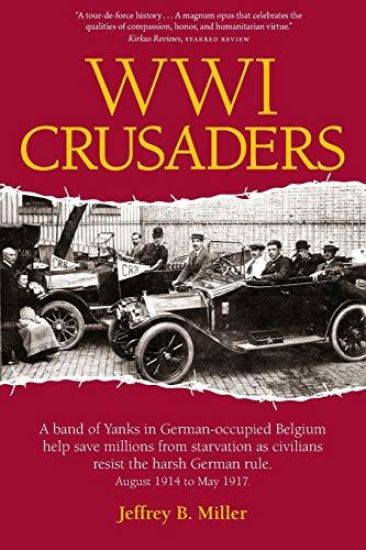
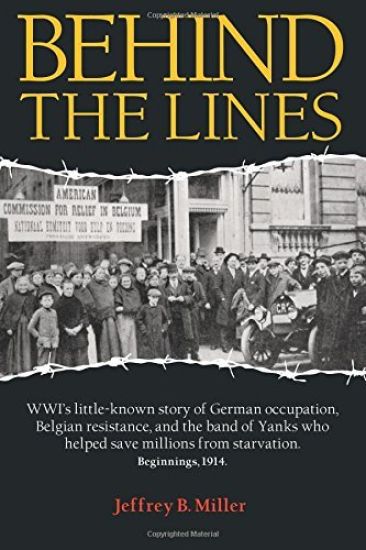
The true story of young, untested American volunteers who entered German-occupied Belgium during WWI (1914-1918) to attempt what had never been done before -- save an entire nation from starvation that was trapped in the middle of a world war. One of America's greatest humanitarian efforts is little-known today. WWI Crusaders brings the past to life by telling the personal stories behind the facts in an as-it's-happening style.During WWI, the American-led, nongovernmental Commission for Relief in Belgium (CRB) initiated, organized, and supervised the largest food relief program the world had ever seen. The CRB and its Belgian counterpart, the Comit National (CN), fed for four years nearly 10 million Belgians and northern French trapped behind German lines. The relief efforts faced huge logistical challenges, international intrigues, and internal conflicts between the leaders of the CRB and CN.Young, idealistic Americans volunteered to go into German-occupied Belgium to guarantee the relief food would not be taken by the Germans. These humanitarian crusaders, known as CRB delegates, had to maintain strict neutrality as they watched the Belgians suffer under the harsh German regime. They also had to deal with a faction of Belgians who resented the Americans' presence and tried to limit their authority.WWI Crusaders is the first book for general readers that tells in one volume the interlacing stories of German brutality, Belgian resistance, and the young Americans who went into German-occupied Belgium. The situation in German-occupied Belgium during the war caused a tumbling together of extraordinary people into a chain reaction of life-and-death situations far from the trenches and killing fields of World War I. And hanging in the balance were millions of civilian lives.Through lively personal stories, this nonfiction book follows a handful of young CRB delegates, a 22-year-old Belgian woman, two American diplomats, the leaders of a Belgian underground newspaper, and the founder of the CRB, who would become known to the world as the Great Humanitarian. His name was Herbert C. Hoover.The book covers from the beginning of the war, August 1917, to May 1917, when the last Americans left Belgium because of America's April entry into the war. An extensive epilogue wraps up all major stories and people through the end of the war and beyond.It is a story that few have heard.
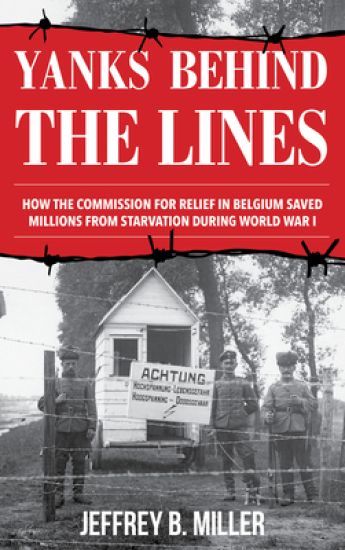
More than nine million soldiers died in World War I. At the same time, a US-led effort saved nearly ten million civilians from starvation behind the lines during the German occupation, yet one of America’s greatest humanitarian efforts is virtually unknown today. In this gripping book, Jeffrey B. Miller tells the remarkable history of two American and Belgian citizen-created organizations that led a massive food relief program for civilians trapped in German-occupied Belgium and northern France. Herbert Hoover, then a successful international businessman, was the driving force behind the effort, coercing and bullying the governments of Germany, Great Britain, France, and the United States to allow a group of idealistic young volunteers to organize in occupied Belgium and coordinate the distribution of tons of food and clothing to desperate Belgians. These crusaders, known as CRB delegates, had to maintain strict neutrality as they watched the Belgians suffer under the harsh German regime. Miller tells compelling stories of German brutality, Belgian relief efforts, and the idealistic Americans who went into German-occupied Belgium from October 1914 up to May 1917, when they were forced to leave after the April entry into the war of the United States. Yanks interweaves the history of the time with fascinating personal stories of volunteers, diplomats, a young Belgian woman who started a dairy farm to feed Antwerp’s children, the autocratic head of the Belgian relief organization, and the founder of the American organization, who would become known to the world as the Great Humanitarian and later, largely because of his work in Belgium and post-war Europe, would become the thirty-first president of the United States.
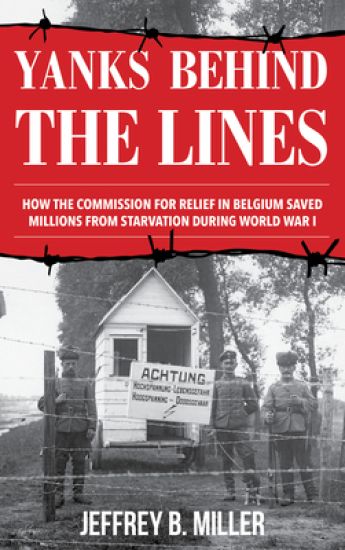
More than nine million soldiers died in World War I. At the same time, a US-led effort saved nearly ten million civilians from starvation behind the lines during the German occupation, yet one of America’s greatest humanitarian efforts is virtually unknown today. In this gripping book, Jeffrey B. Miller tells the remarkable history of two American and Belgian citizen-created organizations that led a massive food relief program for civilians trapped in German-occupied Belgium and northern France. Herbert Hoover, then a successful international businessman, was the driving force behind the effort, coercing and bullying the governments of Germany, Great Britain, France, and the United States to allow a group of idealistic young volunteers to organize in occupied Belgium and coordinate the distribution of tons of food and clothing to desperate Belgians. These crusaders, known as CRB delegates, had to maintain strict neutrality as they watched the Belgians suffer under the harsh German regime. Miller tells compelling stories of German brutality, Belgian relief efforts, and the idealistic Americans who went into German-occupied Belgium from October 1914 up to May 1917, when they were forced to leave after the April entry into the war of the United States. Yanks interweaves the history of the time with fascinating personal stories of volunteers, diplomats, a young Belgian woman who started a dairy farm to feed Antwerp’s children, the autocratic head of the Belgian relief organization, and the founder of the American organization, who would become known to the world as the Great Humanitarian and later, largely because of his work in Belgium and post-war Europe, would become the thirty-first president of the United States.
Social Norms and Economic Institutions
Kenneth J. Koford; Jeffrey B. (EDT) Miller
Univ of Michigan Pr
1991
sidottu

A fascinating, detailed, and sweeping survey of the hats produced by the John B. Stetson company between 1865 and 1970 While the Stetson name is synonymous with cowboys and the Wild West, the John B. Stetson Company was actually based in Philadelphia, PA. The company produced all manner of headwear, and this book takes a look at all of them. Over 500 illustrations display never-before-worn Stetson hats (men's and women's alike), hat boxes, miniature boxes, and a surprisingly large number of collectible items associated with this most famous hat company. Original research charts the development of of the company, and individuals closely related with the firm provide their memories. Hat styles from the mid-nineteenth century to the late twentieth get a review, and for those lucky enough to own one of these valuable collectibles, there are tips on how to wear and care for vintage and modern Stetsons. Values for the hats illustrated, an extensive bibliography, and an index are also included.

The flavonoids, one of the most numerous and widespread groups of natural constituents, are important to man not only because they contribute to plant colour but also because many members (e.g. coumestrol, phloridzin, rotenone) are physiologically active. Nearly two thousand substances have been described and as a group they are universally distributed among vascular plants. Although the anthocyanins have an undisputed function as plant pigments, the raison d'etre for the more widely distributed colourless flavones and flavonols still remains a mystery. It is perhaps the challenge of discovering these yet undisc10sed functions which has caused the considerable resurgence of interest in flavonoids during the last decade. This book attempts to summarize progress that has been made in the study of these constituents since the first comprehensive monograph on the chemistry of the flavonoid compounds was published, under the editorship of T. A. Geissman, in 1962. The present volume is divided into three parts. The first section (Chapters 1-4) deals with advances in chemistry, the main emphasis being on spectral techniques to take into account the re cent successful applications of NMR and mass spectral measurements to structural identifications. Recent developments in isolation techniques and in synthesis are also covered in this section. Advances in chemical knowledge of individual c1asses of flavonoid are mentioned inter aha in later chapters of the book.

Vold's Theoretical Criminology
Jeffrey B. Snipes; Thomas J. Bernard; Alexander L. Gerould
Oxford University Press Inc
2019
sidottu
The standard text in the field, Vold's Theoretical Criminology is universally known by scholars in the discipline. Taking a largely historical approach, it discusses both classic and contemporary theories, presenting historical context, empirical research, and policy implications for each one. The book concludes with a critical assessment of the state of theory in criminology.
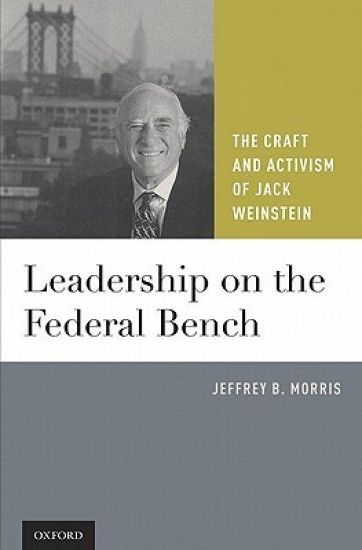
Leadership on the Federal Bench: The Craft and Activism of Jack Weinstein considers the ways a particularly gifted federal judge seized the opportunities available to district judges to influence the results of the cases before him, and employed the tools available to him to make policy having a national impact. In the book, author Jeffrey Morris considers the ways in which the judge, Jack Weinstein of the Eastern District of New York, has been limited by his position. This book adds to the slim literature about the policy-making role of district judges applying the work of legal historians, political scientists and those trained in the law. Focusing upon an admitted judicial activist - perhaps the most famous, innovative and controversial district judge sitting today - the book permits a close look at activism at the trial level. Leadership on the Federal Bench: The Craft and Activism of Jack Weinstein begins by analyzing the job of a federal district judge and why it is profitable to study Judge Weinstein. Related topics include Weinstein's background before appointment to the bench; the political and legal environment within which Weinstein has judged and the characteristics of the district in which he sat and its possible impact on him. Part of the book focuses on Weinstein's judicial output for each of his four decades on the bench. Cases are drawn from a diverse number of areas, among them the areas of civil rights, freedom of speech, search and seizures, organized crime and political corruption cases, evidence and procedure. Finally, conclusions are made on the role of district courts, judicial activism in general, along with a summary of Judge Weinstein's career.

Hubert Harrison was an immensely skilled writer, orator, educator, critic, and political activist who, more than any other political leader of his era, combined class consciousness and anti-white-supremacist race consciousness into a coherent political radicalism. Harrison's ideas profoundly influenced "New Negro" militants, including A. Philip Randolph and Marcus Garvey, and his synthesis of class and race issues is a key unifying link between the two great trends of the Black Liberation Movement: the labor- and civil-rights-based work of Martin Luther King Jr. and the race and nationalist platform associated with Malcolm X. The foremost Black organizer, agitator, and theoretician of the Socialist Party of New York, Harrison was also the founder of the "New Negro" movement, the editor of Negro World, and the principal radical influence on the Garvey movement. He was a highly praised journalist and critic (reportedly the first regular Black book reviewer), a freethinker and early proponent of birth control, a supporter of Black writers and artists, a leading public intellectual, and a bibliophile who helped transform the 135th Street Public Library into an international center for research in Black culture. His biography offers profound insights on race, class, religion, immigration, war, democracy, and social change in America.
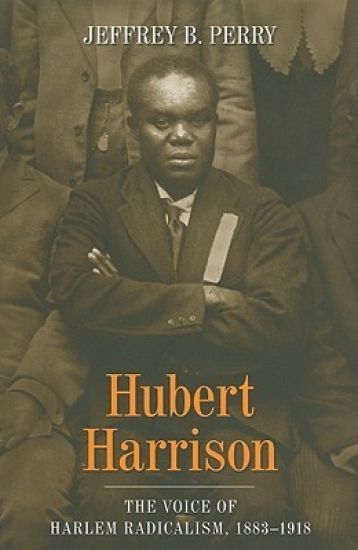
Hubert Harrison was an immensely skilled writer, orator, educator, critic, and political activist who, more than any other political leader of his era, combined class consciousness and anti-white-supremacist race consciousness into a coherent political radicalism. Harrison's ideas profoundly influenced "New Negro" militants, including A. Philip Randolph and Marcus Garvey, and his synthesis of class and race issues is a key unifying link between the two great trends of the Black Liberation Movement: the labor- and civil-rights-based work of Martin Luther King Jr. and the race and nationalist platform associated with Malcolm X. The foremost Black organizer, agitator, and theoretician of the Socialist Party of New York, Harrison was also the founder of the "New Negro" movement, the editor of Negro World, and the principal radical influence on the Garvey movement. He was a highly praised journalist and critic (reportedly the first regular Black book reviewer), a freethinker and early proponent of birth control, a supporter of Black writers and artists, a leading public intellectual, and a bibliophile who helped transform the 135th Street Public Library into an international center for research in Black culture. His biography offers profound insights on race, class, religion, immigration, war, democracy, and social change in America.
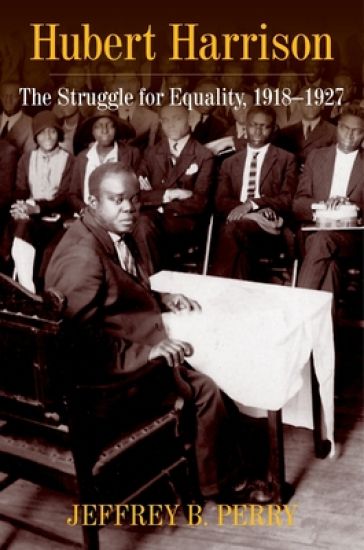
The St. Croix–born, Harlem-based Hubert Harrison (1883–1927) was a brilliant writer, orator, educator, critic, and activist who combined class consciousness and anti-white-supremacist race consciousness into a potent political radicalism. Harrison’s ideas profoundly influenced “New Negro” militants, including A. Philip Randolph and Marcus Garvey, and his work is a key link in the two great strands of the Civil Rights/Black Liberation struggle: the labor- and civil-rights movement associated with Randolph and Martin Luther King Jr. and the race and nationalist movement associated with Garvey and Malcolm X.In this second volume of his acclaimed biography, Jeffrey B. Perry traces the final decade of Harrison’s life, from 1918 to 1927. Perry details Harrison’s literary and political activities, foregrounding his efforts against white supremacy and for racial consciousness and unity in struggles for equality and radical social change. The book explores Harrison’s role in the militant New Negro Movement and the International Colored Unity League, as well as his prolific work as a writer, educator, and editor of the New Negro and the Negro World. Perry examines Harrison’s interactions with major figures such as Garvey, Randolph, J. A. Rogers, Arthur Schomburg, and other prominent individuals and organizations as he agitated, educated, and organized for democracy and equality from a race-conscious, radical internationalist perspective. This magisterial biography demonstrates how Harrison’s life and work continue to offer profound insights on race, class, religion, immigration, war, democracy, and social change in America.
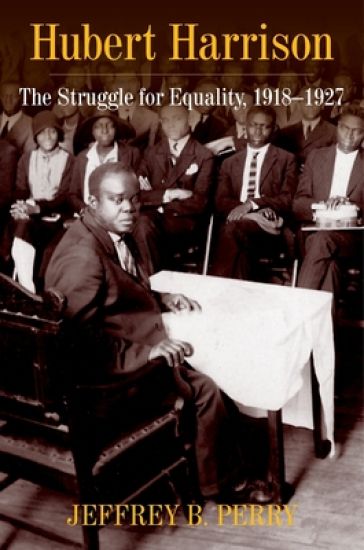
The St. Croix–born, Harlem-based Hubert Harrison (1883–1927) was a brilliant writer, orator, educator, critic, and activist who combined class consciousness and anti-white-supremacist race consciousness into a potent political radicalism. Harrison’s ideas profoundly influenced “New Negro” militants, including A. Philip Randolph and Marcus Garvey, and his work is a key link in the two great strands of the Civil Rights/Black Liberation struggle: the labor- and civil-rights movement associated with Randolph and Martin Luther King Jr. and the race and nationalist movement associated with Garvey and Malcolm X.In this second volume of his acclaimed biography, Jeffrey B. Perry traces the final decade of Harrison’s life, from 1918 to 1927. Perry details Harrison’s literary and political activities, foregrounding his efforts against white supremacy and for racial consciousness and unity in struggles for equality and radical social change. The book explores Harrison’s role in the militant New Negro Movement and the International Colored Unity League, as well as his prolific work as a writer, educator, and editor of the New Negro and the Negro World. Perry examines Harrison’s interactions with major figures such as Garvey, Randolph, J. A. Rogers, Arthur Schomburg, and other prominent individuals and organizations as he agitated, educated, and organized for democracy and equality from a race-conscious, radical internationalist perspective. This magisterial biography demonstrates how Harrison’s life and work continue to offer profound insights on race, class, religion, immigration, war, democracy, and social change in America.
After surviving the blitzkrieg of World War II and escaping from two Nazi prison camps, Soviet soldier Azamat Altay was banished as a traitor from his native home land. Chinghiz Aitmatov became a hero of Kyrgyzstan, writing novels about the lives of everyday Soviet citizens but mourning a mystery that might never be solved. While both came from small villages in the beautiful mountainous countryside, they found themselves caught on opposite sides of the Cold War struggle between world superpowers. Altay became the voice of democracy on Radio Liberty, while Aitmatov rose through the ranks of Soviet politics. Yet just as they seemed to be pulled apart in the political turmoil, they found their lives intersecting in moving and surprising ways. Have the Mountains Fallen? traces the lives of these two men as they confronted the full threat and legacy of the Soviet empire. Through personal and intersecting narratives of loss, love, and longing for a homeland forever changed, a clearer picture emerges of the experience of the Cold War from the other side.
After surviving the blitzkrieg of World War II and escaping from two Nazi prison camps, Soviet soldier Azamat Altay was banished as a traitor from his native home land. Chinghiz Aitmatov became a hero of Kyrgyzstan, writing novels about the lives of everyday Soviet citizens but mourning a mystery that might never be solved. While both came from small villages in the beautiful mountainous countryside, they found themselves caught on opposite sides of the Cold War struggle between world superpowers. Altay became the voice of democracy on Radio Liberty, while Aitmatov rose through the ranks of Soviet politics. Yet just as they seemed to be pulled apart in the political turmoil, they found their lives intersecting in moving and surprising ways. Have the Mountains Fallen? traces the lives of these two men as they confronted the full threat and legacy of the Soviet empire. Through personal and intersecting narratives of loss, love, and longing for a homeland forever changed, a clearer picture emerges of the experience of the Cold War from the other side.
Neither Christopher Columbus nor his contemporaries thought the earth was flat. Yet this curious illusion persists today, firmly established with the help of the media, textbooks, teachers—even noted historians. Inventing the Flat Earth is Russell's attempt to set the record straight. He begins with a discussion of geographical knowledge in the Middle Ages, examining what Columbus and his contemporaries actually did believe, and then moves to a look at how the error was first propagated in the 1820s and 1830s and then snowballed to outrageous proportions by the late 19th century. But perhaps the most intriguing focus of the book is the reason why we allow this error to persist. Do we prefer to languish in a comfortable and familiar error rather than exert the effort necessary to discover the truth? This uncomfortable question is engagingly answered. Inventing the Flat Earth is Jeffrey Burton Russell's attempt to set the record straight. He begins with a discussion of geographical knowledge in the Middle Ages, examining what Columbus and his contemporaries actually did believe, and then moves to a look at how the error was first propagated in the 1820s and 1830s—including how noted writers Washington Irving and Antoinne-Jean Letronne were among those responsible. He shows how later day historians followed these original mistakes, and how this snowball effect grew to outrageous proportions in the late nineteenth century, when Christians opposed to Darwinism were labelled as similar to Medieval Christians who (allegedly) thought the earth was flat. But perhaps the most intriguing focus of the book is the reason why we allow this error to persist. Do we prefer to languish in a comfortable and familiar error rather than exert the effort necessary to discover the truth? This uncomfortable question is engagingly answered, and includes a discussion about the implications of this for historical knowledge and scholarly honesty.
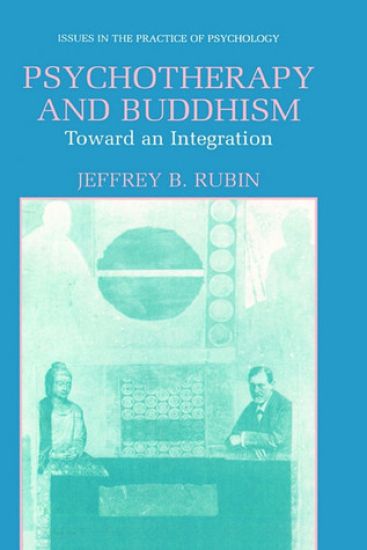
There is currently a burgeoning interest in the relationship between the Western psychotherapeutic and Buddhist meditative traditions among therapists, researchers, and spiritual seekers. Psychotherapy and Buddhism initiates a conversation between these two modern methods of achieving greater self-understanding and peace of mind. Dr. Jeffrey B. Rubin explores how they might be combined to better serve patients in therapy and adherents to a spiritual way of life. He examines the strengths and limitations of each tradition through three contexts: the nature of self, conception of ideal health, and process of achieving optimal health. The volume features the first two cases of Buddhists in psychoanalytic treatment.
While there are many books available on methods of organic and biochemical analysis, the majority are either primarily concerned with the application of a particular technique (e.g. paper chromatography) or have been written for an audience of chemists or for biochemists work ing mainly with animaltissues. Thus, no simple guide to modern metho ds of plant analysis exists and the purpose of the present volume is to fill this gap. It is primarily intended for students in the plant sciences, who have a botanical or a general biological background. It should also be of value to students in biochemistry, pharmacognosy, food science and 'natural products' organic chemistry. Most books on chromatography, while admirably covering the needs of research workers, tend to overwhelm the student with long lists of solvent systems and spray reagents that can be applied to each class of organic constituent. The intention here is to simplify the situation by listing only a few specially recommended techniques that have wide currency in phytochemical laboratories. Sufficient details are provided to allow the student to use the techniques for themselves and most sections contain some introductory practical experiments which can be used in classwork.
A revised and updated edition of the classic study on witchcraft examines the historical, anthropological, and religious manifestations of witchcraft, from ancient times to the present day, arguing that modern witchcraft in the West is in fact a serious religion that offers valuable insights. Original.
An authoritative and concise history of witchcraft from the ancient world up to the present day. Witchcraft has always been a fluid and intriguing belief system that has enchanted and sometimes terrified humanity. For over forty years, A History of Witchcraft has provided the authoritative history of witchery and the occult. Beginning with magic in the ancient world, Jeffrey Russell explores the definition of witchcraft in its many diverse forms, from the worship of the Greek goddess of magic, Hecate, through the witch-crazes of the 15th and 16th centuries to the development of modern witchcraft by Aleister Crowley and Gerald Gardner in the early 20th century. Brooks Alexander analyses the development of witchcraft and neopaganism in the present day, charting the dissemination of modern witchcraft through modern media and the tensions that arise when a secretive cult becomes an open and recognized religion. This updated edition features a new chapter exploring the challenges that witchcraft has faced in the past decade, including the rise of social media platforms like Instagram and Tik Tok, the coronavirus pandemic and new neopagan groups.