Kirjojen hintavertailu. Mukana 11 244 527 kirjaa ja 12 kauppaa.

Kirjahaku

Etsi kirjoja tekijän nimen, kirjan nimen tai ISBN:n perusteella.

1000 tulosta hakusanalla Jeffrey C. Levy

Adaptive Learning and the Human Condition
Adaptive Learning and the Human Condition provides a coherent and comprehensive introduction to the basic principles of classical (Pavlovian) and instrumental (Skinnerian) conditioning. When combined with observational learning and language, they are responsible for human accomplishment from the Stone Age to the digital age. This edition has been thoroughly updated throughout, relating adaptive learning principles to clinical applications as well as non-traditional topics such as parenting, moral development, and the helping professions. Defining learning as an adaptive process enables students to understand the need to review the basic animal research literature in classical and operant conditioning and consider how it applies to human beings in our everyday lives. Divided into four parts, this book covers historical research into psychology and adaptive learning, principles of adaptive learning (prediction and control), adaptive learning and the human condition, and behavior modification and the helping professions. The book showcases how an adaptive learning strategy can be practical, diagnostic, and prescriptive, making this an essential companion for psychology students and those enrolled in programs in professional schools and helping professions including psychiatry, special education, health psychology, and physical therapy.
Adaptive Learning and the Human Condition
Adaptive Learning and the Human Condition provides a coherent and comprehensive introduction to the basic principles of classical (Pavlovian) and instrumental (Skinnerian) conditioning. When combined with observational learning and language, they are responsible for human accomplishment from the Stone Age to the digital age. This edition has been thoroughly updated throughout, relating adaptive learning principles to clinical applications as well as non-traditional topics such as parenting, moral development, and the helping professions. Defining learning as an adaptive process enables students to understand the need to review the basic animal research literature in classical and operant conditioning and consider how it applies to human beings in our everyday lives. Divided into four parts, this book covers historical research into psychology and adaptive learning, principles of adaptive learning (prediction and control), adaptive learning and the human condition, and behavior modification and the helping professions. The book showcases how an adaptive learning strategy can be practical, diagnostic, and prescriptive, making this an essential companion for psychology students and those enrolled in programs in professional schools and helping professions including psychiatry, special education, health psychology, and physical therapy.
Introductory Psychology and the Human Condition

Introductory Psychology and the Human Condition

Jeffrey C. Levy

TAYLOR FRANCIS LTD
2024
nidottu
Introductory Psychology and the Human Condition provides an engaging, cohesive, and practical treatment of traditional psychological principles and theories.The book uses Maslow’s human needs hierarchy and Bronfenbrenner’s ecological theory of development as organizational schemas for considering how cultures have evolved to address human needs. It relates major psychological processes, including biology, perception, motivation, learning, and cognition, to lifespan and personality development in nomadic hunter-gatherer and technologically enhanced cultures. Human history is described as a feedback loop in which inventions and technologies result in the need for individuals and cultures to adapt to changing environmental and social conditions. By applying interdisciplinary perspectives of the humanities, social and natural sciences, and helping professions to the human condition, it offers a meaningful lens through which to study and interpret core psychological concepts. Chapters are supported by self-understanding and self-control exercises that help students place their lives within a cultural and historical context and apply the principles of psychology to themselves.Offering an engaging overview of the essential elements of an introductory psychology course in an accessible and approachable style, Introductory Psychology and the Human Condition is core reading for introductory students and will appeal also to a general audience interested in psychology.
Introductory Psychology and the Human Condition

Introductory Psychology and the Human Condition

Jeffrey C. Levy

TAYLOR FRANCIS LTD
2024
sidottu
Introductory Psychology and the Human Condition provides an engaging, cohesive, and practical treatment of traditional psychological principles and theories.The book uses Maslow’s human needs hierarchy and Bronfenbrenner’s ecological theory of development as organizational schemas for considering how cultures have evolved to address human needs. It relates major psychological processes, including biology, perception, motivation, learning, and cognition, to lifespan and personality development in nomadic hunter-gatherer and technologically enhanced cultures. Human history is described as a feedback loop in which inventions and technologies result in the need for individuals and cultures to adapt to changing environmental and social conditions. By applying interdisciplinary perspectives of the humanities, social and natural sciences, and helping professions to the human condition, it offers a meaningful lens through which to study and interpret core psychological concepts. Chapters are supported by self-understanding and self-control exercises that help students place their lives within a cultural and historical context and apply the principles of psychology to themselves.Offering an engaging overview of the essential elements of an introductory psychology course in an accessible and approachable style, Introductory Psychology and the Human Condition is core reading for introductory students and will appeal also to a general audience interested in psychology.
Rethinking Progress

Rethinking Progress

Jeffrey C. Alexander; Piotr Sztompka

Routledge
1990
sidottu
Rethinking Progress provides a challenging reevaluation of one of the crucial ideas of Western civilization; the notion of progress. Progress often seems to have become self-defeating, producing ecological deserts, overpopulated cities, exhausted resources, decaying cultures, and widespread feelings of alienation. The contributors, from all over the world, present their diversified perspectives on the fate of progress.
The New Negro

The New Negro

Jeffrey C. Stewart

Oxford University Press Inc
2020
nidottu
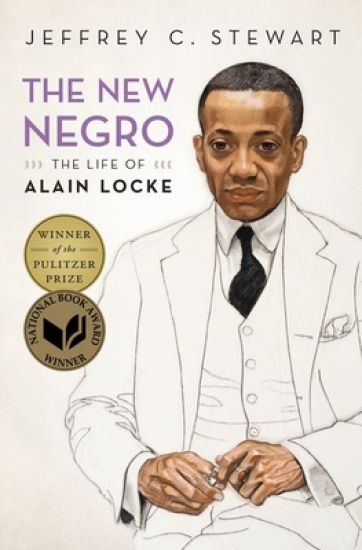
A tiny, fastidiously dressed man emerged from Black Philadelphia around the turn of the century to mentor a generation of young artists including Langston Hughes, Zora Neale Hurston, and Jacob Lawrence and call them the New Negro -- the creative African Americans whose art, literature, music, and drama would inspire Black people to greatness. In the prize-winning The New Negro: The Life of Alain Locke, Jeffrey C. Stewart offers the definitive biography of the father of the Harlem Renaissance, based on the extant primary sources of his life and on interviews with those who knew him personally. He narrates the education of Locke, including his becoming the first African American Rhodes Scholar and earning a PhD in philosophy at Harvard University, and his long career as a professor at Howard University. Locke also received a cosmopolitan, aesthetic education through his travels in continental Europe, where he came to appreciate the beauty of art and experienced a freedom unknown to him in the United States. And yet he became most closely associated with the flowering of Black culture in Jazz Age America and his promotion of the literary and artistic work of African Americans as the quintessential creations of American modernism. In the process he looked to Africa to find the proud and beautiful roots of the race. Shifting the discussion of race from politics and economics to the arts, he helped establish the idea that Black urban communities could be crucibles of creativity. Stewart explores both Locke's professional and private life, including his relationships with his mother, his friends, and his white patrons, as well as his lifelong search for love as a gay man. Stewart's thought-provoking biography recreates the worlds of this illustrious, enigmatic man who, in promoting the cultural heritage of Black people, became--in the process--a New Negro himself.
Felicitous Underspecification

Felicitous Underspecification

Jeffrey C. King

Oxford University Press
2021
sidottu
Felicitous uses of contextually sensitive expressions generally have unique semantic values in context. For example, a felicitous use of the singular pronoun 'she' generally has a single female as its unique semantic value in context. In the present work, Jeffrey C. King argues that contextually sensitive expressions have felicitous uses where they lack unique semantic values in context. He calls such uses instances of felicitous underspecification. In such cases, he says that the underspecified expression is associated with a range of candidate semantic values in context. King provides a rule for updating the Stalnakerian common ground when sentences containing felicitous underspecified expressions are uttered and accepted in a conversation. He also gives an account of the mechanism that associates the range of candidate semantic values in context with an underspecified expression. Sentences containing felicitous underspecified expressions can be embedded in various constructions. King considers the result of embedding such sentences under negation and verbs of propositional attitude. He also considers the question of why some uses of underspecified expressions are felicitous and others aren't. This investigation yields the notion of a context being appropriate for a sentence (LF), where a context is appropriate for a sentence containing an underspecified expression if the sentence is felicitous in that context. Finally, he considers some difficulties that arise in virtue of the fact that pronouns and demonstratives have some sorts of implications of uniqueness that clash with their being underspecified.
The New Negro

The New Negro

Jeffrey C. Stewart

Oxford University Press Inc
2018
sidottu
A tiny, fastidiously dressed man emerged from Black Philadelphia around the turn of the twentieth century to mentor a generation of young artists like Langston Hughes, Zora Neale Hurston, and Jacob Lawrence and call them the New Negro--the gender ambiguous, transformative, artistic African Americans whose art would subjectivize Black people and embolden greatness. Alain Locke (1885-1954) believed Black Americans were sleeping giant that could transform America into a truly humanistic and pluralistic society. In the 1920s, these views were radical, but by announcing a New Negro in art, literature, music, dance, theatre, Locke shifted the discussion of race from the problem-centered discourses of politics and economics to the new creative industries of American modernism. Although this Europhile detested jazz, he used the Jazz Age interest in Black aesthetics to plant the notion in American minds that Black people were America's quintessential artists and Black urban communities were crucibles of creativity where a different life was possible in America. By promoting art, a Black dandy subjectivized Black people and became in the process a New Negro himself.
The Civil Sphere

The Civil Sphere

Jeffrey C. Alexander

Oxford University Press Inc
2006
sidottu
How do real individuals live together in real societies in the real world? Jeffrey Alexander's masterful work, The Civil Sphere, addresses this central paradox of modern life. Feelings for others--the solidarity that is ignored or underplayed by theories of power or self-interest--are at the heart of this novel inquiry into the meeting place between normative theories of what we think we should do and empirical studies of who we actually are. A grand and sweeping statement, The Civil Sphere is a major contribution to our thinking about the real but ideal world in which we all reside.
The Meanings of Social Life

The Meanings of Social Life

Jeffrey C. Alexander

Oxford University Press Inc
2005
nidottu
In The Meanings of Social Life , Jeffrey Alexander presents a new approach to how culture works in contemporary societies. Exposing our everyday myths and narratives in a series of empirical studies that range from Watergate to the Holocaust, he shows how these unseen yet potent cultural structures translate into concrete actions and institutions. Only when these deep patterns of meaning are revealed, Alexander argues, can we understand the stubborn staying power of violence and degradation, but also the steady persistence of hope. By understanding the darker structures that restrict our imagination, we can seek to transform them. By recognizing the culture structures that sustain hope, we can allow our idealistic imaginations to gain more traction in the world. A work that will transform the way that sociologists think about culture and the social world, this book confirms Jeffrey Alexander's reputation as one of the major social theorists of our day.
Remembering the Holocaust

Remembering the Holocaust

Jeffrey C. Alexander; Geoffrey Hartman

Oxford University Press Inc
2009
sidottu
Remembering the Holocaust explains why the Holocaust has come to be considered the central event of the 20th century, and what this means. Presenting Jeffrey Alexander's controversial essay that, in the words of Geoffrey Hartman, has already become a classic in the Holocaust literature, and following up with challenging and equally provocative responses to it, this book offers a sweeping historical reconstruction of the Jewish mass murder as it evolved in the popular imagination of Western peoples, as well as an examination of its consequences. Alexander's inquiry points to a broad cultural transition that took place in Western societies after World War II: from confidence in moving past the most terrible of Nazi wartime atrocities to pessimism about the possibility for overcoming violence, ethnic conflict, and war. The Holocaust has become the central tragedy of modern times, an event which can no longer be overcome, but one that offers possibilities to extend its moral lessons beyond Jews to victims of other types of secular and religious strife. Following Alexander's controversial thesis is a series of responses by distinguished scholars in the humanities and social sciences--Martin Jay, Bernhard Giesen, Michael Rothberg, Robert Manne, Nathan Glazer, and Elihu & Ruth Katz--considering the implications of the universal moral relevance of the Holocaust. A final response from Alexander in a postscript focusing on the repercussions of the Holocaust in Israel concludes this forthright and engaging discussion. Remembering the Holocaust is an all-too-rare debate on our conception of the Holocaust, how it has evolved over the years, and the profound effects it will have on the way we envision the future.
The Civil Sphere

The Civil Sphere

Jeffrey C. Alexander

Oxford University Press Inc
2008
nidottu
What binds societies together and how can these social orders be structured in a fair way? Jeffrey C. Alexander's masterful work, The Civil Sphere, addresses this central paradox of modern life. Feelings for others - the solidarity that is ignored or underplayed by theories of power or self-interest - are at the heart of this novel inquiry into the meeting place between normative theories of what we think we should do and empirical studies of who we actually are. Solidarity, Alexander demonstrates, creates inclusive and exclusive social structures and shows how they can be repaired. It is not perfect, it is not absolute, and the horrors which occur in its lapses have been seen all too frequently in the forms of discrimination, genocide, and war. Despite its worldly flaws and contradictions, however, solidarity and the project of civil society remain our best hope: the antidote to every divisive institution, every unfair distribution, every abusive and dominating hierarchy. This grand, sweeping statement and rigorous empirical investigation is a major contribution to our thinking about the real but ideal world in which we all reside.
The Process of Social Research

The Process of Social Research

Jeffrey C. Dixon; Royce A. Singleton; Bruce C. Straits

OXFORD UNIVERSITY PRESS INC
2023
nidottu
Featuring a conversational, engaging, and student-friendly writing style, The Process of Social Research, Third Edition, introduces students to the fundamentals of research. It places a unique emphasis on process with flowcharts in every chapter that provide step-by-step guides for conducting social research and evaluating the research of others. The authors use relatable, everyday examples and carefully selected research examples to make the book accessible to undergraduates. Comprehensive and up-to-date without attempting to be encyclopedic in its coverage, The Process of Social Research provides a balance between qualitative and quantitative research, taking a more integrated approach to describing the relationship between theory and research.
New Thinking about Propositions

New Thinking about Propositions

Jeffrey C. King; Scott Soames; Jeff Speaks

Oxford University Press
2016
nidottu
Philosophy (especially philosophy of language and philosophy of mind), science (especially linguistics and cognitive science), and common sense all sometimes make reference to propositions--understood as the things we believe and say, and the things which are (primarily) true or false. There is, however, no widespread agreement about what sorts of things these entities are. In New Thinking about Propositions, Jeffrey C. King, Scott Soames, and Jeff Speaks argue that commitment to propositions is indispensable, and that traditional accounts of propositions are inadequate. They each then defend their own views of the nature of propositions.
The Nature and Structure of Content

The Nature and Structure of Content

Jeffrey C. King

Oxford University Press
2009
nidottu
Belief in propositions has had a long and distinguished history in analytic philosophy. Three of the founding fathers of analytic philosophy, Gottlob Frege, Bertrand Russell, and G. E. Moore, believed in propositions. Many philosophers since then have shared this belief; and the belief is widely, though certainly not universally, accepted among philosophers today. Among contemporary philosophers who believe in propositions, many, and perhaps even most, take them to be structured entities with individuals, properties, and relations as constituents. For example, the proposition that Glenn loves Tracy has Glenn, the loving relation, and Tracy as constituents. What is it, then, that binds these constituents together and imposes structure on them? And if the proposition that Glenn loves Tracy is distinct from the proposition that Tracy loves Glenn yet both have the same constituents, what is about the way these constituents are structured or bound together that makes them two different propositions? In The Nature and Structure of Content, Jeffrey C. King formulates a detailed account of the metaphysical nature of propositions, and provides fresh answers to the above questions. In addition to explaining what it is that binds together the constituents of structured propositions and imposes structure on them, King deals with some of the standard objections to accounts of propositions: he shows that there is no mystery about what propositions are; that given certain minimal assumptions, it follows that they exist; and that on his approach, we can see how and why propositions manage to have truth conditions and represent the world as being a certain way. The Nature and Structure of Content also contains a detailed account of the nature of tense and modality, and provides a solution to the paradox of analysis. Scholars and students working in the philosophy of mind and language will find this book rewarding reading.
New Thinking about Propositions

New Thinking about Propositions

Jeffrey C. King; Scott Soames; Jeff Speaks

Oxford University Press
2014
sidottu
Philosophy (especially philosophy of language and philosophy of mind), science (especially linguistics and cognitive science), and common sense all sometimes make reference to propositions--understood as the things we believe and say, and the things which are (primarily) true or false. There is, however, no widespread agreement about what sorts of things these entities are. In New Thinking about Propositions, Jeffrey C. King, Scott Soames, and Jeff Speaks argue that commitment to propositions is indispensable, and that traditional accounts of propositions are inadequate. They each then defend their own views of the nature of propositions.
The Performance of Politics

The Performance of Politics

Jeffrey C. Alexander

Oxford University Press Inc
2011
sidottu
Jeffrey Alexander, a preeminent figure in social theory, offers here a new way of looking at democratic struggles for political power, discussing what happened, and why, during Barack Obama's remarkable run for president. Illustrated with vivid examples drawn from a range of media coverage, participant observation at a Camp Obama, and interviews with leading political journalists, Alexander argues that images, emotion, and performance are the central features of the battle for power. Winning depends on creating images so that candidates can become heroes. Demography, strategy, money, and issues matter, but power goes to the candidate with the most persuasive performances---the one whose carefully constructed heroic image resonates best with the audience of citizens. Though an untested Senator, Obama's moving performances succeeded in casting him as the hero and as the only candidate fit to lead in challenging times. As he sheds new light on modern politics, Alexander also conveys the immediacy and excitement of the final months of the historic 2008 presidential campaign.
The Performance of Politics

The Performance of Politics

Jeffrey C. Alexander

Oxford University Press Inc
2012
nidottu
Contemporary observers of politics in America often reduce democracy to demography, and presidential elections are no exception. But do differences in class, gender, race, and religion really determine the vote? The Performance of Politics develops a new way of looking at democratic struggles for big-time power and it explains what happened, and why, during the 2008 Presidential campaign in the United States. Through a series of simple but telling concepts about meaning and performance in public life, illustrated with vivid examples drawn from a range of media coverage, participant observation at a Camp Obama, and interviews with leading political journalists, Jeffrey Alexander argues that images, emotion, and performance are the central features of the battle for power. While these features have been largely overlooked by pundits, they are, in fact, the primary foci of political actors. Winning depends on creating images so that candidates can become heroes. Obama and McCain carefully constructed heroic self-images for their campaigns and the successful performance of those representations characterized not only each candidate's actual rallies, and not only their media messages but also the ground game. Money and organization facilitate the ground game, but they do not determine it. Emotion, images, and performance do. In other words, demography isn't destiny and political parties can't always delivery the vote. Though an untested Senator and the underdog in his own party, Obama, through his moving performances, succeeded in casting himself as the hero and McCain the anti-hero, as the only candidate fit to lead in challenging times. Drawing on these themes, Alexander then reveals several periods of shifting public opinion and isolates the drama of Obama's celebrity, the effect of Sarah Palin on the race, and the emerging financial crisis through an engaging narrative that conveys the immediacy and excitement of the final months of the historic 2008 presidential campaign. "Jeffrey C. Alexander's intriguing argument in The Performance of Politics, a meticulous review of the 2008 campaign, is that his fellow sociologists have overemphasized impersonal social forces at the expense of the theater of public life - the way politicians perform 'symbolically.' It's a prosaic call for a more poetic (or at least aesthetic) understanding of politics. Ideology must connect viscerally, or it doesn't connect at all." -The New York Times Book Review "The Performance of Politics is replete with sociological insights. ... Alexander presents original theoretical arguments on the democratic struggle for power in America, and in the process provides a new explanation for Obama's historic victory. ... Alexander's argument that the democratic struggle for power is about becoming a collective representation is persuasive, so too is the way he uses this argument to examine the successful and failed performances of candidates on both the primary and general elections. ... The most compelling part of this engaging book is Alexander's brilliant chapter on the 'Celebrity Metaphor.' Rarely have I read an analysis of a social event by a sociologist that had me so enthralled. ... This is a brilliant book.'" -William Julius Wilson, Contemporary Sociology 'That politics is about drama and unpredictable, surprising moments is one of the central arguments in Jeffrey Alexander's remarkable analysis of Barack Obama's presidential campaign ... By employing the tools of cultural sociology, Alexander writes about the most recent US presidential campaign as if it were a modern form of the Iliad.... Sometimes the best sociology is that which reveals itself through brilliant analysis and storytelling.'--Times Higher Education Supplement 'In an extraordinary analysis of real breadth and depth, Jeffrey Alexander challenges us to re-think Barack Obama's election as president. Reflect on the performance that takes place on a grand stage, Alexander advises, and we'll see the big picture.'-Larry J. Sabato, author of The Year of Obama 'This is a work of dazzling brilliance and imagination. It sparkles with new insights that go well beyond standard interpretations of electoral politics. Especially to be treasured is its keen understanding of civil society and the importance of moral meaning and symbolism in public life.'-Robert Wuthnow, Princeton University 'Revealing himself to be de Tocqueville's true heir, Jeffrey Alexander draws a sweeping and daring portrait of the heroes, villains, fools, and mavericks who peopled the 2008 American presidential campaign. The Performance of Politics is riveting. '-Robin Wagner-Pacifici, Swarthmore College
Beyond Glasnost

Beyond Glasnost

Jeffrey C. Goldfarb

University of Chicago Press
1992
nidottu
"Beyond Glasnost is a thoughtful exploration of the past decade's cultural and political ferment in Eastern Europe. It is also something else: an argument—in a deceptively unassuming, anti-ideological voice—about how to conceive of and move toward freedom; an argument that could hardly be more relevant to the roiling debates on the Western left."—Ellen Willis, Village Voice
On Cultural Freedom

On Cultural Freedom

Jeffrey C. Goldfarb

University of Chicago Press
1983
nidottu
In this timely study, Jeffrey C. Goldfarb explores the nature and prospects of cultural freedom by examining the conditions that favor or threaten its development in the political East and West. Goldfarb—who examines conditions in the Soviet Union, the United States, and their respective European allies—focuses most closely upon Poland and the United States. He investigates a wide range of concrete cases, including the Polish opposition movement and Solidarity, the migration of artists, the American television and magazine industries, American philanthropy, and communist cultural conveyor belts. From these cases, Goldfarb derives a definitive set of sociological conditions for cultural freedom: critical creativity which resists systematic constraints, continuity of cultural tradition, and a relatively autonomous public realm for the reception of culture. Cultural freedom, Goldfarb shows, is not a static state but a process of achievement. Its parameters and content are determined by social practice in cultural institutions and by their relations with other components and the totality of social structure. So defined, cultural freedom is transformed from an ideological concept into one with real critical and analytical power. Through it we can appreciate the invisible nature of constraint in the West and the unapparent but acting supports of cultural freedom existing in socialist countries. Most importantly, Goldfarb's conclusions provide a framework for understanding more clearly than before the circumstance of cultural freedom in both East and West so that citizens may utilize their full creative abilities as they address the problems of the present day.