

Kirjahaku
Etsi kirjoja tekijän nimen, kirjan nimen tai ISBN:n perusteella.
1000 tulosta hakusanalla Jeffrey D Barbieri






Summary: The End of Poverty: Review and Analysis of Jeffrey D. Sachs's Book
Businessnews Publishing
Political Book Summaries
2017
nidottu
The must-read summary of Jeffrey D. Sachs's book: "The End of Poverty: Economic Possibilities for Our Time". This complete summary of "The End of Poverty" by Jeffrey D. Sachs, a renowned economist, presents his examination of what needs to be done to finally put an end to extreme poverty and to guarantee a basic level of sanitation, housing, health and nutrition to even the poorest communities. Added-value of this summary: - Save time- Understand what must be done to end extreme poverty throughout the world- Expand your knowledge of international politics and economics To learn more, read "The End of Poverty" and discover the necessity of guaranteeing a basic level of sanitation, housing, health and nutrition to the world's poorest.

L'Index d'Anabolisme: Guide d'evaluation des aliments et des supplements
David S. Lounsbury M. Sc; Jeffrey D. Urdank; Sabrina a. Barr
Flepine Publishing
2013
nidottu
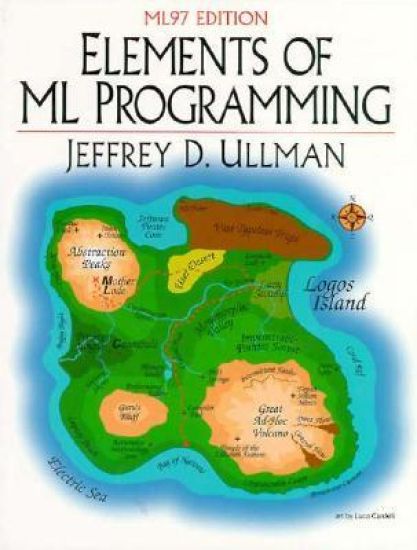
For sophomore through graduate level courses covering an introduction to the fundamentals of ML programming or as a supplement for programming languages, functional programming, or compiler courses. Written by renowned computer science educator and researcher Jeffrey Ullman, this text assumes no previous knowledge of ML or functional programming. This second edition has been heavily revised and updated using ML 97. This is the first book that offers BOTH a highly accessible, step-by-step introductory tutorial on ML programming and a complete explanation of advanced features. The author uses a wide variety of program examples to show how ML can be used in a variety of applications. More sophisticated programs and advanced concepts make this book usable in a number of courses for self-study or class discussion.
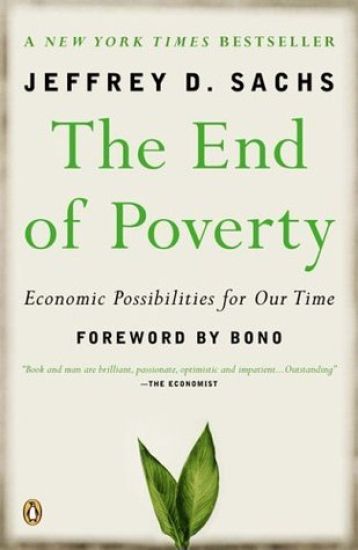
A respected international economic advisor and the director of The Earth Institute shares a wide-spectrum theory about how to enable economic success throughout the world, identifying the different categories into which various nations fall in today's economy while posing solutions to top political, environmental, and social problems that contribute to poverty. Reprint.
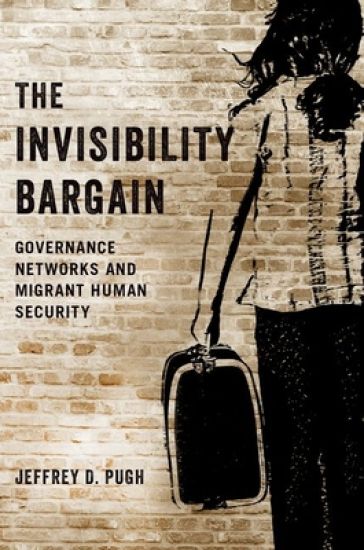
Migrants fleeing economic hardship or violence are entitled to a range of protections and rights under domestic and international law, yet they are often denied such protections in practice. In an era of mass migration and restrictive responses, migrant acceptance is often contingent on the expectation that they contribute economically to the host country while remaining politically and socially invisible. These unwritten expectations, which Jeffrey D. Pugh calls the "invisibility bargain", produce a precarious status in which migrants' visible differences or overt political demands on the state may be met with hostile backlash from the host society. In this context, governance networks of state and non-state actors form an institutional web that can provide indirect access to rights, resources, and protection, but simultaneously help migrants avoid negative backlash against visible political activism. The Invisibility Bargain seeks to understand how migrants negotiate their place in receiving societies and adapt innovative strategies to integrate, participate, and access protection. Specifically, the book examines Ecuador, the largest recipient of refugees in Latin America, and assesses how it achieved migrant human security gains despite weak state presence in peripheral areas. Pugh deploys evidence from 15 months of fieldwork spanning ten years in Ecuador, including 170 interviews, an original survey of Colombian migrants in six provinces, network analysis, and discourse analysis of hundreds of presidential speeches and news media articles. He argues that localities with more dense networks composed of more diverse actors tend to produce greater human security for migrants and their neighbors. The book challenges the conventional understanding of migration and security, providing a new approach to the negotiation of authority between state and society. By examining the informal pathways to human security, Pugh dismantles the false dichotomy between international and national politics, and exposes the micro politics of institutional innovation.
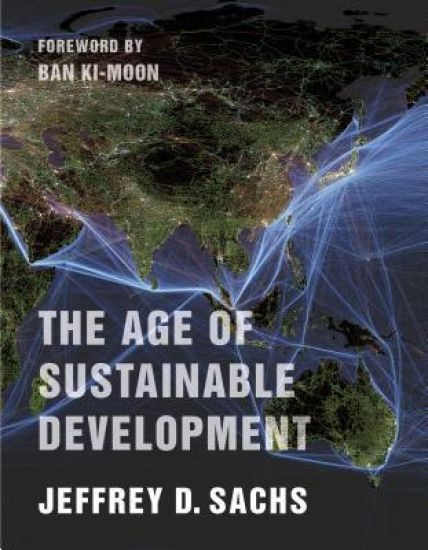
The Age of Sustainable Development
Jeffrey D. Sachs; Ban Ki-moon
Columbia University Press
2015
sidottu
Jeffrey D. Sachs is one of the world's most perceptive and original analysts of global development. In this major new work he presents a compelling and practical framework for how global citizens can use a holistic way forward to address the seemingly intractable worldwide problems of persistent extreme poverty, environmental degradation, and political-economic injustice: sustainable development. Sachs offers readers, students, activists, environmentalists, and policy makers the tools, metrics, and practical pathways they need to achieve Sustainable Development Goals. Far more than a rhetorical exercise, this book is designed to inform, inspire, and spur action. Based on Sachs's twelve years as director of the Earth Institute at Columbia University, his thirteen years advising the United Nations secretary-general on the Millennium Development Goals, and his recent presentation of these ideas in a popular online course, The Age of Sustainable Development is a landmark publication and clarion call for all who care about our planet and global justice. Visit http://cup.columbia.edu/extras/supplement/sachs-9780231173148 for additional teaching materials for students and instructors, including chapter summaries, key concepts, problem sets, and slides.
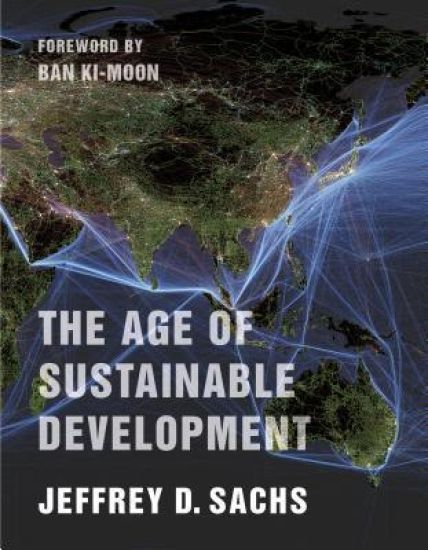
The Age of Sustainable Development
Jeffrey D. Sachs; Ban Ki-moon
Columbia University Press
2015
pokkari
Jeffrey D. Sachs is one of the world's most perceptive and original analysts of global development. In this major new work he presents a compelling and practical framework for how global citizens can use a holistic way forward to address the seemingly intractable worldwide problems of persistent extreme poverty, environmental degradation, and political-economic injustice: sustainable development. Sachs offers readers, students, activists, environmentalists, and policy makers the tools, metrics, and practical pathways they need to achieve Sustainable Development Goals. Far more than a rhetorical exercise, this book is designed to inform, inspire, and spur action. Based on Sachs's twelve years as director of the Earth Institute at Columbia University, his thirteen years advising the United Nations secretary-general on the Millennium Development Goals, and his recent presentation of these ideas in a popular online course, The Age of Sustainable Development is a landmark publication and clarion call for all who care about our planet and global justice. Visit http://cup.columbia.edu/extras/supplement/sachs-9780231173148 for additional teaching materials for students and instructors, including chapter summaries, key concepts, problem sets, and slides.
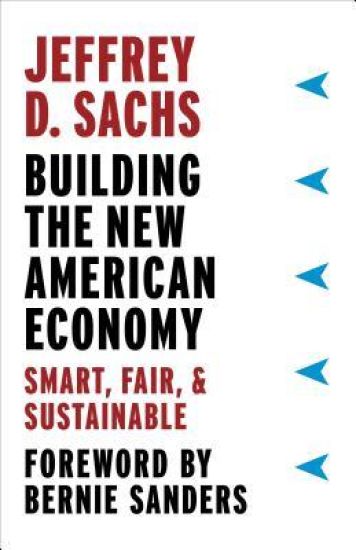
Building the New American Economy
Jeffrey D. Sachs; Bernie Sanders
Columbia University Press
2017
sidottu
In this passionate and powerful book-part manifesto, part plan of action-the renowned economist Jeffrey D. Sachs offers a practical strategy to move America, seemingly more divided than ever, toward a new consensus: sustainable development. Sustainable development is a holistic approach that emphasizes economic, social, and environmental objectives in shaping policy. In focusing too much on economic growth, the United States has neglected rising economic inequality and dire environmental threats. Now, even growth is imperiled. Sachs explores issues that have captivated the nation and political debate, including infrastructure, trade deals, energy policy, the proper size and role of government, the national debt, and income inequality. Not only does he provide illuminating and accessible explanations of the forces at work in each case, but he also presents specific policy solutions. His argument rises above the pessimism born of political paralysis, economic stagnation, and partisanship to devise a brighter way forward, achievable both individually and collectively. In Building the New American Economy, Sachs shows how the United States can find a path to renewed economic progress that is fair and environmentally sustainable.
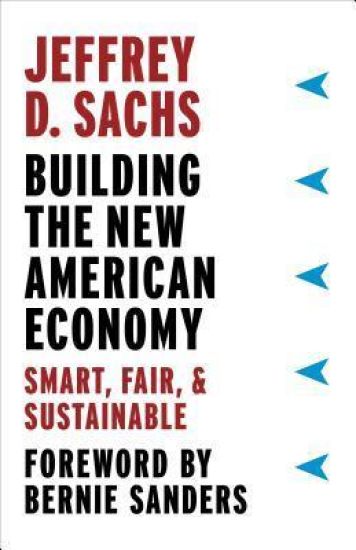
Building the New American Economy
Jeffrey D. Sachs; Bernie Sanders
Columbia University Press
2018
pokkari
In this passionate and powerful book-part manifesto, part plan of action-the renowned economist Jeffrey D. Sachs offers a practical strategy to move America, seemingly more divided than ever, toward a new consensus: sustainable development. Sustainable development is a holistic approach that emphasizes economic, social, and environmental objectives in shaping policy. In focusing too much on economic growth, the United States has neglected rising economic inequality and dire environmental threats. Now, even growth is imperiled. Sachs explores issues that have captivated the nation and political debate, including infrastructure, trade deals, energy policy, the proper size and role of government, the national debt, and income inequality. Not only does he provide illuminating and accessible explanations of the forces at work in each case, but he also presents specific policy solutions. His argument rises above the pessimism born of political paralysis, economic stagnation, and partisanship to devise a brighter way forward, achievable both individually and collectively. In Building the New American Economy, Sachs shows how the United States can find a path to renewed economic progress that is fair and environmentally sustainable.
The American Century began in 1941 and ended on January 20, 2017. While the United States remains a military giant and is still an economic powerhouse, it no longer dominates the world economy or geopolitics as it once did. The current turn toward nationalism and “America first” unilateralism in foreign policy will not make America great. Instead, it represents the abdication of our responsibilities in the face of severe environmental threats, political upheaval, mass migration, and other global challenges.In this incisive and forceful book, Jeffrey D. Sachs provides the blueprint for a new foreign policy that embraces global cooperation, international law, and aspirations for worldwide prosperity—not nationalism and gauzy dreams of past glory. He argues that America’s approach to the world must shift from military might and wars of choice to a commitment to shared objectives of sustainable development. Our pursuit of primacy has embroiled us in unwise and unwinnable wars, and it is time to shift from making war to making peace and time to embrace the opportunities that international cooperation offers. A New Foreign Policy explores both the danger of the “America first” mindset and the possibilities for a new way forward, proposing timely and achievable plans to foster global economic growth, reconfigure the United Nations for the twenty-first century, and build a multipolar world that is prosperous, peaceful, fair, and resilient.
The American Century began in 1941 and ended on January 20, 2017. While the United States remains a military giant and is still an economic powerhouse, it no longer dominates the world economy or geopolitics as it once did. The current turn toward nationalism and “America first” unilateralism in foreign policy will not make America great. Instead, it represents the abdication of our responsibilities in the face of severe environmental threats, political upheaval, mass migration, and other global challenges.In this incisive and forceful book, Jeffrey D. Sachs provides the blueprint for a new foreign policy that embraces global cooperation, international law, and aspirations for worldwide prosperity—not nationalism and gauzy dreams of past glory. He argues that America’s approach to the world must shift from military might and wars of choice to a commitment to shared objectives of sustainable development. Our pursuit of primacy has embroiled us in unwise and unwinnable wars, and it is time to shift from making war to making peace and time to embrace the opportunities that international cooperation offers. A New Foreign Policy explores both the danger of the “America first” mindset and the possibilities for a new way forward, proposing timely and achievable plans to foster global economic growth, reconfigure the United Nations for the twenty-first century, and build a multipolar world that is prosperous, peaceful, fair, and resilient.
Today’s most urgent problems are fundamentally global. They require nothing less than concerted, planetwide action if we are to secure a long-term future. But humanity’s story has always been on a global scale. In this book, Jeffrey D. Sachs, renowned economist and expert on sustainable development, turns to world history to shed light on how we can meet the challenges and opportunities of the twenty-first century.Sachs takes readers through a series of seven distinct waves of technological and institutional change, starting with the original settling of the planet by early modern humans through long-distance migration and ending with reflections on today’s globalization. Along the way, he considers how the interplay of geography, technology, and institutions influenced the Neolithic revolution; the role of the horse in the emergence of empires; the spread of large land-based empires in the classical age; the rise of global empires after the opening of sea routes from Europe to Asia and the Americas; and the industrial age. The dynamics of these past waves, Sachs demonstrates, offer fresh perspective on the ongoing processes taking place in our own time—a globalization based on digital technologies. Sachs emphasizes the need for new methods of international governance and cooperation to prevent conflicts and to achieve economic, social, and environmental objectives aligned with sustainable development. The Ages of Globalization is a vital book for all readers aiming to make sense of our rapidly changing world.

What’s the secret to keeping your balance? The ear does more than hear: it helps us stay stable by perceiving movements and gravity. Elegant sensors deep within the skull detect every twist, turn, and tumble, powering swift reflexes that keep vision and balance steady. This is the vestibular system. It’s primordial and ubiquitous: every animal has one, and even plants have a rudimentary version. It works so well that we take it for granted—until it fails. How does this remarkable system function? What happens when it goes haywire? How can modern medicine treat vestibular disease?The Great Balancing Act tells the story of the vestibular system, from T. rex hearing organs to cochlear implants, and from the unsung power of hair cells to inner-ear problems in outer space. Combining neuroscience, history, and medicine, Jeffrey D. Sharon—a vestibular doctor and researcher—explains the sense of balance using accessible language and wry humor. He recounts how pioneering scientists solved the mysteries of the vestibular system and shows why it is necessary for spatial reasoning and abstract thought. Sharon explores the devastating consequences of vestibular problems such as vertigo, dizziness, and imbalance, offering an expert, patient-friendly look at emerging and future treatments. Engaging and entertaining, this book invites readers to discover a little-known yet vital part of ourselves.