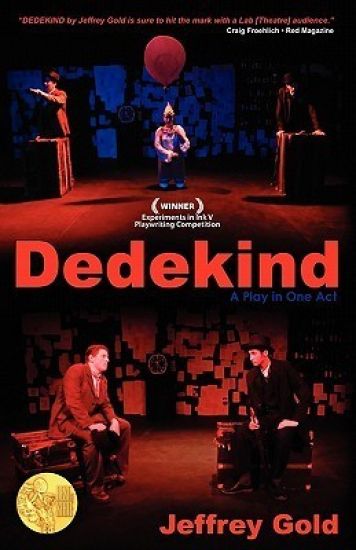
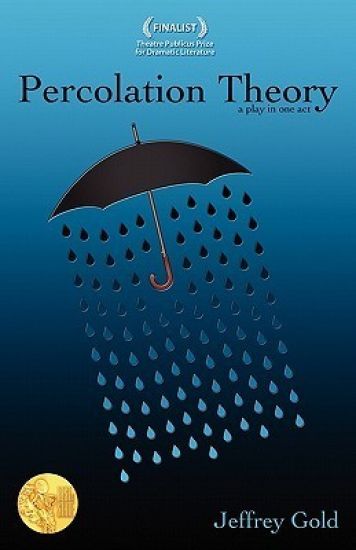
In this dark comedy, the overbearing owner of a Fortune 500 company visits the home of a former employee---with a few surprises. FINALIST - 2005 Theatre Publicus Prize for Dramatic Literature Dramatica Press plays are designed to enhance readability of the stageplay format by creating a new ergonomic layout and using color to easily differentiate between character names, dialogue, parentheticals, and stage directions. Characters TOM MORGAN - Father. Hard worker. Unfortunately the compensation for all this work has not been commensurate with the effort. To add injury to insult, he was recently downsized by the Glasgow Corporation about 7 weeks ago. ALATHEA MORGAN - His wife. Housewife. Strong, but knows when to step back and let Tom feel useful. LESLIE MORGAN - Their daughter of 17 years. A pregnancy waiting to happen. ANDY MORGAN - Their son of 20 years. Probably involved with drugs. Wears a T-shirt that proudly reads "Wiener Takes Fall". SHELDON GLASGOW - The overbearing owner and chairman of the Glasgow Corporation, a Fortune 500 Company. A portly man who enjoys the best things in life, because he can afford them.
The doctrine of parliamentary sovereignty has long been regarded as the most fundamental element of the British Constitution. It holds that Parliament has unlimited legislative authority, and that the courts have no authority to judge statutes invalid. This doctrine has now been criticized on historical and philosophical grounds and critics claim that it is a relatively recent invention of academic lawyers that superseded an earlier tradition in which Parliament's authority was limited to common law. The critics also argue that it is based on a misunderstanding of the relationship between statutory and common law, and is morally indefensible. The Sovereignty of Parliament: History and Philosophy responds to these criticisms. It first defines and clarifies the concept of legislative sovereignty and then describes the historical origins and the development of the doctrine from the thirteenth to the end of the nineteenth century. Professor Goldsworthy goes on to identify many different reasons why persuaded statesmen, lawyers, and political theorists have endorsed the doctrine. He discusses the ideas of a large number of legal and political thinkers, including Fortescue, St German, Hooker, Coke, Bacon, Parker, Milton, Hobbes, Hale, Locke, Bolingbroke, Blackstone, and Burke. He shows that judges in Great Britain have never had authority to invalidate statutes, and that the doctrine is much older than is generally realized. The book concludes by dealing with philosophical criticisms of the doctrine. Combining the insights of earlier thinkers with those of contemporary legal philosophers, it demonstrates that these criticisms are based on a defective understanding of the nature and foundations of law, and of the relationship between legislative authority and the common law. It argues that the doctrine is morally defensible, and refutes the thesis that the judges have authority to modify or reject it.
The doctrine of parliamentary sovereignty has long been regarded as the most fundamental element of the British Constitution. It holds that Parliament has unlimited legislative authority, and that the courts have no authority to judge statutes invalid. This doctrine has now been criticized on historical and philosophical grounds and critics claim that it is a relatively recent invention of academic lawyers that superseded an earlier tradition in which Parliament's authority was limited to common law. The critics also argue that it is based on a misunderstanding of the relationship between statutory and common law, and is morally indefensible. The Sovereignty of Parliament: History and Philosophy responds to these criticisms. It first defines and clarifies the concept of legislative sovereignty and then describes the historical origins and the development of the doctrine from the thirteenth to the end of the nineteenth century. Professor Goldsworthy goes on to identify many different reasons why persuaded statesmen, lawyers, and political theorists have endorsed the doctrine. He discusses the ideas of a large number of legal and political thinkers, including Fortescue, St German, Hooker, Coke, Bacon, Parker, Milton, Hobbes, Hale, Locke, Bolingbroke, Blackstone, and Burke. He shows that judges in Great Britain have never had authority to invalidate statutes, and that the doctrine is much older than is generally realized. The book concludes by dealing with philosophical criticisms of the doctrine. Combining the insights of earlier thinkers with those of contemporary legal philosophers, it demonstrates that these criticisms are based on a defective understanding of the nature and foundations of law, and of the relationship between legislative authority and the common law. It argues that the doctrine is morally defensible, and refutes the thesis that the judges have authority to modify or reject it.
An award-winning correspondent for The New Yorker and an American Jew describes his move to Israel as a student, his work as a prison guard at Ketziot, and his extended dialogue with a prisoner named Rafiq, a PLO leader, explaining how the two very different men forged a unique friendship despite their religious, cultural, and political differences. Reprint. 25,000 first printing.
This book has four main themes: (1) a criticism of 'common law constitutionalism', the theory that Parliament's authority is conferred by, and therefore is or can be made subordinate to, judge-made common law; (2) an analysis of Parliament's ability to abdicate, limit or regulate the exercise of its own authority, including a revision of Dicey's conception of sovereignty, a repudiation of the doctrine of implied repeal and the proposal of a novel theory of 'manner and form' requirements for law-making; (3) an examination of the relationship between parliamentary sovereignty and statutory interpretation, defending the reality of legislative intentions, and their indispensability to sensible interpretation and respect for parliamentary sovereignty; and (4) an assessment of the compatibility of parliamentary sovereignty with recent constitutional developments, including the expansion of judicial review of administrative action, the Human Rights and European Communities Acts and the growing recognition of 'constitutional principles' and 'constitutional statutes'.
This book has four main themes: (1) a criticism of 'common law constitutionalism', the theory that Parliament's authority is conferred by, and therefore is or can be made subordinate to, judge-made common law; (2) an analysis of Parliament's ability to abdicate, limit or regulate the exercise of its own authority, including a revision of Dicey's conception of sovereignty, a repudiation of the doctrine of implied repeal and the proposal of a novel theory of 'manner and form' requirements for law-making; (3) an examination of the relationship between parliamentary sovereignty and statutory interpretation, defending the reality of legislative intentions, and their indispensability to sensible interpretation and respect for parliamentary sovereignty; and (4) an assessment of the compatibility of parliamentary sovereignty with recent constitutional developments, including the expansion of judicial review of administrative action, the Human Rights and European Communities Acts and the growing recognition of 'constitutional principles' and 'constitutional statutes'.
Australia is now the only major Anglophone country that has not adopted a Bill of Rights. Since 1982 Canada, New Zealand and the UK have all adopted either constitutional or statutory bills of rights. Australia, however, continues to rely on common law, statutes dealing with specific issues such as racial and sexual discrimination, a generally tolerant society and a vibrant democracy. This book focuses on the protection of human rights in Australia and includes international perspectives for the purpose of comparison and it provides an examination of how well Australian institutions, governments, legislatures, courts and tribunals have performed in protecting human rights in the absence of a Bill of Rights.
Australia is now the only major Anglophone country that has not adopted a Bill of Rights. Since 1982 Canada, New Zealand and the UK have all adopted either constitutional or statutory bills of rights. Australia, however, continues to rely on common law, statutes dealing with specific issues such as racial and sexual discrimination, a generally tolerant society and a vibrant democracy. This book focuses on the protection of human rights in Australia and includes international perspectives for the purpose of comparison and it provides an examination of how well Australian institutions, governments, legislatures, courts and tribunals have performed in protecting human rights in the absence of a Bill of Rights.
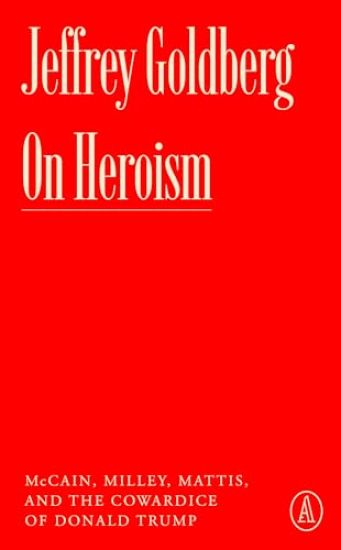
From the editor in chief of The Atlantic comes a collection of essays examining Donald Trump's corrupted notions of American 'heroism' and 'cowardice'. An Atlantic Edition, featuring long-form journalism by Atlantic writers, drawn from contemporary articles or classic storytelling from the magazine's 165-year archive.From the editor in chief of The Atlantic comes a grave study of Donald Trump's trenchant disdain for military personnel, a preoccupation that reveals the extent to which Trump is grossly unfit to serve. Jeffrey Goldberg draws upon decades of his own reporting, including key interviews with top officials such as John McCain, former Defense Secretary James Mattis, and former chairman of the Joint Chiefs Mark Milley. In doing so, Goldberg paints a portrait of a president whose impulse is to dismiss acts of heroism in pursuit of dangerously undemocratic processes and ideals.
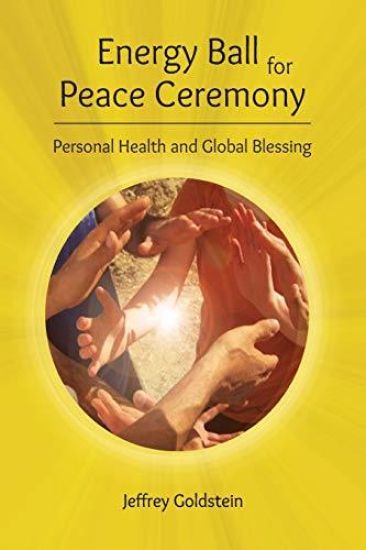
Welcome to the "World of the Energy Ball" Create Peaceful vibrations within yourself and your environment anytime using the Life Energy that flows through your hands.This guidebook was born from the author's experiences conducting Energy Ball for Peace Ceremonies in Israel and Palestine over the past 20+ years. As a member of peace activities, he realized that there was a genuine need for groups of participants to join together in meaningful experiences. Knowing that the Energy Ball brings on a peaceful atmosphere, the author demonstrated to individuals and groups how to form the Energy Ball and merge together as a team. This grew into several types of Energy Circles based on peaceful, healing, and dancing energy. To form an Energy Ball, you contain Life Energy between your hands. When the hands are held close to one another, they compact the Life Energy flowing from them. After a few moments, the Life Energy intensifies, and you can feel it in your hands as sensations. This focused energy is what is called the "Energy Ball".The Energy Ball circulates the flow of Life Energy running through your body. When combined with creative positive attitudes, thoughts and actions the Energy Ball becomes magical and practical Your physical and emotional responses to forming an Energy Ball vary depending on your circumstances, needs, and the number of people participating. Energy Ball formation can be very relaxing, helping those participating to calm down; and at other times very energizing. Responses depend on the participant's hand position and intention. The Collective Energy Ball for Peace Ceremony invites individuals to blend together as a radiant Peace Team. The Ceremony is usually done sitting or standing in a circle so that participants can see one another. There is a leader who guides the participants into a collective team. The goal is to consciously merge and harmonize, providing exponential amounts of light. This collective energy is then sent out in Blessing to humanity and Planet Earth.The Energy Ball compliments all Healing modalities such as allopathic and alternative medicine, sound healing, psychological treatments, body - mind- emotional therapies, physical exercise programs, yoga, nature healing, stress and anger management therapies and so much more.It is excellent for group bonding activities: social, religious, educational, as it brings people together for a unique, stimulating, interesting, alternative activity. It is also great way for office workers to quickly recharge themselves and come together as a team.
With “the age of democracy” apparently coming to an end, Jeffrey C. Goldfarb offers hope against hopelessness, turning away from the canned political perspectives of the left, right, and center to recognize the beauty of the less than perfect and to emphasize the centrality of free public life. In Gray is Beautiful, he reflects on a lifetime of political engagement and scholarship, drawing upon experiences as a radical New Leftist, participant observer of the democratic opposition “behind the iron curtain,” teacher in Afghanistan, and publisher of online public forums. Offering original insights, this book considers the promise rather than the problems of political uncertainty, uses Tocqueville’s mistakes to understand the present state of democracy in America, and considers the ironies of collaboration. Goldfarb helps readers confront today’s central challenges in fresh ways, demonstrating that the political gray is indeed beautiful and how this sensibility provides a way to confront the global retreat of democracy.
This sociological study of cultural freedom examines the relatively unhindered Polish theater movement in terms of the organizational context and cultural traditions that support it. Dr. Goldfarb points to inadequacies in prevailing models of Communist societies and asserts that cultural freedom may be realized not only as dissent in opposition to
This sociological study of cultural freedom examines the relatively unhindered Polish theater movement in terms of the organizational context and cultural traditions that support it. Dr. Goldfarb points to inadequacies in prevailing models of Communist societies and asserts that cultural freedom may be realized not only as dissent in opposition to