Kirjahaku
Etsi kirjoja tekijän nimen, kirjan nimen tai ISBN:n perusteella.
1000 tulosta hakusanalla Jeffrey H. Dyer
Why has Chrysler been twice as profitable as GM and Ford during the 1990s even though it is a much smaller company with plants that are less efficient than Ford's? Why does Toyota continue to have substantial productivity and quality advantages long after knowledge of the Toyota Production System has diffused to competitors? The answer, according to Jeff Dyer, is that Toyota and Chrysler have been the first in their industry to recognize that the fundamental unit of competition has changed--from the individual firm to the extended enterprise. In this book Dyer demonstrates the power of collaborative advantage, arguing that, in the future, competitive advantage will increasingly be created by teams of companies, rather than by the single firm. Managers who do not recognize this development--regardless of their industry--are in danger of adopting the wrong strategies for their firms. Dyer draws on eight years of study of the automotive industry, including a wealth of data from interviews with over 200 executives and surveys of over 500 suppliers, as he offers detailed case studies of Toyota and Chrysler to show managers how to create collaborative advantage with their supplier networks. Dyer demonstrates how to build trust in the extended enterprise, how to exploit and manage knowledge (describing how Toyota manages knowledge across organizational boundaries), and how to create advantages through dedicated asset investments. In turn, these processes generate stunning performance advantages and an identity for the extended enterprise. To be successful in future years, executives will have to convert their corporations into fully integrated, extended enterprises. In Collaborative Advantage, Jeff Dyer shows them how.
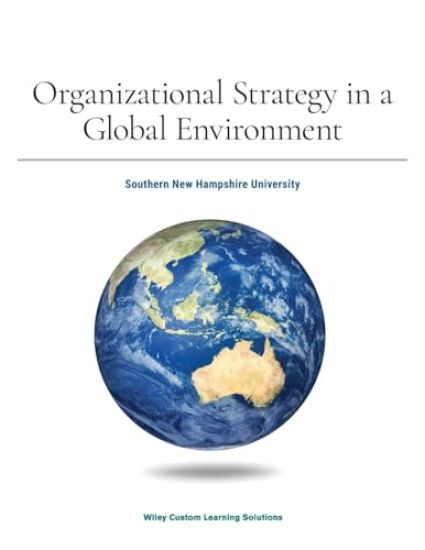
Strategic Management, 5e with Organizational Behavior 3e for Southern New Hampshire University
Jeffrey H. Dyer
WILEY
2024
nidottu
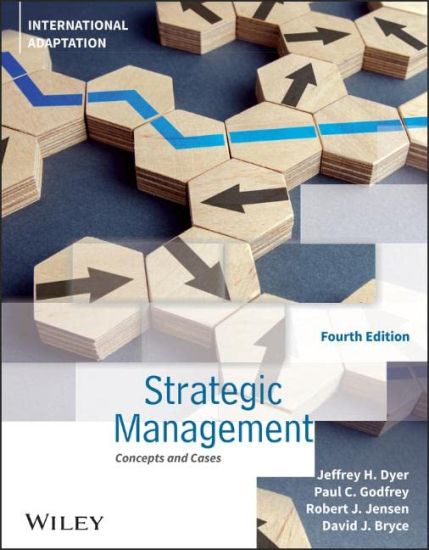
Strategic Management
Jeffrey H. Dyer; Paul C. Godfrey; Robert J. Jensen; David J. Bryce
JOHN WILEY SONS INC
2023
nidottu
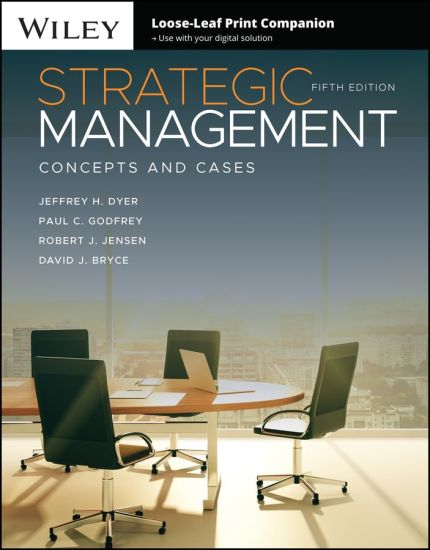
Strategic Management delivers an insightful, clear, concise introduction to strategy management concepts and links these concepts to the skills and knowledge students need to be successful in the professional world. Written in an accessible Harvard Business Review style with lots of practical examples and strategy tools, the book engages students with an easy-to-understand learning experience to strategic management concepts. This International Adaptation sparks ideas, fuels creative thinking and discussion, while engaging students via contemporary examples, outstanding author-produced cases, and much more. Every chapter now includes new questions to help readers test their understanding of the subject. There are also new Mini-Cases and Strategy in Practice vignettes that are contemporary and more relevant to the global scenario.
Strategic Management
Jeffrey H. Dyer; Paul C. Godfrey; Robert J. Jensen
JOHN WILEY SONS INC
2024
pokkari
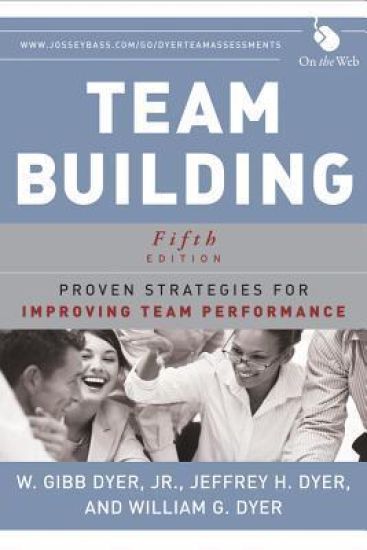
TEAM BUILDING Now in its fifth edition, Team Building is a classic in the field of organization development. In this new edition, the authors strengthen the Four Cs framework that was introduced in the fourth edition and add a wealth of new illustrative examples, a chapter on the challenges of managing cross-functional teams, and a chapter on leading innovative teams in a competitive environment. To complement the text, the authors have developed two online assessments: one designed for use in the classroom with student teams and one designed for teams within organizations. For more information, please visit www.josseybass.com/go/dyerteamassessments. The fifth edition of Team Building provides the next generation of team leaders,team members, and team consultants with the knowledge and skills they need to create effective and high-functioning teams. PRAISE FOR TEAM BUILDING “First rate. It is a treasure trove of ideas, tools, and examples.” —Dave Ulrich, professor, University of Michigan; partner, The RBL Group “What an amazing gift! The ‘bible’ of team building has been updated and expanded. Solid theory is combined with the most practical of techniques. Practitioners of team building and OD are huge beneficiaries of this monumental work.” —Jack Zenger, cofounder and chief executive officer, Zenger-Folkman; coauthor of the best-selling The Extraordinary Leader and Results-Based Leadership
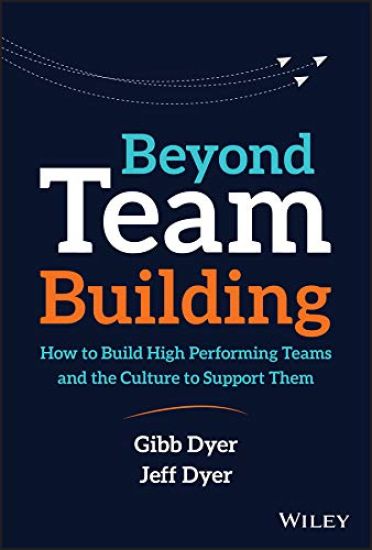
Understand the dynamics of all different types of teams Beyond Team Building: How to Build High Performing Teams and the Culture to Support Them represents the latest in thinking about creating effective teams. The authors present a new “Five C” framework that focuses on the core aspects of team building. The book helps the reader assess how his/her team is performing on each of the 5Cs—context, composition, competencies, change, and collaborative leadership, and discusses options concerning how to improve team performance along each of these dimensions. The book includes: • A wealth of examples of effective (and ineffective) teams from such companies as Cisco Systems, Bain & Company, and Amazon • New material concerning how to develop effective entrepreneurial and family teams • How to manage cross-cultural, virtual, and alliance teams • How to create a “team building organization” This book provides the next generation of team leaders, team members, and team consultants with the knowledge and skills they need to create effective and high functioning teams.
FLEXIBLY FREUDIAN The Collected Works of Jeffrey H. Golland, PhD
Jeffrey H Golland
Ipbooks
2025
pokkari
FLEXIBLY FREUDIAN The Collected Works of Jeffrey H. Golland, PhD
Jeffrey H Golland
Ipbooks
2025
sidottu
"Dr. Golland offers the reader a wide range of clinical perspectives with a refreshing attitude of open inquiry that clinicians regardless of their theoretical model or years of experience will find helpful." -IRA MOSES, PH.D., FABP, Former Director of Training, Supervising and Training Analyst, William Alanson White Psychoanalytic Institute; Clinical Instructor, Department of Psychiatry, Yale University Medical School "Jeff Golland, my longterm friend and colleague, has collected his quintessentially psychoanalytic and philosophically sophisticated writings in one readable book. We analysts are grateful to have them all in one place." -WILLIAM M. GREENSTADT, PHD, Faculty and former president, Contemporary Freudian Society "Dr. Golland is a scholar who is thoughtful, creative and unusually articulate. I am delighted he is sharing his lifetime of work." -HILLEL I. SWILLER, MD, DLFAPA, LFAGPA, Director Emeritus, Division of Psychotherapy, Clinical Professor Department of Psychiatry, Icahn School of Medicine at Mount Sinai "A very wideranging collection of the work of Dr. Golland, who is a distinguished and gifted clinician and educator. These papers show his characteristically insightful and incisive thinking in many important areas of psychological work and life, and his perceptive, valuable, approach to education and educational administration. Scholars and practitioners in both areas will benefit." -FREDERIC J. LEVINE, Ph.D., Training and Supervising Analyst, Florida Psychoanalytic Center
Organic Structure Determination Using 2-D NMR Spectroscopy
Jeffrey H. Simpson
Academic Press Inc
2012
nidottu
Organic Structure Determination Using 2-D NMR Spectroscopy: A Problem-Based Approach, Second Edition, is a primary text for a course in two-dimensional (2-D) nuclear magnetic resonance (NMR) techniques, with the goal to learn to identify organic molecular structure. It presents strategies for assigning resonances to known structures and for deducing structures of unknown organic molecules based on their NMR spectra. The book begins with a discussion of the NMR technique, while subsequent chapters cover instrumental considerations; data collection, processing, and plotting; chemical shifts; symmetry and topicity; through-bond effects; and through-space effects. The book also covers molecular dynamics; strategies for assigning resonances to atoms within a molecule; strategies for elucidating unknown molecular structures; simple and complex assignment problems; and simple and complex unknown problems. Each chapter includes problems that will enable readers to test their understanding of the material discussed. The book contains 30 known and 30 unknown structure determination problems. It also features a supporting website from which instructors can download the structures of the unknowns in selected chapters, digital versions of all figures, and raw data sets for processing. This book will stand as a single source to which instructors and students can go to obtain a comprehensive compendium of NMR problems of varying difficulty.
NMR Case Studies: Data Analysis of Complicated Molecules provides a detailed discussion of the full logical flow associated with assigning the NMR spectra of complex molecules, also helping readers further develop their NMR spectral assignment skills. The robust case studies present the logic of each assignment, from beginning to end, fully exploring the available range of potential solutions. Readers will gain a better appreciation of various approaches and develop an intuitive sense for when this particular concept should be implemented, thus enhancing their skillsets and providing a host of methodologies potentially amenable to yielding correct assignments. Authored by a scientist with more than 20 years of experience in research and instruction, this book is the ideal reference for anyone in search of application-based content. The book addresses complicated molecules, including corticosteroids, biomolecules, polypeptides, and secondary metabolites.
In Skeleton Keys: An Introduction to Human Skeletal Morphology, Development, and Analysis, Second Edition, Jeffrey H. Schwartz presents a detailed yet highly accessible introduction to the study of the human skeleton. This unique volume examines the skeleton from its developmental basis to the expression of individual variation. It reviews a variety of different approaches used to determine an individual's sex, age, and pathological history and challenges readers to think critically about how to analyze a human skeleton rather than learning formulas for quick results. An ideal text for courses in human osteology, skeletal analysis, and bioarchaeology, this book is also a helpful reference for professionals. Thoroughly revised and updated, the second edition of Skeleton Keys features: * The companion website contains hundreds of color images of skeletons and skeletal elements--demonstrating morphology, pathology, and nonmetric variation--that can be used as classroom projections or for individual study. * Coverage of the most recent developments in the field, including the molecular regulation of bone and tooth formation * Expanded studies in each area of analysis: sex, age, nonmetric variation, pathology, biodistance and bioarchaeology, and stable isotope analysis * Additional photographic images, especially in the pathology and sexing chapters * Two separate and extensively illustrated chapters on the skull, one dealing with articulated elements and one with isolated bones (these topics were covered in one chapter in the first edition) * Integration of material--such as anthropometric landmarks--from appendices in the previous edition into relevant chapters as tables * More accessible language throughout and an extensive glossary
In the winter of 1910, the river that brought life to Paris quickly became a force of destruction. Torrential rainfall saturated the soil, and faulty engineering created a perfect storm of conditions that soon drowned Parisian streets, homes, businesses, and museums. The city seemed to have lost its battle with the elements. Given the Parisians' history of deep-seated social, religious, and political strife, it was questionable whether they could collaborate to confront the crisis. Yet while the sewers, Metro, and electricity failed around them, Parisians of all backgrounds rallied to save the city and one another. Improvising techniques to keep Paris functioning and braving the dangers of collapsing infrastructure and looters, leaders and residents alike answered the call to action. This newfound ability to work together proved a crucial rehearsal for an even graver crisis four years later, when France was plunged into World War I. On the occasion of the hundredth anniversary of the flood, Jeffrey H. Jackson captures here for the first time the drama and ultimate victory of man over nature.
Integrating Work and Family
Jeffrey H. Greenhaus; Saroj Parasuraman
Praeger Publishers Inc
1999
nidottu
Despite calls for a renewal of family values and the proliferation of corporate work-family programs, the goal of achieving a healthy balance between the demands of work and a satisfying family life remains elusive. Dr. Parasuraman, Dr. Greenhaus, and the contributors to this well-balanced and thoughtful volume examine this increasingly prevalent social dilemma from a stakeholder perspective. They see work-family tensions as a multifaceted social issue, and they examine the nature and consequences of these tensions from the viewpoints of individuals, employers, consultants, counseling professionals, and other service providers. Their inclusion of legal, cultural, international, and research perspectives and recognition of the unique concerns of vulnerable groups, such as nonexempt employees and ethnic minorities, add to the breadth of coverage. Academics in the social and behavioral sciences, executive decision-makers in government and business, human resource professionals, and employed men and women interested in achieving work-life balance will find this volume insightful, stimulating, and useful.The editors have arranged their book into five parts and 21 chapters. Part I provides a broad overview of the environmental factors impacting work and family. It then identifies the critical issues and challenges facing individuals, families, and employees in managing the complex interdependencies between work and family roles. In Part II they provide a view of the issues from the vantage point of specific stakeholders. Part III concentrates on the role of culture in shaping ideology, policies, and practices concerning work and family and the relationships among them. Part IV examines the impact of career development programs on employees and their families. It also discusses the effectiveness of alternative career tracks, various usages of work-family benefits by women and men, and the roles employers and employees can play in legitimizing alternative career paths. Part V concludes the book by examining the cultural barriers to achieving more effective integration of work and family, and by analyzing the appropriate role of key stakeholders in addressing work-family problems.
Migration is a way of life for many individuals and even families in the Mexican state of Oaxaca. Some who leave their rural communities go only as far as the state capital, while others migrate to other parts of Mexico and to the United States. Most send money back to their communities, and many return to their homes after a few years. Migration offers Oaxacans economic opportunities that are not always available locally-but it also creates burdens for those who stay behind. This book explores the complex constellation of factors that cause rural Oaxacans to migrate, the historical and contemporary patterns of their migration, the effects of migration on families and communities, and the economic, cultural, and social reasons why many Oaxacans choose not to migrate. Jeffrey Cohen draws on fieldwork and survey data from twelve communities in the central valleys of Oaxaca to give an encompassing view of the factors that drive migration and determine its outcomes. He demonstrates conclusively that, while migration is an effective way to make a living, no single model can explain the patterns of migration in southern Mexico.
In the villages and small towns of Oaxaca, Mexico, as in much of rural Latin America, cooperation among neighbors is essential for personal and community survival. It can take many forms, from godparenting to sponsoring fiestas, holding civic offices, or exchanging agricultural or other kinds of labor. This book examines the ways in which the people of Santa Ana del Valle practice these traditional cooperative and reciprocal relationships and also invent new relationships to respond to global forces of social and economic change at work within their community. Based on fieldwork he conducted in this Zapotec-speaking community between 1992 and 1996, Jeffrey Cohen describes continuities in the Santañeros' practices of cooperation, as well as changes resulting from transnational migration, tourism, increasing educational opportunities, and improved communications. His nuanced portrayal of the benefits and burdens of cooperation is buttressed by the words of many villagers who explain why and how they participate-or not-in reciprocal family and community networks. This rich ethnographic material offers a working definition of community created in and through cooperative relationships.
Around the globe, people leave their homes to better themselves, to satisfy needs, and to care for their families. They also migrate to escape undesirable conditions, ranging from a lack of economic opportunities to violent conflicts at home or in the community. Most studies of migration have analyzed the topic at either the macro level of national and global economic and political forces, or the micro level of the psychology of individual migrants. Few studies have examined the "culture of migration"-that is, the cultural beliefs and social patterns that influence people to move.Cultures of Migration combines anthropological and geographical sensibilities, as well as sociological and economic models, to explore the household-level decision-making process that prompts migration. The authors draw their examples not only from their previous studies of Mexican Oaxacans and Turkish Kurds but also from migrants from Europe, sub-Saharan Africa, the Pacific, and many parts of Asia. They examine social, economic, and political factors that can induce a household to decide to send members abroad, along with the cultural beliefs and traditions that can limit migration. The authors look at both transnational and internal migrations, and at shorter- and longer-term stays in the receiving location. They also consider the effect that migration has on those who remain behind. The authors' "culture of migration" model adds an important new dimension to our understanding of the cultural beliefs and social patterns associated with migration and will help specialists better respond to increasing human mobility.
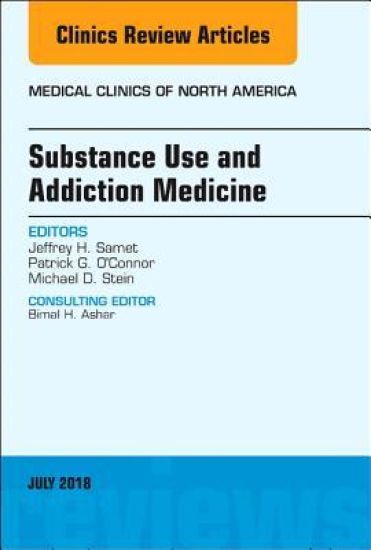
Substance Use and Addiction Medicine, An Issue of Medical Clinics of North America
Jeffrey H. Samet; Patrick G O'Connor; Michael D Stein
Elsevier - Health Sciences Division
2018
sidottu
This issue of Medical Clinics, guest edited by Drs. Jeffrey H. Samet, Patrick G. O'Connor, and Michael D. Stein, is devoted to Substance Use and Addiction Medicine. Articles in this outstanding issue include: Making Unhealthy Substance Use a Part of Behavioral Health Integration in Primary Care; The Inpatient Addiction Consult Medical Service: Expertise for Hospitalized Patients with Complex Addiction Problems; The Addiction Physician Workforce: Addiction Psychiatry and Addiction Medicine Collaboration in a New Age; Preventing Opioid Overdose in the Clinic and Hospital: Analgesia and Opioid Antagonists; The Role of Non-Traditional Maintenance Treatments: Injectable Opioid Agonist Therapies and Managed Alcohol Programs; Office-Based Addiction Treatment (OBAT) in Primary Care: Models that Work; Alcohol Use Disorder Pharmacotherapy: the Use of FDA and non-FDA Approved Medications; When and How to Treat Possible Cannabis Use Disorder; Clinical Presentations of New Drugs with Abuse Potential; Use of Technology in Addiction Therapy; Sleep Management Among Patients with Substance Use Disorders; Pain Management Among Patients with Substance Use Disorders; E-Cigarettes: A Path to Recovery or a Road to Hell?; Are Adolescent and Young Adults Different When Addressing Substance Use Disorders?; and Smoking Cessation for Those in Recovery from Substance Use Disorders.
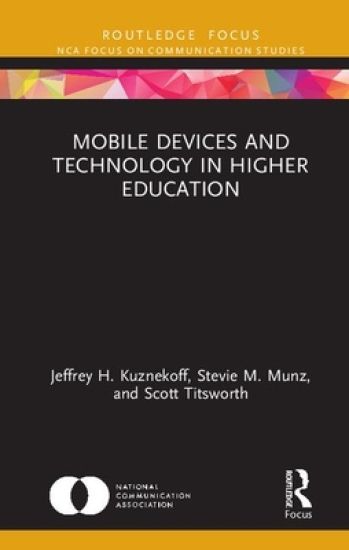
Mobile Devices and Technology in Higher Education
Jeffrey H. Kuznekoff; Stevie M. Munz; Scott Titsworth
Routledge
2019
sidottu
This book examines key issues at the intersection of education and technology by addressing the question that most educators face—how do we use technology to engage students in the learning process and enhance learning?Problematizing the view that technology is the default solution to a host of problems facing education, while also recognizing that technology has an important place in a variety of education levels, the book provides readers with clear insights on technology and learning from a variety of perspectives from communication studies, education, and related disciplines.This volume is an essential read for scholars and teachers working in the area of elementary education. It will also be of interest to academics working in the area of education, postsecondary education, and learning and can be used as an ancillary text in graduate-level seminars.
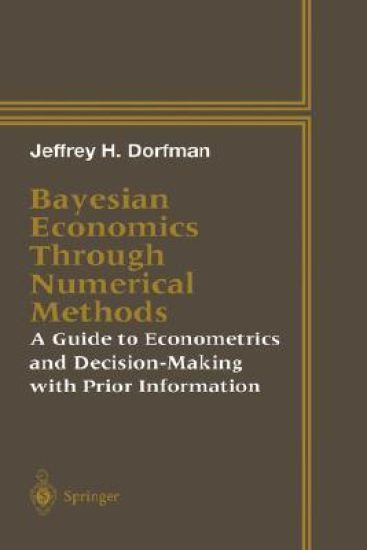
Bayesian Economics Through Numerical Methods
Jeffrey H. Dorfman
Springer-Verlag New York Inc.
1997
sidottu
The aim of this book is to provide researchers in economics, finance, and statistics with an up-to-date introduction to applying Bayesian techniques to empirical studies. It covers the full range of the new numerical techniques which have been developed over the last thirty years, notably: Monte Carlo sampling, antithetic replication, importance sampling, and Gibbs sampling. The author covers both advances in theory and modern approaches to numerical and applied problems. The book includes applications drawn from a variety of different fields within economics and also provides a quick overview to the underlying statistical ideas of Bayesian thought. The result is a book which presents a roadmap of applied economic questions that can now be addressed empirically with Bayesian methods. Consequently, many researchers will find this a readily readable survey of this growing research topic.
Rattiner's Review for the CFP(R) Certification Examination, Fast Track, Study Guide
Jeffrey H. Rattiner
John Wiley Sons Inc
2009
nidottu
The proven CFP Study Guide that delivers just what you need to succeed! A quick-study guide for candidates preparing to take the CFP Certification Examination, Rattiner's Review for the CFP® Certification Examination distills the bare-bones essentials you need to know to pass this challenging exam, all in a logical and easy-to-absorb manner. This indispensable study tool for students who have already been through traditional CFP educational programming—and just need a little extra help pulling it all together—provides a no-nonsense approach to studying for some of the most important disciplines of financial planning, including: PFP, insurance, employee benefit, investments, income tax, retirement, and estate planning. Each discipline contains short and concise statements emphasizing key points through mnemonic devices, study tips, and other established test-taking methods that provide helpful hints. Rattiner's Review for the CFP® Certification Examination, Third Edition has been thoroughly updated to include: Reviews from recent CFP Exam students who compare the CFP Board curriculum to this Third Edition, ensuring that all topics are covered adequatelyNew, easy-to-follow flowcharts at the beginning of each chapter highlight the macro level perspective of each subject disciplineBasic calculator keystrokes for investment math, retirement, life, and education needs analysis, and other important calculationsNew multiple-choice questions as well as new charts and tables for quick memorizationsNew acronyms to help put things into a simplified perspective and help students tie back to the big picture flowchart Perfect as a quick-reference guide to complement all CFP texts and self-study materials, it also serves as an important one-stop resource for financial services professionals who want information in a hurry. Stay organized, on track, and focused with Rattiner's Review for the CFP® Certification Examination, Third Edition.