Kirjojen hintavertailu. Mukana 11 627 220 kirjaa ja 12 kauppaa.

Kirjahaku

Etsi kirjoja tekijän nimen, kirjan nimen tai ISBN:n perusteella.

1000 tulosta hakusanalla Jeffrey K. Clarke

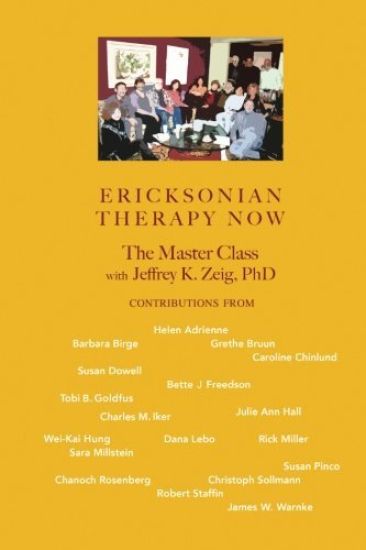
Ericksonian Therapy Now: The Master Class With Jeffrey K. Zeig
From Jeffrey K. Zeig: Milton Erickson was my mentor intermittently for more than six years; he was also an inspiration in creating the Master Class. At his essence, Erickson was experiential. He was the most radically experiential therapist to ever practice. Creating transformative experiences is a component in many schools of therapy, including rational emotive behavior therapy and cognitive behavior therapy, but for Erickson being experiential was not merely a component; it was the foundation of his therapeutic work. Erickson's experiential approach is derived from hypnosis, which is essentially an experiential technique, not a means of providing information. The subtext of hypnosis is: "By living this experience, you can be different." This book is an opportunity to study single-session therapies that are based in experiential methods. The learning from these methods is primarily stimulated by the client "living" the change, not by intellectual understanding of how to change. The participants declare what they are going to do differently, and the sessions are designed to create experiences that foster the accomplishment of stated goals. Participants have solved complex problems and have made significant life changes. They have overcome writer's block and then completed a book; they are happier in their jobs and relationships; they rebalance work and life; and they surmount childhood trauma. The transcripts contained here offer opportunities to sit in on live interactions between therapist and client. An extraordinary adjunct to the transcripts are the participants'-all stellar professionals themselves-notes on the sessions. They articulate their understandings and impressions in such powerful ways that upon reading their perspectives I also took away something new.
Introductory Immunology

Introductory Immunology

Jeffrey K. Actor

Academic Press Inc
2014
nidottu
Introductory Immunology quickly acquaints readers with natural immune responses manifesting in diseases and disorders. The book presents a complete picture of natural defenses to infectious agents, as well as the mechanisms that lead to autoimmune dysfunction. In addition, it examines immunologically based diseases, giving the reader sufficient knowledge to make sound clinical decisions leading to better treatment outcomes. Introductory Immunology is aimed at researchers, postgraduates, or any scientifically inclined reader interested in immunology. No prior expertise in medical, biochemical, or cellular science is needed to benefit from the clear presentation of immunology concepts in this book.
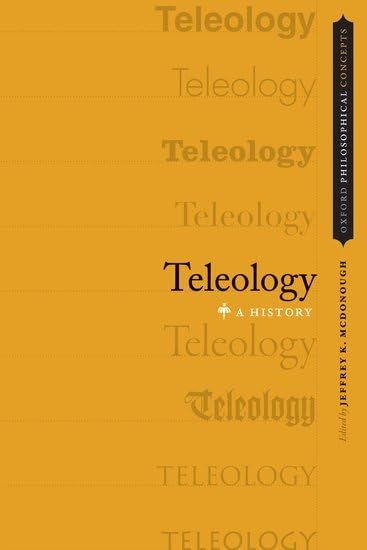
Teleology

Teleology

Jeffrey K. McDonough

Oxford University Press Inc
2020
nidottu
Teleology is the belief that some things happen, or exist for the sake of other things. It is the belief that, for example, salmon swim upstream in order to spawn, and that bears have claws for the sake of catching fish. This volume takes up the intuitive yet puzzling concept of teleology as it has been treated by philosophers from ancient times to the present day. It includes nine main chapters centered on the treatment of teleology in Plato, Aristotle, the Islamic medieval tradition, the Jewish medieval tradition, the Latin medieval tradition, the early modern era, Kant, Hegel, and contemporary philosophy. Each chapter probes central questions such as: is teleology inherent in its subjects or is it imposed on them from the outside? Does teleology necessarily involve intentionality, that is, a subject's cognizing some end, goal, or purpose? What is the scope of teleology? Is it, for example, applicable to elements and animals, or only to rational beings? Finally, is teleology explanatory? When we say that salmon swim upstream in order to spawn, have we explained why they swim upstream? When we say that bears have claws for catching fish, have we explained why bears have claws? The philosophical discussions of the main chapters are enlivened and contextualized by four reflection pieces exploring the implications of teleology in medicine, art, poetry, and music.
Teleology

Teleology

Jeffrey K. McDonough

Oxford University Press Inc
2020
sidottu
Teleology is the belief that some things happen, or exist for the sake of other things. It is the belief that, for example, salmon swim upstream in order to spawn, and that bears have claws for the sake of catching fish. This volume takes up the intuitive yet puzzling concept of teleology as it has been treated by philosophers from ancient times to the present day. It includes nine main chapters centered on the treatment of teleology in Plato, Aristotle, the Islamic medieval tradition, the Jewish medieval tradition, the Latin medieval tradition, the early modern era, Kant, Hegel, and contemporary philosophy. Each chapter probes central questions such as: is teleology inherent in its subjects or is it imposed on them from the outside? Does teleology necessarily involve intentionality, that is, a subject's cognizing some end, goal, or purpose? What is the scope of teleology? Is it, for example, applicable to elements and animals, or only to rational beings? Finally, is teleology explanatory? When we say that salmon swim upstream in order to spawn, have we explained why they swim upstream? When we say that bears have claws for catching fish, have we explained why bears have claws? The philosophical discussions of the main chapters are enlivened and contextualized by four reflection pieces exploring the implications of teleology in medicine, art, poetry, and music.
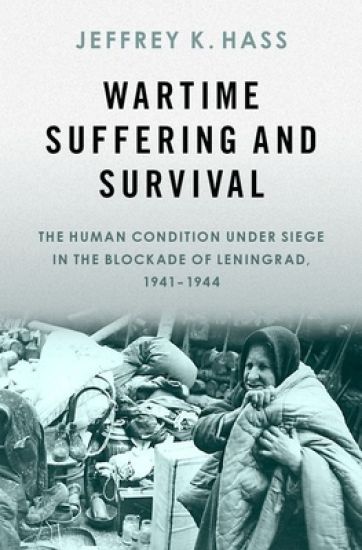
Wartime Suffering and Survival

Wartime Suffering and Survival

Jeffrey K. Hass

Oxford University Press Inc
2021
sidottu
During the 872-day siege of Leningrad from September 1941 to January 1944, civilians endured air raids, bread rations as low as 125 grams, food theft and speculation by opportunistic officials and shadow market traders, and death by starvation. As shocks of total war weaken institutions, desperate survival can compel violation of norms, and personal suffering can shatter long-held beliefs and practices. In Wartime Suffering and Survival, Jeffrey K. Hass uses the Blockade of Leningrad in World War II to explore the social practices and dynamics by which we cope or collapse. Using hundreds of personal accounts from diaries, recollections, police records, interviews, and state documents, Hass tells the story of how average Leningraders coped with the nightmares of war, starvation, and extreme uncertainty. By exploring the state and shadow markets, food, families, gender, class, death, and suffering, he describes the routines of daily life, the functioning of official institutions, and the development of illegal practices that were made and remade in the interactions of citizens and state agencies coping with new and extreme situations. The key to what Leningraders did and how they survived, Hass argues, is relations to anchors--entities of symbolic and personal significance that tethered Leningraders to each other and shaped practices of empathy and compassion, and of opportunism and egoism. Moving and powerful, Wartime Suffering and Survival goes to the heart of human resilience and fragility and to the core of the human condition--both individual and social.
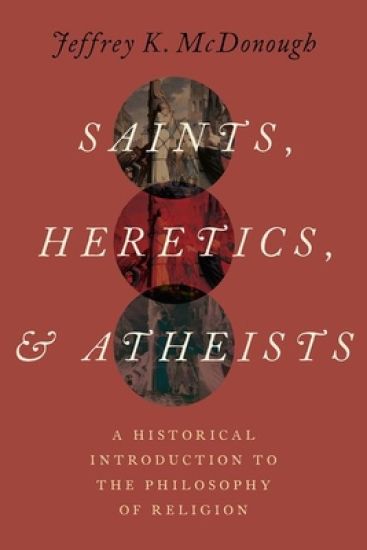
Saints, Heretics, and Atheists

Saints, Heretics, and Atheists

Jeffrey K. McDonough

OXFORD UNIVERSITY PRESS INC
2023
sidottu
Does God exist? What is the nature of evil, and where does it come from? Are humans free? Responsible? Immortal? Does it matter? Saints, Heretics and Atheists offers a historical introduction to fundamental questions in the philosophy of religion. Ranging from ancient times to the twentieth century, it is divided into twenty-five succinct, chronological chapters. Individual chapters discuss philosophies from history's greatest thinkers including Plato, Augustine, al-Ghazali, Aquinas, Margarite Porte, Spinoza, Hume, Mary Shepherd, and Nietzche. The book closes with an exploration of William James's defense of the right to believe, possible limitations of that right, and the nature of philosophical progress. Based on lectures from a popular course taught in the Program for General Education at Harvard University for over a decade, Saints, Heretics, and Atheists invites readers along for a journey that is unique in its sweeping historical approach to the philosophy of religion and the balance it strikes between traditional, non-traditional, and atheistic standpoints with respect to religion in the western tradition.
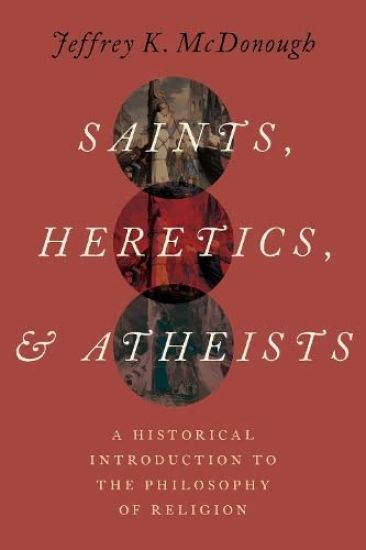
Saints, Heretics, and Atheists

Saints, Heretics, and Atheists

Jeffrey K. McDonough

OXFORD UNIVERSITY PRESS INC
2022
nidottu
Does God exist? What is the nature of evil, and where does it come from? Are humans free? Responsible? Immortal? Does it matter? Saints, Heretics and Atheists offers a historical introduction to fundamental questions in the philosophy of religion. Ranging from ancient times to the twentieth century, it is divided into twenty-five succinct, chronological chapters. Individual chapters discuss philosophies from history's greatest thinkers including Plato, Augustine, al-Ghazali, Aquinas, Margarite Porte, Spinoza, Hume, Mary Shepherd, and Nietzche. The book closes with an exploration of William James's defense of the right to believe, possible limitations of that right, and the nature of philosophical progress. Based on lectures from a popular course taught in the Program for General Education at Harvard University for over a decade, Saints, Heretics, and Atheists invites readers along for a journey that is unique in its sweeping historical approach to the philosophy of religion and the balance it strikes between traditional, non-traditional, and atheistic standpoints with respect to religion in the western tradition.
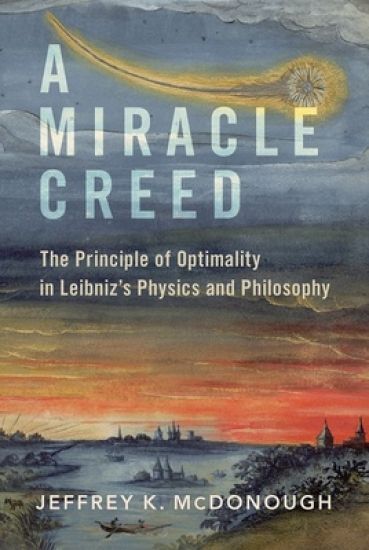
A Miracle Creed

A Miracle Creed

Jeffrey K. McDonough

OXFORD UNIVERSITY PRESS INC
2022
sidottu
A rival to Isaac Newton in mathematics and physics, Gottfried Wilhelm Leibniz believed that our world--the best of all possible worlds--must be governed by a principle of optimality. This book explores Leibniz's pursuit of optimality in five of his most important works in natural philosophy and shows how his principle of optimality bridges his scientific and philosophical studies. The first chapter explores Leibniz's work on the laws of optics and its implications for his defense of natural teleology. The second chapter examines Leibniz's work on the breaking strength of rigid beams and its implications for his thinking about the metaphysical foundations of the material world. The third chapter revisits Leibniz's famous defense of the conservation of vis viva and proposes a novel account of the origin of Leibniz's mature natural philosophy. The fourth chapter takes up Leibniz's efforts to determine the shape of freely hanging chains--the so-called problem of the catenary--and shows how that work provides an illuminating model for his thinking about the teleological structure of wills. Finally, the fifth chapter uses Leibniz's derivation of the path of quickest descent--his solution to the so-called problem of the Brachistochrone--and its historical context as a springboard for an exploration of the legacy of Leibniz's physics. The book closes with a brief discussion of the systematicity of Leibniz's thinking in philosophy and the natural sciences.
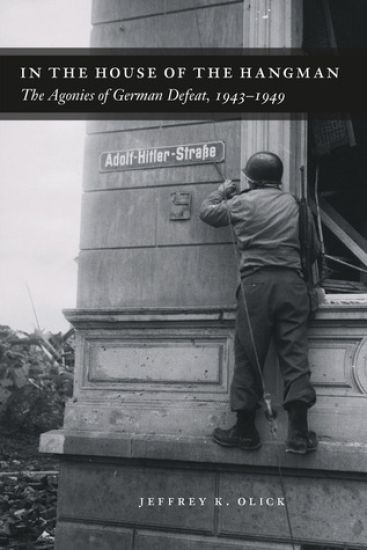
In the House of the Hangman

In the House of the Hangman

Jeffrey K. Olick

University of Chicago Press
2013
nidottu
The central question for both the victors and the vanquished of World War II was just how widely the stain of guilt would spread over Germany. Political leaders and intellectuals on both sides of the conflict debated whether support for National Socialism tainted Germany's entire population and thus discredited the nation's history and culture. The tremendous challenge that Allied officials and German thinkers faced as the war ended, then, was how to limn a postwar German identity that accounted for National Socialism without irrevocably damning the idea and character of Germany as a whole. In the House of the Hangman chronicles this delicate process, exploring key debates about the Nazi past and German future during the later years of World War II and its aftermath. Jeffrey K. Olick explores the processes of accommodation and rejection that Allied plans for a new German state inspired among the German intelligentsia. He also examines heated struggles over the value of Germany's institutional and political heritage. Along the way, he demonstrates how the moral and political vocabulary for coming to terms with National Socialism in Germany has been of enduring significance - as a crucible not only of German identity but also of contemporary thinking about memory and social justice more generally.
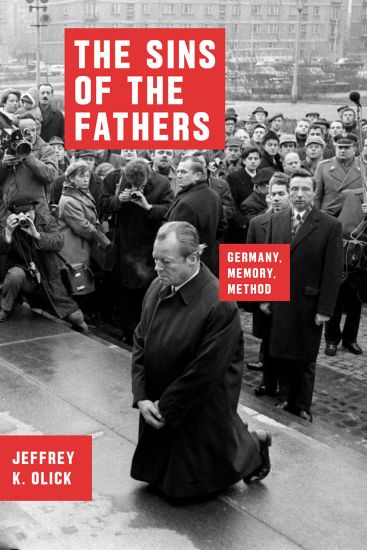
The Sins of the Fathers

The Sins of the Fathers

Jeffrey K. Olick

University of Chicago Press
2016
sidottu
National identity and political legitimacy always involve a delicate balance between remembering and forgetting. All nations have elements in their past that they would prefer to pass over the catalog of failures, injustices, and horrors committed in the name of nations, if fully acknowledged, could create significant problems for a country trying to move on and take action in the present. Yet denial and forgetting carry costs as well. Nowhere has this precarious balance been more potent, or important, than in the Federal Republic of Germany, where the devastation and atrocities of two world wars have weighed heavily in virtually every moment and aspect of political life. The Sins of the Fathers confronts that difficulty head-on, exploring the variety of ways that Germany's leaders since 1949 have attempted to meet this challenge, with a particular focus on how those approaches have changed over time. Jeffrey K. Olick asserts that other nations are looking to Germany as an example of how a society can confront a dark past casting Germany as our model of difficult collective memory.
Legacies of Losing in American Politics

Legacies of Losing in American Politics

Jeffrey K. Tulis; Nicole Mellow

University of Chicago Press
2018
sidottu
American politics is typically a story about winners. The fading away of defeated politicians and political movements is a feature of American politics that ensures political stability and a peaceful transition of power. But American history has also been built on defeated candidates, failed presidents, and social movements that at pivotal moments did not dissipate as expected but instead persisted and eventually achieved success for the loser's ideas and preferred policies. With Legacies of Losing in American Politics, Jeffrey K. Tulis and Nicole Mellow rethink three pivotal moments in American political history: the founding, when anti-Federalists failed to stop the ratification of the Constitution; the aftermath of the Civil War, when President Andrew Johnson's plan for restoring the South to the Union was defeated; and the 1964 presidential campaign, when Barry Goldwater's challenge to the New Deal order was soundly defeated by Lyndon B. Johnson. In each of these cases, the very mechanisms that caused the initial failures facilitated their eventual success. After the dust of the immediate political defeat settled, these seemingly discredited ideas and programs disrupted political convention by prevailing, often subverting, and occasionally enhancing constitutional fidelity. Tulis and Mellow present a nuanced story of winning and losing and offer a new understanding of American political development as the interweaving of opposing ideas.
Legacies of Losing in American Politics

Legacies of Losing in American Politics

Jeffrey K. Tulis; Nicole Mellow

University of Chicago Press
2018
nidottu
American politics is typically a story about winners. The fading away of defeated politicians and political movements is a feature of American politics that ensures political stability and a peaceful transition of power. But American history has also been built on defeated candidates, failed presidents, and social movements that at pivotal moments did not dissipate as expected but instead persisted and eventually achieved success for the loser's ideas and preferred policies. With Legacies of Losing in American Politics, Jeffrey K. Tulis and Nicole Mellow rethink three pivotal moments in American political history: the founding, when anti-Federalists failed to stop the ratification of the Constitution; the aftermath of the Civil War, when President Andrew Johnson's plan for restoring the South to the Union was defeated; and the 1964 presidential campaign, when Barry Goldwater's challenge to the New Deal order was soundly defeated by Lyndon B. Johnson. In each of these cases, the very mechanisms that caused the initial failures facilitated their eventual success. After the dust of the immediate political defeat settled, these seemingly discredited ideas and programs disrupted political convention by prevailing, often subverting, and occasionally enhancing constitutional fidelity. Tulis and Mellow present a nuanced story of winning and losing and offer a new understanding of American political development as the interweaving of opposing ideas.
In the House of the Hangman

In the House of the Hangman

Jeffrey K. Olick

University of Chicago Press
2005
sidottu
The central question for both the victors and the vanquished of World War II was just how widely the stain of guilt would spread over Germany. Political leaders and intellectuals on both sides of the conflict debated whether support for National Socialism tainted Germany's entire population and thus discredited the nation's history and culture. The tremendous challenge that Allied officials and German thinkers faced as the war closed, then, was how to limn a post-war German identity that accounted for National Socialism without irrevocably damning the idea and character of Germany as a whole. "In the House of the Hangman" chronicles this delicate process, exploring key debates about the Nazi past and German future during the later years of World War II and its aftermath. What did British and American leaders think had given rise to National Socialism, and how did these beliefs shape their intentions for occupation? What rhetorical and symbolic tools did Germans develop for handling the insidious legacy of Nazism? Considering these and other questions, Jeffrey K. Olick explores the processes of accommodation and rejection that Allied plans for a new German state inspired among the German intelligentsia. He also examines heated struggles over the value of Germany's institutional and political heritage. Along the way, he demonstrates how the moral and political vocabulary for coming to terms with National Socialism in Germany has been of enduring significance - as a crucible not only of German identity but also of contemporary thinking about memory and social justice more generally. Given the current war in Iraq, the issues contested during Germany's abjection and reinvention - how to treat a defeated enemy, how to place episodes within wider historical trajectories, how to distinguish varieties of victimhood - are as urgent today as they were sixty years ago, and "In the House of the Hangman" offers readers an invaluable historical perspective on these critical questions.
The Politics of Regret

The Politics of Regret

Jeffrey K. Olick

Routledge
2007
sidottu
In the past decade, Jeffrey Olick has established himself as one of the world’s pre-eminent sociologists of memory (and, related to this, both cultural sociology and social theory). His recent book on memory in postwar Germany, In the House of the Hangman (University of Chicago Press, 2005) has garnered a great deal of acclaim. This book collects his best essays on a range of memory related issues and adds a couple of new ones. It is more conceptually expansive than his other work and will serve as a great introduction to this important theorist. In the past quarter century, the issue of memory has not only become an increasingly important analytical category for historians, sociologists and cultural theorists, it has become pervasive in popular culture as well. Part of this is a function of the enhanced role of both narrative and representation – the building blocks of memory, so to speak – across the social sciences and humanities. Just as importantly, though, there has also been an increasing acceptance of the notion that the past is no longer the province of professional historians alone. Additionally, acknowledging the importance of social memory has not only provided agency to ordinary people when it comes to understanding the past, it has made conflicting interpretations of the meaning of the past more fraught, particularly in light of the terrible events of the twentieth century.Olick looks at how catastrophic, terrible pasts – Nazi Germany, apartheid South Africa – are remembered, but he is particularly concerned with the role that memory plays in social structures. Memory can foster any number of things – social solidarity, nostalgia, civil war – but it always depends on both the nature of the past and the cultures doing the remembering. Prior to his studies of individual episodes, he fully develops his theory of memory and society, working through Bergson, Halbwachs, Elias, Bakhtin, and Bourdieu.
The Politics of Regret

The Politics of Regret

Jeffrey K. Olick

Routledge
2007
nidottu
In the past decade, Jeffrey Olick has established himself as one of the world’s pre-eminent sociologists of memory (and, related to this, both cultural sociology and social theory). His recent book on memory in postwar Germany, In the House of the Hangman (University of Chicago Press, 2005) has garnered a great deal of acclaim. This book collects his best essays on a range of memory related issues and adds a couple of new ones. It is more conceptually expansive than his other work and will serve as a great introduction to this important theorist. In the past quarter century, the issue of memory has not only become an increasingly important analytical category for historians, sociologists and cultural theorists, it has become pervasive in popular culture as well. Part of this is a function of the enhanced role of both narrative and representation – the building blocks of memory, so to speak – across the social sciences and humanities. Just as importantly, though, there has also been an increasing acceptance of the notion that the past is no longer the province of professional historians alone. Additionally, acknowledging the importance of social memory has not only provided agency to ordinary people when it comes to understanding the past, it has made conflicting interpretations of the meaning of the past more fraught, particularly in light of the terrible events of the twentieth century.Olick looks at how catastrophic, terrible pasts – Nazi Germany, apartheid South Africa – are remembered, but he is particularly concerned with the role that memory plays in social structures. Memory can foster any number of things – social solidarity, nostalgia, civil war – but it always depends on both the nature of the past and the cultures doing the remembering. Prior to his studies of individual episodes, he fully develops his theory of memory and society, working through Bergson, Halbwachs, Elias, Bakhtin, and Bourdieu.
Introductory Immunology

Introductory Immunology

Jeffrey K. Actor

ELSEVIER SCIENCE PUBLISHING CO INC
2023
nidottu
**Selected for Doody’s Core Titles® 2024 in Immunology** Introductory Immunology: Basic Concepts for Interdisciplinary Applications, 3rd Edition, is a completely updated, revised, and expanded concise, conceptual approach to understanding the immune systems as a primary defense to maintain health and homeostasis. This expanded version includes the aspects of microbiology and related immune defense mechanisms important in combating disease, as well critical components related to the field of vaccine development. Immunology as a subject is no longer confined to the realms of "immunology" or "microbiology" studies. Indeed, the subject matter has become increasingly important to understand complex mechanisms found within a wider range of biological systems. This book aims specifically at educated audiences who do not have a deep understanding of medical, biochemical, or cellular knowledge. The overall text will present concepts that portray a comprehensive picture of the natural defenses to infectious agents as well as provide an introduction to mechanisms that lead to autoimmune dysfunction. In addition, immunological diseases will be detailed, with the goal of allowing the readers to gain sufficient knowledge to make sound choices for clinical decisions to affect treatment outcomes. This new edition expands on the existing chapters, focusing on updating the previous text. It has been expanded to include knowledge on effector mechanisms addressing components inherent within cellular responses that are either newly discovered, or missing from the previous edition. It has an extra emphasis on aspects related to mechanisms important in combating microbial agents and critical sections on how vaccines protect against pathogenic invaders to limit associated pathology. The goal is that Introductory Immunology will become the preferred provider of core knowledge in immunology to build a foundation to explore components of the human immune system that work together to confer and understand dysregulation that causes clinical diseases. This book serves as a basic platform to define therapeutic interventions by: creating appreciation for components of the human immune system to work together to confer lifelong protection; providing a core knowledge in immunology to build a foundation to explore mechanisms involved in clinical disease, and defining functional aspects of immunological terms to permit the reader easy access to comprehend specific topics; presenting introduction to complex immunological concepts in a concise and easy manner that relates to clinical disease; breaking down all of immunology into manageable, logically digestible building blocks, and providing a map to explore overlapping mechanisms of immune protective responses; providing a platform to readers without medical, biochemical, or cellular expertise to understand and appreciate how immunology controls homeostasis and protects against pathogens.
Meyler's Side Effects of Psychiatric Drugs

Meyler's Side Effects of Psychiatric Drugs

Jeffrey K. Aronson

Elsevier Science Ltd
2008
sidottu
Elsevier now offers a series of derivative works based on the acclaimed Meylers Side Effect of Drugs, 15th Edition. These individual volumes are grouped by specialty to benefit the practicing physician or health care clinician. The unwarranted effects of medications used in psychiatry can adversely affect a treatment plan. This book is critical in helping psychiatrists and mental health professionals assess the adverse effects of drugs such as antidepressants, mood stabilizers, hypnosedatives, and antipsychotic drugs.The material is drawn from the 15th edition of the internationally renowned encyclopedia, Meyler’s Side Effects of Drugs, and the latest volumes in the companion series, Side Effects of Drugs Annuals. Drug names have usually been designated by their recommended or proposed International Non-proprietary Names (rINN or pINN); when those are not available, clinical names have been used. In some cases, brand names have been used.This volume is critical for any health professional involved in the administration of psychiatric mediations.
Meyler's Side Effects of Cardiovascular Drugs

Meyler's Side Effects of Cardiovascular Drugs

Jeffrey K. Aronson

Elsevier Science Ltd
2009
sidottu
Elsevier now offers a series of derivative works based on the acclaimed Meylers Side Effect of Drugs, 15th Edition. These individual volumes are grouped by specialty to benefit the practicing physician or health care clinician. Each year, heart disease kills more people than cancer. Patients are treated by a variety of specialists and primary care practitioners, depending on the organ system involved. This volume enables practitioners to assess the adverse effects of the complete range of drugs used in cardiovascular medicine, including antihypertensive drugs, and drugs used in the treatment of heart failure, angina, angina pectoris, and cardiac arrhythmia and enable practitioners to prescribe preventative treatments with medications such as blood pressure reducers, aspirin, and cholesterol-lowering drugs, as well as drugs used for more aggressive therapy.The material is drawn from the 15th edition of the internationally renowned encyclopedia, Meyler’s Side Effects of Drugs, and the latest volumes in the companion series, Side Effects of Drugs Annuals. Drug names have usually been designated by their recommended or proposed International Non-proprietary Names (rINN or pINN); when those are not available, clinical names have been used. In some cases, brand names have been used.This volume is critical for any health professional involved in the administration of cardiovascular mediations.
Meyler's Side Effects of Drugs Used in Anesthesia

Meyler's Side Effects of Drugs Used in Anesthesia

Jeffrey K. Aronson

Elsevier Science Ltd
2008
sidottu
Elsevier now offers a series of derivative works based on the acclaimed Meylers Side Effect of Drugs, 15th Edition. These individual volumes are grouped by specialty to benefit the practicing physician or health care clinician. A safe and efficient anesthesia practice requires appropriate drug knowledge. Catastrophes under anesthesia have focused attention on the interaction between drugs, including prescribed and non-prescribed medications, including interactions with vitamins, herbal preparations, traditional remedies, and food supplements.This book summarizes the adverse effects of a large range of drugs used in anesthesia. The material is drawn from the 15th edition of the internationally renowned encyclopedia, Meyler’s Side Effects of Drugs, and the latest volumes in the companion series, Side Effects of Drugs Annuals.This volume is critical for any health professional involved in the administration of anesthesia.