
Kirjahaku
Etsi kirjoja tekijän nimen, kirjan nimen tai ISBN:n perusteella.
1000 tulosta hakusanalla Jeffrey L Morrow
This booklet is your one stop for a list of Catholic apologetics resources. The booklet includes an extensive bibliography divided by topic, but also by reading difficulty. There is no Catholic apologetics reference work quite like this one.
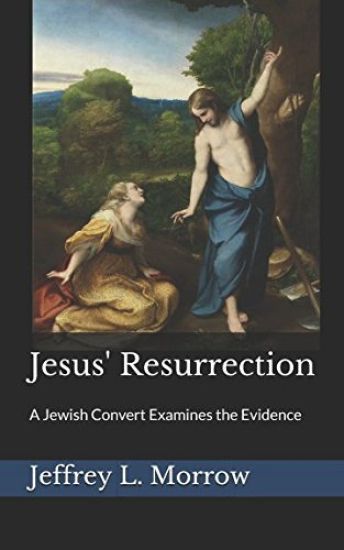
The Apostle Paul famously wrote that if Jesus did not rise from the dead, then the Christian faith is in vain. In this volume, Dr. Jeffrey Morrow examines the historical evidence for Jesus' resurrection. Dr. Morrow's thorough investigation examines the arguments and weighs the evidence, demonstrating that the Christian confession of Jesus' resurrection best explains the known historical facts. The main narrative is accessible to a wide lay audience. The book includes detailed endnotes and bibliography for the interested scholar."Dr. Jeffrey Morrow is a brilliant theologian whose work on the Resurrection provides abundant historical evidence for this greatest of biblical miracles. Highly recommended."-SCOTT HAHN, Father Michael Scanlan, TOR, Chair of Biblical Theology and the New Evangelization at Franciscan University of Steubenville"As a convert to Christianity from Judaism, Jeffrey Morrow brings a unique perspective to the quest for Jesus. Even more, he leaves no stone unturned in the debate over what happened to Jesus' body on the first Easter morning. Whether you are a skeptic or a believer, if you're looking for a clear, concise, and compelling case for the Resurrection, then this is the book for you."-BRANT PITRE, Professor of Sacred Scripture at Notre Dame Seminary, and author of The Case for Jesus: the Biblical and Historical Evidence for Christ"Jeffrey Morrow has produced a lucid and erudite defense of the resurrection of Jesus after years of exhaustive research. His extensive bibliography includes just about everything written in English, French, German, and Italian which supports or denies the resurrection of Jesus."-EDWIN M. YAMAUCHI, Professor of History Emeritus, Miami University
Modern biblical scholars often view the methods they employ as objective and neutral, tracing the history of modern biblical scholarship to the eighteenth and nineteenth centuries. In this volume, Jeffrey Morrow examines some earlier, lesser known roots of modern biblical scholarship. He explores biblical scholarship from the fourteenth through the seventeenth centuries and then discusses its new place in the Enlightenment of the eighteenth century where such scholarship would flourish. Far from merely an objective and neutral method, such scholarship was never without philosophical, theological, and political underpinnings. Morrow concludes the volume with a look at the separation of biblical studies from theology, using the example of Catholic moral theology in the twentieth century. ""As biblical scholars have come increasingly to acknowledge the importance of disciplinary self-understanding, the history of scholarship has taken on new and critical importance. In this accessible, amply documented collection of essays, Jeffrey Morrow introduces the reader to an impressive array of figures in biblical interpretation's rich and complex history, casting valuable light on the political contours of what can no longer be regarded as a neutral, scientific enterprise."" --Michael Legaspi, Associate Professor of Classics and Ancient Mediterranean Studies and Jewish Studies, Pennsylvania State University ""Jeffrey Morrow's grasp of the political history of modern biblical scholarship is simply stunning. On page after page, he calmly and brilliantly explodes the common assumption that biblical criticism has nothing to do with politics. The chapter on 'Biblical Studies at the Enlightenment University' alone is worth the price of the book. A must-read for anyone interested in the roots of historical-critical exegesis and its relationship to politics and theology."" --Brant Pitre, Professor of Sacred Scripture, Notre Dame Seminary, Graduate School of Theology Jeffrey L. Morrow is Associate Professor of Theology at Immaculate Conception Seminary School of Theology at Seton Hall University and is a Senior Fellow of the St. Paul Center for Biblical Theology. He is the author of Three Skeptics and the Bible (2016).
Modern historical biblical criticism, while having many strengths, often operates under the pretensions of objectivity, as if such scholarship were neutral and disinterested. Examining the history and roots of modern biblical scholarship shows that such objectivity is elusive, and was never intended by the method's earliest practitioners. Building upon his earlier work in Three Skeptics and the Bible and Theology, Politics, and Exegesis, Morrow continues this historical investigation into the political and philosophical roots of modern biblical criticism in Pretensions of Objectivity, in the hope of developing a criticism of biblical criticism and of making space for theological exegesis. ""One would think that in a postmodern environment, scholars would have learned to be suspicious about any claims to intellectual neutrality and objectivity, but there remains a large pocket of unreformed 'modernism' within the discipline of biblical studies. Morrow helps unmask the covert agendas of this intellectual tradition."" --John Bergsma, Professor of Theology, Franciscan University of Steubenville Jeffrey L. Morrow is Associate Professor at Immaculate Conception Seminary School of Theology at Seton Hall University. He is the author of Three Skeptics and the Bible (2016) and Theology, Politics, and Exegesis (2017).
For far too long the Bible has been studied as just one among many historical and cultural documents from ancient history. That it is a foundational text for Western civilization is clear. What is too often forgotten or ignored in academic discussions, however, is that the Bible has also inspired the lives of countless saints throughout history; men and women who sought to love God and love neighbor to the point of offering heroic sacrifices, sometimes giving up their very lives. Much of biblical scholarship over the past two centuries, however, has reduced the Bible to a dead historical document with little-to-no relevance for today, beyond intellectual curiosity. This, in part, lies at the root of the tragic separation of theology from biblical studies. That theology and biblical exegesis are at an impasse has become a commonplace in academic discourse. Liturgy and Sacrament, Mystagogy and Martyrdom is an attempt to bridge the gap between theology and exegesis. It seeks to develop a theological interpretation of Scripture relying upon the best of traditional Christian exegesis and modern biblical scholarship, so that the Bible can serve, once again, as the wellspring of Christian life.
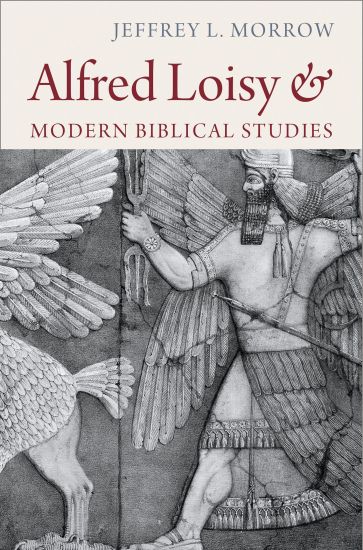
Alfred Loisy and Modern Biblical Studies
Jeffrey L. Morrow
The Catholic University of America Press
2019
sidottu
The French Catholic priest and biblical scholar Alfred Loisy (1857-1940) was at the heart of the Roman Catholic Modernist crisis in the early part of the twentieth century. He saw much of his work as an attempt to bring John Henry Newman's notion of development of doctrine into the realm of Catholic biblical studies, and thereby transform Catholic theology. This volume situates Loisy's better known works on the New Testament and theology in the context of his lesser known work in Assyriology and Old Testament studies. His early training in Assyriology taught Loisy a comparative historical approach to studying ancient texts, in addition to providing him the requisite training in ancient Near Eastern languages and literature. Loisy built upon this Assyriological foundation with his historical critical work in biblical studies, first in the Old Testament. In his biblical scholarship, Loisy combined the then current trends of historical biblical criticism with his more comparative approach. Prior to his excommunication in 1908, Loisy attempted in his more popular writings to defend the inclusion of historical biblical criticism in the repertoire of Catholic biblical interpretation. He saw this as an important step in reforming Catholic theology. The Modernist crisis set the stage for the major debates that would occur in the Catholic theological world for more than a century. The controversy over Modernism became one important conflict that helped pave the way for the Second Vatican Council. The issues raised during Loisy's time, remain contested today. Examining how Loisy approached biblical studies helps readers better understand his overall work, and the place it played in the pivotal intellectual turmoil of his day.
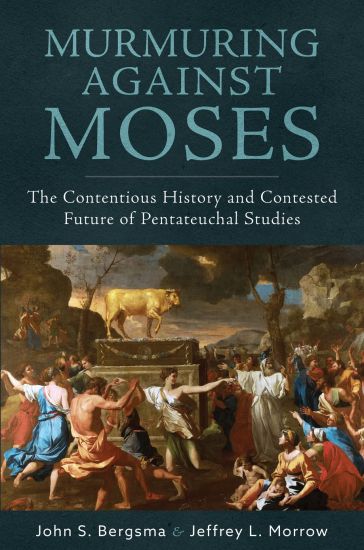
For much of the history of both Judaism and Christianity, the Pentateuch - the first five books of the Bible - was understood to be the unified work of a single inspired author: Moses. Yet the standard view in modern biblical scholarship contends that the Pentateuch is a composite text made up of fragments from diverse and even discrepant sources that originated centuries after the events it purports to describe.Murmuring against Moses provides a critical narrative of the emergence of modern Pentateuchal studies and challenge the scholarly consensus by highlighting the weaknesses of the modern paradigms and mustering an array of new evidence for the Pentateuch's antiquity. By shedding light on the past history of research and the present developments in the field, Bergsma and Morrow give fresh voice to a growing scholarly dissatisfaction with standard critical approaches and make an important contribution toward charting a more promising future for Pentateuchal studies.
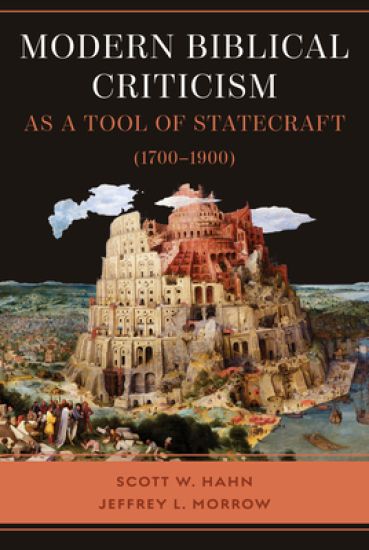
Modern biblical scholarship is often presented as analogous to the hard and natural sciences; its histories present the developmental stages as quasi-scientific discoveries. That image of Bible scholars as neutral scientists in pursuit of truth has persisted for too long.This examination of the lesser known history of the development of modern biblical scholarship in the eighteenth and nineteenth centuries seeks partially to fulfill Pope Benedict XVI's request for a thorough critique of modern biblical criticism by exploring the eighteenth and nineteenth century roots of modern biblical scholarship, situating those scholarly developments in their historical, philosophical, theological, and political contexts.Picking up where Scott W. Hahn and Benjamin Wiker's Politicizing the Bible left off, Hahn and Morrow show how biblical scholarship continued along a secularizing trajectory as it found a home in the newly developing Enlightenment universities, where it received government funding. The book makes clear why the discipline of modern biblical studies is often so hostile to religious and faith commitments today.
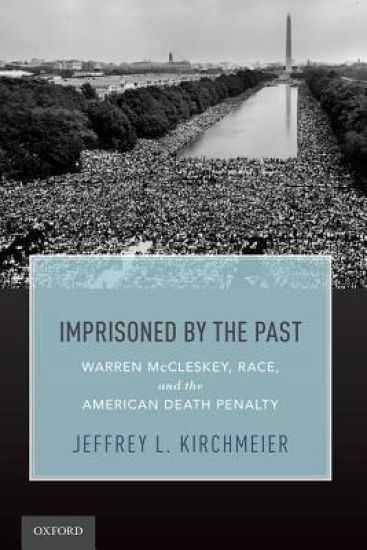
Imprisoned by the Past: Warren McCleskey, Race, and the American Death Penalty connects the history of the American death penalty to the case of Warren McCleskey. By highlighting the relation between American history and an individual case, Imprisoned by the Past provides a unique understanding of the big picture of capital punishment in the context of a compelling human story. McCleskey's criminal law case resulted in one of the most important Supreme Court cases in U.S. legal history, where the Court confronted evidence of racial discrimination in the administration of capital punishment. The case marks the last that the Supreme Court realistically might have held that capital punishment violates the Eighth Amendment of the U.S. Constitution. As such, the constitutional law case also created a turning point in the death penalty debate in the country. The book connects McCleskey's case -- as well as his life and crime -- to the issues that have haunted the American death penalty debate since the first executions by early settlers and that still affect the legal system today. Imprisoned by the Past ties together three unique American stories in U.S history. First, the book considers the changing American death penalty across centuries where drastic changes have occurred in the last fifty years. Second, the book discusses the role that race played in that history. And third, the book tells the story of Warren McCleskey and how his life and legal case brought together the other two narratives.
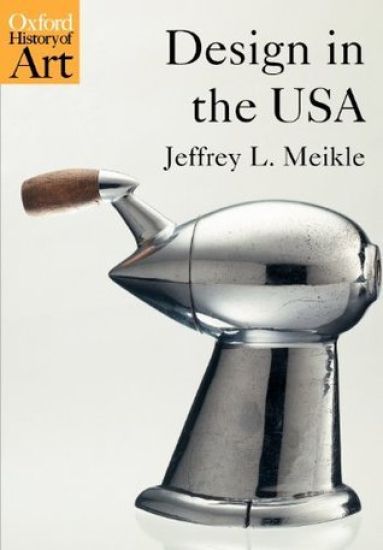
From the Cadillac to the Apple Mac, the skyscraper to the Tiffany lampshade, the world in which we live has been profoundly influenced for over a century by the work of American designers. But the product is only the end of a story that is full of fascinating questions. What has been the social and cultural role of design in American society? To produce useful things that consumers need? Or to persuade them to buy things that they don't need? Where does the designer stand in all this? And how has the role of design in America changed over time, since the early days of the young Republic? Jeffrey Meikle explores the social and cultural history of American design spanning over two centuries, from the hand-crafted furniture and objects of the early nineteenth century, through the era of industrialization and the mass production of the machine age, to the information-based society of the present, covering everything from the Arts and Crafts movement to Art Deco, modernism to post-modernism, MOMA to the Tupperware bowl.
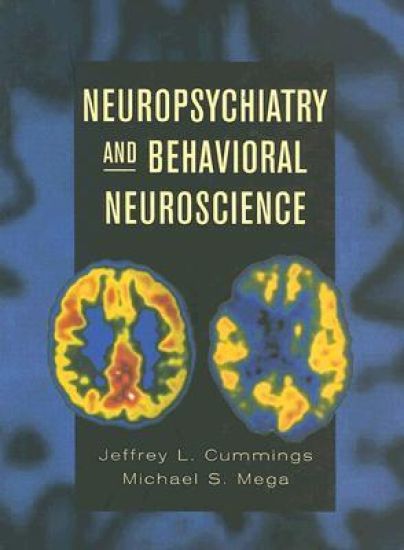
Neuropsychiatry and Behavioural Neuroscience
Jeffrey L. Cummings; Michael S. Mega
Oxford University Press Inc
2003
sidottu
This is the long-awaited new edition of Jeffrey Cummings' classic work, Clinical Neuropsychiatry, originally published in 1985. That book represented an integration of behavioural neurology and biological psychiatry into a single volume devoted to explicating brain-behaviour relationships. It was clinically oriented and intended for practitioners caring for patients with neuropsychiatric disorders. The new title reflects the authors' effort to link the recent explosion of new information from neurochemistry, neuroanatomy, genetics, neuropharmacology, neuropathology, and neuroimaging to the clinical descriptions. Yet the clinical emphasis of its predecessor has been maintained. Each chapter has a consistent approach and the book as whole provides a practical, easy-to-use synthesis of clinical advice and basic science. The volume is enchanced by 4-colour images throughout. It is intended for students, residents, fellows, and practitioners of neurology, psychiatry, neuropsychology, and cognitive neuroscience. It will also be interest to individuals in neuroimaging.

In 1987, the United States Supreme Court decided a case that could have ended the death penalty in the United States. Imprisoned by the Past: Warren McCleskey and the American Death Penalty examines the long history of the American death penalty and its connection to the case of Warren McCleskey, revealing how that case marked a turning point for the history of the death penalty. In this book, Jeffrey L. Kirchmeier explores one of the most important Supreme Court cases in history, a case that raised important questions about race and punishment, and ultimately changed the way we understand the death penalty today. McCleskey's case resulted in one of the most important Supreme Court decisions in U.S. history, where the Court confronted evidence of racial discrimination in the administration of capital punishment. The case currently marks the last time that the Supreme Court had a realistic chance of completely striking down capital punishment. As such, the case also marked a turning point in the death penalty debate in the country. Going back nearly four centuries, this book connects McCleskey's life and crime to the issues that have haunted the American death penalty debate since the first executions by early settlers through the modern twenty-first century death penalty. Imprisoned by the Past ties together three unique American stories. First, the book considers the changing American death penalty across centuries where drastic changes have occurred in the last fifty years. Second, the book discusses the role that race played in that history. And third, the book tells the story of Warren McCleskey and how his life and legal case brought together the other two narratives.

"The fate of our times is characterized by rationalization and intellectualization and, above all, by 'the disenchantment of the world.'" Max Weber's statement remains a dominant interpretation of the modern condition: the increasing capabilities of knowledge and science have banished mysteries, leaving a world that can be mastered technically and intellectually. And though this idea seems empowering, many people have become disenchanted with modern disenchantment. Using intimate encounters with works of art to explore disenchantment and the possibilities of re-enchantment, Arts of Wonder addresses questions about the nature of humanity, the world, and God in the wake of Weber's diagnosis of modernity. Jeffrey L. Kosky focuses on a handful of artists Walter De Maria, Diller + Scofidio, James Turrell, and Andy Goldsworthy to show how they introduce spaces hospitable to mystery and wonder, redemption and revelation, and transcendence and creation. What might be thought of as religious longings, he argues, are crucial aspects of enchanting secularity when developed through encounters with these works of art. Developing a model of religion that might be significant to secular culture, Kosky shows how this model can be employed to deepen interpretation of the art we usually view as representing secular modernity. A thoughtful dialogue between philosophy and art, Arts of Wonder will catch the eye of readers of art and religion, philosophy of religion, and art criticism.