Kirjojen hintavertailu. Mukana 11 244 527 kirjaa ja 12 kauppaa.

Kirjahaku

Etsi kirjoja tekijän nimen, kirjan nimen tai ISBN:n perusteella.

1000 tulosta hakusanalla Jeffrey L. Benovic

Regulation of G Protein Coupled Receptor Function and Expression
G protein-coupled receptors (GPCRs) constitute the largest single class of receptors and are responsible for mediating much of intracellular mammalian signaling. Indeed, over 40 percent of the pharmacological targets being evaluated by drug companies are related to G protein-coupled receptors. Understanding how GPCRs are regulated is critical in determining waysto control their function and expression. This volume covers basic concepts while providing comprehensive treatment of methods used to examine how the functions of GPCRs are regulated. Chapters in this volume, edited by Dr. Jeffrey Benovic, a world-renowned expert in the study of GPCR regulation, describe: * Current techniques used to define the molecular mechanisms involved in receptor regulation * ;Specific techniques employed to characterize receptors * The role of regulatory proteins in modulating receptor function * Methods used to measure receptor trafficking and expression Covering a broad range of fundamental concepts and methodologies which are current in the study of GPCRs, Regulation of G Protein-Coupled Receptor Function and Expression is a vital reference for receptor biochemists, pharmacologists, neuroscientists, molecular biologists, cell biologists, and physiologists. Also in this series: Receptor Localization: Laboratory Methods and Procedures edited by Marjorie A. Ariano Identification and Expression of G Protein-Coupled Receptors edited by Kevin R. Lynch Structure-Function Analysis of G Protein-Coupled Receptors edited by Jürgen Wess

Imprisoned by the Past

Imprisoned by the Past

Jeffrey L. Kirchmeier

Oxford University Press Inc
2016
nidottu
Imprisoned by the Past: Warren McCleskey, Race, and the American Death Penalty connects the history of the American death penalty to the case of Warren McCleskey. By highlighting the relation between American history and an individual case, Imprisoned by the Past provides a unique understanding of the big picture of capital punishment in the context of a compelling human story. McCleskey's criminal law case resulted in one of the most important Supreme Court cases in U.S. legal history, where the Court confronted evidence of racial discrimination in the administration of capital punishment. The case marks the last that the Supreme Court realistically might have held that capital punishment violates the Eighth Amendment of the U.S. Constitution. As such, the constitutional law case also created a turning point in the death penalty debate in the country. The book connects McCleskey's case -- as well as his life and crime -- to the issues that have haunted the American death penalty debate since the first executions by early settlers and that still affect the legal system today. Imprisoned by the Past ties together three unique American stories in U.S history. First, the book considers the changing American death penalty across centuries where drastic changes have occurred in the last fifty years. Second, the book discusses the role that race played in that history. And third, the book tells the story of Warren McCleskey and how his life and legal case brought together the other two narratives.
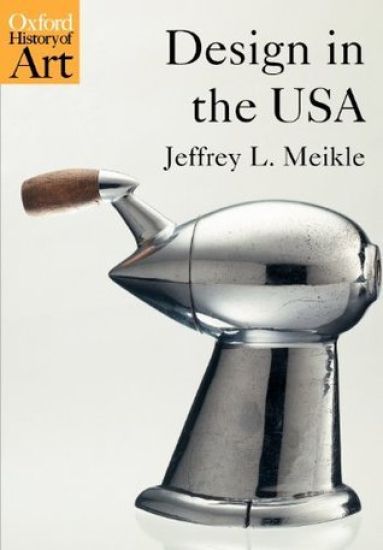
Design in the USA

Design in the USA

Jeffrey L. Meikle

Oxford University Press Inc
2005
nidottu
From the Cadillac to the Apple Mac, the skyscraper to the Tiffany lampshade, the world in which we live has been profoundly influenced for over a century by the work of American designers. But the product is only the end of a story that is full of fascinating questions. What has been the social and cultural role of design in American society? To produce useful things that consumers need? Or to persuade them to buy things that they don't need? Where does the designer stand in all this? And how has the role of design in America changed over time, since the early days of the young Republic? Jeffrey Meikle explores the social and cultural history of American design spanning over two centuries, from the hand-crafted furniture and objects of the early nineteenth century, through the era of industrialization and the mass production of the machine age, to the information-based society of the present, covering everything from the Arts and Crafts movement to Art Deco, modernism to post-modernism, MOMA to the Tupperware bowl.
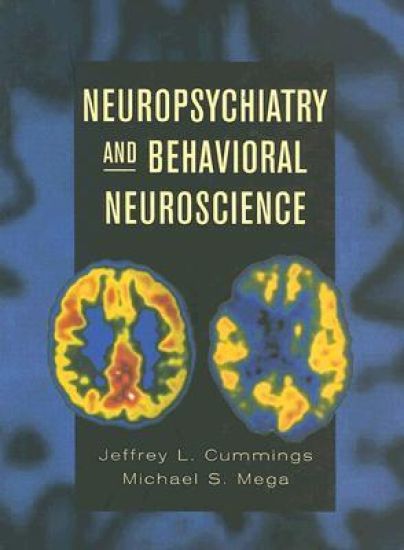
Neuropsychiatry and Behavioural Neuroscience

Neuropsychiatry and Behavioural Neuroscience

Jeffrey L. Cummings; Michael S. Mega

Oxford University Press Inc
2003
sidottu
This is the long-awaited new edition of Jeffrey Cummings' classic work, Clinical Neuropsychiatry, originally published in 1985. That book represented an integration of behavioural neurology and biological psychiatry into a single volume devoted to explicating brain-behaviour relationships. It was clinically oriented and intended for practitioners caring for patients with neuropsychiatric disorders. The new title reflects the authors' effort to link the recent explosion of new information from neurochemistry, neuroanatomy, genetics, neuropharmacology, neuropathology, and neuroimaging to the clinical descriptions. Yet the clinical emphasis of its predecessor has been maintained. Each chapter has a consistent approach and the book as whole provides a practical, easy-to-use synthesis of clinical advice and basic science. The volume is enchanced by 4-colour images throughout. It is intended for students, residents, fellows, and practitioners of neurology, psychiatry, neuropsychology, and cognitive neuroscience. It will also be interest to individuals in neuroimaging.
Imprisoned by the Past

Imprisoned by the Past

Jeffrey L. Kirchmeier

Oxford University Press Inc
2015
sidottu
In 1987, the United States Supreme Court decided a case that could have ended the death penalty in the United States. Imprisoned by the Past: Warren McCleskey and the American Death Penalty examines the long history of the American death penalty and its connection to the case of Warren McCleskey, revealing how that case marked a turning point for the history of the death penalty. In this book, Jeffrey L. Kirchmeier explores one of the most important Supreme Court cases in history, a case that raised important questions about race and punishment, and ultimately changed the way we understand the death penalty today. McCleskey's case resulted in one of the most important Supreme Court decisions in U.S. history, where the Court confronted evidence of racial discrimination in the administration of capital punishment. The case currently marks the last time that the Supreme Court had a realistic chance of completely striking down capital punishment. As such, the case also marked a turning point in the death penalty debate in the country. Going back nearly four centuries, this book connects McCleskey's life and crime to the issues that have haunted the American death penalty debate since the first executions by early settlers through the modern twenty-first century death penalty. Imprisoned by the Past ties together three unique American stories. First, the book considers the changing American death penalty across centuries where drastic changes have occurred in the last fifty years. Second, the book discusses the role that race played in that history. And third, the book tells the story of Warren McCleskey and how his life and legal case brought together the other two narratives.
Arts of Wonder

Arts of Wonder

Jeffrey L. Kosky

University of Chicago Press
2016
nidottu
"The fate of our times is characterized by rationalization and intellectualization and, above all, by 'the disenchantment of the world.'" Max Weber's statement remains a dominant interpretation of the modern condition: the increasing capabilities of knowledge and science have banished mysteries, leaving a world that can be mastered technically and intellectually. And though this idea seems empowering, many people have become disenchanted with modern disenchantment. Using intimate encounters with works of art to explore disenchantment and the possibilities of re-enchantment, Arts of Wonder addresses questions about the nature of humanity, the world, and God in the wake of Weber's diagnosis of modernity. Jeffrey L. Kosky focuses on a handful of artists Walter De Maria, Diller + Scofidio, James Turrell, and Andy Goldsworthy to show how they introduce spaces hospitable to mystery and wonder, redemption and revelation, and transcendence and creation. What might be thought of as religious longings, he argues, are crucial aspects of enchanting secularity when developed through encounters with these works of art. Developing a model of religion that might be significant to secular culture, Kosky shows how this model can be employed to deepen interpretation of the art we usually view as representing secular modernity. A thoughtful dialogue between philosophy and art, Arts of Wonder will catch the eye of readers of art and religion, philosophy of religion, and art criticism.
From the Heart

From the Heart

Jeffrey L. Kosky

Columbia University Press
2025
sidottu
What does it mean to have a heart? How does it feel when a heart fails, and what does it take to recover? In a world beset by never-ending crises—personal and collective, local and global—is heartlessness the only option?From the Heart weaves together a personal narrative of a life-threatening ailment with considerations of philosophy, art, and science to contemplate ultimate questions: matters of life and death. Jeffrey L. Kosky recounts his brush with death—the surgical repair of a congenital defect in his aortic valve—his gradual recovery of everyday life, and his struggle to find the heart to go on throughout it all. To make sense of the experience, he immerses himself in humanistic inquiry and medical science—the histories of medicine, cardiac surgery, and knowledge of the human heart as well as the works of artists, writers, philosophers, and theologians. Writing about the experience of being human from the precarious position of his own woundedness, Kosky shares hard-earned perspectives on what matters most.Combining moving memoir, encounters with major authors and artists, and heartfelt reflections on the “big questions” of existence, this elegantly written book is at once erudite and powerful. It shows us why the heart—in physical, emotional, and metaphorical senses—helps us come to terms with sickness and health, dying and living.
From the Heart

From the Heart

Jeffrey L. Kosky

Columbia University Press
2025
pokkari
What does it mean to have a heart? How does it feel when a heart fails, and what does it take to recover? In a world beset by never-ending crises—personal and collective, local and global—is heartlessness the only option?From the Heart weaves together a personal narrative of a life-threatening ailment with considerations of philosophy, art, and science to contemplate ultimate questions: matters of life and death. Jeffrey L. Kosky recounts his brush with death—the surgical repair of a congenital defect in his aortic valve—his gradual recovery of everyday life, and his struggle to find the heart to go on throughout it all. To make sense of the experience, he immerses himself in humanistic inquiry and medical science—the histories of medicine, cardiac surgery, and knowledge of the human heart as well as the works of artists, writers, philosophers, and theologians. Writing about the experience of being human from the precarious position of his own woundedness, Kosky shares hard-earned perspectives on what matters most.Combining moving memoir, encounters with major authors and artists, and heartfelt reflections on the “big questions” of existence, this elegantly written book is at once erudite and powerful. It shows us why the heart—in physical, emotional, and metaphorical senses—helps us come to terms with sickness and health, dying and living.
Levinas and the Philosophy of Religion

Levinas and the Philosophy of Religion

Jeffrey L. Kosky

Indiana University Press
2001
sidottu
Levinas and the Philosophy of Religion Jeffrey L. Kosky Reveals the interplay of phenomenology and religion in Levinas's thought. "Kosky examines Levinas's thought from the perspective of the philosophy of religion and he does so in a way that is attentive to the philosophical nuances of Levinas's argument. . . . an insightful, well written, and carefully documented study . . . that uniquely illuminates Levinas's work." —John D. Caputo For readers who suspect there is no place for religion and morality in postmodern philosophy, Jeffrey L. Kosky suggests otherwise in this skillful interpretation of the ethical and religious dimensions of Emmanuel Levinas's thought. Placing Levinas in relation to Hegel and Nietzsche, Husserl and Heidegger, Derrida and Marion, Kosky develops religious themes found in Levinas's work and offers a way to think and speak about ethics and morality within the horizons of contemporary philosophy of religion. Kosky embraces the entire scope of Levinas's writings, from Totality and Infinity to Otherwise than Being, contrasting Levinas's early religious and moral thought with that of his later works while exploring the nature of phenomenological reduction, the relation of religion and philosophy, the question of whether Levinas can be considered a Jewish thinker, and the religious and theological import of Levinas's phenomenology. Kosky stresses that Levinas is first and foremost a phenomenologist and that the relationship between religion and philosophy in his ethics should cast doubt on the assumption that a natural or inevitable link exists between deconstruction and atheism. Jeffrey L. Kosky is translator of On Descartes' Metaphysical Prism: The Constitution and the Limits of Onto-theo-logy in Cartesian Thought by Jean-Luc Marion. He has taught at Williams College. Indiana Series in the Philosophy of Religion—Merold Westphal, general editor May 2001 272 pages, 6 1/8 x 9 1/4, bibl., index, append. cloth0-253-33925-1$39.95 s / £30.50
Postcard America

Postcard America

Jeffrey L. Meikle

University of Texas Press
2016
sidottu
Extensively illustrated with representative images, this unique book illuminates the cultural significance of the highly colorized “linen” postcards that depicted a glowing America in the 1930s and 1940s and that fascinate collectors today.From the Great Depression through the early postwar years, any postcard sent in America was more than likely a “linen” card. Colorized in vivid, often exaggerated hues and printed on card stock embossed with a linen-like texture, linen postcards celebrated the American scene with views of majestic landscapes, modern cityscapes, roadside attractions, and other notable features. These colorful images portrayed the United States as shimmering with promise, quite unlike the black-and-white worlds of documentary photography or Life magazine. Linen postcards were enormously popular, with close to a billion printed and sold.Postcard America offers the first comprehensive study of these cards and their cultural significance. Drawing on the production files of Curt Teich & Co. of Chicago, the originator of linen postcards, Jeffrey L. Meikle reveals how photographic views were transformed into colorized postcard images, often by means of manipulation-adding and deleting details or collaging bits and pieces from several photos. He presents two extensive portfolios of postcards-landscapes and cityscapes-that comprise a representative iconography of linen postcard views. For each image, Meikle explains the postcard’s subject, describes aspects of its production, and places it in social and cultural contexts. In the concluding chapter, he shifts from historical interpretation to a contemporary viewpoint, considering nostalgia as a motive for collectors and others who are fascinated today by these striking images.
Warmed by Windchill

Warmed by Windchill

Jeffrey L. Tucker

University of Wisconsin Press
2013
nidottu
One bitterly cold winter afternoon, a nine-month-old colt—extremely weak, starving, left to die—was frozen to the rock-hard white landscape of a northern Wisconsin pasture. His whinny for help barely carried through thirty-mile-an-hour winds lashing snow and ice against his thin coat. But somewhere inside him a light refused to go out.The colt's call for help was answered, and that light inspired a worldwide response to his story. The struggle of the little colt, called Windchill by his rescuers, was reported widely, and soon 1.2 million people were following Windchill's progress on a blog and webcam.Warmed by Windchill tells how Jeffrey L. Tucker, owner of nearby Raindance Farms, and Kathi Davis, owner of a horse training operation co-located at Raindance, rescued and cared for the colt, aided by an outpouring of assistance. Donations of money, feed, blankets, and other supplies streamed in as round-the-clock volunteers tried to save Windchill. Warmed by Windchill is both heartening and heartbreaking.
Law Enforcement Planning

Law Enforcement Planning

Jeffrey L. Sedgwick

Praeger Publishers Inc
1984
sidottu
Is cost-benefit analysis the best means to determine and formulate public policies? To answer this question Jeffrey Leigh Sedgwick examines its application to crime and criminal justice and the implications of that application. In this interdisciplinary study, Sedgwick first assesses the value of applying economic models to the social problem of crime. He compares economic models to sociological ones and then addresses the question of whether economic models are compatible with the values of a liberal political order. He shows that cost-benefit analysis suffers from technical and ethical problems when used to set law enforcement goals. Current techniques for measuring the costs of crime are crude and unreliable, he argues, and overreliance on citizen and consumer preference may lead to the adoption of policies incompatible with American political traditions and respect for human rights. Sedgwick concludes that economic analysis cannot, by itself, lead to the adoption of effective and publicly defensible policies to combat crime.
Robin Hood

Robin Hood

Jeffrey L. Forgeng

Praeger Publishers Inc
1998
sidottu
Among the narrative traditions of the Middle Ages, the Robin Hood legend holds a unique, important, and often overlooked position. Robin Hood's uniqueness and importance begins with his status as the only English contribution to world mythology. His is also the only lasting myth to arise from the High Middle Ages and the last Western legend to achieve a sustained international appeal. Several Robin Hood ballads survive from the Middle Ages, and from the 15th to the 17th centuries he figured prominently in folk drama. Since then, he has appeared in numerous proverbs, placenames, operas, novels, children's stories, films, and television series. A tale told so often must be profoundly significant to the society that retells it. Yet in spite of its importance and popularity, the legend of Robin Hood has received surprisingly little study. This book overviews the genesis and development of the Robin Hood legend from the Middle Ages to 1700. As is appropriate for a work that bridges the divide between the worlds of fiction and history, this volume incorporates the strengths of both historical and literary approaches, respecting both the circumstances of the historic setting and the legend's status as a fictive creation. The principal focus of the book is the interaction between the text and the social context in which the legend arose and developed. The first two chapters examine the early Robin Hood tradition, including the initial nondramatic manifestations of the legend and the later dramatic representations. The volume then looks at the transformation of the legend in the 16th and 17th centuries and considers how the various elements of the legend interacted with each other and with society as a whole.
Daily Life in Stuart England

Daily Life in Stuart England

Jeffrey L. Forgeng

Greenwood Press
2007
sidottu
England witnessed an overall rising standard of living in the seventeenth century. Still very much an agrarian society, approximately 80% of the population lived in rural settlements, and even citydwellers were in walking distance of farmland. However, as the the century came to an end a growing proportion of the population was living in urban areas. London in particular grew from some 200,000 people in 1600 to 575,000 by 1700 and went from being the 3rd largest city in Europe to the largest. Homes were larger than previously and the wealth of a family could be determined by how many fireplaces were in the home. Clothing was another important facet of Stuart culture and not only protected the wearer against the elements but was a statement of their position in society. Clothing and homes weren't the only marker of social status, even sports and games were often divided along class lines - many in the lower classes played football while the upper-classes were consumed with billiards. Forgeng brings life in Stuart England alive for students and general readers alike. Chapters devoted to the course of life and cycles of time; the living environment; clothing and accoutrements; food and drink; and entertainments detail the day-to-day lives of those living in Stuart England; while the role of women; religion; science and technology; the military; and trade and economy are also explored. Greenwood's Daily Life through History series looks at the everyday lives of common people. This book will illuminate the lives of those living in Stuart England and provide a basis for further research. Black and white photographs, maps and charts are interspersed throughout the text to assist readers. Reference features include a timeline of historic events, sources for further reading, glossary of terms, bibliography and index.
Daily Life in Chaucer's England

Daily Life in Chaucer's England

Jeffrey L. Forgeng; Will Mclean

Greenwood Press
2008
sidottu
Experience the medieval world firsthand in this indispensable hands-on resource, and examine life as it was actually lived. The first book on medieval England to arise out of the living history movement, this volume allows readers to understand-and, if possible, recreate-what life was like for ordinary people in the days of Geoffrey Chaucer. Readers will learn not only what types of games medieval Britons played, what clothes they wore, or what food they ate, but actual rules for games, clothing patterns, and recipes. Written with impeccable detail, this volume examines all aspects of life in medieval England, down to basic fundamentals like nutrition, waste management, and table manners. Parallel situations and quoted material from The Canterbury Tales draw direct connections to Chaucer's work. Student researchers will benefit from a multitude of resources, including primary source sidebars, a chapter on online resources and digital research, information on medieval reenactments, a timeline of events, a glossary of terms, numerous illustrations, and a comprehensive print and nonprint bibliography of accessible sources. Supporting the world history curriculum and offering an interactive supplement to literature curricula, this volume is a must-have for students and interested readers. Detailed and meticulous, this volume examines all aspects of life in medieval England, down to basic fundamentals like nutrition, waste management, and table manners. Readers will explore, seasons, holidays and holy days, the prevalence and normalcy of death, the average workday, crafts and trade, decorating practices, and recreational activities like archery and falconry. Parallel situations and quoted material from The Canterbury Tales also draw direct connections to Chaucer's work.
Daily Life in Medieval Europe

Daily Life in Medieval Europe

Jeffrey L. Forgeng

Greenwood Press
1999
nidottu
Explore the Middle Ages, a complex and often misunderstood period in European history, through this vivid examination. Details of everyday living recreate the time period for modern readers, conveying the foreignness of the medieval world while bringing it into focus. The volume provides a two-pronged approach to history beginning with a broad sketch of the general dynamics that shaped the medieval experience while at the same time creating a detailed and clear portrait of what life would have been like for real individuals living in specific settings at the time. The reader is introduced to medieval society in the first three chapters, which include information on the life cycle, material culture, and the economy. These chapters provide an understanding of what people ate, what their social lives were like, what they wore, what kinds of jobs they had, and much more. Following are portraits of life in four specific medieval settings, offering in each case a particular example of the type: the village (Cuxham in Oxfordshire), the castle (Dover), the monastery (Cluny) and the town (Paris). Extensive use of documentary sources from each place sketch the broad contours of the social setting and provide details of the everyday experiences of real individuals. The volume concludes with an exploration of how ordinary people perceived the world in which they lived. Original games, recipes, and music are also provided to round out this rich introduction to life in medieval Europe.
Daily Life in Elizabethan England

Daily Life in Elizabethan England

Jeffrey L. Forgeng

Greenwood Press
2009
sidottu
This book offers an experiential perspective on the lives of Elizabethans—how they worked, ate, and played—with hands-on examples that include authentic music, recipes, and games of the period. Daily Life in Elizabethan England: Second Edition offers a fresh look at Elizabethan life from the perspective of the people who actually lived it. With an abundance of updates based on the most current research, this second edition provides an engaging—and sometimes surprising—picture of what it was like to live during this distant time. Readers will learn, for example, that Elizabethans were diligent recyclers, composting kitchen waste and collecting old rags for papermaking. They will discover that Elizabethans averaged less than 2 inches shorter than their modern British counterparts, and, in a surprising echo of our own age, that many Elizabethan city dwellers relied on carryout meals—albeit because they lacked kitchen facilities. What further sets the book apart is its "hands-on" approach to the past with the inclusion of actual music, games, recipes, and clothing patterns based on primary sources.
Global Competition Between and Within Standards

Global Competition Between and Within Standards

Jeffrey L. Funk

Palgrave Macmillan
2001
sidottu
Managing technology and globalization are two of the main concerns facing companies today. This book argues that the success of firms such as Ericsson and Nokia is a function of how they have managed these two areas simultaneously. The author summarises the development of the global mobile communications industry to date, examining how global standards have been established, and why particular firms have succeeded within these standards. He goes on to examine the factors that will determine the market leaders in third-generation mobile communications systems and phones, and shows how other high technology industries can benefit from the strategies used.