Kirjojen hintavertailu. Mukana 11 244 527 kirjaa ja 12 kauppaa.

Kirjahaku

Etsi kirjoja tekijän nimen, kirjan nimen tai ISBN:n perusteella.

1000 tulosta hakusanalla Jeffrey Smith

Ladbrokes On And Off The Rails

Ladbrokes On And Off The Rails

Jeffrey Smith

Lulu.com
2018
pokkari
Ladbrokes on and off the rails is the history of Ladbrokes from its inception in 1886 up to its disappearance as an independent entity in 2015, when it was merged into what became the Ladbrokes Coral Group. Also included is the story of the London casinos, including those owned by Corals, Playboy and others, during the 1970s, when nearly every casino lost its license due to the questionable activities of the directors. It is the story of Arthur Bendir and Cyril Stein, without either of whom Ladbrokes would not exist today. It contains instances of corporate and personal greed, together with examples of good management practice and mismanagement and the boardroom cricket match in which one director after another is bowled out for one reason or another. The author held several positions within the Ladbroke Group during the 1970s, including that of Group Chief Accountant.
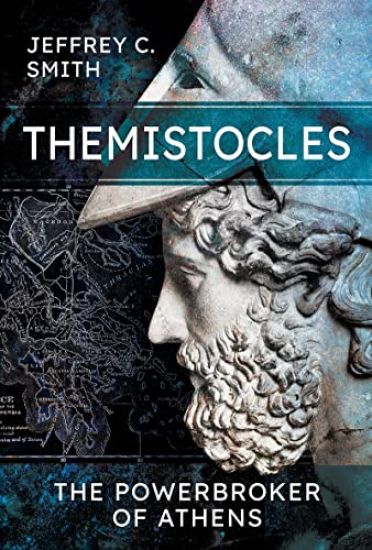
Themistocles

Themistocles

Jeffrey Smith

PEN SWORD BOOKS LTD
2023
nidottu
This is an exciting new biography of Themistocles of Athens, architect of the Greek victory over the Persian invasions of 490 BC and 480 to 479 BC. While his role in the Persian wars is naturally a major theme, Themistocles' career before and after those conflicts is also considered in detail. Themistocles was a leading exponent of a new kind of populist politics in the young democracy of Athens, manipulating the practice of ostracism (exile) to get rid of his political rivals. Jeffrey Smith explains Themistocles' rise to a position of virtual hegemony which allowed him to institute his far-sighted policy of preparation against the growing Persian threat. In particular he strengthened Athens' fleet and thereby secured the support of the poor thetes, who found employment as rowers. During the first invasion, Themistocles fought, and possibly held joint command, at the decisive battle of Marathon. When the Persians struck again in 480, he commanded the fleet at Artemisium and Salamis. The latter battle he won by subterfuge and secured Athens' liberation and survival. Ironically he was himself eventually ostracized by his fellow citizens and ultimately entered Persian service, ending his days as governor of Magnesia in Asia Minor.
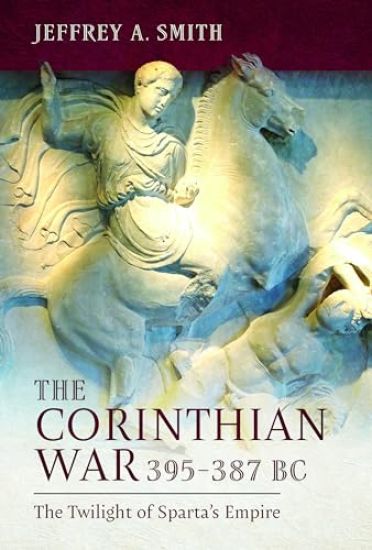
The Corinthian War, 395–387 BC

The Corinthian War, 395–387 BC

Jeffrey Smith

PEN SWORD BOOKS LTD
2024
sidottu
At the end of the Peloponnesian War in 404 BC, Sparta reigned supreme in Greece. Having vanquished their rival Athens and quickly dismantled the wealthy and powerful Athenian Empire, Sparta set its sights on dominating the Mediterranean world and had begun a successful invasion of the vast Persian Empire under their legendary king Agesilaus II. But with their victory over Athens came the inheritance of governing Athens’s empire - and Sparta desperately lacked both a cogent vision of empire and the essential economic and trade infrastructure to survive in the role of hegemon. Sparta’s overextension of empire compounded with internal political conflict to antagonize the rest of Greece with heavy-fisted and uneven interventionism. Soon the unlikely confederacy of Athens, Corinth, Thebes, Argos, and Persia united against Sparta in a war that, despite a Spartan victory, had devastating ramifications for their empire. The Corinthian War (395 - 387 BC) was a fascinating entanglement of clashing empires, complex diplomatic alliances and betrayals, and political fissures erupting after centuries of tension. Situated between the great Peloponnesian War and the Theban-Spartan War, the Corinthian War is often overlooked or understood as an aftershock of the civil war Greece had just endured. But the Corinthian War was instead a seminal conflict that reshaped the Greek world, illustrating the limits of Sparta’s newfound imperial experiment as they grappled with their own internal cultural conflicts and charted the rise - and fall - of their newfound hegemony and the future of Greece.
Treasure Hunt: Fun Activities and Devotions for Kids - Featuring Prayer Pups
Perfect for lazy summer days, long car trips, and family getaways, this fun activity and devotional book will keep kids entertained for hours. Featuring the popular Prayer Pups characters, join Constantine, Abigail, Nim, Amos, and Jeremiah for comics, puzzles, mazes, jokes, word games, fun facts, and more. Best of all, children will find short devotions written especially for them, and encouraging Scriptures to think about during the day. Have fun and be filled with joy as you spend time in this exciting activity book for kids!
The Rural Cemetery Movement

The Rural Cemetery Movement

Jeffrey Smith

Lexington Books
2017
sidottu
When Mount Auburn opened as the first “rural” cemetery in the United States in 1831, it represented a new way for Americans to think about burial sites. It broke with conventional notions about graveyards as places to bury and commemorate the dead. Rather, the founders of Mount Auburn and the spate of similar cemeteries that followed over the next three decades before the Civil War created institutions that they envisioned being used by the living in new ways. Cemeteries became places for leisure, communing with nature, and creating a version of collective memory. In fact, these cemeteries reflected changing values and attitudes of Americans spanning much of the nineteenth century. In the process, they became paradoxical: they were “rural” yet urban, natural yet designed, artistic yet industrial, commemorating the dead yet used by the living. The Rural Cemetery Movement: Places of Paradox in Nineteenth-Century America breaks new ground in the history of cemeteries in the nineteenth century. This book examines these “rural” cemeteries modeled after Mount Auburn that were founded between the 1830s and 1850s. As such, it provides a new way of thinking about these spaces and new paradigm for seeing and visiting them. While they fulfilled the sacred function of burial, they were first and foremost businesses. The landscape and design, regulation of gravestones, appearance, and rhetoric furthered their role as a business that provided necessary services in cities that went well beyond merely burying bodies. They provided urban green spaces and respites from urban life, established institutions where people could craft their roles in collective memory, and served as prototypes for both urban planning and city parks. These cemeteries grew and thrived in the second half of the nineteenth century; for most, the majority of their burials came before 1910. This expansion of cemeteries coincided with profound urban growth in the United States. Unlike their predecessors, founders of these burial grounds intended them to be used in many ways that reflected their views and values about nature, life and death, and relationships. Emphasis on worldly accomplishments increased with industrialization and growth in the United States, which was reflected in changing ways people commemorated their dead during the period under this study. Thus, these cemeteries are a prism through which to understand the values, attitudes, and culture of urban America from mid-century through the Progressive Era.
The Rural Cemetery Movement

The Rural Cemetery Movement

Jeffrey Smith

Lexington Books
2019
nidottu
When Mount Auburn opened as the first “rural” cemetery in the United States in 1831, it represented a new way for Americans to think about burial sites. It broke with conventional notions about graveyards as places to bury and commemorate the dead. Rather, the founders of Mount Auburn and the spate of similar cemeteries that followed over the next three decades before the Civil War created institutions that they envisioned being used by the living in new ways. Cemeteries became places for leisure, communing with nature, and creating a version of collective memory. In fact, these cemeteries reflected changing values and attitudes of Americans spanning much of the nineteenth century. In the process, they became paradoxical: they were “rural” yet urban, natural yet designed, artistic yet industrial, commemorating the dead yet used by the living. The Rural Cemetery Movement: Places of Paradox in Nineteenth-Century America breaks new ground in the history of cemeteries in the nineteenth century. This book examines these “rural” cemeteries modeled after Mount Auburn that were founded between the 1830s and 1850s. As such, it provides a new way of thinking about these spaces and new paradigm for seeing and visiting them. While they fulfilled the sacred function of burial, they were first and foremost businesses. The landscape and design, regulation of gravestones, appearance, and rhetoric furthered their role as a business that provided necessary services in cities that went well beyond merely burying bodies. They provided urban green spaces and respites from urban life, established institutions where people could craft their roles in collective memory, and served as prototypes for both urban planning and city parks. These cemeteries grew and thrived in the second half of the nineteenth century; for most, the majority of their burials came before 1910. This expansion of cemeteries coincided with profound urban growth in the United States. Unlike their predecessors, founders of these burial grounds intended them to be used in many ways that reflected their views and values about nature, life and death, and relationships. Emphasis on worldly accomplishments increased with industrialization and growth in the United States, which was reflected in changing ways people commemorated their dead during the period under this study. Thus, these cemeteries are a prism through which to understand the values, attitudes, and culture of urban America from mid-century through the Progressive Era.

Themistocles

Themistocles

Jeffrey Smith

Pen Sword Military
2021
sidottu
This is an exciting new biography of Themistocles of Athens, architect of the Greek victory over the Persian invasions of 490 BC and 480 to 479 BC. While his role in the Persian wars is naturally a major theme, Themistocles' career before and after those conflicts is also considered in detail. Themistocles was a leading exponent of a new kind of populist politics in the young democracy of Athens, manipulating the practice of ostracism (exile) to get rid of his political rivals. Jeffrey Smith explains Themistocles' rise to a position of virtual hegemony which allowed him to institute his far-sighted policy of preparation against the growing Persian threat. In particular he strengthened Athens' fleet and thereby secured the support of the poor thetes, who found employment as rowers. During the first invasion, Themistocles fought, and possibly held joint command, at the decisive battle of Marathon. When the Persians struck again in 480, he commanded the fleet at Artemisium and Salamis. The latter battle he won by subterfuge and secured Athens' liberation and survival. Ironically he was himself eventually ostracized by his fellow citizens and ultimately entered Persian service, ending his days as governor of Magnesia in Asia Minor.
Aromatherapy

Aromatherapy

Jeffrey Smith

Jason Thawne
2021
pokkari
Aromatherapy suggests that the essential oils which are found in our environment can be used to cure our ailments and increase our mental and physical wellness. These essential oils that could become a part of our daily routine could actually help and aid us in gradually removing our bodies of disease and illnesses which we have been suffering with and make us healthy. The content of this book will cover: - An account of introduction to aromatherapy to make the reader familiar with its basics- Different recipes of massage with essential oils- Multiple recipes of essential oils aromatherapy with bath- Recipes for essential oil aromatherapy with inhalation- Recipes for essential oils aromatherapy for specific diseasesAromatherapy is a complementary or alternative medicine to improve your general health or well being. It can be particularly useful to people leading a busy life and not paying enough attention to their health, as they should. The simple use of essential oils can improve the quality of life for such people to an immense degree. Although it is not a scientific method like other forms of medicine, it is a holistic method that has stood the test of time.
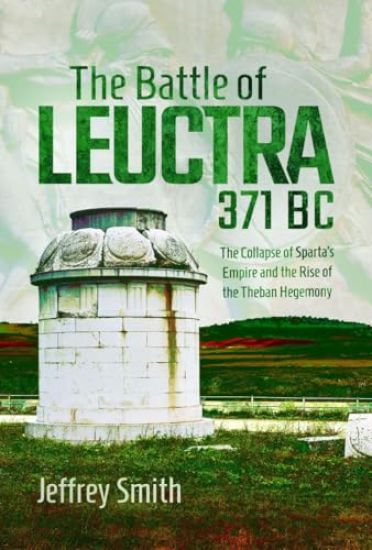
The Battle of Leuctra, 371 BC

The Battle of Leuctra, 371 BC

Jeffrey Smith

PEN SWORD BOOKS LTD
2026
sidottu
After defeating a coalition of Athens, Thebes, Persia, and other Greek city-states at the end of the Corinthian War in 387 BC, Sparta tyrannized all of Greece with nearly unchecked power. But her empire had been hollowed by the cost of generations of war and a most unfavourable trend in demographics: a sharp decline in Spartan soldiers and citizens. With Sparta's infirmity came a desperately tighter grip on Greece. And Sparta’s renowned king, Agesilaus II, held a special hatred for Thebes. After conquering the city in 382 BC, Sparta dismantled Thebes and intended to permanently eliminate their Theban problem. Thebes, though, was stubbornly resilient in the face of Sparta’s cruelty and not only survived Spartan occupation, but soon overthrew Sparta and aimed to shatter her empire. Against the odds, Thebes succeeded. Her victory boiled down to the indomitable spirit of two men: the irreproachable general Epaminondas and the cunning statesman Pelopidas. The two formed a local resistance movement that first liberated their home from Spartan oppression in 378 and then challenged Sparta’s empire outright in the Theban-Spartan War. By 371 at the Battle of Leuctra, their vision of a free Thebes and broken Sparta was realized, and the infamous Spartan war machine was at long last defeated. For the first time since the age of mythology, Thebes reigned supreme over Greece. Leuctra was the lynchpin of the new Theban Hegemony, and began a new era of empire in Greece, and the first power in centuries that was not Athens or Sparta.
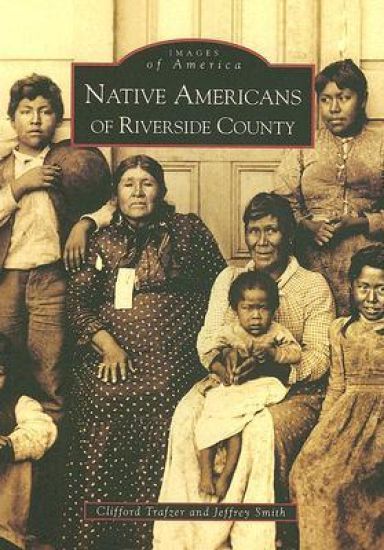
Native Americans of Riverside County

Native Americans of Riverside County

Clifford Trafzer; Jeffrey Smith

Arcadia Publishing (SC)
2006
nidottu
The Colorado Desert lands that became Riverside County in the 19th century were home to diverse bands of California Indian people, including the Cahuilla, Gabrielino, Serrano, Luise-o, Chemehuevi, and Mojave tribes. Other Native Americans call the county home, including urban Indians who moved here in the 20th century. The tribes of Riverside County are survivors, descendants of sovereign people who left their mark on the county's history eons before the first European explorers entered the land. These historic photographs depicting the tribes and their way of life were culled from the authors' personal archives as well as the collections of the Cabazon Band of Mission Indians Museum, Twenty-nine Palms Tribe, Riverside Municipal Museum, and the University of California, Riverside.
Strategic Crisis Communication

Strategic Crisis Communication

James O'Rourke; Jeffrey Smith

TAYLOR FRANCIS LTD
2023
nidottu
Addressing 21st-century issues, threats, and opportunities with time-tested principles, this book empowers corporate communications professionals to protect, inspire, and energize organizations in the face of a crisis. Whether due to an external incident or an internal misstep, every major company or institution will find itself scrutinized, its normal operations disrupted, and its reputation and business continuity threatened at some point—and how it prepares for, and reacts to, a crisis can make a critical difference in the ultimate outcome of events. This book focuses on strategic crisis communication as a function of three elements: 1. crisis preparation—establishing a robust and nimble infrastructure and plans, in advance of any crisis 2. crisis management—rapidly gathering information, activating and adjusting plans, making decisions, and relentlessly monitoring outcomes 3. crisis communication—reaching multiple audiences, on multiple platforms, with clear, consistent, and purposeful messages that tell the truth and defend the organization. Bringing together best practices gleaned from hundreds of recent case studies, this book is an unmatched resource enabling corporate communications and PR professionals, and the organizations that employ them, to understand how to weather any reputational storm that may threaten their enterprise.