Kirjojen hintavertailu. Mukana 11 244 527 kirjaa ja 12 kauppaa.

Kirjahaku

Etsi kirjoja tekijän nimen, kirjan nimen tai ISBN:n perusteella.

1000 tulosta hakusanalla Jennifer B. Fleischner

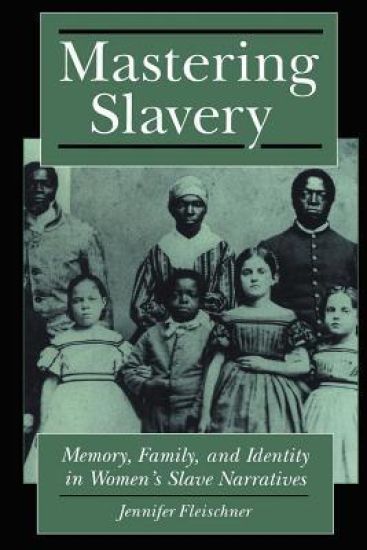
Mastering Slavery

Mastering Slavery

Jennifer B. Fleischner

New York University Press
1996
sidottu
In Mastering Slavery, Fleischner draws upon a range of disciplines, including psychoanalysis, African-American studies, literary theory, social history, and gender studies, to analyze how the slave narratives--in their engagement with one another and with white women's antislavery fiction--yield a far more amplified and complicated notion of familial dynamics and identity than they have generally been thought to reveal. Her study exposes the impact of the entangled relations among master, mistress, slave adults and slave children on the sense of identity of individual slave narrators. She explores the ways in which our of the social, psychological, biological--and literary--crossings and disruptions slavery engendered, these autobiographers created mixed, dynamic narrative selves.
Mastering Slavery

Mastering Slavery

Jennifer B. Fleischner

New York University Press
1996
pokkari
In Mastering Slavery, Fleischner draws upon a range of disciplines, including psychoanalysis, African-American studies, literary theory, social history, and gender studies, to analyze how the slave narratives--in their engagement with one another and with white women's antislavery fiction--yield a far more amplified and complicated notion of familial dynamics and identity than they have generally been thought to reveal. Her study exposes the impact of the entangled relations among master, mistress, slave adults and slave children on the sense of identity of individual slave narrators. She explores the ways in which our of the social, psychological, biological--and literary--crossings and disruptions slavery engendered, these autobiographers created mixed, dynamic narrative selves.
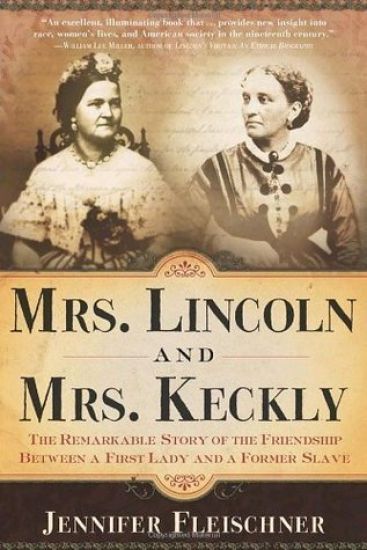
Mrs. Lincoln and Mrs. Keckly: The Remarkable Story of the Friendship Between a First Lady and a Former Slave
A vibrant social history set against the backdrop of the Antebellum south and the Civil War that recreates the lives and friendship of two exceptional women: First Lady Mary Todd Lincoln and her mulatto dressmaker, Elizabeth Keckly. "I consider you my best living friend," Mary Lincoln wrote to Elizabeth Keckly in 1867, and indeed theirs was a close, if tumultuous, relationship. Born into slavery, mulatto Elizabeth Keckly was Mary Lincoln's dressmaker, confidante, and mainstay during the difficult years that the Lincolns occupied the White House and the early years of Mary's widowhood. But she was a fascinating woman in her own right, Lizzy had bought her freedom in 1855 and come to Washington determined to make a life for herself. She was independent and already well-established as the dressmaker to the Washington elite when she was first hired by Mary Lincoln upon her arrival in the nation's capital. Mary Lincoln hired Lizzy in part because she was considered a "high society" seamstress and Mary, as an outsider in Washington's social circles, was desperate for social cachet. With her husband struggling to keep the nation together, Mary turned increasingly to her seamstress for companionship, support, and advice--and over the course of those trying years, Lizzy Keckly became her confidante and closest friend. Historian Jennifer Fleischner allows us to glimpse the intimate dynamics of this unusual friendship for the first time, and traces the pivotal events that enabled these two women to forge such an unlikely bond at a time when relations between blacks and whites were tearing the nation apart. Mrs. Lincoln and Mrs. Keckly is a remarkable work of scholarship that explores the legacy of slavery and sheds new light on the Lincoln White House.
Nobody'S Boy

Nobody'S Boy

Jennifer Fleischner

Missouri Historical Society Press
2006
nidottu
A work of historical fiction, Nobody's Boy is loosely based on the real-life story of a slave named George Kirkland. George's owner, Hugh Garland, the lawyer for Mrs. Emerson in the Dred Scott case, brought him to St. Louis at the age of about five. George's mother, Elizabeth Keckly (dressmaker for and confidante of Mary Todd Lincoln), bought his freedom and, in about 1860, sent him to college in Ohio. Like the main character in Nobody's Boy, the light-skinned George ultimately joined a Missouri regiment in the Civil War, enlisting as a white man on the Union side. Not long after, he died in the battle of Wilson's Creek. The early 1850s was an important time in Missouri--a turning point in the buildup to the war and the beginning of the historic Dred Scott case. The story of George's short life is an intimate look at race and life in Missouri at this time, seen through the eyes of an African American boy who grew up on the color line.
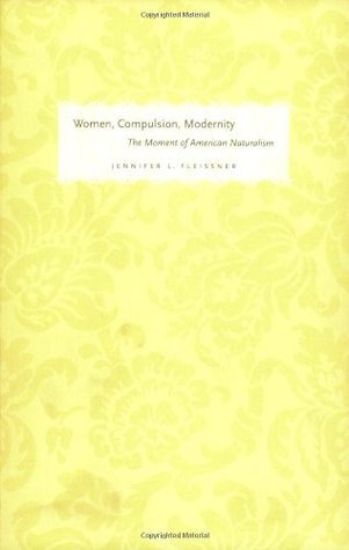
Women, Compulsion, Modernity

Women, Compulsion, Modernity

Jennifer L. Fleissner

University of Chicago Press
2004
sidottu
The 1890s have long been thought one of the most male-oriented eras in American history. But in reading such writers as Frank Norris with Mary Wilkins Freeman and Charlotte Perkins Gilman with Stephen Crane, Jennifer L. Fleissner boldly argues that feminist claims in fact shaped the period's cultural mainstream. ?Women, Compulsion, Modernity? reopens a moment when the young American woman embodied both the promise and threat of a modernizing world. Fleissner shows that this era's expanding opportunities for women were inseparable from the same modern developments--industrialization, consumerism--typically believed to constrain human freedom. With ?Women, Compulsion, and Modernity?, Fleissner creates a new language for the strange way the writings of the time both broaden and question individual agency.
Women, Compulsion, Modernity

Women, Compulsion, Modernity

Jennifer L. Fleissner

University of Chicago Press
2004
nidottu
The 1890s have long been thought one of the most male-oriented eras in American history. But in reading such writers as Frank Norris with Mary Wilkins Freeman and Charlotte Perkins Gilman with Stephen Crane, Jennifer L. Fleissner boldly argues that feminist claims in fact shaped the period's cultural mainstream. ?Women, Compulsion, Modernity? reopens a moment when the young American woman embodied both the promise and threat of a modernizing world. Fleissner shows that this era's expanding opportunities for women were inseparable from the same modern developments--industrialization, consumerism--typically believed to constrain human freedom. With ?Women, Compulsion, and Modernity?, Fleissner creates a new language for the strange way the writings of the time both broaden and question individual agency.
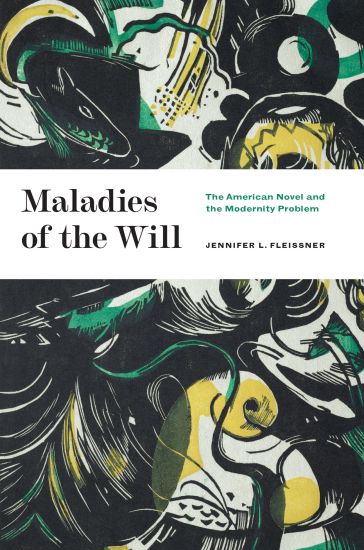
Maladies of the Will

Maladies of the Will

Jennifer L. Fleissner

THE UNIVERSITY OF CHICAGO PRESS
2022
sidottu
An examination of the nineteenth-century American novel that argues for a new genealogy of the concept of the will. What if the modern person were defined not by reason or sentiment, as Enlightenment thinkers hoped, but by will? Western modernity rests on the ideal of the autonomous subject, charting a path toward self-determination. Yet novelists have portrayed the will as prone to insufficiency or excess—from indecision to obsession, wild impulse to melancholic inertia. Jennifer Fleissner’s ambitious book shows how the novel’s attention to the will’s maladies enables an ongoing interrogation of modern premises from within. Maladies of the Will reveals the nineteenth-century American novel’s relation to a wide-ranging philosophical tradition, highly relevant to our own tumultuous present. In works from Moby-Dick and The Scarlet Letter to Elizabeth Stoddard’s The Morgesons and Charles W. Chesnutt’s The Marrow of Tradition, the will’s grandeur and its perversity emerge as it alternately aligns itself with and pits itself against a bigger Will—whether of God, the state, society, history, or life itself. Today, when invocations of autonomy appear beside the medicalization of many behaviors, and democracy’s tenet of popular will has come into doubt, Maladies of the Will provides a map to how we got here, and how we might think these vital dilemmas anew.
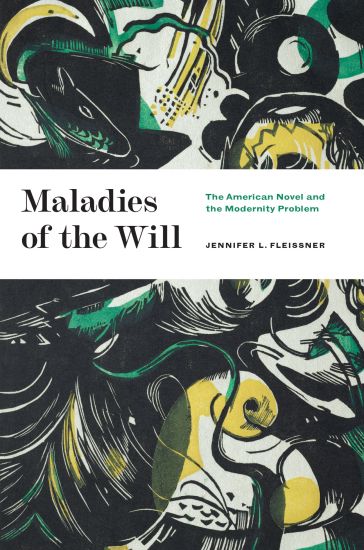
Maladies of the Will

Maladies of the Will

Jennifer L. Fleissner

THE UNIVERSITY OF CHICAGO PRESS
2022
nidottu
An examination of the nineteenth-century American novel that argues for a new genealogy of the concept of the will. What if the modern person were defined not by reason or sentiment, as Enlightenment thinkers hoped, but by will? Western modernity rests on the ideal of the autonomous subject, charting a path toward self-determination. Yet novelists have portrayed the will as prone to insufficiency or excess—from indecision to obsession, wild impulse to melancholic inertia. Jennifer Fleissner’s ambitious book shows how the novel’s attention to the will’s maladies enables an ongoing interrogation of modern premises from within. Maladies of the Will reveals the nineteenth-century American novel’s relation to a wide-ranging philosophical tradition, highly relevant to our own tumultuous present. In works from Moby-Dick and The Scarlet Letter to Elizabeth Stoddard’s The Morgesons and Charles W. Chesnutt’s The Marrow of Tradition, the will’s grandeur and its perversity emerge as it alternately aligns itself with and pits itself against a bigger Will—whether of God, the state, society, history, or life itself. Today, when invocations of autonomy appear beside the medicalization of many behaviors, and democracy’s tenet of popular will has come into doubt, Maladies of the Will provides a map to how we got here, and how we might think these vital dilemmas anew.
Imagining Religious Communities

Imagining Religious Communities

Jennifer B. Saunders

Oxford University Press Inc
2019
sidottu
Imagining Religious Communities tells the story of the Gupta family through the personal and religious narratives they tell as they create and maintain their extended family and community across national borders. Based on ethnographic research, the book demonstrates the ways that transnational communities are involved in shaping their experiences through narrative performances. Jennifer B. Saunders demonstrates that narrative performances shape participants' social realities in multiple ways: they define identities, they create connections between community members living on opposite sides of national borders, and they help create new homes amidst increasing mobility. The narratives are religious and include epic narratives such as excerpts from the Ramayana as well as personal narratives with dharmic implications. Saunders' analysis combines scholarly understandings of the ways in which performances shape the contexts in which they are told, indigenous comprehension of the power that reciting certain narratives can have on those who hear them, and the theory that social imaginaries define new social realities through expressing the aspirations of communities. Imagining Religious Communities argues that this Hindu community's religious narrative performances significantly contribute to shaping their transnational lives.
Family Based Treatment for Young Children With OCD

Family Based Treatment for Young Children With OCD

Jennifer B Freeman; Abbe Marrs Garcia

Oxford University Press Inc
2008
nidottu
Obsessive-compulsive disorder (OCD) can develop at a young age and when it does, it can cause significant distress for the child and the family. Parents may be unclear on the nature of OCD symptoms and how to best respond to their child. Family involvement in the child's symptoms may be making the situation worse for the whole family. When treating young children with OCD, it is important to recognize the family component and directly involve parents in treatment. It is also essential to tailor the treatment to a child's age and developmental level. This therapist guide presents a family-based treatment for OCD specifically designed for children ages 5-8. Using a cognitive-behavioral approach, it provides psychoeducation for the family and a set of tools for the management of OCD. "Parent tools" involve differential attention, modeling, and scaffolding techniques. "Child tools" include cognitive strategies such as "bossing back" and using a feelings thermometer to rate anxiety. Treatment centers on exposure with response prevention (E/RP), in which the patient faces feared situations without avoidance or rituals until anxiety decreases. The therapist works with the family to create a hierarchy of E/RP tasks that will be conducted in session and practiced at home. A reward plan helps motivate the child to complete tasks and cooperate with parents. The program ends with relapse prevention to maintain gains and prepare for future symptoms. Therapy process issues are addressed throughout treatment to help families improve life at home. With helpful tips for adapting the program to a child's developmental level and family situation, this guide is a "must-have" for clinicians working with childhood-onset OCD. The corresponding workbook for families reinforces the skills introduced in session and provides forms for homework. Children, their parents, and their families will all benefit from this comprehensive treatment package.
Family-Based Treatment for Young Children with OCD Workbook

Family-Based Treatment for Young Children with OCD Workbook

Jennifer B Freeman; Abbe Marrs Garcia

Oxford University Press Inc
2008
nidottu
Young children with obsessive-compulsive disorder (OCD) often require professional help to overcome their symptoms. This workbook corresponds to a treatment program specifically designed for children ages 5-8 and their families. Your therapist will tailor the program to your child's developmental level and family situation. Parents have an important role to play in treatment; you will be attending all sessions and working at home with your child. In therapy, your child will face feared situations without avoidance or rituals until anxiety decreases. This is called exposure with response prevention (E/RP); sessions will tackle E/RP tasks of increasing difficulty. A reward plan will motivate your child to practice E/RP tasks at home with your help. You and your child will also be learning "tools" to manage and reduce OCD symptoms. For example, you will learn how to best use attention with your child and how to model positive behavior. Your child will learn how to "boss back" OCD symptoms and use a feelings thermometer to rate anxiety. This workbook includes all the information your family needs to participate in treatment. Chapters on "parent tools" and "child tools" review the skills learned in session. Instructions for E/RP assist with home practice. There are also tips for maintaining gains after treatment ends and how to handle future symptoms.
The Genius of Opposites

The Genius of Opposites

Jennifer B Kahnweiler

Readhowyouwant
2015
pokkari
FDR and Eleanor. Mick and Keith. Jobs and Woz. Siskel and Ebert. Sandberg and Zuckerberg. History is filled with many examples of successful introvert - extrovert partnerships. Opposites like these can make brilliant products and great works of art and can even change history. But great introvert - extrovert partnerships don't just happen. They demand wise nurturing. Without it, they can implode. Bestselling author Jennifer Kahnweiler offers a five - step process that will enable introverts and extroverts to work together harmoniously and achieve more than they ever could on their own. The process can be precarious. The key, Kahnweiler says, is to remember that these relationships are most successful when opposites stop emphasizing their differences and use approaches that focus them both on moving toward results. This first - of - its - kind practical guide helps introverts and extroverts understand and appreciate each other's wiring, use their inevitable conflicts to spur creativity, find the right roles within the partnership, act like respectful friends, and mine their diversity to give clients the widest range of options. Blending their two points of view allows both partners to see and act on things neither would have separately. Partners can even enrich their skills by learning from their opposites. Kahnweiler shows you how to perform the delicate balancing act required to create a whole that is exponentially greater than the sum of its parts.
Where To?: How I Shed My Baggage and Learned to Live Free
Finalist in the Autobiography/Memoir category of the 2019 International Book Awards"Some memoirs tell us stories and open up worlds we never knew, but some open up places in our own hearts and souls that we have wanted to explore and have never given ourselves the chance to do so. Where To? How I Shed My Baggage and Learned to Live Free by Jennifer B. Monahan belongs to the second category of memoirs...It is a spiritual testament, a book that describes a journey towards inner freedom and authenticity." (Reader's Favorite Book Reviews)In this "empowering" book (Rebecca Austill-Clausen, Change Maker, How My Brother's Death Woke Up My Life), Mayan-trained shaman and coach Jennifer B. Monahan shares one year of her life, where she leaves the security of her well-paying corporate job to travel the world: primarily in the Guatemalan jungle, but also in Japan, Cambodia and Thailand. Living in a thatched-roof hut in a tiny village, Jennifer connected with local shamans and participated in their ancient rituals, became fully integrated into the daily life of a local family, and ultimately faced down some of the greatest losses and long-buried pain she had experienced in her quest to live courageously and authentically.Filled with "breath-taking descriptions and captivating writing, Jennifer flawlessly narrates her story in a brazen, honest and inspiring way" (Red-Headed Book Lover) designed to "guide the reader to look inward and start his or her healing journey as well." (Irene Weinberg, They Serve Bagels in Heaven). Where To shares the six steps she took to heal and courageously create the life of her dreams and includes a workbook for readers to do the same.
Bodine's City

Bodine's City

Jennifer B. Bodine

Schiffer Publishing Ltd
2011
sidottu
A. Aubrey Bodine was a Baltimore Sunday Sun feature photographer for 43 years. The 154 images displayed here were shot within a four mile radius of where he lived or worked. The subject matter of these powerful images is exclusively Baltimore, and yet this is not a Baltimore picture book. The reason these photos transcend their geographical bounds is that Bodine’s subject matter varied wildly, demonstrating the versatility of Bodine as an artist. Bodine is called a pictorialist, but he is much more than that one defining label. He photographed people, animals, buildings, harsh weather conditions, textures, geometric patterns, and cityscapes, devoting his life to elevating photography to an art form. He was famous for his dark room magic. Changes to any photograph occurred in the darkroom and they were all done by hand. Open these pages and enter into the magic that is Bodine’s photography.
Trains

Trains

Jennifer B. Bodine

Schiffer Publishing Ltd
2018
sidottu
A. Aubrey Bodine's archive of train photographs chronicling mid-twentieth-century rail transportation. A. Aubrey Bodine, newspaper photographer, pictorialist, modernist, and documentarian, was a Baltimore Sun feature photographer from 1924 to 1970. This book is his archive of train photographs chronicling mid-20th-century rail transportation and the people working on the railroad. Bodine’s images of steam and diesel locomotives document an era passed. award-winning picturescurrently popular pictureshistorically interesting picturespictures unseen until this volume These images demonstrate Bodine’s pictorialist and modernist photographic eye for trains and railroads in motion and at rest. Bodine published four books, wrote articles, judged photographic Salons, won awards from all over the world, lectured across northeast America, and held down a full-time job at a major metropolitan newspaper. This is the fourth Bodine picture book assembled by his daughter, Jennifer. Their previous collaborations are Bodine’s Chesapeake Bay Country, Bodine’s City, and Bodine’s Industry.
Annapolis

Annapolis

Jennifer B. Bodine

Schiffer Publishing Ltd
2020
sidottu
Aubrey Bodine, pictorialist, modernist, and documentarian, was a Baltimore Sunday Sun feature photographer from 1924 to 1970. This book contains his vintage Annapolis, US Naval Academy, and Chesapeake Bay photographs, chronicling the mid-20th century in and around Maryland’s state capital. These images demonstrate Bodine’s pictorialist and modernist photographic eye for mansions, government buildings, city streets, and sailboat racing, encapsulating the essence of Annapolis from 1928 to 1970. Bodine published four books, wrote articles, judged Salons, won awards from all over the world, lectured across northeast America, and held down a full-time job at a major metropolitan newspaper. This is the fifth Bodine picture book assembled by his daughter, Jennifer. Their previous collaborations are Bodine’s Chesapeake Bay Country, Bodine’s City, Bodine’s Industry, and Trains: Photography of A. Aubrey Bodine.