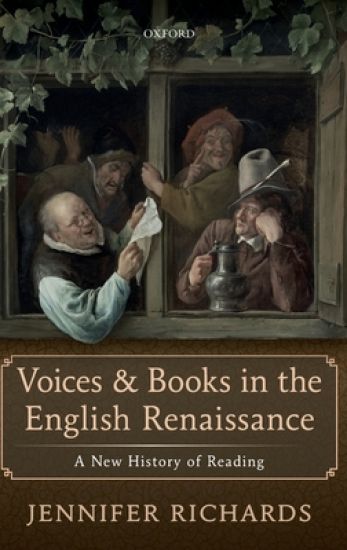
Voices and Books in the English Renaissance offers a new history of reading that focuses on the oral reader and the voice- or performance-aware silent reader, rather than the historical reader, who is invariably male, silent, and alone. It recovers the vocality of education for boys and girls in Renaissance England, and the importance of training in pronuntiatio (delivery) for oral-aural literary culture. It offers the first attempt to recover the voice--and tones of voice especially--from textual sources. It explores what happens when we bring voice to text, how vocal tone realizes or changes textual meaning, and how the literary writers of the past tried to represent their own and others' voices, as well as manage and exploit their readers' voices. The volume offers fresh readings of key Tudor authors who anticipated oral readers including Anne Askew, William Baldwin, and Thomas Nashe. It rethinks what a printed book can be by searching the printed page for vocal cues and exploring the neglected role of the voice in the printing process. Renaissance printed books have often been misheard and a preoccupation with their materiality has led to a focus on them as objects. However, Renaissance printed books are alive with possible voices, but we will not understand this while we focus on the silent reader.

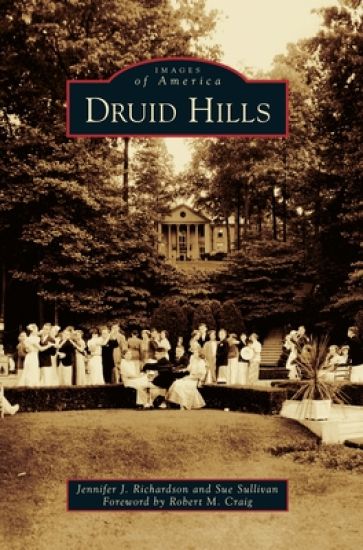
In 1892, entrepreneur Joel Hurt invited Frederick Law Olmsted Sr. to Atlanta to design an ideal suburb. Olmsted and his firm began designs and were in regular communication with Hurt. Members of the firm came to Atlanta during design and construction. Even with changing ownership, Olmsted's vision and plans were followed. The design became the last residential suburb designed by Olmsted--the only one in the Deep South. The centerpiece of the neighborhood is its segmented park. After reaching a peak of beauty in the 1930s, the park and neighborhood declined, and the park was threatened by an ill-conceived expressway. Olmsted and Hurt's dream of the linear park prevailed, and the park has been renovated to how it looked in its heyday. This is the story of how a handful of people preserved, protected, and enhanced the linear park so that it can be enjoyed for generations to come.
She was happily married, a mother of two, and a successful engineer working in the Motor City. Her life was perfect, or so it seemed. Then one morning she discovered a small lump. Jennifer Hayse was thirty-two years old and ten weeks pregnant when she was given the shattering diagnosis of Stage III, Level B, breast cancer. Facing a life-threatening decision, she chose to place herself while her unborn child in God's loving hands. Her story unfolded in the hearts of many Southeast Michigan residents as they watched her battle covered on area television and written about in local newspapers. This inspirational epic begins in Plymouth, but then Jennifer travels six thousand miles across the Atlantic Ocean to the Holy City of Jerusalem, where God has beckoned her to come while she prays for a miracle. Mark your footsteps next to hers and come along as we journey with her and forever take...A Walk with Jennifer. "Cancer and hope collide in this beautifully written story, where in the end we all win because Jesus is the Resurrection and the Life, and when our trust is in Him we live, no matter what When you are desperate for hope take A Walk with Jennifer, and embrace God's precious gift of Life " - Robin Sullivan, Host WMUZ Detroit Christian Radio
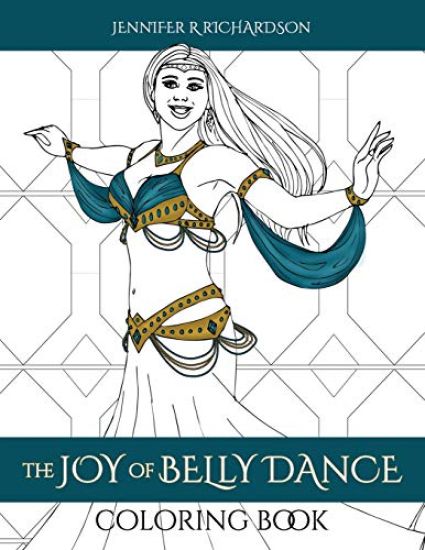
Experience the joy of belly dance by coloring 35 unique illustrations of beautiful dancers by artist Jennifer R. Richardson, a belly dancer herself. Belly dance features a rich array of styles and types of dances, many that will be found in The Joy of Belly Dance, including Egyptian Raqs Sharqi, American Cabaret, Raqs al Assaya, Folkloric, and more Each dancer illustrated in this book was hand drawn by the artist from a real belly dancer. Let your imagination and creativity flow when presented with so many costumes and props to color Belly dance has brought joy to Jennifer's life and she hopes this book can give some of it back out to you. Relax and unwind while bringing these lovely dancers to life with color by using your favorite pencils, markers, or pens.35 unique illustrations inspired by real dancersPerfect for any skill level with a combination of simplicity and detailSingle sided pages8.5 x 11 Check out Jennifer's other coloring book Fairy Birth Flower Coloring Book
Three remarkable people were responsible for the beginnings of Atlanta's historic Druid Hills. The first was entrepreneur Joel Hurt, who having already experienced success with his rail-served development of Inman Park set his sights on a second community. With remarkable vision, Hurt hired renowned landscape architect Frederick Law Olmsted Sr. to plan his new subdivision. Druid Hills would be Olmsted's last design and also his only one in the Deep South. Hurt eventually sold the land for his subdivision to a group of wealthy and influential businessmen, headed by Coca-Cola owner Asa Griggs Candler. The men retained Olmsted as landscape architect and planner. The story of historic Druid Hills weaves the genius of America's father of landscape architecture with the acumen of the owners of the Druid Hills Corporation. With its central linear park, curvilinear streets, and an abundance of trees, Druid Hills succeeded in becoming an ideal suburb that eventually became home to the civic and business lions of Atlanta.
The Black Feminist Coup: Black Women’s Lived Experiences in White Supremacist Feminist Academic Spaces is a collective narrative of how three Black women faculty at a large Midwestern PWI, and two of their former students and allies build alliances to collaboratively disrupt white supremacist feminist spaces. Themes of what it means to be a fugitive, to be free, and to be a feminist inform how we envision the future of Black women’s labor in the academy. More specifically, this project explores intersecting narratives of how three Black women faculty fled a racist and microaggressive Gender and Women’s Studies (GWS) department, following the start of the COVID 19 pandemic and the 2020 summer of racial unrest, and moved to an institute that houses African American and African studies. Their stories of misogynoir reflect a brutal irony that GWS departments expect Black women to further all women’s interests while impeding Black women’s ability to thrive. This work demands that institutions bear responsibility in providing Black women with an environment to thrive, and dream of new possibilities and opportunities to develop curricula and initiatives that center Black lives with priority. Bridging at the intersections of feminism, Black Studies, and higher education, this project surveys concepts of survival, trauma, pain, and healing to offer future possibilities for dismantling and challenging systems of white supremacy in the academy. The Black Feminist Coup is a groundbreaking text. Through courageous counter-stories and brilliant theoretical engagements, the authors spotlight the various intellectual traditions, institutional arrangements, power dynamics, and sociocultural practices that have made academia a persistent site of oppression and violence for Black women. Although such an offering would be more than enough for a single text, the book also provides a clear and accessible pathway toward dismantling White supremacy, nurturing radical resistance, and building safe and productive intellectual spaces for Black women within academia. —Marc Lamont Hill, Presidential Professor of Urban Education and Anthropology at CUNY Graduate Center THE BLACK FEMINIST COUP is a compelling, courageous co-authored monograph that explores the lived experiences of a group of mostly Black women in white supremacist feminist spaces at one university. Grounded in Black feminist history and theory, this pioneering text makes visible – in moving and painful ways-- the impact of racism, sexism, and misogynoir on Black feminists in the academy during various junctures of their journeys, including, perhaps surprisingly, women’s and gender studies spaces. Especially instructive is the book’s exploration of what cross-racial solidarities might mean in feminist academic spaces and what white women in particular might learn from these analyses and blueprints for transformation. —Beverly Guy-Sheftall, The Anna Julia Cooper Professor of Comparative Women’s Studies at Spelman College and co-edited WORDS OF FIRE (New Press, 1995)
When an American woman and her British husband decide to buy a two-hundred-year-old cottage in the heart of theCotswolds, they're hoping for an escape from theirLondonlives. Instead, their decision about whether or not to have a child plays out against abackdrop of villagefetes, rural rambles, and a cast of eccentrics clad in corduroy and tweed. Americashire: A Field Guide to a Marriagebegins with the simultaneouspurchase of aCotswold cottage and Richardson's ill-advised decision to tell her grandchild-hungry parents that she is going to try to have a baby. As she transitions from urban to rural life, she is forced to confront both her ambivalence about the idea of motherhood and the reality of living with a spouse who sees the world as a glass half-full. Part memoir, part travelogue - and including field guides to narrative-related Cotswoldwalks -Americashireis a candid, humorous tale of marriage, illness, and big life decisions.
In all organisations, people are a valuable asset. Much time and effort is spent on the optimisation and professional growth of individuals and teams, whether this be by recruitment, assessment, coaching or the design of compensation frameworks, making it an important focus for many public companies. In family enterprises, this is equally true, if not more so. Additional complexities are present via the interplay between family members, advisors and executives - the development of each group, and the mindset boards and executives need to have to work effectively with family members. Developing Talent and Managing People in the Family Enterprise explores the unique people-related challenges that families and their advisers face, bringing together experts in the field, including family enterprise advisers, family office investment specialists, next generation advisers, lawyers, cybersecurity and technology experts and family members themselves. They provide insights on a range of topics, including: Leadership in Family Enterprise: What High-Performance Sports Teams and Coaches Can Teach Us About Optimising Talent and Teamwork Developing a Family Office Investment Engine: Challenges and Differences in Set-Ups for Family Office CIOs Head, Heart, and Mind: A Family Enterprise Lawyer on Crafting Constitutions with Wit and Warmth Next Generation Talent: Guiding the Future Leaders of Business Families Advising families in the digital age Lessons from intentional succession planning Readers will benefit from in-depth analysis, strategic guidance, and anecdotes at a critical time when families and their advisers face new challenges, such as rapidly evolving technology and changing budgets. This Special Report is an indispensable resource for family businesses, family offices, and other family enterprises, along with accountants, lawyers serving the private market, executive search firms, and coaches.
A unique and valuable resource for busy clinicians at any stage of their career, Evidence-Based Medicine: How to Practice and Teach EBM, 6th Edition, is ideal for those who want to learn how to effectively practice and teach evidence-based medicine (EBM). This classic introduction to EBM has been thoroughly updated from cover to cover, while retaining its short, practical format that emphasizes the direct clinical application of EBM and provides the tactics to practice and teach EBM in real time and in various settings. Written by internationally renowned practising clinicians, methodologists, and teachers, this bestselling text offers easy-to-read, accessible coverage of all the basics of EBM for time-constrained undergraduate and postgraduate medical learners, instructors, and practitioners in all clinical areas of health care. Provides clear guidance for all key areas of EBM: how to ask answerable clinical questions; how to translate them into effective searches for the best evidence; how to critically appraise that evidence for its validity and importance; and how to integrate it with patients' values and preferences Features an accessible, workbook-like format supplemented by a wide range of helpful tools online: critical appraisal worksheets, pocket cards, EBM calculators, educational prescriptions, clinical questions log, and self-evaluations Focuses on practising and teaching EBM in real time, in various clinical settings and contexts, including primary and specialty care and inpatient/outpatient settings Reflects a new focus on health equity in all chapters; updated teaching approaches to reflect the hybrid teaching environment, including the incorporation of AI tools; new resources for finding, organizing, and utilizing evidence in clinical practice; and advances in current research methods Contains practical hints and tips on the adoption of new and emerging technologies-including the use of AI-as well as other key topics such as systematic reviews, network meta-analysis, clinical manifestations of disease, and more An eBook version is included with purchase. The eBook allows you to access all of the text, figures, and references, with the ability to search, customize your content, make notes and highlights, and have content read aloud
A handbook for anyone involved in, or contemplating, feminist activism relates the author's experiences as a grassroots organizer who has learned how to move beyond philanthropy, writing congresspeople, and volunteering, embracing creative new forms of activism. Original.
Voices and Books in the English Renaissance offers a new history of reading that focuses on the oral reader and the voice- or performance-aware silent reader, rather than the historical reader, who is invariably male, silent, and alone. It recovers the vocality of education for boys and girls in Renaissance England, and the importance of training in pronuntiatio (delivery) for oral-aural literary culture. It offers the first attempt to recover the voice—and tones of voice especially—from textual sources. It explores what happens when we bring voice to text, how vocal tone realizes or changes textual meaning, and how the literary writers of the past tried to represent their own and others' voices, as well as manage and exploit their readers' voices. The volume offers fresh readings of key Tudor authors who anticipated oral readers including Anne Askew, William Baldwin, and Thomas Nashe. It rethinks what a printed book can be by searching the printed page for vocal cues and exploring the neglected role of the voice in the printing process. Renaissance printed books have often been misheard and a preoccupation with their materiality has led to a focus on them as objects. Indeed, Renaissance printed books are alive with possible voices, but we will not understand this while we focus on the silent reader.
Rhetoric has shaped our understanding of the nature of language and the purpose of literature for over two millennia. It is of crucial importance in understanding the development of literary history as well as elements of philosophy, politics and culture. The nature and practise of rhetoric was central to Classical, Renaissance and Enlightenment cultures and its relevance continues in our own postmodern world to inspire further debate.Examining both the practice and theory of this controversial concept, Jennifer Richards explores: historical and contemporary definitions of the term ‘rhetoric’uses of rhetoric in literature, by authors such as William Shakespeare, Mary Shelley, William Wordsworth, Jane Austen, W.B. Yeats and James Joyceclassical traditions of rhetoric, as seen in the work of Plato, Aristotle and Cicero the rebirth of rhetoric in the Renaissance and the Enlightenment the current status and future of rhetoric in literary and critical theory as envisaged by critics such as Kenneth Burke, Paul de Man and Jacques Derrida.This insightful volume offers an accessible account of this contentious yet unavoidable term, making this book invaluable reading for students of literature, philosophy and cultural studies.
Rhetoric and Courtliness in Early Modern Literature explores the early modern interest in conversation as a newly identified art. Conversation was widely accepted to have been inspired by the republican philosopher Cicero. Recognizing his influence on courtesy literature - the main source for 'civil conversation' - Jennifer Richards uncovers alternative ways of thinking about humanism as a project of linguistic and social reform. She argues that humanists explored styles of conversation to reform the manner of association between male associates; teachers and students, buyers and sellers, and settlers and colonial others. They reconsidered the meaning of 'honesty' in social interchange in an attempt to represent the tension between self-interest and social duty. Richards explores the interest in civil conversation among mid-Tudor humanists, John Cheke, Thomas Smith and Roger Ascham, as well as their self-styled successors, Gabriel Harvey and Edmund Spenser.
This new collection reflects a resurgence of interest in Shakespeare's plays performed between 1608 and 1613: Pericles, Cymbeline, The Winter's Tale, The Tempest, All is True (Henry VIII), The Two Noble Kinsmen, and Cardenio. It offers a broad range of new, historicist approaches, touching upon key topics in current Shakespearean studies, such as kinship relations, manliness, magic, medico-politics, nationalism, rhetoric, schism, sexuality and staging conventions. The plays are explored both individually and within generic, thematic and chronological groups. Each author combines new research with their experience of teaching the plays, offering innovative approaches to some well-known works, as well as encouraging readers to explore less familiar dramas such as Pericles, Cymbeline, All is True and The Two Noble Kinsmen. The volume is unusual in its coverage of the lost 'late' play Cardenio, and considers its significance for our conception of the 'lateness' of these plays. This book will fill a large gap in the market for a broad-ranging critical introduction to this important and increasingly popular area in Shakespeare's work, and is suitable as a textbook for undergraduate, graduate and more general readers.