Kirjojen hintavertailu. Mukana 11 244 527 kirjaa ja 12 kauppaa.

Kirjahaku

Etsi kirjoja tekijän nimen, kirjan nimen tai ISBN:n perusteella.

1000 tulosta hakusanalla Jennifer M. Besel

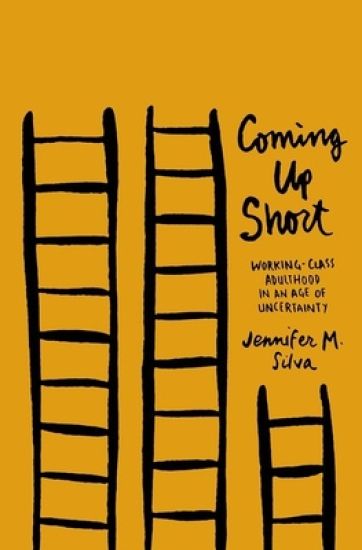
Coming Up Short

Coming Up Short

Jennifer M. Silva

Oxford University Press Inc
2015
nidottu
"Impeccably researched and skillfully articulated, Silva's work is a timely primer on the current state of blue-collar Millennials." --Publishers Weekly "[A] brief yet devastating book that blends academic analysis and oral history to put a new face on well-documented trends that are more usually described in the abstract." --Boston Globe "Silva has made a major contribution to understanding where young adults are coming from, what influences them, and what they consider to be common sense." --The American Conservative "Fascinating" --Feministing.com "[A]n enjoyable read and raises important issues that we generally overlook." --Washington Independent Review of Books "Coming Up Short is a brief, but powerful, update of the status, difficulties, behaviors and distresses that characterize the lives of young working class adults.... highly recommended for sociologists and social welfare students and academics alike. It informs in telling detail the difficult circumstances and self-perceptions of a significant portion of the American population. It is also a window into how the 'helping professions' have influenced the thinking of young adults and suggests that those professions need to help their clients see their troubles in broader terms than they apparently currently do." --Journal of Sociology & Social Welfare What does it mean to grow up today as working-class young adults? How does the economic and social instability left in the wake of neoliberalism shape their identities, their understandings of the American Dream, and their futures? Coming Up Short illuminates the transition to adulthood for working-class men and women. Moving away from easy labels such as the "Peter Pan generation," Jennifer Silva reveals the far bleaker picture of how the erosion of traditional markers of adulthood-marriage, a steady job, a house of one's own-has changed what it means to grow up as part of the post-industrial working class. Based on one hundred interviews with working-class people in two towns-Lowell, Massachusetts, and Richmond, Virginia-Silva sheds light on their experience of heightened economic insecurity, deepening inequality, and uncertainty about marriage and family. Silva argues that, for these men and women, coming of age means coming to terms with the absence of choice. As possibilities and hope contract, moving into adulthood has been re-defined as a process of personal struggle-an adult is no longer someone with a small home and a reliable car, but someone who has faced and overcome personal demons to reconstruct a transformed self. Indeed, rather than turn to politics to restore the traditional working class, this generation builds meaning and dignity through the struggle to exorcise the demons of familial abuse, mental health problems, addiction, or betrayal in past relationships. This dramatic and largely unnoticed shift reduces becoming an adult to solitary suffering, self-blame, and an endless seeking for signs of progress. This powerfully written book focuses on those who are most vulnerable-young, working-class people, including African-Americans, women, and single parents-and reveals what, in very real terms, the demise of the social safety net means to their fragile hold on the American Dream.
Institutional Reform and Diaspora Entrepreneurs

Institutional Reform and Diaspora Entrepreneurs

Jennifer M. Brinkerhoff

Oxford University Press Inc
2016
sidottu
Externally-promoted institutional reform, even when nominally accepted by developing country governments, often fails to deliver lasting change. Diasporans-immigrants who still feel a connection to their country of origin-may offer an In-Between Advantage for institutional reform, which links problem understanding with potential solutions, and encompasses vision, impact, operational, and psycho-social advantages. Individuals with entrepreneurial characteristics can catalyzing institutional reform. Diasporans may have particular advantages for entrepreneurship, as they live both psychologically and materially between the place of origin they left and the new destination they have embraced. Their entrepreneurial characteristics may be accidental, cultivated through the migration and diaspora experience, or innate to individuals' personalities. This book articulates the diaspora institutional entrepreneur In-Between Advantage, proposes a model for understanding the characteristics and motivational influences of entrepreneurs generally and how they apply to diaspora entrepreneurs in particular, and presents a staged model of institutional entrepreneur actions. I test these frameworks through case narratives of social institutional reform in Egypt, economic institutional reform in Ethiopia, and political institutional reform in Chad. In addition to identifying policy implications, this book makes important theoretical contributions in three areas. First, it builds on existing and emerging critiques of international development assistance that articulate prescriptions related to alternative theories of change. Second, it fills an important gap in the literature by focusing squarely on the role of agency in institutional reform processes while still accounting for organizational systems and socio-political contexts. In doing so, it integrates a more expansive view of entrepreneurism into extant understandings of institutional entrepreneurism, and it sheds light on what happens in the frequently-invoked black box of agency. Third, it demonstrates the fallacy of many theoretical frameworks that seek to order institutional change processes into neatly definable linear stages.
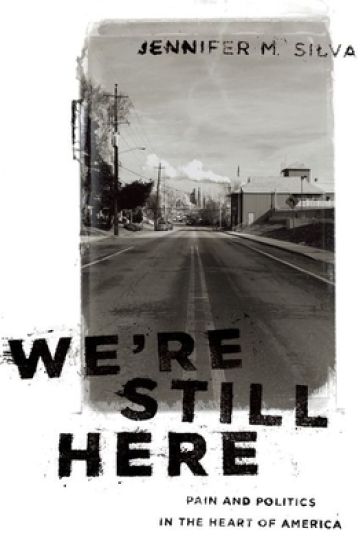
We're Still Here

We're Still Here

Jennifer M. Silva

Oxford University Press Inc
2019
sidottu
The economy has been brutal to American workers for several decades. The chance to give one's children a better life than one's own-the promise at the heart of the American Dream-is withering away. In turn, "deaths of despair" such as drug overdoses, suicides, and cirrhosis of the liver are rising among the working class. The 2016 elections threw into sharp relief how little we know about how working-class people translate their grievances into politics. In We're Still Here, Jennifer M. Silva tells a deep, multi-generational story of pain and politics that will endure long after Trump and the elections of 2016. Drawing on over 100 interviews with black, white, and Latino working-class residents of a declining coal town in Pennsylvania, Silva proposes that the key to understanding the puzzle of working-class politics is to understand how the decline of the American Dream is lived and felt. In the post-industrial age, the routines and rhythms of traditional working-class life such as manual labor, unions, marriage, church, and social clubs have diminished. Moreover, the institutions that have historically mediated between individual, personal struggles and broader, collective political coalitions have become active sites of betrayal. In this void, individual strategies for coping with pain, and finding personal redemption, have themselves become sources of political stimulus and reaction among the working class. In the coal region, understanding how generations of Democratic voters come to reject the social safety net and often politics altogether requires moving beyond simple partisanship into a maze of addiction, joblessness, family disruption, violence, and trauma. How working-class men and women put the pieces back together - if they do at all-will have grave consequences for the future of American democracy. We're Still Here provides powerful, on the ground evidence of the remaking of working-class identity and politics that will spark new tensions but also open up the possibility for shifting alliances and new possibilities.
The Claims of Culture at Empire's End

The Claims of Culture at Empire's End

Jennifer M. Dueck

Oxford University Press
2010
muu
This volume asks fundamental questions about the political impact of cultural institutions by exploring the power struggles for control over such institutions in Syria and Lebanon under French Mandate rule. Countering assertions of French imperial cultural ascendancy and self-confidence, the author demonstrates the diverse capacities of Arab and other local communities, to forge competing cultural identities that would, in later years, form the basis for rising political self-enfranchisement. Drawing on a wide array of written sources and oral testimonies, the author illuminates how political and religious leaders fought to harness the force of culture through projects as diverse as schools, cinema, scouting, and tourism. These leaders were to be found not only in the French colonial administration or the burgeoning Syrian and Lebanese parliaments, but also in student societies, missionary congregations, and philanthropic organizations. The author pays particular attention to the last decade of French rule before Syrian and Lebanese independence as a critical time of transition and debate. The rich individual histories of institutions such as the American University of Beirut, the secular French Mission laique, or the Jesuit missionaries come together in a broader narrative that speaks to the ongoing Syrian and Lebanese journeys toward national identity.
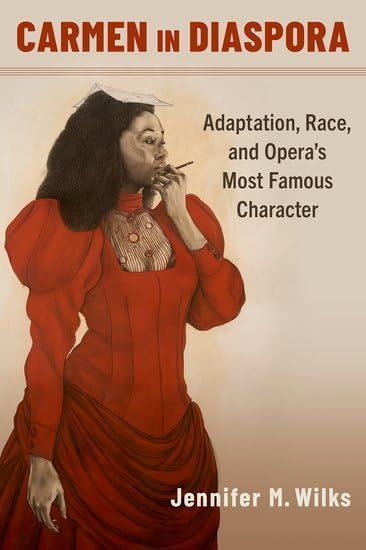
Carmen in Diaspora

Carmen in Diaspora

Jennifer M. Wilks

OXFORD UNIVERSITY PRESS INC
2025
sidottu
Carmen in Diaspora is a cultural history of Carmen adaptations set in African diasporic contexts. It explores the phenomenon of the connection between the story of Carmen, which originally appeared in Prosper Mérimée's eponymous 1845 novella and came to prominence through Georges Bizet's 1875 opera, with prolific popular recreations in African diasporic settings. The source texts for Carmen not only suggest nineteenth-century French negotiations of Blackness via the Romani community, but also provide provocative frameworks through which to examine conceptions of Black womanhood and self-determination in the twentieth and twenty-first centuries. Through analyses of Mérimée and Bizet, the Harlem Renaissance novels The Blacker the Berry (1929), Banjo (1929), and Romance in Marseille (2020); the U.S. movie musicals Carmen Jones (1954) and Carmen: A Hip Hopera (2001); the Senegalese and South African feature films Karmen Geï (2001) and U-Carmen eKhayelitsha (2005), respectively; and the Cuban-set stage musical Carmen la Cubana (2016), Carmen in Diaspora examines how these works illuminate the cultural currents of the nineteenth-century European context in which the character was born. The book also interrogates social categories, particularly gender, race, and sexuality, in contemporary Europe, North America, Africa, and the Caribbean. Carmen is Diaspora is an adaptation study that emphasizes connections formed through the transposition rather than imposition of European culture as it considers how artists have brought - and continue to bring - new energy, vision, and life to the story of opera's most famous character.
We're Still Here

We're Still Here

Jennifer M. Silva

OXFORD UNIVERSITY PRESS INC
2021
nidottu
A deep, multi-generational story of pain, place, and politics. The economy has been brutal to American workers for several decades. The chance to give one's children a better life than one's own -- the promise at the heart of the American Dream -- is withering away. While onlookers assume those suffering in marginalized working-class communities will instinctively rise up, the 2016 election threw into sharp relief how little we know about how the working-class translate their grievances into politics. In We're Still Here, Jennifer M. Silva tells a deep, multi-generational story of pain, place, and politics that will endure long after the Trump administration. Drawing on over 100 interviews with black, white, and Latino working-class residents of a declining coal town in Pennsylvania, Silva reveals how the decline of the American Dream is lived and felt. The routines and rhythms of traditional working-class life such as manual labor, unions, marriage, church, and social clubs have diminished. In their place, she argues, individualized strategies for coping with pain, and finding personal redemption, have themselves become sources of political stimulus and reaction among the working class. Understanding how generations of Democratic voters come to reject the social safety net and often politics altogether requires moving beyond simple partisanship into a maze of addiction, joblessness, family disruption, violence, and trauma. Instead, Silva argues that we need to uncover the relationships, loyalties, longings, and moral visions that underlie and generate the civic and political disengagement of working-class people. We're Still Here provides powerful, on the ground evidence of the remaking of working-class identity and politics that will spark new tensions but also open up the possibility for shifting alliances and new possibilities.
The Future

The Future

Jennifer M. Gidley

Oxford University Press
2017
nidottu
From the beginning of time, humans have been driven by both a fear of the unknown and a curiosity to know. We have always yearned to know what lies ahead, whether threat or safety, scarcity or abundance. Throughout human history, our forebears tried to create certainty in the unknown, by seeking to influence outcomes with sacrifices to gods, preparing for the unexpected with advice from oracles, and by reading the stars through astrology. As scientific methods improve and computer technology develops we become ever more confident of our capacity to predict and quantify the future by accumulating and interpreting patterns form the past, yet the truth is there is still no certainty to be had. In this Very Short Introduction Jennifer Gidley considers some of our most burning questions: What is "the future "?; Is the future a time yet to come?; Or is it a utopian place?; Does the future have a history?; Is there only one future or are there many possible futures? She asks if the future can ever be truly predicted or if we create our own futures - both hoped for and feared - by our thoughts, feelings, and actions, and concludes by analysing how we can learn to study the future. ABOUT THE SERIES: The Very Short Introductions series from Oxford University Press contains hundreds of titles in almost every subject area. These pocket-sized books are the perfect way to get ahead in a new subject quickly. Our expert authors combine facts, analysis, perspective, new ideas, and enthusiasm to make interesting and challenging topics highly readable.
Simple Sentences, Substitution, and Intuitions

Simple Sentences, Substitution, and Intuitions

Jennifer M. Saul

Oxford University Press
2010
nidottu
The phenomenon of substitution failure is a longstanding focus of discussion for philosophers of language. Substitution failure occurs when a change from one co-referential name to another (e.g. from 'Superman' to 'Clark Kent') affects the truth-value of a sentence. Jennifer Saul has shown that this can occur even in the simplest of sentences. She presents the first full-length treatment of this puzzling feature of language, and explores its implications for the theory of reference and names, and for the methodology of semantics.
Changing Norms through Actions

Changing Norms through Actions

Jennifer M. Ramos

Oxford University Press Inc
2013
sidottu
How do international norms evolve? This book examines the manner in which sovereignty, a bedrock norm of international relations since the seventeenth century, has evolved in response to changing conceptions of the responsibilities of government. Whereas most previous studies of international norms have examined how norms influence policy decisions, this book asks, instead, how state policies actively shape international norms. Changing Norms through Actions contends that the concept of sovereignty is moving towards one in which states that are unable or unwilling to fulfill their domestic and international obligations are forced to relinquish certain sovereign responsibilities to the international community. As issues such as genocide, weapons of mass destruction, and terrorism have forced states to reassess their understandings of sovereignty, Ramos is interested in how understandings of norms - particularly long-held norms such as absolute sovereignty - change. If action taken by states reinforces an existing norm or alters current understandings of the norm, states must consider how their actions may change the "rules of the game" for the future. Even when a major power acts primarily out of its own self-interest, without any concern to international norms, the action may have the unintended consequence of modifying the normative environment within which other minor powers act. Shifting understandings of sovereignty (and how states relate to one another) can also have profound implications for the workings of the international system. Ramos looks specifically at what happens to sovereignty when states choose to bypass traditional norms of non-intervention on behalf of other competing norms, such as those regarding counterterrorism, human rights, or weapons of mass destruction.
Changing Norms through Actions

Changing Norms through Actions

Jennifer M. Ramos

Oxford University Press Inc
2013
nidottu
How do international norms evolve? This book examines the manner in which sovereignty, a bedrock norm of international relations since the seventeenth century, has evolved in response to changing conceptions of the responsibilities of government. Whereas most previous studies of international norms have examined how norms influence policy decisions, this book asks, instead, how state policies actively shape international norms. Changing Norms through Actions contends that the concept of sovereignty is moving towards one in which states that are unable or unwilling to fulfill their domestic and international obligations are forced to relinquish certain sovereign responsibilities to the international community. As issues such as genocide, weapons of mass destruction, and terrorism have forced states to reassess their understandings of sovereignty, Ramos is interested in how understandings of norms - particularly long-held norms such as absolute sovereignty - change. If action taken by states reinforces an existing norm or alters current understandings of the norm, states must consider how their actions may change the "rules of the game" for the future. Even when a major power acts primarily out of its own self-interest, without any concern to international norms, the action may have the unintended consequence of modifying the normative environment within which other minor powers act. Shifting understandings of sovereignty (and how states relate to one another) can also have profound implications for the workings of the international system. Ramos looks specifically at what happens to sovereignty when states choose to bypass traditional norms of non-intervention on behalf of other competing norms, such as those regarding counterterrorism, human rights, or weapons of mass destruction.
The Experimental Fire

The Experimental Fire

Jennifer M Rampling

THE UNIVERSITY OF CHICAGO PRESS
2023
nidottu
A 400-year history of the development of alchemy in England that brings to light the evolution of the practice. In medieval and early modern Europe, the practice of alchemy promised extraordinary physical transformations. Who would not be amazed to see base metals turned into silver and gold, hard iron into soft water, and deadly poison into elixirs that could heal the human body? To defend such claims, alchemists turned to the past, scouring ancient books for evidence of a lost alchemical heritage and seeking to translate their secret language and obscure imagery into replicable, practical effects. Tracing the development of alchemy in England over four hundred years, from the beginning of the fourteenth century to the end of the seventeenth, Jennifer M. Rampling illuminates the role of alchemical reading and experimental practice in the broader context of national and scientific history. Using new manuscript sources, she shows how practitioners like George Ripley, John Dee, and Edward Kelley, as well as many previously unknown alchemists, devised new practical approaches to alchemy while seeking the support of English monarchs. By reconstructing their alchemical ideas, practices, and disputes, Rampling reveals how English alchemy was continually reinvented over the space of four centuries, resulting in changes to the science itself. In so doing, The Experimental Fire bridges the intellectual history of chemistry and the wider worlds of early modern patronage, medicine, and science.
Antsy Agatha

Antsy Agatha

Jennifer M Langston

Tellwell Talent
2021
pokkari
Antsy Agatha does what she knows when she doesn't know what to do. In this book we see how the symptoms of Attention Deficit Hyperactivity Disorder impact Antsy Agatha, those around her, and how therapy helps her improve.