Kirjojen hintavertailu. Mukana 11 244 527 kirjaa ja 12 kauppaa.

Kirjahaku

Etsi kirjoja tekijän nimen, kirjan nimen tai ISBN:n perusteella.

1000 tulosta hakusanalla Jennifer Mather Saul

Dogwhistles and Figleaves

Dogwhistles and Figleaves

Jennifer Mather Saul

Oxford University Press
2024
sidottu
Pinpoints how "dogwhistles" and "figleaves," two kinds of linguistic trick, distort political discourse and normalize racism It is widely accepted that political discourse in recent years has become more openly racist and more accepting of wildly implausible conspiracy theories. Dogwhistles and Figleaves explores ways in which such changes--both of which defied previously settled norms of political speech--have been brought about. Jennifer Saul shows that two linguistic devices, dogwhistles and figleaves, have played a crucial role. Some dogwhistles (such as "88", used by Nazis online to mean "Heil Hitler") serve to disguise messages that would otherwise be rejected as unacceptable, allowing them to be transmitted surreptitiously. Other dogwhistles (like the 1988 "Willie Horton" ad) work by influencing people in ways that they are not aware of, and which they would likely reject were they aware. Figleaves (such as "just asking questions") take messages that could easily be recognized as unacceptable, and provide just enough cover that people become more willing to accept them. Saul argues that these devices are important for the spread of racist discourse. She also shows how they contribute to the transmission of norm-violating discourse more generally, focusing on the case of wildly implausible conspiracist speech. Together, these devices have both exploited and widened existing divisions in society, and normalized racist and conspiracist speech. This book is the first full-length exploration of dogwhistles and figleaves. It offers an illuminating and disturbing view of the workings of contemporary political discourse.
Lying, Misleading, and What is Said

Lying, Misleading, and What is Said

Jennifer Mather Saul

Oxford University Press
2015
nidottu
Many people (both philosophers and not) find it very natural to think that deceiving someone in a way that avoids lying--by merely misleading--is morally preferable to simply lying. Others think that this preference is deeply misguided. But all sides agree that there is a distinction. In Lying, Misleading, and What is Said, Jennifer Saul undertakes a close examination of the lying/misleading distinction. Saul begins by using this very intuitive distinction to shed new light on entrenched debates in philosophy of language over notions like what is said. Next, she tackles the puzzling but widespread moral preference for misleading over lying, and arrives at a new view regarding the moral significance of the distinction. Finally, Saul draws her conclusions together to examine a range of historically important and interesting cases, from a consideration of modern politicians to the early Jesuits.
Feminism

Feminism

Jennifer Mather Saul

Oxford University Press
2003
nidottu
An introduction to feminist philosophy. The chapters are organised around key issues of practical significance, such as pornography, abortion and sexual harassment. Clear arguments are provided for a variety of feminist positions, drawing upon up-to-date empirical research.
Lying, Misleading, and What is Said

Lying, Misleading, and What is Said

Jennifer Mather Saul

Oxford University Press
2012
sidottu
Many people (both philosophers and not) find it very natural to think that deceiving someone in a way that avoids lying--by merely misleading--is morally preferable to simply lying. Others think that this preference is deeply misguided. But all sides agree that there is a distinction. In Lying, Misleading, and What is Said, Jennifer Saul undertakes a close examination of the lying/misleading distinction. Saul begins by using this very intuitive distinction to shed new light on entrenched debates in philosophy of language over notions like what is said. Next, she tackles the puzzling but widespread moral preference for misleading over lying, and arrives at a new view regarding the moral significance of the distinction. Finally, Saul draws her conclusions together to examine a range of historically important and interesting cases, from a consideration of modern politicians to the early Jesuits.
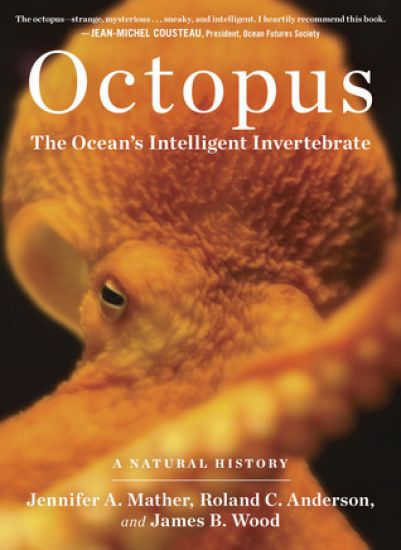
Octopus

Octopus

James B. Wood; Jennifer A. Mather; Roland C. Anderson

Timber Press
2010
sidottu
The visually arresting and often misunderstood octopus has long captured popular imagination. With an alien appearance and an uncanny intellect, this exceptional sea creature has inspired fear in famous lore and legends—from the giant octopus attack in 20,000 Leagues Under the Sea to Ursula the sea witch in The Little Mermaid. Yet its true nature is more wondrous still. After decades of research, the authors reveal a sensitive, curious, and playful animal with remarkable intelligence, an ability to defend itself with camouflage and jet propulsion, an intricate nervous system, and advanced problem-solving abilities. In this beautifully photographed book, three leading marine biologists bring readers face to face with these amazingly complex animals that have fascinated scientists for decades. From the molluscan ancestry of today’s octopus to its ingenious anatomy, amazing mating and predatory behaviors, and other-worldly relatives, the authors take readers through the astounding life cycle, uncovering the details of distinctive octopus personalities. With personal narratives, underwater research, stunning closeup photography, and thoughtful guidance for keeping octopuses in captivity, Octopus is the first comprehensive natural history of this smart denizen of the sea.
Software Evangelism and the Rhetoric of Morality
Examining the layers of meaning encoded in software and the rhetoric surrounding it, this book offers a much-needed perspective on the intersections between software, morality, and politics. In software development culture, evangelism typically denotes a rhetorical practice that aims to convert software developers, as well as non-technical lay users, from one platform to another (e.g., from the operating system Microsoft Windows to Linux). This book argues that software evangelism, like its religious counterpart, must also be understood as constructing moral and political values that extend well beyond the boundaries of the development culture. Unlike previous studies that locate such values in the effects of code in-use or in certain types of code like free and open source (FOSS) software, Maher argues that all code is meaningful beyond its technical, executable functions. To facilitate this analysis, this study builds a theory of evangelism and illustrates this theory at work in the proprietary software industry and FOSS communities. As an example of political liberalism at work at the level of code, these evangelical rhetorics of software construct competing conceptions of what is good that fall within a shared belief in what is just. Maher illustrates how these beliefs in goodness and justice do not always execute in replicable ways, as the different ways of decoding software evangelisms in the contexts of Brazil and China reveal. Demonstrating how software evangelisms exert a transformative force on the world, one comparable in significance to code itself, this book highlights the importance of rhetoric in even the most seemingly a-rhetorical of technical endeavors and foregrounds the crucial need for rhetorical literacy in the digital age.
Software Evangelism and the Rhetoric of Morality
Examining the layers of meaning encoded in software and the rhetoric surrounding it, this book offers a much-needed perspective on the intersections between software, morality, and politics. In software development culture, evangelism typically denotes a rhetorical practice that aims to convert software developers, as well as non-technical lay users, from one platform to another (e.g., from the operating system Microsoft Windows to Linux). This book argues that software evangelism, like its religious counterpart, must also be understood as constructing moral and political values that extend well beyond the boundaries of the development culture. Unlike previous studies that locate such values in the effects of code in-use or in certain types of code like free and open source (FOSS) software, Maher argues that all code is meaningful beyond its technical, executable functions. To facilitate this analysis, this study builds a theory of evangelism and illustrates this theory at work in the proprietary software industry and FOSS communities. As an example of political liberalism at work at the level of code, these evangelical rhetorics of software construct competing conceptions of what is good that fall within a shared belief in what is just. Maher illustrates how these beliefs in goodness and justice do not always execute in replicable ways, as the different ways of decoding software evangelisms in the contexts of Brazil and China reveal. Demonstrating how software evangelisms exert a transformative force on the world, one comparable in significance to code itself, this book highlights the importance of rhetoric in even the most seemingly a-rhetorical of technical endeavors and foregrounds the crucial need for rhetorical literacy in the digital age.
No Matter

No Matter

Jennifer Burch

The Winged Way
2008
pokkari
The Winged Way presents Jennifer Burch's first book of poems. Writing sometimes from the space between the real and the dream, and sometimes entirely from the dream, Burch scribes a thoughtful song for the page. She invites you in, and surprises and confounds, stands against and leans in to whisper in your ear.
The Mother's Legacy in Early Modern England
Using printed and manuscript texts composed between 1575 and 1672, Jennifer Heller defines the genre of the mother's legacy as a distinct branch of the advice tradition in early modern England that takes the form of a dying mother's pious counsel to her children. Reading these texts in light of specific cultural contexts, social trends, and historical events, Heller explores how legacy writers used the genre to secure personal and family status, to shape their children's beliefs and behaviors, and to intervene in the period's tumultuous religious and political debates. The author's attention to the fine details of the period's religious and political swings, drawn from sources such as royal proclamations, sermons, and first-hand accounts of book-burnings, creates a fuller context for her analysis of the legacies. Similarly, Heller explains the appeal of the genre by connecting it to social factors including mortality rates and inheritance practices. Analyses of related genres, such as conduct books and fathers' legacies, highlight the unique features and functions of mothers' legacies. Heller also attends to the personal side of the genre, demonstrating that a writer's education, marriages, children, and turns of fortune affect her work within the genre.
The Mother's Legacy in Early Modern England

The Mother's Legacy in Early Modern England

Jennifer Heller

Ashgate Publishing Limited
2011
sidottu
Using printed and manuscript texts composed between 1575 and 1672, Jennifer Heller defines the genre of the mother's legacy as a distinct branch of the advice tradition in early modern England that takes the form of a dying mother's pious counsel to her children. Reading these texts in light of specific cultural contexts, social trends, and historical events, Heller explores how legacy writers used the genre to secure personal and family status, to shape their children's beliefs and behaviors, and to intervene in the period's tumultuous religious and political debates. The author's attention to the fine details of the period's religious and political swings, drawn from sources such as royal proclamations, sermons, and first-hand accounts of book-burnings, creates a fuller context for her analysis of the legacies. Similarly, Heller explains the appeal of the genre by connecting it to social factors including mortality rates and inheritance practices. Analyses of related genres, such as conduct books and fathers' legacies, highlight the unique features and functions of mothers' legacies. Heller also attends to the personal side of the genre, demonstrating that a writer's education, marriages, children, and turns of fortune affect her work within the genre.
Old Mother Frost

Old Mother Frost

Jennifer Hartman

Pagan Kids
2020
sidottu
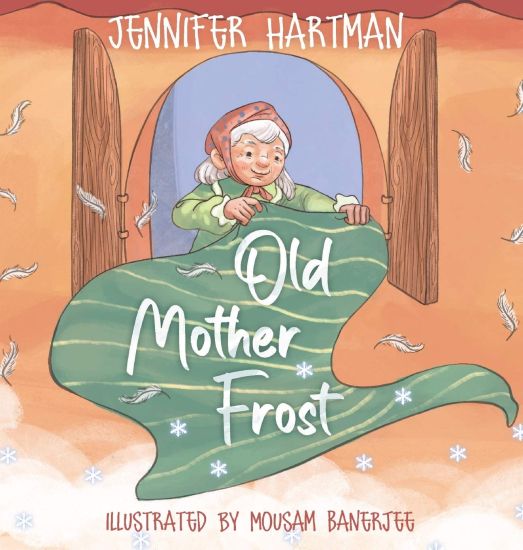
Blurb Old Mother Frost is a Yuletide story of an ancient Norse goddess who sleeps all year long, waking only to make sure children are happy, healthy and festive during the longest and coldest nights of the year (the 12 days of Yuletide). Background Old Mother Frost is a Yuletide book based on the Norse pagan origins of the holidays. It focuses on the folklore and mythologies surrounding the pre-Christian goddess named Frau Holle. For the purpose of the children's book she goes by her English names: Old Mother Frost and Mother Hulda. The illustrations show that ALL children are included in the holidays.Bonus Page: After the story ends there is an educational 'Fun Fact' page briefly highlighting some of the modern holiday traditions that are traced back to pagan customs.
Old Mother Frost

Old Mother Frost

Jennifer Hartman

Pagan Kids
2020
pokkari
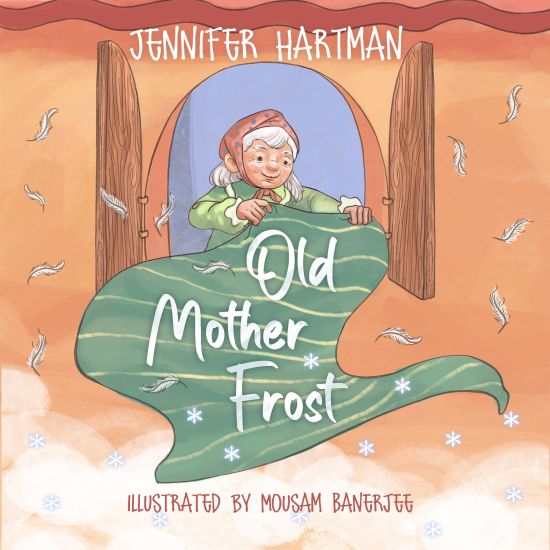
Blurb Old Mother Frost is a Yuletide story of an ancient Norse goddess who sleeps all year long, waking only to make sure children are happy, healthy and festive during the longest and coldest nights of the year (the 12 days of Yuletide). Background Old Mother Frost is a Yuletide book based on the Norse pagan origins of the holidays. It focuses on the folklore and mythologies surrounding the pre-Christian goddess named Frau Holle. For the purpose of the children's book she goes by her English names: Old Mother Frost and Mother Hulda. The illustrations show that ALL children are included in the holidays.Bonus Page: After the story ends there is an educational 'Fun Fact' page briefly highlighting some of the modern holiday traditions that are traced back to pagan customs.
Juicy Mother

Juicy Mother

Jennifer Camper

Soft Skull Press
2004
nidottu
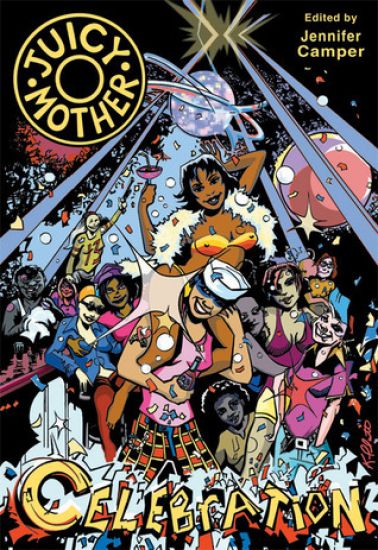
Featuring works by and about women, queers, and people of color, this provocative collection of graphic stories includes contributions by Howard Cruse, Alison Bechdel, Diane DiMassa, Ivan Velez, Ariel Schrag, Robert Kirby, and Joan Hilty, among others. Original.