
Kirjahaku
Etsi kirjoja tekijän nimen, kirjan nimen tai ISBN:n perusteella.
1000 tulosta hakusanalla Jennifer N. Wunder

Keats, Hermeticism, and the Secret Societies
Jennifer N. Wunder
Ashgate Publishing Limited
2008
sidottu
Jennifer Wunder makes a strong case for the importance of hermeticism and the secret societies to an understanding of John Keats's poetry and his speculations about religious and philosophical questions. Although secret societies exercised enormous cultural influence during the late eighteenth and early nineteenth centuries, they have received little attention from Romantic scholars. And yet, information about the societies permeated all aspects of Romantic culture. Groups such as the Rosicrucians and the Freemasons fascinated the reading public, and the market was flooded with articles, pamphlets, and books that discussed the societies's goals and hermetic philosophies, debated their influence, and drew on their mythologies for literary inspiration. Wunder recovers the common knowledge about the societies and offers readers a first look at the role they played in the writings of Romantic authors in general and Keats in particular. She argues that Keats was aware of the information available about the secret societies and employed hermetic terminology and imagery associated with these groups throughout his career. As she traces the influence of these secret societies on Keats's poetry and letters, she offers readers a new perspective not only on Keats's writings but also on scholarship treating his religious and philosophical beliefs. While scholars have tended either to consider Keats's aesthetic and religious speculations on their own terms or to adopt a more historical approach that rejects an emphasis on the spiritual for a materialist interpretation, Wunder offers us a middle way. Restoring Keats to a milieu characterized by simultaneously worldly and mythological propensities, she helps to explain if not fully reconcile the insights of both camps.
Jennifer Wunder makes a strong case for the importance of hermeticism and the secret societies to an understanding of John Keats's poetry and his speculations about religious and philosophical questions. Although secret societies exercised enormous cultural influence during the late eighteenth and early nineteenth centuries, they have received little attention from Romantic scholars. And yet, information about the societies permeated all aspects of Romantic culture. Groups such as the Rosicrucians and the Freemasons fascinated the reading public, and the market was flooded with articles, pamphlets, and books that discussed the societies's goals and hermetic philosophies, debated their influence, and drew on their mythologies for literary inspiration. Wunder recovers the common knowledge about the societies and offers readers a first look at the role they played in the writings of Romantic authors in general and Keats in particular. She argues that Keats was aware of the information available about the secret societies and employed hermetic terminology and imagery associated with these groups throughout his career. As she traces the influence of these secret societies on Keats's poetry and letters, she offers readers a new perspective not only on Keats's writings but also on scholarship treating his religious and philosophical beliefs. While scholars have tended either to consider Keats's aesthetic and religious speculations on their own terms or to adopt a more historical approach that rejects an emphasis on the spiritual for a materialist interpretation, Wunder offers us a middle way. Restoring Keats to a milieu characterized by simultaneously worldly and mythological propensities, she helps to explain if not fully reconcile the insights of both camps.

Joey - Wie ein blindes Pferd uns Wunder sehen ließ
Jennifer Marshall Bleakley
Gerth Medien GmbH
2020
nidottu



Starke Mädchen, starke Gefühle - Das 5-Minuten-Tagebuch für wundervolle Mädchen ab 12
Jennifer Herzog
Impuls Verlag
2024
nidottu
Hiking Women: A Guided Journal for Solo Female Wanderers
Jennifer Doehring
Countryman Press
2024
nidottu
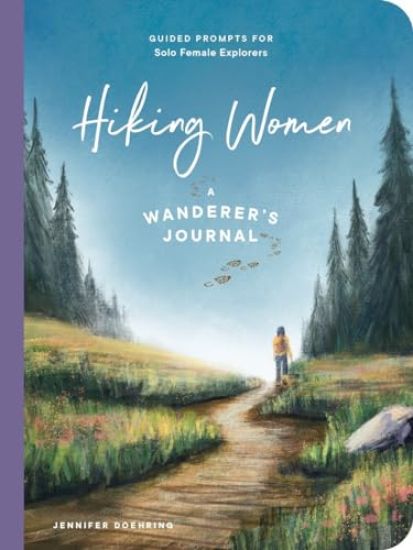
More and more women are hitting the trails by themselves and embracing their time in nature. They're out for the afternoon, for an overnight, and are often inspired to aim for longer, more extensive backpacking trips. Solo hiking can be daunting, though, especially for women, which is where this journal comes in. In it, Jennifer Doehring encourages readers to examine their feelings, to chronicle their journeys, and to celebrate their accomplishments. Delightful illustrations and enlightening nature facts complement prompts such as: At what moment did you most feel yourself? Have you seen any wild animals? Did you stop and chat with other hikers? She also includes fun facts and provides guidance on important skills such as reading maps, tying knots, and recognizing weather patterns. Designed for both beginners and more seasoned explorers, this unique book will remain a testament to nature and the power of women long after the trail is complete.
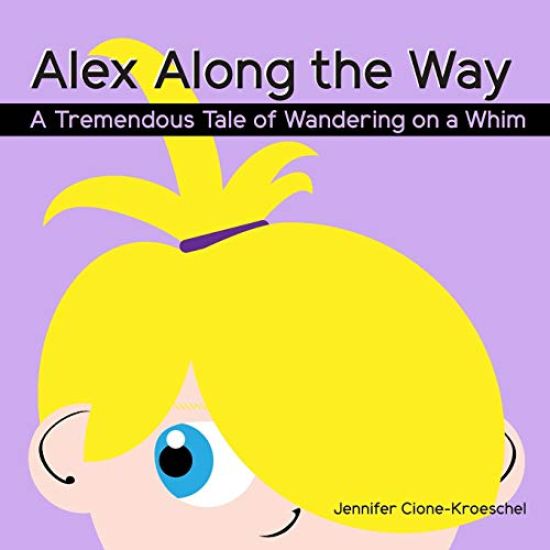
Alex Along the Way: A Tremendous Tale of Wandering on a Whim
Jennifer Cione-Kroeschel
Createspace Independent Publishing Platform
2018
nidottu

Shoreline Hikers: Guided Prompts for Wandering Near Water
Jennifer Doehring
Countryman Press
2025
nidottu
Hiking by a body of water can be exhilarating in a different way from reaching a summit view, and being near water often inspires a closer connection with the surrounding environment. In this new Wanderer's Journal, writers and doodlers alike will enjoy taking the time to consider their feelings and experiences, soaking in these scenes of natural splendor with beautiful quotes, guided prompts, and helpful facts. For example: Water sounds can influence brain activity, promoting alpha waves associated with a relaxed but alert state. What peaceful thoughts did water sounds stimulate today? Imagine what this waterway looked like 100 years ago. In what ways do you think it has changed, and what stories might it tell from its past? Name every shade of blue that you see. Get artsy Delightful hand-drawn illustrations will appeal to readers of all ages and skill level and help them document and remember their very own hiking story.
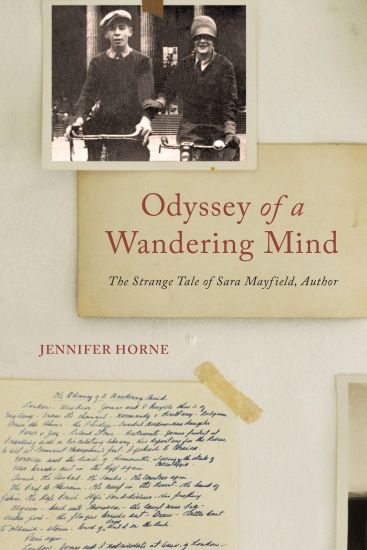
A carefully rendered portrait of a brilliant but troubled daughter of the Old South who struggled against the conventions of gender, class, family, and ultimately of sanity, yet survived to define a creative life of her own Sara Mayfield was born into Alabama’s governing elite in 1905 and grew up in a social circle that included Zelda Sayre, Sara Haardt, and Tallulah and Eugenia Bankhead. After winning a Goucher College short story contest judged by H. L. Mencken, Mayfield became friends with Mencken and his circle, then visited with Scott and Zelda Fitzgerald and hobnobbed with the literati while traveling in Europe after a failed marriage. Returning to Alabama during the Depression, she briefly managed the family landholdings before departing for New York City where she became involved in the theater. Inventing a plastic compound while working on theatrical sets, she applied for a patent and set her sights on a livelihood as an inventor and businesswoman. With the advent of World War II, Mayfield returned to her family home in Tuscaloosa where she expanded her experiments, freelanced as a journalist, and doggedly pursued a bizarre series of military and intelligence schemes, prompting temporary hospitalization. In 1945, she mingled with a host of cultural figures, including Frida Kahlo, Diego Rivera, Orson Welles, Rita Hayworth, and even a young John F. Kennedy, while reporting on the creation of the United Nations from Mexico and California. Back in Tuscaloosa after the war, however, she struggled to find her way with both work and family, becoming increasingly paranoid about perceived conspiracies arrayed against her. Finally, her mother and brother committed her to Bryce Hospital for the Insane, where she remained for the next seventeen years. Throughout her life, Mayfield kept journals, wrote fiction, and produced thousands of letters while nursing the ambition that had driven her since childhood: to write and publish books. During her confinement, Mayfield assiduously recorded her experiences and her determined efforts—sometimes delusional, always savvy—to overturn her diagnosis and return to the world as a sane, independent adult. At 59, she was released from Bryce and later obtained a decree of “having been restored to sanity,” enabling her to manage her own financial affairs and to live how and where she pleased. She went on to publish noteworthy literary biographies of the Menckens and the Fitzgeralds plus a novel based on the life of Mona Lisa, finally achieving her quest to become the author of books and her own life. In Odyssey of a Wandering Mind, noted writer Jennifer Horne draws on years of research and an intimate understanding of the vast archive Sara Mayfield left behind to sensitively render Mayfield’s struggle to move through the world as the person she was—and her ultimate success in surviving to define the terms of her story.
A carefully rendered portrait of a brilliant but troubled daughter of the Old South who struggled against the conventions of gender, class, family, and ultimately of sanity, yet survived to define a creative life of her own Sara Mayfield was born into Alabama’s governing elite in 1905 and grew up in a social circle that included Zelda Sayre, Sara Haardt, and Tallulah and Eugenia Bankhead. After winning a Goucher College short story contest judged by H. L. Mencken, Mayfield became friends with Mencken and his circle, then visited with Scott and Zelda Fitzgerald and hobnobbed with the literati while traveling in Europe after a failed marriage. Returning to Alabama during the Depression, she briefly managed the family landholdings before departing for New York City where she became involved in the theater. Inventing a plastic compound while working on theatrical sets, she applied for a patent and set her sights on a livelihood as an inventor and businesswoman. With the advent of World War II, Mayfield returned to her family home in Tuscaloosa where she expanded her experiments, freelanced as a journalist, and doggedly pursued a bizarre series of military and intelligence schemes, prompting temporary hospitalization. In 1945, she mingled with a host of cultural figures, including Frida Kahlo, Diego Rivera, Orson Welles, Rita Hayworth, and even a young John F. Kennedy, while reporting on the creation of the United Nations from Mexico and California. Back in Tuscaloosa after the war, however, she struggled to find her way with both work and family, becoming increasingly paranoid about perceived conspiracies arrayed against her. Finally, her mother and brother committed her to Bryce Hospital for the Insane, where she remained for the next seventeen years. Throughout her life, Mayfield kept journals, wrote fiction, and produced thousands of letters while nursing the ambition that had driven her since childhood: to write and publish books. During her confinement, Mayfield assiduously recorded her experiences and her determined efforts—sometimes delusional, always savvy—to overturn her diagnosis and return to the world as a sane, independent adult. At 59, she was released from Bryce and later obtained a decree of “having been restored to sanity,” enabling her to manage her own financial affairs and to live how and where she pleased. She went on to publish noteworthy literary biographies of the Menckens and the Fitzgeralds plus a novel based on the life of Mona Lisa, finally achieving her quest to become the author of books and her own life. In Odyssey of a Wandering Mind, noted writer Jennifer Horne draws on years of research and an intimate understanding of the vast archive Sara Mayfield left behind to sensitively render Mayfield’s struggle to move through the world as the person she was—and her ultimate success in surviving to define the terms of her story.
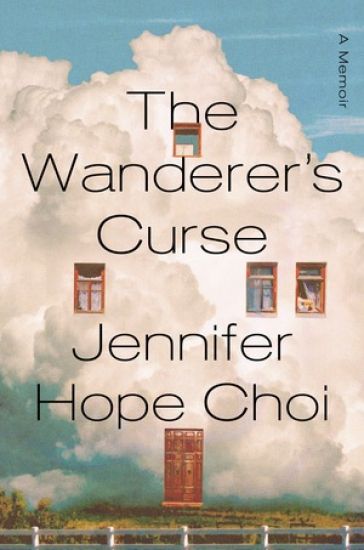
When Jennifer Hope Choi first stumbled upon the "curse" known as yeokmasal--an allegedly inheritable affliction causing one to roam farther and farther from home--she immediately consulted her mother. "Oh yeah," Umma quipped. "I have that." Technically this wasn't a revelation. Since 2007, the no-nonsense open-heart surgery nurse had moved suddenly from the Golden State to the Last Frontier, shuttling over the next decade through seven states.For much of her adulthood, Choi had fancied herself nothing like her immigrant mother, late-blooming vagabond spirit and all--until life in Brooklyn imploded, spurring her to relocate to South Carolina and reckon with startling truths. Artmaking had left her in debt, single, and jobless. Questions hovered, gathering ragged like fractus clouds: Was it time to give up writing? Would she ever have a place of her own to call home? Or was she doomed to bunk up with Umma in the Deep South indefinitely?This probing memoir follows Choi through her many former homes, from a crumbling Chinatown tenement to a haunted museum in Georgia. Connections emerge, between her curious trajectory and idiosyncratic Korean identity narratives: a mystical Korean dog breed, pro golfers, modern Korean cults, the four pillars of destiny, and Korean American art. One question lingers throughout her search: What might be gained from living in residence with uncertainty?Told with whip-smart sensibility, The Wanderer's Curse is an electric mother-daughter story, exploring ideas of belonging, self-determination, and possibility, leaving readers to wonder what we take with us generation to generation, what we wish we could leave behind, and how we move on.

The Wanderer's Journal: Guided Prompts for Hikers, Backpackers, and Explorers
Jennifer Doehring
Countryman Press
2024
nidottu
Hiking is a powerful and positive activity. Wholesome, peaceful, and restorative, it offers a perfect opportunity to reflect, quiet the mind, and soothe the soul. In The Wanderer's Journal, Jennifer Doehring invites you to cherish and record the small but magical details that make each outing unique. Inspiring quotes and charming line illustrations immerse you in the environment, while journaling prompts enable you to soak in every element of the outdoors. Contemplate how the environment affects you and your wellbeing and learn to draw connections between yourself and the surrounding ecosystem. Use this book to really see, be present in, and capture special moments. Complete with a hiking index so no trek goes forgotten, your collected field notes will serve as a valuable record of your time spent wandering. Get out there, explore, and deepen your appreciation for the natural world with this trusty trail companion

Writer and founder of national online support group Caregiver Collective and herself a caregiver Jennifer N. Levin offers a comprehensive look at our current culture of care--with an emphasis on Millennial caregivers--providing a roadmap to solutions and an urgent call for policy change.More than 10 million Millennials are caring for aging parents before they've been able to fully launch their own careers and consider starting their own families, and that's not including the incalculable numbers of people affected by long COVID. Yet no one is naming this problem, talking about how it feels, or offering resources to ease the pressure of Millennial caregiver burnout. Jennifer N. Levin was 32 when her father was diagnosed with a rare degenerative illness. As she struggled with few resources and little support, she created Caregiver Collective, a national online support group for Millennial caregivers. Now Levin brings the wisdom from her own experience and that of her support group to Why Us?, a comprehensive look at this generation's culture of care. Filled with the voices of caregivers, expert commentary and research, and a roadmap to the solutions that can begin helping people now as well as build the policies of the future, Why Us? addresses:- The urgency of caregiving: With earlier (and better) detection of disease, along with a rise in chronic illness, the average age of a care recipient is younger than before--as is the average caregiver age.- The financial costs: Millennials spend a higher percentage of their income on caregiving and carry unprecedented student loan debt, adding to fiscally devastating out-of-pocket costs for care.- Ambiguous loss for caregivers: Caregiving can dictate caregivers' lifestyle choices; Millennial caregivers may grieve the lives they 'thought' they'd have.- The impact of COVID and long COVID: We're in a period of fluctuation with flex and remote work, which makes work and caregiving more compatible. How can we make sure that working caregivers' needs are honored?- Strategies for getting help on the individual level and in relation to policy.We, as a culture and society, talk about caregiving broadly-it's something many of us may think, "not us" or "we'll figure that out later." But caregiving is an increasingly urgent crisis. Why Us? brings this crisis to the fore, illuminates the real stories and people who are most affected, underscores the need for shifts in policy and giving support where it is most needed, and sounds a clarion call for change.

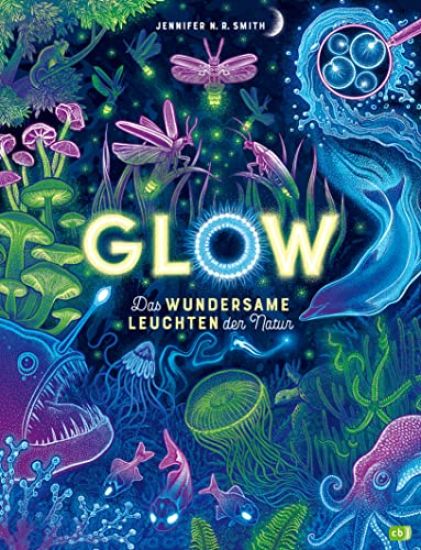
The astonishing phenomenon of bioluminescence is brought to life in vivid detail by medical illustrator Jennifer N. R. Smith. The natural world is an infinite source of wonder and the phenomenon of bioluminescence is no exception. Glow explores the remarkable way animals and plants light up of their own accord, and what we can learn from their incredible glow-in-the-dark abilities. Written and illustrated in minute detail by medical illustrator Jennifer N. R. Smith, Glow takes readers on a magical journey to the deepest ocean trenches, through winding networks of caves and into the darkest corners of the forest to experience the wonder of bioluminescence. The first in a series of non-fiction children’s books exploring natural phenomena, Glow introduces readers to creatures that glow in the dark including anglerfish, firefly squid, lanternfish, the glowing sucker octopus, Flor de Coco and Honey fungi, as well as hosts of fireflies and glow-worms. It also celebrates the scientists and deep-sea explorers who, at great personal risk, have travelled to the ocean floor to study bioluminescence. Combining natural history with STEM, Glow considers how bioluminescence works and what we can learn from it, including ways to prevent climate change and tackle pollution. Printed using UV printing techniques, the illustrations appear luminous on the page, making for a truly awe-inspiring reading experience. Shortlisted for the AOI World Illustration Awards
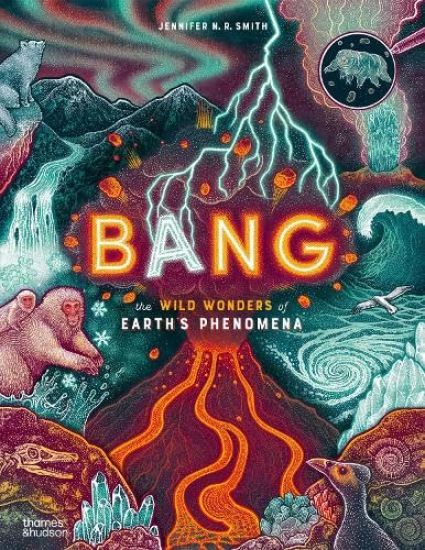
Using luminous HUV printing, Bang immerses readers in the awe-inspiring phenomena of the natural world. In this follow up to the highly acclaimed Glow, award-winning illustrator Jennifer N. R. Smith takes us on a breathtaking tour of the planet’s most astonishing natural phenomena - from explosive volcanoes and geysers to dancing lights in the night sky. The Earth may seem solid and stationary but deep beneath its surface it is constantly changing, twisting and transforming. Its unbridled power is what generates surreal natural phenomena and dramatic landscapes, as well as devastating natural disasters. In this lavishly illustrated book, young readers will discover the explosive power of volcanoes, a cave filled with giant crystals, a hot spring pool filled with bathing snow monkeys, dinosaurs hidden between layers of rock and an incredible ecosystem that can survive the boiling hot waters around hydrothermal vents, as well as extreme weather and incredible optical phenomena, including auroras, light pillars and sun dogs. Hyper-detailed, glorious and awe-inspiring in and of itself, this book will inspire young earth scientists to see the wonder in the world around them.