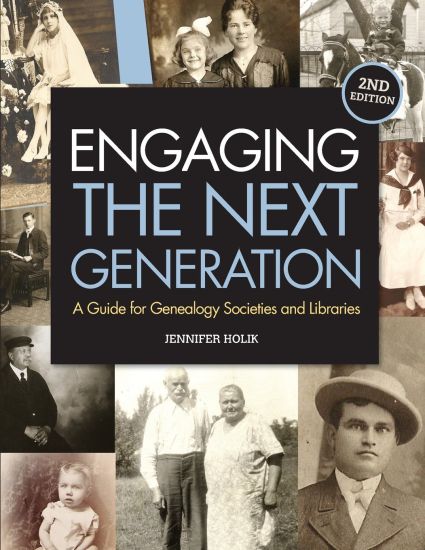
Engaging the Next Generation is written specifically for groups looking to create youth programs. This is a two-part book featuring one-hour and half-day youth program examples and the complete 4th-8th grade Branching Out set of thirty lessons. Part I allows genealogy societies and libraries to create youth programs based on example outlines, example speaking text, and project ideas in the book. Part II allows genealogy societies and libraries to build larger programs using the thirty lessons provided in the Branching Out series. Part II can also be used to teach beginning genealogy in public schools.
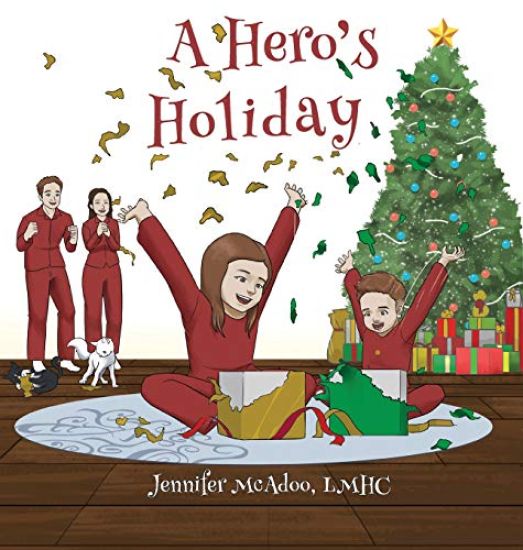
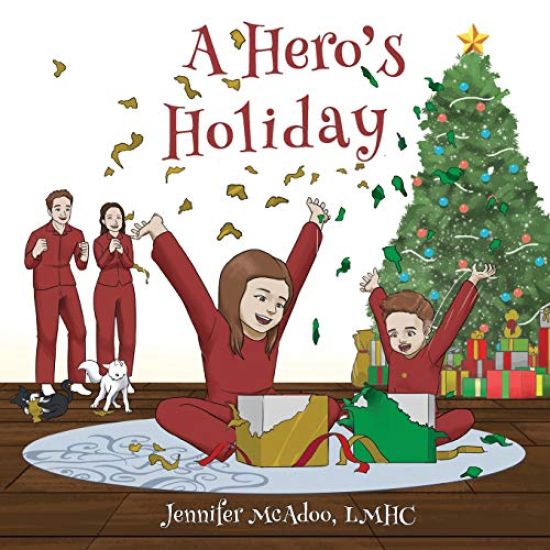
A hero is defined as an individual who is brave, courageous, and someone to look up to. Haddie and Bubba's daddy is a hero, and he needs to work on Christmas. This leaves Haddie feeling down in the dumps. But soon she learns that Santa makes special trips to all hero families. All you need to do is ask Special request form included.
A hero is defined as an individual who is brave, courageous, and someone to look up to. Haddie and Bubba's daddy is a hero, and he needs to work on Christmas. This leaves Haddie feeling down in the dumps. But soon she learns that Santa makes special trips to all hero families. All you need to do is ask Special request form included.
The Elm Creek Quilters are home for the holidays in this heartwarming Christmas story from New York Times bestselling author Jennifer Chiaverini.For the Elm Creek Quilters, the day after Thanksgiving marks the start of the quilting season, a time to gather at Elm Creek Manor and spend the day stitching holiday gifts for loved ones. This year, in keeping with the season's spirit of gratitude, Master Quilter Sylvia Bergstrom Compson Cooper is eager to revive a cherished family tradition. A recent remodeling of the manor's kitchen unearthed a cornucopia that once served as the centerpiece of the Bergstrom family's holiday table. Into it, each Bergstrom would place an object that symbolized something he or she was especially thankful for that year. On this quilter's holiday, Sylvia has invited her friends to continue the tradition by sewing quilt blocks that represent their thankfulness and gratitude. As each quilter explains the significance of her carefully chosen block, stories of love and longing for family and friends emerge—feelings that are also expressed in the gifts they work on throughout the day. As an early winter storm blankets Elm Creek Manor in heavy snow, the quilters find new meanings in their best-loved traditions and new reasons to be thankful. A Quilter's Holiday is a story of holiday spirit, in its truest, most generous sense.
It's Christmas in Grey's Harbor, but glad tidings aren't the only things blowing in from offshore. A nor'easter blasts the sleepy seaside town, bringing with it snow, wind, heartache, and happiness.
"Prepare to have your heartstrings tugged Pure Christmas delight."--Lori Wilde, New York Times bestselling author on An Alaskan Christmas Can a hometown Christmas bring together these two polar opposites?After traveling to all corners of the globe, Isla Wakefield has returned home to celebrate Christmas with her adoptive family. The gorgeous Alaskan wilderness is the perfect place to recharge before moving on to her next adventure--whatever that may be. Too bad that being home means once more butting heads with Chief Petty Officer Aaron Segura, Port Serenity's resident buzzkill.Isla's fearless spirit has always infuriated Aaron--but fascinated him, too. Having lost his sister years ago, he's never understood how some people can live so recklessly. But after a terrifying ice-climbing accident leaves Isla with amnesia, she and Aaron both see each other in a brand-new light. Forgetting the pain of her past makes Isla fearless in a completely different way. She's not afraid to show Aaron exactly how she feels, yet he can't help but wonder...will this temporary change of mind lead to a permanent change of heart?Bonus NovellaIn Love in the Forecast, meteorologist Monica Mallard signs up for Port Serenity's annual navigation contest as a distraction from recent heartbreak. But when she's paired with silver fox Captain Keith Beaumont, Monica finds the second chance she never could have predicted.A Wild Coast NovelBook 1: Sweet Home Alaska
Elizabeth Bennet is a dedicated choral director and teacher at Meryton Academy for the Performing Arts and William Darcy is the aloof CEO of Darcy Enterprises. The two of them met when unfortunate circumstances brought them together during a summer music festival in Chicago where tempers flared and unpleasant words were exchanged. Find out what happens when their paths cross again in December. Will their animosity continue, or will their reunion turn out to be A Holiday to Remember?NOTE: A Bonus Regency short story called "Twelve Days" is included in this book. What could be better than a little holiday humor when the Darcys are besieged with twelve days of unusual gifts?
This is the story of Flying Tiger Robert Brouk, a Flight Leader in the 3rd Squadron of the American Volunteer Group. In the months prior to Pearl Harbor, until the disbandment of the American Volunteer Group in July 1942, the Flying Tigers valiantly fought the Japanese over the skies of Burma and China. This story contains Robert's complete war diary. The diary outlines his dramatic experiences from the moment he enlisted in the American Volunteer Group to its disbandment. His story also contains snapshots of the life he led upon his return to his home in Cicero, Illinois; a graphic account of his untimely death; and accounts of how Robert has been remembered through the years.
Stories can save us. Stories have the power to heal. Stories help us preserve the past and provide hope that history will not repeat itself. For some cultures, storytelling is the primary method for transmitting a family or group's collective history. For others, writing the stories to share with family or the world, is the method. When we write, we must ask ourselves, what writing really matters? Consider the words you write as your legacy. Find ways to share your writing to document your life, to remember those who are no longer here, and to honor those who survived a time when the world was collapsing in chaos. All the questions researchers need to start writing the stories of World War II from a U.S. perspective or overseas theater of war perspective, to honor those who lived in those chaotic years, are included in this volume. This book contains more than 500 writing prompts covering multiple themes for writers in the U.S. and overseas. This is the most important writing reference guide researchers need to begin writing the stories of World War II.
Finding the Answers. This is what each person who starts WWII research hopes to accomplish. We often begin with many questions, to which answers are often elusive. This is often the case when those questions concern those who died in the war or are still considered Missing In Action (MIA). Who do we ask about our family member's service, especially when most of our WWII-era family members are gone? What records exist to help find the answers? The Individual Deceased Personnel File (IDPF) is the most important file you need to help you find the answers to your questions regarding those who died in service. The IDPF documents the death, and temporary and final burial details, of WWII service members from all military branches. This quick guide introduces you: - What the IDPF is and is not. - To the questions about military service and death you may be able to answer through the pages of this file. - The history of the men who created the records. - Information on obtaining the file and other records. - Where to go to learn more. Are you ready to Find the Answers about your family's war dead?
Finding the Answers. This is what each person who starts WWII research hopes to accomplish. We often begin with many questions, to which answers are often elusive. The most logical place to search for answers to our World War II questions is online. There is a common misconception that all military records exist online. While many records are digitized and placed on line each day, the fact is, most of the records required are in paper format in repositories and archives. Requiring records that exist only on paper may leave you wondering, what can I find online? How can I find information easily? This quick guide introduces you to: - Reasons to research WWII service online. - What records may be available online. - Techniques to make searching easier. - A research form to track websites you've visited. - A sample of websites on which you can find information. - Checklist of specific databases and indexes. - Where to go to learn more. Are you ready to Find the Answers about your family's military service online?
World War II research is surrounded by stories and myths which often give people the perception they cannot obtain any information about military service. - Have you heard, 'All the records burned ' - Have you read on a website that you must be the next-of-kin to receive information? - Do you think sending in one form to request records gives you everything available? - Do you know there are additional records at NPRC, that staff will not search for you, that are required for Army and Army Air Forces research? - Do you think starting your search in unit records will provide all the answers? Did you know there are many records available you can obtain by visiting the archives or hiring a research firm like mine? Records the archives will not search for you to reconstruct service history? If records exist, what is the problem? Why haven't researchers and family members been able to reconstruct service history easily on their own? The problem is, any books or guides produced by military museums, archives, libraries, and other groups, talk only about the fire, what you cannot get, and a few major record sources. Usually these materials stress searching unit level records, which is not the place to start research. None of these guides explains through a process, how to use other resources and records to reconstruct service history for all branches. In this guide you will learn everything you need to know to start your World War II research, even if the records burned. Armed with the information you discover, you can find the answers to your military research questions.
Finding the Answers. Are you seeking answers to questions about your family's female World War II service member or civilian worker? Women played crucial roles during World War II after the Japanese attacked Pearl Harbor. Men felt an obligation to join the military and rushed to enlist. Enlistment and later the draft, required men to vacate jobs on the home front. As a result, women were recruited and trained to take over jobs left by men. The military also began programs for women to volunteer to aid the war effort, or in some cases, join the military as enlisted personnel and officers. This quick guide introduces you to: - A brief history of the shift of roles women played at home and in service. - Histories of the components of each military branch in which women served. - Histories of the civilian organizations in which women served - Tips for locating information to begin a search for records with checklists. Are you ready to start searching for information on your female service member?
Congratulations with taking a first step on a journey to learn more about your World War II soldier's, sailor's, airman's, or Marine's military service and walk in their footsteps in Europe. World War II travel is done for many reasons. There are people who enjoy seeing the major battle sites and hearing history of the more famous units who helped win the war. Veterans still travel to Europe to walk where they fought, meet old friends and make new ones, and attend commemorative events. There are some who unexpectedly end up at a cemetery or battlefield and take an interest in the war. Finally, there are many who travel to heal their souls and find answers or closure to questions they have had about their father or mother's service. Whatever your reason for World War II travel, I invite you to be open to anything that shows up on your journey. This quick guide introduces you to: - Doing your homework. Helping you learn about your service member's history prior to travel. - Trip planning tips. - Considerations for hiring a travel agent, traveling with a tour group, or traveling on your own. - Learning about living history in Europe. - Ways to preserve the details and memories of your trip. - Ways to contribute to preserving World War II history in Europe. Are you ready to travel in your soldier's footsteps in Europe?
Have you ever attempted World War II research or read any recommended beginning genealogy book and hit a brick wall because of the lack of records available online, or because all the records burned? Researchers have been conditioned through many books and websites to believe there is no way to research a soldier's service if the records burned in the 1973 fire at the National Personnel Records Center in St. Louis, Missouri. Researching the service of a World War II soldier can take many winding paths, and there are many starting points from which the research and analysis can begin. However, before we can begin our journey and learn the first part of the research strategy, we must first understand some of the roadblocks and questions that arise during research. This quick guide introduces you: - Part one of the research strategy. - Resources you can use to locate information. - How to request military records. - Where to find records. - Records used to reconstruct service history. Are you ready to research your soldier's service?