Kirjojen hintavertailu. Mukana 12 390 323 kirjaa ja 12 kauppaa.

Kirjahaku

Etsi kirjoja tekijän nimen, kirjan nimen tai ISBN:n perusteella.

501 tulosta hakusanalla Jerald D. Harris; Andrew R.C. Milner

Tracks in Deep Time

Tracks in Deep Time

Jerald D. Harris; Andrew R.C. Milner

University of Utah Press,U.S.
2016
nidottu
In February 2000, while excavating his property in St. George, Utah, Sheldon Johnson turned over a piece of ground and discovered a fully preserved dinosaur footprint. That track was the first of many fossils to be uncovered. Five years later, the St. George Dinosaur Discovery Site (SGDS) at Johnson Farm was established to preserve one of the richest and oldest dinosaur-age fossil sites in Utah.Tracks in Deep Time presents, for the first time, an engaging, thoroughly readable account of the history, geology, and paleontology of this important site. Two hundred million years ago, Lake Dixie covered this area. Within its waters and along its shores, a diverse ecosystem of organisms thrived, leaving behind thousands of footprints and other fossils preserved in layers of rock. Unusual fossils found here include the world's largest collection of tracks left by swimming dinosaurs, and one of only six traces known to have been made by a sitting, meat-eating dinosaur. With approachable text and lavish, full-color photographs and illustrations, Jerald Harris and Andrew Milner describe how geologists and paleontologists have painstakingly reconstructed a vivid snapshot of life from the Early Jurassic.
Economics for Investment Decision Makers

Economics for Investment Decision Makers

Christopher D. Piros; Jerald E. Pinto; Larry Harris

John Wiley Sons Inc
2013
sidottu
The economics background investors need to interpret global economic news distilled to the essential elements: A tool of choice for investment decision-makers. Written by a distinguished academics and practitioners selected and guided by CFA Institute, the world’s largest association of finance professionals, Economics for Investment Decision Makers is unique in presenting microeconomics and macroeconomics with relevance to investors and investment analysts constantly in mind. The selection of fundamental topics is comprehensive, while coverage of topics such as international trade, foreign exchange markets, and currency exchange rate forecasting reflects global perspectives of pressing investor importance. Concise, plain-English introduction useful to investors and investment analystsRelevant to security analysis, industry analysis, country analysis, portfolio management, and capital market strategyUnderstand economic news and what it meansAll concepts defined and simply explained, no prior background in economics assumedAbundant examples and illustrationsGlobal markets perspective
Archaeology of Northern Florida, A.D. 200-900

Archaeology of Northern Florida, A.D. 200-900

Jerald T. Milanich; et al

University Press of Florida
1997
nidottu
Focusing on the pre-Columbian south east of the United States, the authors draw on north Florida archaeological excavations and site surveys to reveal the Weeden Island culture and its ceramics. The McKeithen site, a multi-mound village site, provides information on native society culture.
The One True God, the Two Kingdoms, and the Three Estates

The One True God, the Two Kingdoms, and the Three Estates

Jerald Dulas; James D. Heiser

Createspace Independent Publishing Platform
2011
nidottu
"The pressing problems of our age are fundamentally theological." In this essay presented to the 2011 Synod of the Evangelical Lutheran Diocese of North America, Bishop Heiser examines the plight of the West as it confronts the threat of the Islamic Jihad. As Heiser explains, the danger which confronts the West is exacerbated by the spiritual weakness of the West.
Economics for Investment Decision Makers

Economics for Investment Decision Makers

Christopher D. Piros; Jerald E. Pinto

John Wiley Sons Inc
2013
nidottu
The economics background investors need to interpret global economic news distilled to the essential elements: A tool of choice for investment decision-makers. Written by a distinguished academics and practitioners selected and guided by CFA Institute, the world’s largest association of finance professionals, Economics for Investment Decision Makers is unique in presenting microeconomics and macroeconomics with relevance to investors and investment analysts constantly in mind. The selection of fundamental topics is comprehensive, while coverage of topics such as international trade, foreign exchange markets, and currency exchange rate forecasting reflects global perspectives of pressing investor importance. Concise, plain-English introduction useful to investors and investment analystsRelevant to security analysis, industry analysis, country analysis, portfolio management, and capital market strategyUnderstand economic news and what it meansAll concepts defined and simply explained, no prior background in economics assumedAbundant examples and illustrationsGlobal markets perspective
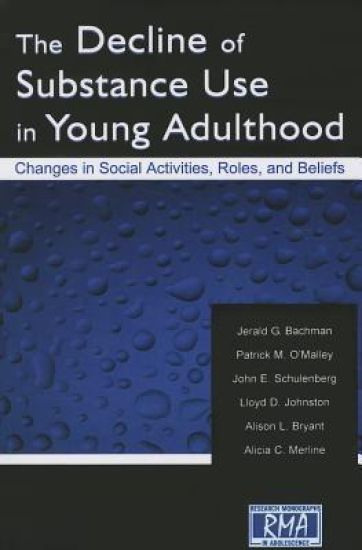
The Decline of Substance Use in Young Adulthood

The Decline of Substance Use in Young Adulthood

Jerald G. Bachman; Patrick M. O'Malley; John E. Schulenberg; Lloyd D. Johnston; Alison L. Bryant; Alicia C. Merline

Psychology Press Ltd
2013
nidottu
This book is intended as a thoughtful extension to Bachman et al.'s well-received monograph Smoking, Drinking, and Drug Use in Young Adulthood. That volume showed that the new freedoms of young adulthood lead to increases in substance use, while the responsibilities of adulthood--marriage, pregnancy, parenthood--contribute to declines in substance use. The Decline of Substance Use in Young Adulthood examines how the changes in social and religious experiences and in attitudes toward substance use observed among young adults are related to changes in substance use, family transitions, living arrangements, college experience, and employment. The research uses a variety of analysis techniques and is based on the nationwide Monitoring the Future surveys of more than 38,000 young people followed from high school into adulthood. The research covers the last quarter of the 20th century, a period when drug use and views about drugs underwent many important changes. In spite of these shifts, the overall patterns of relationships reported in this book are impressive in their consistency across time and in their general similarity for men and women.Specific questions addressed include the following: *As young adults experience new freedoms and responsibilities, do their attitudes about drugs change? *Do their religious views and behaviors shift? *Do their new freedoms and responsibilities affect the amount of time they spend in social activities, including going to parties and bars? *And how are any of these changes linked to changes in cigarette use, alcohol use, marijuana use, and cocaine use?
Smoking, Drinking, and Drug Use in Young Adulthood

Smoking, Drinking, and Drug Use in Young Adulthood

Jerald G. Bachman; Katherine N. Wadsworth; Patrick M. O'Malley; Lloyd D. Johnston; John E. Schulenberg

Psychology Press
1997
sidottu
Why do some young adults substantially change their patterns of smoking, drinking, or illicit drug use after graduating from high school? In this book, the authors show that leaving high school and leaving home create new freedoms that are linked to increases in the use of cigarettes, alcohol, marijuana, and cocaine. They also show that marriage, pregnancy, and parenthood create new responsibilities that are linked to decreases in drug use. The research is based on more than 33,000 young people followed from high school through young adulthood by the nationwide Monitoring the Future project. Every two years, participants reported on their drug use, as well as their schooling, employment, military service, living arrangements, marriages, pregnancies, parenthood, and even their divorces. The unique qualities of this research--large nationally representative samples, follow-ups extending up to 14 years beyond high school, and multiple approaches to analysis and data presentation--allowed the examination of several important influences simultaneously, while retaining much of the rich detail encountered in the real world. On the whole, the results are encouraging, suggesting that the potentials for change and improvement during the transition to adulthood are as important as the detrimental effects of problem behavior in adolescence. This research is a "must" read for anyone concerned with how new freedoms and responsibilities impact adolescents, young adults, and the use of licit and illicit drugs.
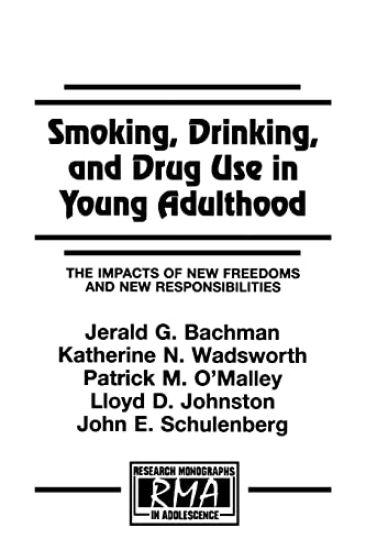
Smoking, Drinking, and Drug Use in Young Adulthood

Smoking, Drinking, and Drug Use in Young Adulthood

Jerald G. Bachman; Katherine N. Wadsworth; Patrick M. O'Malley; Lloyd D. Johnston; John E. Schulenberg

Psychology Press
1997
nidottu
Why do some young adults substantially change their patterns of smoking, drinking, or illicit drug use after graduating from high school? In this book, the authors show that leaving high school and leaving home create new freedoms that are linked to increases in the use of cigarettes, alcohol, marijuana, and cocaine. They also show that marriage, pregnancy, and parenthood create new responsibilities that are linked to decreases in drug use. The research is based on more than 33,000 young people followed from high school through young adulthood by the nationwide Monitoring the Future project. Every two years, participants reported on their drug use, as well as their schooling, employment, military service, living arrangements, marriages, pregnancies, parenthood, and even their divorces. The unique qualities of this research--large nationally representative samples, follow-ups extending up to 14 years beyond high school, and multiple approaches to analysis and data presentation--allowed the examination of several important influences simultaneously, while retaining much of the rich detail encountered in the real world. On the whole, the results are encouraging, suggesting that the potentials for change and improvement during the transition to adulthood are as important as the detrimental effects of problem behavior in adolescence. This research is a "must" read for anyone concerned with how new freedoms and responsibilities impact adolescents, young adults, and the use of licit and illicit drugs.
The Decline of Substance Use in Young Adulthood

The Decline of Substance Use in Young Adulthood

Jerald G. Bachman; Patrick M. O'Malley; John E. Schulenberg; Lloyd D. Johnston; Alison L. Bryant; Alicia C. Merline

Psychology Press
2001
sidottu
This book is intended as a thoughtful extension to Bachman et al.'s well-received monograph Smoking, Drinking, and Drug Use in Young Adulthood. That volume showed that the new freedoms of young adulthood lead to increases in substance use, while the responsibilities of adulthood--marriage, pregnancy, parenthood--contribute to declines in substance use. The Decline of Substance Use in Young Adulthood examines how the changes in social and religious experiences and in attitudes toward substance use observed among young adults are related to changes in substance use, family transitions, living arrangements, college experience, and employment. The research uses a variety of analysis techniques and is based on the nationwide Monitoring the Future surveys of more than 38,000 young people followed from high school into adulthood. The research covers the last quarter of the 20th century, a period when drug use and views about drugs underwent many important changes. In spite of these shifts, the overall patterns of relationships reported in this book are impressive in their consistency across time and in their general similarity for men and women.Specific questions addressed include the following: *As young adults experience new freedoms and responsibilities, do their attitudes about drugs change? *Do their religious views and behaviors shift? *Do their new freedoms and responsibilities affect the amount of time they spend in social activities, including going to parties and bars? *And how are any of these changes linked to changes in cigarette use, alcohol use, marijuana use, and cocaine use?
The Education-Drug Use Connection

The Education-Drug Use Connection

Jerald G. Bachman; Patrick M. O'Malley; John E. Schulenberg; Lloyd D. Johnston; Peter Freedman-Doan; Emily E. Messersmith

Psychology Press
2007
sidottu
Does success in school protect teenagers from drug use? Does drug use impair scholastic success? This book tackles a key issue in adolescent development and health - the education-drug use connection. The authors examine the links and likely causal connections between educational experiences, delinquent behavior, and adolescent use of tobacco, alcohol, marijuana, and cocaine.The book uses data from the University of Michigan's Monitoring the Future project. It focuses on a large and nationally representative sample of 8th grade students in the United States who were initially surveyed in 1991-1993 and then followed over the vitally important developmental period between ages 14 and 22. The volume uses a variety of statistical analysis techniques, and the findings can be understood by individuals with limited, as well as with extensive, backgrounds in research design. The findings convincingly demonstrate that if young people can be successful in school, it can improve a broad range of outcomes in their lives, not the least of which is their ability to resist pressures to use drugs. The book provides: a summary of the findings and conclusions; a review of relevant literature; a detailed discussion of the survey and analysis methods; the academic attainment of those in the longitudinal panel; the delinquent behaviors of panel members as they relate to measures of educational success; and the patterns of initiation, continuation, and cessation for each substance: cigarettes, marijuana, cocaine, and alcohol.This book is intended for anyone who deals with education and/or substance use, including educational, developmental, and social psychologists; sociologists; epidemiologists; educators; and policy makers. The analysis of panel survey data, using a variety of techniques, will also appeal to survey methodologists and students.
The Education-Drug Use Connection

The Education-Drug Use Connection

Jerald G. Bachman; Patrick M. O'Malley; John E. Schulenberg; Lloyd D. Johnston; Peter Freedman-Doan; Emily E. Messersmith

Psychology Press
2007
nidottu
Does success in school protect teenagers from drug use? Does drug use impair scholastic success? This book tackles a key issue in adolescent development and health - the education-drug use connection. The authors examine the links and likely causal connections between educational experiences, delinquent behavior, and adolescent use of tobacco, alcohol, marijuana, and cocaine.The book uses data from the University of Michigan's Monitoring the Future project. It focuses on a large and nationally representative sample of 8th grade students in the United States who were initially surveyed in 1991-1993 and then followed over the vitally important developmental period between ages 14 and 22. The volume uses a variety of statistical analysis techniques, and the findings can be understood by individuals with limited, as well as with extensive, backgrounds in research design. The findings convincingly demonstrate that if young people can be successful in school, it can improve a broad range of outcomes in their lives, not the least of which is their ability to resist pressures to use drugs. The book provides: a summary of the findings and conclusions; a review of relevant literature; a detailed discussion of the survey and analysis methods; the academic attainment of those in the longitudinal panel; the delinquent behaviors of panel members as they relate to measures of educational success; and the patterns of initiation, continuation, and cessation for each substance: cigarettes, marijuana, cocaine, and alcohol.This book is intended for anyone who deals with education and/or substance use, including educational, developmental, and social psychologists; sociologists; epidemiologists; educators; and policy makers. The analysis of panel survey data, using a variety of techniques, will also appeal to survey methodologists and students.
The American Southeast at the End of the Ice Age

The American Southeast at the End of the Ice Age

David G. Anderson; Derek T. Anderson; Katherine McMillan Barry; Kara Bridgman Sweeney; Samuel O. Brookes; Adam M. Burke; Stephen B. Carmody; Philip J. Carr; William A. Childress; I. Randolph Daniel; Ryan Duggins; Grayal E. Farr; Michael K. Faught; Brendan Fenerty; Jay D. Franklin; Lauren M. Franklin; J. Christopher Gillam; Joseph A. M. Gingerich; Jessi J. Halligan; Kandace D. Hollenbach; Vance T. Holliday; Thomas A. Jennings; K. C. Jones; Shawn A. Joy; Jerald Ledbetter; Greg J. Maggard; Steven M. Meredith; D. Shane Miller

THE UNIVERSITY OF ALABAMA PRESS
2022
sidottu
The definitive book on what is known about the Late Pleistocene and Early Holocene archaeological record in the Southeast The 1996 benchmark volume The Paleoindian and Early Archaic Southeast, edited by David G. Anderson and Kenneth E. Sassaman, was the first study to summarize what was known of the peoples who lived in the Southeast when ice sheets covered the northern part of the continent and mammals such as mammoths, saber-toothed cats, and ground sloths roamed the landscape.The American Southeast at the End of the Ice Age provides an updated, definitive synthesis of current archaeological research gleaned from an array of experts in the region. It is organized in three parts: state records, the regional perspective, and reflections and future directions. Chapters survey a diversity of topics including the distribution of the earliest archaeological sites in the region, chipped-stone tool technology, the expanding role of submerged archaeology, hunter-gatherer lifeways, past climate changes and the extinction of megafauna on the transitional landscape, and evidence of demographic changes at the end of the Ice Age. Discussion of the ethical responsibilities regarding the use of private collections and the relationship of archaeologists and the avocational community, insight from outside the Southeast, and considerations for future research round out the volume.
The Urban Guide To Success In Selling Anything Even Yourself: 25 Guiding Principles to Following Your Dream
"Instead of selling weed, I decided to sell everything else." If you can master the art of selling, and pushing through adversity you will have a breakthrough. This book will inspire and ignite a fire in your belly to stop settling and soar. In The Urban Guide to Success in Selling Anything Even Yourself you will see the principles Clyde has used and discovered through life and reading books like Napoleon's Hill "Think and Grow Rich" and many more. The guiding principles outlined in this book will shift the mindset and structure the life of each reader. As you learn to the Urban Guide To Success you will look forward to your next move.
Jerald the Chair

Jerald the Chair

Ritvik Gupta; Pan Jiarong Oscar

Partridge Publishing Singapore
2022
pokkari
"Jerard the Chair" is a series about two funny characters Jerald and Jeff, who like to mess around and enjoy their life. Jerard is very low in IQ, as per his character he does lot of funny actions to make world laugh on him. Jeff buys all his actions and try to resolve mess created by his dude Jerard. All n all Jeff is indirect guardian of Jerald and protect him at every possible time. Both together never miss to enjoy each funny moment created by them. They are building up with their daily embarrassing moments without any regret. This book is a comedy with multiple hidden good messages. This book refresh the mind of readers to move on their next action with full energy.