Kirjahaku
Etsi kirjoja tekijän nimen, kirjan nimen tai ISBN:n perusteella.
1000 tulosta hakusanalla Jeremiah J. McCarthy
According to Norbert Rigali, SJ, moral theology and pastoral practice are in a complementary relationship of mutual correlation rather than in polar opposition. Jeremiah McCarthy's distinctive contribution is the recovery of a deeper strand in the Church's tradition, reconnecting moral action to the spirituality of a moral character formed in the image and likeness of Christ.Endorsements"Building upon a lifetime of research, writing, teaching, and ethical consultations, Msgr. Jeremiah McCarthy has produced a work that gives the reader a timely and invigorating understanding of Catholic ethics. In ways that will intrigue the new student of ethics as well as the veteran theologian, Whole People in a Broken World provides powerful insights and help in grappling with the complex ethical issues of the day. A truly great read!"—Most Rev. Edward J. Weisenburger, Archbishop of Detroit"In a work that spans from the ancient church to Pope Francis, McCarthy enlivens the heart and inspiration of Catholic moral theology: mercy and compassion flowing forth in Christ-like connection to others, in the face of all difficulty and suffering. McCarthy's interpretation of where moral theology has been and where it is now is both erudite and pastoral, never losing sight of its accountability to 'real life.'"—Lisa Sowle Cahill, J. Donald Monan, SJ, Professor of Theology, Boston College"In Whole People in a Broken World, Jeremiah McCarthy provides the philosophical and theological underpinnings of Pope Francis's understanding of the role of mercy in the Church's pastoral and missionary outreach. If Jesus is the face of the Father's mercy, then his disciples are called to extend that mercy to others. They are strangers in a foreign land, a whole people living in a broken world. I recommend this book to anyone interested in understanding how the ethics of mercy and Christian spirituality come together in the field hospital of Christ's Body, the Church."—Dennis J. Billy, CSsR,, professor emeritus, The Alphonsian Academy of Rome's Pontifical Lateran UniversityMsgr. Jeremiah McCarthy, PhD, is a priest of the Diocese of Tucson, Arizona, and has been serving as Professor of Moral Theology at Oblate School of Theology, San Antonio, Texas since 2019. He earned his PhD from the Graduate Theological Union, Berkeley, California.†
Japanese direct investment in the United States increased $100 billion during the late 1980s. By 1992, 400,000 Americans were employed in 2600 companies. This book, the first full-length study of Japan's U.S. business presence, describes the performance of Japanese companies and their approach to managing Americans. With a few exceptions, Japanese investment is unprofitable. Moreover, part of the blame for failure can be attributed to poor management. Sullivan reviews Japanese management practices and shows that, contrary to popular belief, they are rooted in the exercise of power rather than the development of loyalty. These practices work well in Japan but do not transfer easily to the United States. Using the results of extensive interviews and surveys, Sullivan begins by profiling both an effective and an ineffective Japanese manager in the U.S. He describes their reactions to America's individualism, patriotism, and day to day work practices. Broadening the focus, he describes economic and strategic reasons for the rush of Japanese direct investment and summarizes the data on profitability (low), productivity (less than U.S.-owned firms), and the impact on the American economy (generally beneficial or at least harmless). Japanese management philosophy and practices are analyzed in terms of the idea of work, the nature of a company, and the function of profit. Also discussed are lifetime employment, trust-building, decision making, and communication in the organization. These practices are shown in use both in Japan and in Japanese firms in America. Several chapters describe training of Japanese managers for work in the United States and of Americans in Japanese-owned companies.
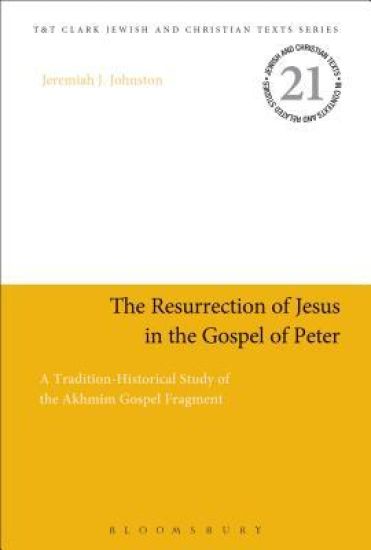
All four canonical gospels identify the resurrection of Jesus, yet none detail the exact moment of its happening. The absence of this narrative detail was hotly contested in the second century, when critics derided a resurrection account without credible witness. Thus, the discovery of the Akhmim fragment at the end of the 19th century, which purports to provide exactly that detail, is a huge and surprisingly under-utilised addition to Biblical scholarship of the Apocryphal gospels. Johnston examines both the impact of this discovery on the scholarship at the time, and argues for the dating of the fragment to the second century AD. He identifies shared characteristics with other documents from this period, including a rise in anti-semitic feeling, and developments in concepts of the afterlife, and makes a claim for this fragment being the text that aided the development of these movements.The Second Century was the key time in which the non-canonical Biblical texts were established. It was also the era in which theologies which would become 'orthodox' in the third century were penned and defined. The significance, then, of dating the Akhmim fragment to the second century AD is huge. This work will be of great use to scholars of Second Temple Judaism, and those with an interest in the creation of the ideas that surround scholarship of the Bible.
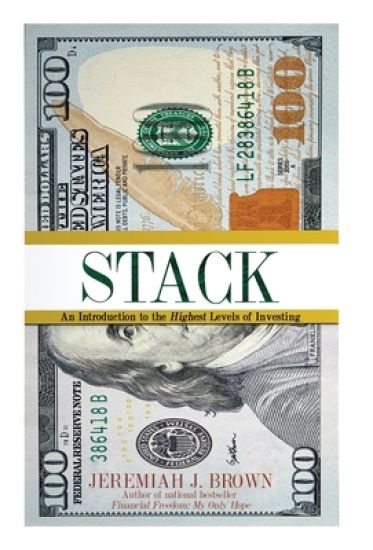
Most people have it all wrong about how you become wealthy in America. More often then not, we are taught that wealth is the by-product of hard work, diligent savings, and living below one's means. If that were the case, why is it that 50% of the population are considered financially inept, in a nation that is primarily driven by finance? How is it that one in three people who've worked their entire lives, have nothing saved towards retirement? How is it that 40% of all student borrowers cant afford to make payments on their college loans? Most of us recognize that something is terribly wrong within our economy and financial systems, yet we continue to obey the antiquated financial rhetoric spewed by the experts and media. But at what cost? If you're going to participate in this game and wonder how you build more wealth, then the solution will be easier then what is normally given to the 99 percenters. Bank On You explores the financial advice kept from the masses and shares it with you in a way that is compelling and easy to digest. The book includes: How to pursue multiple streams of income How to acquire assets that pay you How not to lose money How to be your own boss How to achieve finanical freedom in any market cycle Embrace your new financial awakening and begin to master the game of money.
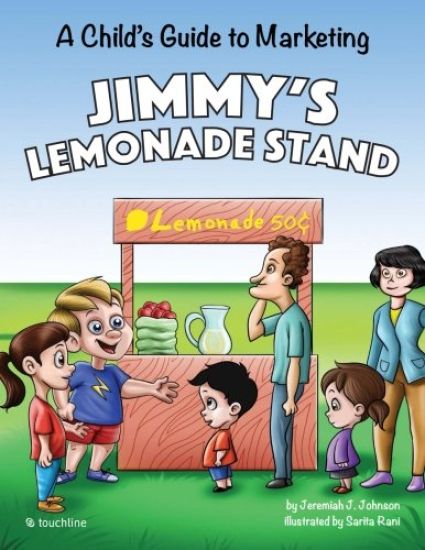
Jimmy's Lemonade Stand: A Child's Guide To Marketing
Jeremiah J. Johnson
Touchline Marketing
2017
nidottu
Jimmy's Lemonade Stand - A Child's Guide To Marketing A 5-minute read that will quickly simplify your outlook on marketing. Everyday, we help busy small business owners & executives at medium-sized companies with their digital marketing. Many of our discovery meetings are with entrepreneurs who think the latest and greatest marketing technology is the key to their business' success. The bad news is that there is no quick fix, wonder pill, or magical elixir. The good news is that a marketing foundation built upon the principle of "understand your customer first" will point you in the right direction. We wrote this story as a tool to help our clients quickly reshape the way they think about marketing their product or service. Modeled as a children's book, "Jimmy's Lemonade Stand - A Child's Guide To Marketing", takes the reader through a young boy's journey of starting a lemonade stand and the familiar challenges facing every business owner. With the help of his father who works as a marketing professional, Jimmy creates a buyer persona for his business that is a mythical picture of their ideal customer. The buyer persona is a representation of key identifiers that exist in ideal customers along with their associated pain points, challenges, and goals. The buyer persona can also define a value proposition that speaks to this specific customer profile. "Jimmy's Lemonade Stand - A Child's Guide To Marketing" is the perfect gift for a friend, family member, or colleague who is a small business owner, big-time executive, or aspiring entrepreneur. Size: 8.5" x 11" (21.59 x 27.94 cm) Interior: 38 pages. Full color. Cover: Full color glossy finish. 38 pages
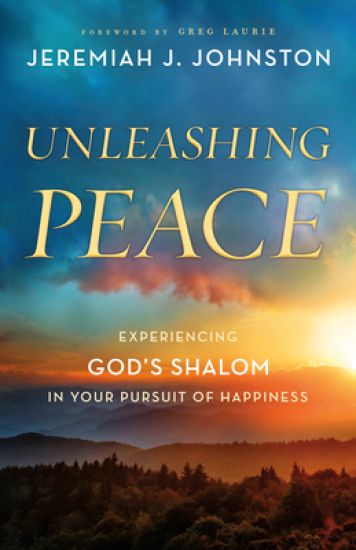
Unleashing Peace
Jeremiah J. Johnston; Greg Laurie
Bethany House Publishers, a division of Baker Publishing Group
2022
nidottu
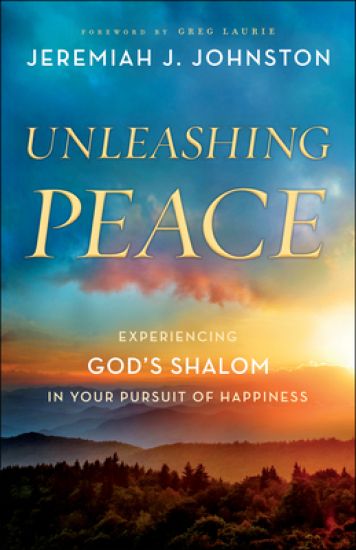
It's easy to think that emotional pain and feelings of hopelessness are modern issues. But two thousand years ago, Jesus ministered to people who were also longing for peace and happiness. His answer? God's peace--his Shalom, a word so important that it's translated seventy different ways in the Bible. This often-overlooked aspect of the Christian life is the foundation for deep, meaningful happiness. In this uplifting book, Jeremiah Johnston provides a biblical perspective on living a life of Shalom. Johnston reveals: * the peace Jesus offers vs. the peace the world promises but can't deliver * how to apply God's peace to our current situation and combat anxiety, fear, and hopelessness * how to protect this perfect peace in our lives when troubles try to steal it This book is also helpful for lay leaders, pastors, and everyone else who recognizes the church's incredible opportunity today to help individuals and families dealing with anxiety and depression.
Body of Proof – The 7 Best Reasons to Believe in the Resurrection of Jesus––and Why It Matters Today
Jeremiah J. Johnston; Gary Habermas
BAKER PUBLISHING GROUP
2023
nidottu
He is risen indeed! Here are the best reasons why it's true! Culture is doing its best to convince the world there is nothing special about Jesus. And many Christians never get beyond a Sunday school understanding of their own faith. As a result, Christianity's most important historical fact--the resurrection--is often the most misunderstood, relegated to Easter and funeral services, creating a powerless Christianity. In Body of Proof, acclaimed apologist and scholar Dr. Jeremiah Johnston sets out to show why Jesus' victory over death is central to a believer's faith. Straightforward, accessible, and practical, this book ? examines the latest archaeological and textual findings ? presents seven tangible, fresh reasons to believe Jesus really rose from the dead? explains why it matters today as the foundation of our hope in the face of suffering and griefWhen you fully understand the implications of the resurrection, you will begin to understand the power of Christ in you. This changes everything."A creative masterpiece of persuasive evidence for the pivotal event of human history."--LEE STROBEL, New York Times bestselling author
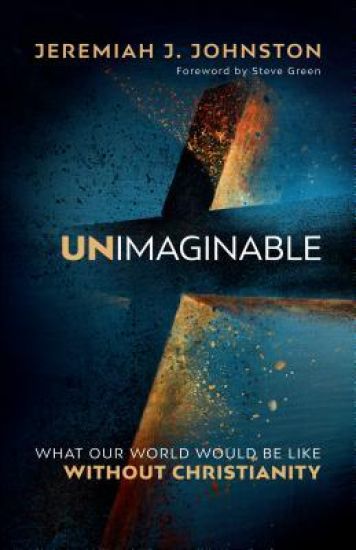
Unimaginable
Jeremiah J. Johnston; Steve Green
Bethany House Publishers, a division of Baker Publishing Group
2019
pokkari
Is God dying? Some people think so--and more want it so. They say Christian beliefs and our way of life aren't relevant anymore. But what critics, and even many churchgoers, don't realize is the life-changing importance of Christianity. Showing how the world would be a dark place without Christianity, Unimaginable guides you through the halls of history to see how Jesus's teachings dramatically changed our world and continue to be the most powerful force for good today. Learn how Christianity has stood against slavery, racism, eugenics, and injustices toward women and children why freedom as a universal value and modern education and legal systems owe much to Christianity how Christians throughout the ages have demonstrated the value of human life by sacrificially caring for the sick, marginalized, and dying how people of faith are extending God's kingdom through charities, mental health initiatives, and other ways. This provocative and enlightening book is sure to encourage believers and equip them to respond to doubters.
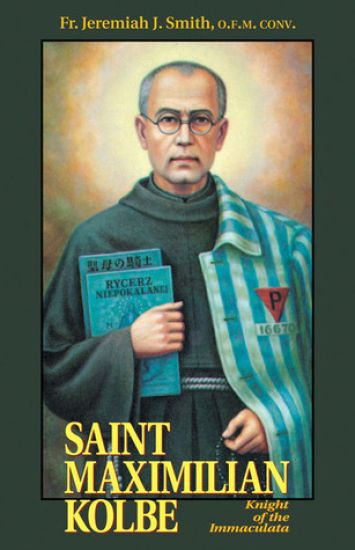
St. Maximilian Kolbe: Knight of the Immaculata
Jeremiah J. Smith; J. J. Smith; Ofm Conv Fr Jeremiah J. Smith
Tan Books
1951
nidottu
Covering the life of the famous martyr of the Nazi concentration camp in Auschwitz, this beautifully written biography shows how Fr. Kolbe (+1941) worked mightily to conquer the world for Christ through Mary Immaculate. His desire to win the salvation of souls, even to the point of offering his own life in the place of another, encourages the reader to evangelize with zeal like this heroic saint of modern times.
The Attitude of John Pecham Toward Monastic Houses Under His Jurisdiction
Jeremiah J. Smith
Literary Licensing, LLC
2013
nidottu
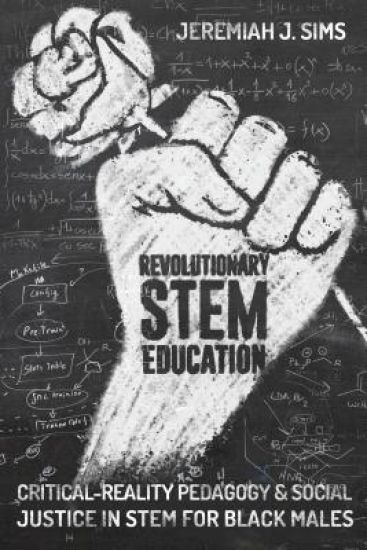
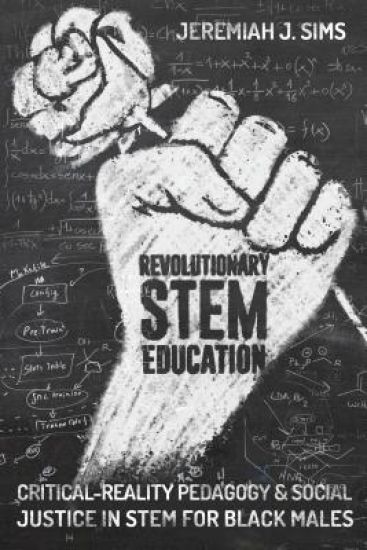
Revolutionary STEM Education: Critical-Reality Pedagogy and Social Justice in STEM for Black Males by Jeremiah J. Sims, an educator, researcher, and administrator from Richmond, California, is calling for a revolutionary, paradigm shift in the STEM education of and for Black boys. STEM education has been reliant on axioms and purported facts that for far too long have been delivered in a banking or absorption model that is, arguably, anti-critical. Unsurprisingly, this pedagogical approach to STEM education has failed large segments of students; and, this is especially true of African American males. Revolutionary STEM Education highlights, chronicles, and investigates the potential inroads and vistas of a Saturday Science, Technology, Engineering and Math (STEM) program, Male Aptitudes Nurtured for Unlimited Potential (MAN UP), which was designed to foster interest and competence in STEM by middle school Black boys. This program was impelled by a critical-reality based pedagogical approach, which was formulated to arrive at socio-academic synergy, that is, a thoughtful conjoining of students’ real life concerns, joys, ways of being, and socio-cultural identities and the curricular material covered in the courses offered at MAN UP. Sims’ lived-experiences as an inner-city, low-income Black male are interspersed throughout Revolutionary STEM Education; however, the heartbeat of this book is, undoubtedly, the stories of the positive transformation that the MAN UP scholars experienced while becoming more competent in STEM, developing positive STEM identities, and learning to use their STEM knowledge for social justice.
Minding the Obligation Gap in Community Colleges and Beyond
Jeremiah J. Sims; Jennifer Taylor-Mendoza; Lasana O. Hotep; Jeramy Wallace; Tabitha Conaway
Peter Lang Publishing Inc
2020
nidottu
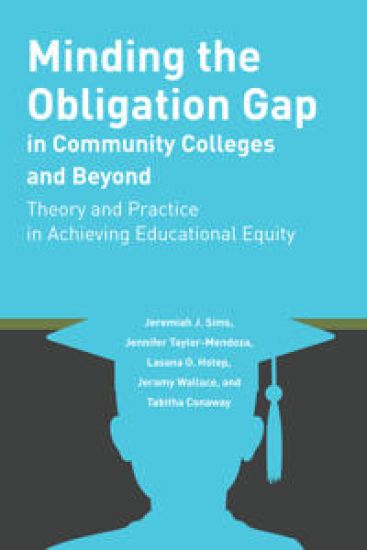
It is difficult to find justice-centered books geared specifically for community college practitioners interested in achieving campus wide educational equity. It is even more difficult to find a book in this vein written, exclusively, by community college practitioners. Minding the Obligation Gap in Community Colleges and Beyond is just that: a concerted effort by a cross-representational group of community college practitioners working to catalyze conversations and eventually practices that attend to the most pressing equity gaps in and on our campuses. By illuminating the constitutive parts of the ever-increasing obligation gap, this book offers both theory and practice in reforming community colleges so that they function as disruptive technologies. It is our position that equity-centered community colleges hold the potential to call out, impede, and even disrupt institutionalized polices, pedagogies, and practices that negatively impact poor, ethno-racially minoritized students of color. If you and your college is interested in striving for educational equity campus-wide please join us in this ongoing conversation on how to work for equity for all of the students that we serve.
Minding the Obligation Gap in Community Colleges and Beyond
Jeremiah J. Sims; Jennifer Taylor-Mendoza; Lasana O. Hotep; Jeramy Wallace; Tabitha Conaway
Peter Lang Publishing Inc
2020
sidottu
It is difficult to find justice-centered books geared specifically for community college practitioners interested in achieving campus wide educational equity. It is even more difficult to find a book in this vein written, exclusively, by community college practitioners. Minding the Obligation Gap in Community Colleges and Beyond is just that: a concerted effort by a cross-representational group of community college practitioners working to catalyze conversations and eventually practices that attend to the most pressing equity gaps in and on our campuses. By illuminating the constitutive parts of the ever-increasing obligation gap, this book offers both theory and practice in reforming community colleges so that they function as disruptive technologies. It is our position that equity-centered community colleges hold the potential to call out, impede, and even disrupt institutionalized polices, pedagogies, and practices that negatively impact poor, ethno-racially minoritized students of color. If you and your college is interested in striving for educational equity campus-wide please join us in this ongoing conversation on how to work for equity for all of the students that we serve.
Evangelicals and Republicans have been powerful-and active-allies in American politics since the 1970s. But as public opinions have changed, are young evangelicals’ political identities and attitudes on key issues changing too? And if so, why? In Rock of Ages, Jeremiah Castle answers these questions to understand their important implications for American politics and society. Castle develops his own theory of public opinion among young evangelicals to predict and explain their political attitudes and voting behavior. Relying on both survey data and his own interviews with evangelical college students, he shows that while some young evangelicals may be more liberal in their attitudes on some issues, most are just as firmly Republican, conservative, and pro-life on abortion as the previous generation. Rock of Ages considers not only what makes young evangelicals different from the previous generation, but also what that means for both the church and American politics.