Kirjahaku
Etsi kirjoja tekijän nimen, kirjan nimen tai ISBN:n perusteella.
1000 tulosta hakusanalla Jeremiah W. Montgomery

In A Social-Political History of Monotheism, Cataldo shows how political concerns were fundamental to the development of Judeo-Christian monotheism. Beginning with the disruptive and devastating historical events that shook early Israelite culture and ending with the seemingly victorious emergence of Christianity under the Byzantine Empire, this work highlights critical junctures marking the path from political frustration to imperial ideology. Monotheism, Cataldo argues, was not an enlightened form of religion; rather, it was a cultic response to effluent anxieties pouring out from under the crushing weight of successive empires. This provocative work is a valuable tool for anyone with an interest in the development of early Christianity alongside empires and cultures.
Breaking Monotheism makes the case that the failed vision of a theocratic utopia in the biblical texts has contributed (in a structural sense) to the exclusionary focus of monotheistic religion. Using the Persian province Yehud as its primary case study, this work embodies a special focus on the interaction between religion and the social-political body in several important areas: (1) power relations in the province, (2) land as private property and its economic impact, (3) political structure and the "rule of law," (4) monotheistic religious identity in Palestine and its tendency toward "cultural" exclusion, and (5) social group formation in the midst of conflict. This work makes the case that cultural-religious patterns and trends that would later prove formative for Judaism and Christianity as monotheistic religions began with the failed reality of a theocracy in Yehud. Thus, and this point will be demonstrated in the work, Yehud offers not only a historical subject for analysis but also a model through which to analyze and understand the development of the broader framework of later monotheistic religions.
This work offers a social-scientific analysis of Yehud and uses that analysis to construct a model through which to analyze later monotheistic religious developments.
Among the variety of social-political reconstructions of Persian-period Yehud, one "consensus" stands out - one which states that the Jerusalem priesthood enjoyed a prominent level of authority, symbolized in the Jerusalem temple. Unfortunately, this leads easily into conclusions of a theocracy in Yehud. The problem, in part, is due to the immediate association of priests assumed to be authoritative with that of a theocratic governing structure.To address this problem, at least three aspects of Yehud's governing structure(s) require further attention: (1) the social implications of a particular governing structure within a society; (2) the developments of a society leading up to that governing structure; and (3) a clearly articulated definition of the term and concept of theocracy. Since many scholars appear to depend upon a theocratic "structure" or "spirit" at some point in their discussions of Persian-period Yehud, one would usualy expect to find a clear definition of theocracy. Instead, a hasty and ill-equipped definition that seems to avoid addressing the social and political complexities is often used.The conclusion is that no power or political vacuum appears to have existed allowing the priesthood to claim power in Yehud. The Persian empire did not allow territories to develop autonomous governing structures (Chapter 2). The social, economic, and political realms of Yehud functioned within the framework of Persian imperial administration (Chapter 3). And the term theocracy, when defined according to social-scientific requirements (Chapter 4), does not accurately describe the social-political context of Yehud during the Persian period (Chapter 5).
This book is open access and available on www.bloomsburycollections.com. It is funded by Knowledge Unlatched.For biblical authors and readers, law and restoration are central concepts in the Bible, but they were not always so. To trace out the formation of those biblical concepts as elements in defensive strategies, Cataldo uses as conversational starting points theories from Zizek, Foucault and Deleuze, all of whom emphasize relation and difference. This work argues that the more modern assumption that biblical authors wrote their texts presupposing a central importance for those concepts is backwards. On the contrary, law and restoration were made central only through and after the writing of the biblical texts - in particular, those that were concerned with protecting the community from threats to its identity as the "remnant". Modern Bible readers, Cataldo argues, must renegotiate how they understand law and restoration and come to terms with them as concepts that emerged out of more selfish concerns of a community on the margins of imperial political power.
This book is open access and available on www.bloomsburycollections.com. It is funded by Knowledge Unlatched.For biblical authors and readers, law and restoration are central concepts in the Bible, but they were not always so. To trace out the formation of those biblical concepts as elements in defensive strategies, Cataldo uses as conversational starting points theories from Zizek, Foucault and Deleuze, all of whom emphasize relation and difference. This work argues that the more modern assumption that biblical authors wrote their texts presupposing a central importance for those concepts is backwards. On the contrary, law and restoration were made central only through and after the writing of the biblical texts - in particular, those that were concerned with protecting the community from threats to its identity as the "remnant". Modern Bible readers, Cataldo argues, must renegotiate how they understand law and restoration and come to terms with them as concepts that emerged out of more selfish concerns of a community on the margins of imperial political power.
Among the variety of social-political reconstructions of Persian-period Yehud, one "consensus" stands out - one which states that the Jerusalem priesthood enjoyed a prominent level of authority, symbolized in the Jerusalem temple. Unfortunately, this leads easily into conclusions of a theocracy in Yehud. The problem, in part, is due to the immediate association of priests assumed to be authoritative with that of a theocratic governing structure.To address this problem, at least three aspects of Yehud's governing structure(s) require further attention: (1) the social implications of a particular governing structure within a society; (2) the developments of a society leading up to that governing structure; and (3) a clearly articulated definition of the term and concept of theocracy. Since many scholars appear to depend upon a theocratic "structure" or "spirit" at some point in their discussions of Persian-period Yehud, one would usualy expect to find a clear definition of theocracy. Instead, a hasty and ill-equipped definition that seems to avoid addressing the social and political complexities is often used.The conclusion is that no power or political vacuum appears to have existed allowing the priesthood to claim power in Yehud. The Persian empire did not allow territories to develop autonomous governing structures (Chapter 2). The social, economic, and political realms of Yehud functioned within the framework of Persian imperial administration (Chapter 3). And the term theocracy, when defined according to social-scientific requirements (Chapter 4), does not accurately describe the social-political context of Yehud during the Persian period (Chapter 5).

Principles of Politics from the Viewpoint of the American Citizen
Jeremiah W Jenks
Trieste Publishing
2018
nidottu


In A Social-Political History of Monotheism, Cataldo shows how political concerns were fundamental to the development of Judeo-Christian monotheism. Beginning with the disruptive and devastating historical events that shook early Israelite culture and ending with the seemingly victorious emergence of Christianity under the Byzantine Empire, this work highlights critical junctures marking the path from political frustration to imperial ideology. Monotheism, Cataldo argues, was not an enlightened form of religion; rather, it was a cultic response to effluent anxieties pouring out from under the crushing weight of successive empires. This provocative work is a valuable tool for anyone with an interest in the development of early Christianity alongside empires and cultures.

Rants, Screeds and Diatribes
Jeremiah W. Pinkard
Createspace Independent Publishing Platform
2014
nidottu
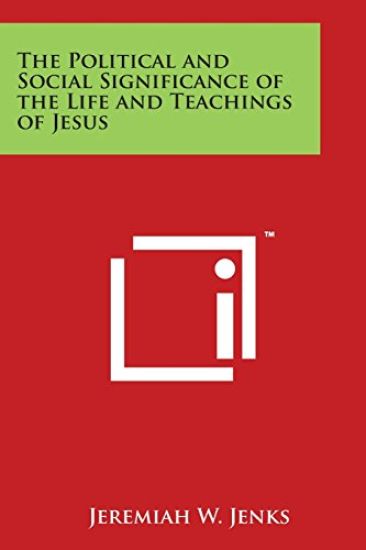
The Political and Social Significance of the Life and Teachings of Jesus
Jeremiah W. Jenks
Literary Licensing, LLC
2014
nidottu

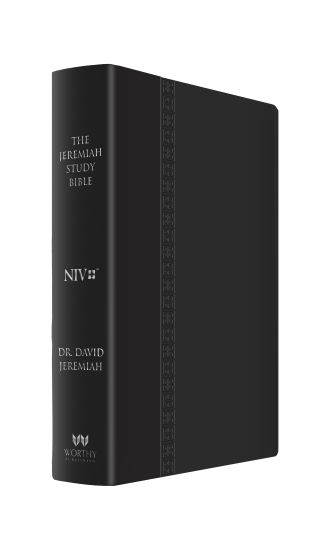
The Jeremiah Study Bible, Niv: (Black W/ Burnished Edges) Leatherluxe(r): What It Says. What It Means. What It Means for You.
David Jeremiah
Worthy Books
2016
erikoissidos
Drawn from more than 40 years of study, Dr. David Jeremiah, one of America's leading Bible teachers, has produced a deeply personal and comprehensive study Bible packed with features specifically focused to help you discover what Scripture says, what Scripture means and, most importantly, what Scripture means for you. The Jeremiah Study Bible presents the best of biblical insight and study tools along with clear, practical application to bring about authentic transformation in your life.
The Jeremiah Study Bible, NIV (Large Print, Black W/ Burnished Edges) Leatherluxe W/Thumb Index: What It Says. What It Means. What It Means for You.
David Jeremiah
Worthy Books
2017
erikoissidos
Drawn from more than 40 years of study, Dr. David Jeremiah, one of America's leading Bible teachers, has produced a deeply personal and comprehensive study Bible packed with features specifically focused to help you discover what Scripture says, what Scripture means and, most importantly, what Scripture means for you. The Jeremiah Study Bible presents the best of biblical insight and study tools along with clear, practical application to bring about authentic transformation in your life.
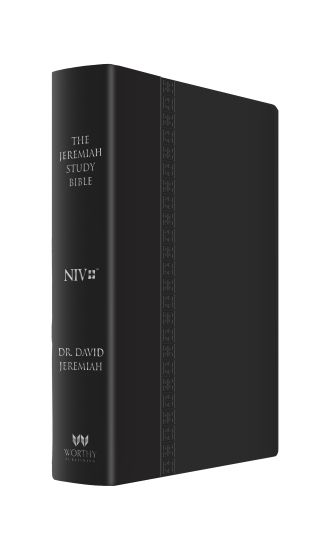
The Jeremiah Study Bible, NIV (Large Print Edition, Black W/ Burnished Edges) Leatherluxe: What It Says. What It Means. What It Means for You.
David Jeremiah
Worthy Books
2017
erikoissidos
Drawn from more than 40 years of study, Dr. David Jeremiah, one of America's leading Bible teachers, has produced a deeply personal and comprehensive study Bible packed with features specifically focused to help you discover what Scripture says, what Scripture means and, most importantly, what Scripture means for you. The Jeremiah Study Bible presents the best of biblical insight and study tools along with clear, practical application to bring about authentic transformation in your life.