Kirjojen hintavertailu. Mukana 11 244 527 kirjaa ja 12 kauppaa.

Kirjahaku

Etsi kirjoja tekijän nimen, kirjan nimen tai ISBN:n perusteella.

1000 tulosta hakusanalla Jeremy Killian

Eugene O'Neill's Philosophy of Difficult Theatre

Eugene O'Neill's Philosophy of Difficult Theatre

Jeremy Killian

TAYLOR FRANCIS LTD
2022
sidottu
Through a close re-examination of Eugene O’Neill’s oeuvre, from minor plays to his Pulitzer-winning works, this study proposes that O’Neill’s vision of tragedy privileges a particular emotional response over a more “rational” one among his audience members. In addition to offering a new paradigm through which to interpret O’Neill’s work, this book argues that O’Neill’s theory of tragedy is a robust account of the value of difficult theatre as a whole, with more explanatory scope and power than its cognitivist counterparts. This paradigm reshapes our understanding of live theatrical tragedy’s impact and significance for our lives. The book enters the discussion of tragic value by way of the plays of Eugene O’Neill, and through this study, Killian makes the case that O’Neill has refused to allow Plato to define the terms of tragedy’s merit, as the cognitivists have. He argues that O’Neill’s theory of tragedy is non-cognitive and locates the value of a play in its ability to trigger certain emotional responses from the audience. This would be of great interest to students and scholars of performance studies, literature and philosophy.
Eugene O'Neill's Philosophy of Difficult Theatre

Eugene O'Neill's Philosophy of Difficult Theatre

Jeremy Killian

TAYLOR FRANCIS LTD
2024
nidottu
Through a close re-examination of Eugene O’Neill’s oeuvre, from minor plays to his Pulitzer-winning works, this study proposes that O’Neill’s vision of tragedy privileges a particular emotional response over a more “rational” one among his audience members. In addition to offering a new paradigm through which to interpret O’Neill’s work, this book argues that O’Neill’s theory of tragedy is a robust account of the value of difficult theatre as a whole, with more explanatory scope and power than its cognitivist counterparts. This paradigm reshapes our understanding of live theatrical tragedy’s impact and significance for our lives. The book enters the discussion of tragic value by way of the plays of Eugene O’Neill, and through this study, Killian makes the case that O’Neill has refused to allow Plato to define the terms of tragedy’s merit, as the cognitivists have. He argues that O’Neill’s theory of tragedy is non-cognitive and locates the value of a play in its ability to trigger certain emotional responses from the audience. This would be of great interest to students and scholars of performance studies, literature and philosophy.
Higher Form of Killing

Higher Form of Killing

Jeremy Paxman; Robert Harris

Cornerstone
2002
pokkari
First published in 1982, this revised and updated edition takes into account the events that have happened since the early 1980s - including the break-up of the former Soviet Union and the black market that appeared in chemical and biological weapons, the acquisition of these weapons by Third World countries, etc.
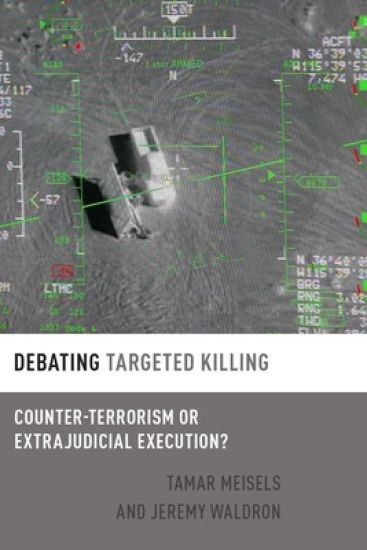
Debating Targeted Killing

Debating Targeted Killing

Tamar Meisels; Jeremy Waldron

Oxford University Press Inc
2020
sidottu
Known terrorists are often targeted for death by the governments of Israel and the United States. Several thousand have been killed by drones or by operatives on the ground in the last twenty years. Is this form of killing justified, when hundreds or thousands of lives are possibly at risk at the hands of a known terrorist? Is there anything about it that should disturb us? Ethically-sound and practical answers to these questions are more difficult to come by than it might seem. Renowned political theorists Jeremy Waldron and Tamar Meisels here defend two competing positions on the legitimacy of targeted killing as used in counterterrorism strategy in this riveting and essential for-and-against book. The volume begins with a joint introduction, briefly setting out the terms of discussion, and presenting a short historical overview of the practice: what targeted killing is, and how it has been used in which conflicts and by whom. It then hones in on killings themselves and the element of targeting. The authors tackle difficult and infinitely complex subjects, for example the similarities and differences between targeted killing of terrorists and ordinary killings in combat, and they ask whether targeted killing can be regarded as a law enforcement strategy, or as a hybrid between combat and law enforcement. They compare the practice of targeted killing with assassination and the use of death squads. And they consider the likelihood that targeted killing has been or will be abused against insurgents, criminals, or political opponents. Meisels analyzes the assassination by Israeli operatives of nuclear scientists working for regimes hostile to Israel. Meisels and Waldron carefully consider whether this sort of killing can ever be justified in terms of the danger it, in theory, averts. The conclusions drawn are at once as surprising as they are insightful, cautioning us against a world in which targeted killing is the norm as it proliferates rapidly. This is essential reading not only for students of political and war theory and military personnel, but for anyone interested in or concerned by the future of targeted killing.
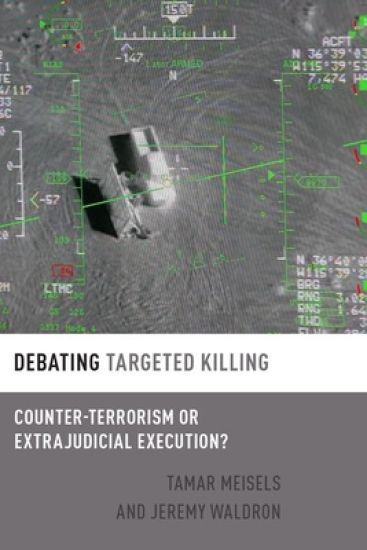
Debating Targeted Killing

Debating Targeted Killing

Tamar Meisels; Jeremy Waldron

Oxford University Press Inc
2020
nidottu
Known terrorists are often targeted for death by the governments of Israel and the United States. Several thousand have been killed by drones or by operatives on the ground in the last twenty years. Is this form of killing justified, when hundreds or thousands of lives are possibly at risk at the hands of a known terrorist? Is there anything about it that should disturb us? Ethically-sound and practical answers to these questions are more difficult to come by than it might seem. Renowned political theorists Jeremy Waldron and Tamar Meisels here defend two competing positions on the legitimacy of targeted killing as used in counterterrorism strategy in this riveting and essential for-and-against book. The volume begins with a joint introduction, briefly setting out the terms of discussion, and presenting a short historical overview of the practice: what targeted killing is, and how it has been used in which conflicts and by whom. It then hones in on killings themselves and the element of targeting. The authors tackle difficult and infinitely complex subjects, for example the similarities and differences between targeted killing of terrorists and ordinary killings in combat, and they ask whether targeted killing can be regarded as a law enforcement strategy, or as a hybrid between combat and law enforcement. They compare the practice of targeted killing with assassination and the use of death squads. And they consider the likelihood that targeted killing has been or will be abused against insurgents, criminals, or political opponents. Meisels analyzes the assassination by Israeli operatives of nuclear scientists working for regimes hostile to Israel. Meisels and Waldron carefully consider whether this sort of killing can ever be justified in terms of the danger it, in theory, averts. The conclusions drawn are at once as surprising as they are insightful, cautioning us against a world in which targeted killing is the norm as it proliferates rapidly. This is essential reading not only for students of political and war theory and military personnel, but for anyone interested in or concerned by the future of targeted killing.
A Higher Form of Killing: The Secret History of Chemical and Biological Warfare
Interviews with experts and an examination of previously classified documents underlie a study of the history, technological development, and expanding strategic role of chemical and biological warfare, in an updated study that incorporates a new introduction and epilogue that brings the history up to the present day. Reprint. 30,000 first printing.
Jeremy

Jeremy

Paul G Roberts; Charlie O'Brien

DESIRE GROUPE
2022
sidottu
JEREMY SCOTTOver the last twenty years, American designer Jeremy Scott shocked and awed fashion critics and lovers alike with his bright colours, comical prints and frequent shows of outrageous designs. Constantly pushing the boundaries in fashion, Scott's mark on the fashion landscape led to a breakdown in consumer barriers by blurring the lines between high and low culture. He endured a rough childhood, so he grew up strong. Many of his job applications were rejected, so he became his own boss. He has listened to criticisms of his works, but continues to create fashion people can enjoy. Withstanding tireless adversity, the designer has never let anything stand in the way of his passion and creativity.An audience of drag queens, club scene members and fashion cognoscenti gather at Scott's fashion shows. These eccentrics form the core of Scott's plight to break free of the bindings the fashion industry tries to wrap around him. He is a true renegade: someone with unconventional ideas and methods, resisting the norm through all means.AUTHOR CHARLIE O'BRIENA culture enthusiast with a deeply-held passion for the written word, Charlie O'Brien graduated from Griffith University with a Bachelors in Communication and the dedication to become a professional writer. Charlie worked in high fashion for over six years with esteemed international brands Ralph Lauren and Hugo Boss, making him the perfect fit for the fast-paced world of couture literature. He prefers the substance of timeless style over fleeting fashion trends and firmly believes all men look better in suits.When not writing about fashion Charlie can be found indulging his love of cinema, music and an eternal quest to find the greatest sandwich in the world. His most recent masterpiece involved beef cheeks, Swiss cheese and pesto on toasted sourdough.