

Kirjahaku
Etsi kirjoja tekijän nimen, kirjan nimen tai ISBN:n perusteella.
1000 tulosta hakusanalla Jeremy M Gates



The Second Folio: A Set of Plays by Jeremy M. Miller
Jeremy M. Miller
Createspace Independent Publishing Platform
2015
nidottu
Sensation & Perception
Jeremy M. Wolfe; Dennis M. Levi; Lori L. Holt
Sinauer Associates Is an Imprint of Oxford Un
2024
nidottu
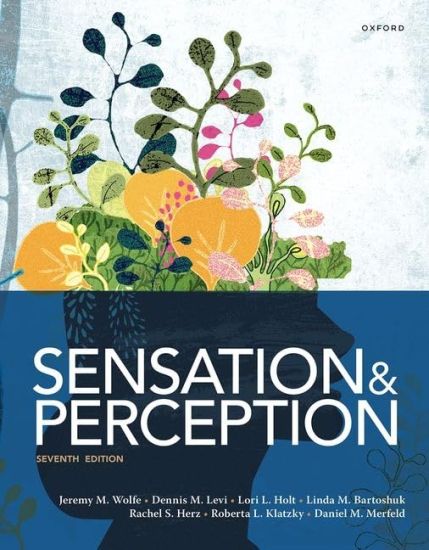
Winner of the Textbook & Academic Authors Association's McGuffey Longevity Award Sensation and Perception, Seventh Edition, introduces students to the fascinating world of human senses and helps them answer such interesting questions as "Why do some substances taste sweet" or "Why does music sound musical?" The authors, specialists in their respective domains, strive to spread their enthusiasm for fundamental questions about the human senses and the impact that answers to those questions have on medical and societal issues. Offering a comprehensive and balanced blend of neuroscience and cognitive psychology, Sensation and Perception studies the interaction and multisensory nature of sensory experiences of the senses. Using clear writing and engaging and relevant features that apply scientific knowledge to everyday life and walk students through the scientific process and experimental design, this unique text is accessible to students from various majors.

The adventures and antics of James Bond have provided the world with many of the most gripping story lines of the last half-century. Fleming's novels were best-sellers in their day, and the Bond films have been even more popular, becoming the most enduring and successful film franchise in history. By some estimates, half of the world's population—billions of people—have seen a James Bond movie, thus viewing an image of global struggle through Western eyes and obtaining a particular perception of Britain and the world. This fascinating and accessible account of the global phenomenon uses the plots and characterizations in the novels and the blockbuster films to place Bond in a historical, cultural, and political context.Black charts and explores how the settings and the dynamics of the Bond adventures have changed over time in response to shifts in the real-world environment in which the fictional Bond operates. Sex, race, class, and violence are each important factors as 007 evolves from Cold Warrior to foe of SPECTRE and eventually to world defender pitted against megalomaniacal foes. The development of Bond, his leading ladies, and the major plots all shed light on world political attitudes and reflect elements of the real espionage history of the period. This look at Bond's world and his lasting legacy offers an intriguing glimpse into both cultural history and popular entertainment.
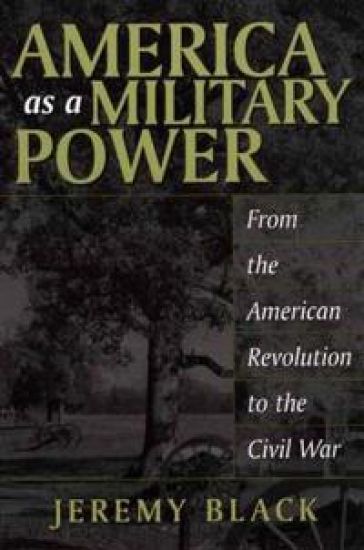
How have military actions shaped the history of the United States and the country's role in world history? Noted military historian Jeremy Black examines American military exceptionalism with the critical eye of a foreign scholar. The British fought two wars with the Americans and followed American developments with keen interest. Black marshals contemporary British commentary to contextualize American military actions within a global perspective.Several major conflicts are covered:^L^DBLThe War for Independence^DBLThe War of 1812^DBLThe Mexican War^DBLWar with Native Americans^DBLThe Civil War^LThroughout this phase of America military action, one sees a shift from a state in conflict with neighboring states to a nation divided, fighting for its very survival. This study clarifies the unique combination of political, social, intellectual, and physical factors-including potential threats-that shaped, and were shaped, by the general American culture during this period.

What is total war? Definitions abound, but one thing is certain—the concept of total war has come to be seen as a defining concept of the modern age. Celebrated historian Jeremy Black explores the rise and demise of an era of total war, which he defines in terms of the intensity of the struggle, the range (geographical and/or chronological) of conflict, the nature of the goals, and the extent to which civil society was involved. He contends that this era (roughly 1860-1945) was markedly different from the warfare that characterized earlier periods; and that it is very different from the situation that has evolved since, with its emphasis on asymmetrical conflict and limited warfare.Acknowledging that various definitions are problematic and often contradictory, Black argues that 1860 to 1945 was an era in which the prospect of war and the consequences of it were crucially important for human history. He focuses primarily on conflict between Western powers, including Japanese participation in the Russo-Japanese War. Trends and developments subsequent to 1945 have combined, Black asserts, to make a return to total war unlikely.

Starting his account at a time when Britain was poised to rule the world's oceans—and much of its land as well—prolific historian Jeremy Black details the nation's involvement in global affairs from the late-18th century to the present. A Military History of Britain is an account of military structures and cultures, and relevant socio-political contexts, as well as of conflicts. As in all of his writing, Black seeks to challenge conventional assumptions and offer illuminating new perspectives. Black begins by setting the background to British military history, in particular the anti-(large) army ideology, the maritime tradition, and the growing geo-political rivalry with France. After the defeat of the French in North America, Britain would become the world's leading maritime power. The 19th Century would see tension between Britain and the new United States, France, Germany, and an increasing emphasis on imperial conquests. Organized in three parts: Britain as Imperial Parent; Britain as Imperial Rival; and Britain as Imperial Partner. A primary focus of this account will be the 20th century, examining Britain and World War I (including Britain as a world power and issues of imperial overstretch) and World War II (and the subsequent wars of Imperial Retention in Malaya, Kenya, and Cyprus). As in all of his writing, Black seeks to challenge conventional assumptions, and offer illuminating new perspectives. Black details the involvement of Britain in global affairs up to the present. Recent issues of continuing importance include Britain as a nuclear power, the end of the East of Suez policy, NATO membership; out-of-area conflict (from the Falklands to Iraq), and the adjustment to new global roles. This wide-ranging and broadly-based account is designed for students and for the general reader.

Winner of the 2017 James M. Blaut Award from the Cultural and Political Ecology Specialty Group of the Association of American GeographersHonorable Mention for the 2016 Book Prize from the Association for Political and Legal AnthropologySince the 1960s, when Brazil first encouraged large-scale Amazonian colonization, violence and confusion have often accompanied national policies concerning land reform, corporate colonization, indigenous land rights, environmental protection, and private homesteading. Conjuring Property shows how, in a region that many perceive to be stateless, colonists - from highly capitalized ranchers to landless workers - adopt anticipatory stances while they await future governance intervention regarding land tenure. For Amazonian colonists, property is a dynamic category that becomes salient in the making: it is conjured through papers, appeals to state officials, and the manipulation of landscapes and memories of occupation. This timely study will be of interest to development studies scholars and practitioners, conservation ecologists, geographers, and anthropologists.

Winner of the 2017 James M. Blaut Award from the Cultural and Political Ecology Specialty Group of the Association of American GeographersHonorable Mention for the 2016 Book Prize from the Association for Political and Legal AnthropologySince the 1960s, when Brazil first encouraged large-scale Amazonian colonization, violence and confusion have often accompanied national policies concerning land reform, corporate colonization, indigenous land rights, environmental protection, and private homesteading. Conjuring Property shows how, in a region that many perceive to be stateless, colonists - from highly capitalized ranchers to landless workers - adopt anticipatory stances while they await future governance intervention regarding land tenure. For Amazonian colonists, property is a dynamic category that becomes salient in the making: it is conjured through papers, appeals to state officials, and the manipulation of landscapes and memories of occupation. This timely study will be of interest to development studies scholars and practitioners, conservation ecologists, geographers, and anthropologists.
Although law enforcement officials have long recognized the need to cooperate with the communities they serve, recent efforts to enhance performance and maximize resources have resulted in a more strategic approach to collaboration among police, local governments, and community members. The goal of these so-called "community policing" initiatives is to prevent neighborhood crime, reduce the fear of crime, and enhance the quality of life in communities. Despite the growing national interest in and support for community policing, the factors that influence an effective implementation have been largely unexplored. Drawing on data from nearly every major U.S. municipal police force, Community Policing in America is the first comprehensive study to examine how the organizational context and structure of police organizations impact the implementation of community policing. Jeremy Wilson’s book offers a unique theoretical framework within which to consider community policing, and identifies key internal and external factors that can facilitate or impede this process, including community characteristics, geographical region, police chief turnover, and structural complexity and control. It also provides a simple tool that practitioners, policymakers, and researchers can use to measure community policing in specific police organizations.
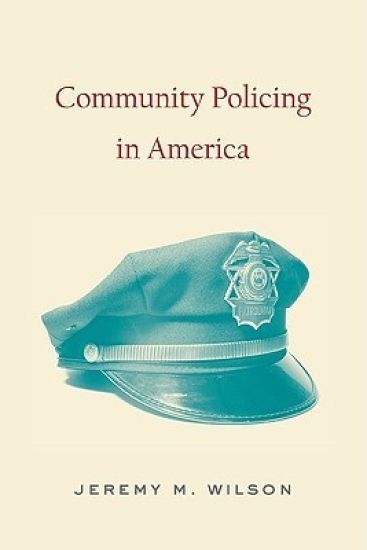
Although law enforcement officials have long recognized the need to cooperate with the communities they serve, recent efforts to enhance performance and maximize resources have resulted in a more strategic approach to collaboration among police, local governments, and community members. The goal of these so-called "community policing" initiatives is to prevent neighborhood crime, reduce the fear of crime, and enhance the quality of life in communities. Despite the growing national interest in and support for community policing, the factors that influence an effective implementation have been largely unexplored. Drawing on data from nearly every major U.S. municipal police force, Community Policing in America is the first comprehensive study to examine how the organizational context and structure of police organizations impact the implementation of community policing. Jeremy Wilson’s book offers a unique theoretical framework within which to consider community policing, and identifies key internal and external factors that can facilitate or impede this process, including community characteristics, geographical region, police chief turnover, and structural complexity and control. It also provides a simple tool that practitioners, policymakers, and researchers can use to measure community policing in specific police organizations.

Overcoming Problematic Alcohol and Drug Use is a workbook for use with clients in treatment, informed by the most current research and literature in the substance abuse field. Offering a field-tested alternative to the disease model of addiction, the book introduces a six-session curriculum for treating persons with substance abuse issues and can be used as a self-help resource, or as a practice guide for human service professionals. Drawing on years of research on cognitive-behavioral therapy, the stages of change model, motivational interviewing, and solution-focused therapy, the author has put together a comprehensive and effective guide to change.
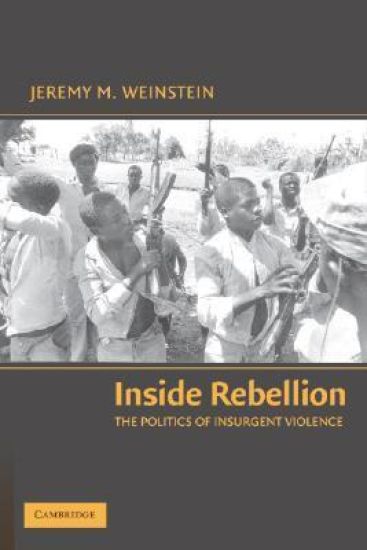
Some rebel groups abuse noncombatant populations, while others exhibit restraint. Insurgent leaders in some countries transform local structures of government, while others simply extract resources for their own benefit. In some contexts, groups kill their victims selectively, while in other environments violence appears indiscriminate, even random. This book presents a theory that accounts for the different strategies pursued by rebel groups in civil war, explaining why patterns of insurgent violence vary so much across conflicts. It does so by examining the membership, structure, and behavior of four insurgent movements in Uganda, Mozambique, and Peru. Drawing on interviews with nearly two hundred combatants and civilians who experienced violence firsthand, it shows that rebels' strategies depend in important ways on how difficult it is to launch a rebellion. The book thus demonstrates how characteristics of the environment in which rebellions emerge constrain rebel organization and shape the patterns of violence that civilians experience.
Some rebel groups abuse noncombatant populations, while others exhibit restraint. Insurgent leaders in some countries transform local structures of government, while others simply extract resources for their own benefit. In some contexts, groups kill their victims selectively, while in other environments violence appears indiscriminate, even random. This book presents a theory that accounts for the different strategies pursued by rebel groups in civil war, explaining why patterns of insurgent violence vary so much across conflicts. It does so by examining the membership, structure, and behavior of four insurgent movements in Uganda, Mozambique, and Peru. Drawing on interviews with nearly two hundred combatants and civilians who experienced violence firsthand, it shows that rebels' strategies depend in important ways on how difficult it is to launch a rebellion. The book thus demonstrates how characteristics of the environment in which rebellions emerge constrain rebel organization and shape the patterns of violence that civilians experience.

This is a theological reflection on churches repenting of events and convictions they have held in the past. Churches have been repenting, apologizing, and asking forgiveness for beliefs and practices they once justified. These often high-profile statements raise questions such as: Can a church repent for things that happened centuries ago? Is it possible for a church to sin or to be forgiven? What difference will repenting make? Is this just more church hypocrisy? In this book Jeremy Bergen tells the story of ecclesial repentance in recent decades and explores the theological issues its raises. He argues that because it is grounded in the doctrines of Christ and the Holy Spirit, ecclesial repentance requires the church to articulate in new ways its own nature and mission.
This is a theological reflection on churches repenting of events and convictions they have held in the past. Churches have been repenting, apologizing, and asking forgiveness for beliefs and practices they once justified. These often high-profile statements raise questions such as: Can a church repent for things that happened centuries ago? Is it possible for a church to sin or to be forgiven? What difference will repenting make? Is this just more church hypocrisy? In this book Jeremy Bergen tells the story of ecclesial repentance in recent decades and explores the theological issues its raises. He argues that because it is grounded in the doctrines of Christ and the Holy Spirit, ecclesial repentance requires the church to articulate in new ways its own nature and mission.

This monograph studies research conducted for the purpose of investigating the relationship between vocabulary recognition and morphological knowledge during the early and middle elementary school years. The findings suggest that lexical development can be characterized in terms of increasing morphological complexity, and as a child ages, the proportion of known complex words that the child figured out by analyzing their morphological structure increased.