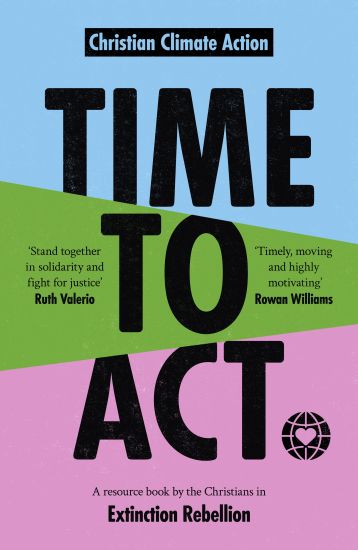
'The climate crisis is the biggest issue facing humanity today. . . It is only together that we can make a difference.' Amanda Khozi Mukwashi, Christian Aid Written by members and friends of Christian Climate Action, this stimulating resource book sets out the moral and religious case for joining the struggle against climate change. It reflects on the Christian tradition of non-violent direct action, and offers deeply moving testimonies by those engaged in such protests today, along with powerful sermons, prayers, liturgies and other spiritual resources. Now is the time to act! Don't let it pass you by! 'This is a landmark book. It is nothing short of an invitation to join the holy uprising of people sweeping the globe who will not be silent in the face of the destruction of God's earth.' Shane Claiborne, Red Letter Christians
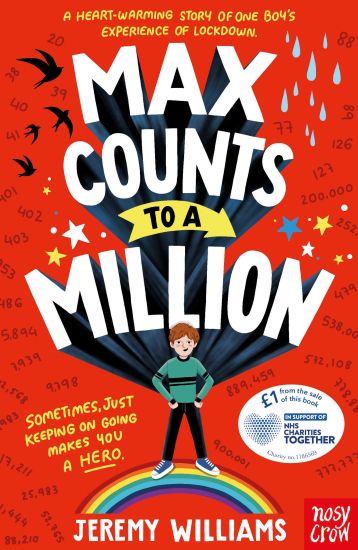
Do you like epic quests of amazing counting?Do you dislike global pandemics, being stuck at home, and the number 7?Then I have a story for you. It's about how I counted to a million during lockdown - with help from Mum and Dad, friends and neighbours, and Grandad. And some birds. And a bucket of marbles. And an awesome TV reporter.Sometimes, just keeping on going makes you a hero.Eight-year-old Max is counting to a million. Normally, school or having anything interesting to do would get in the way, but school is shut and everyone has to stay home because the UK is in its first lockdown. Max's dad works at the hospital and counting helps Max with missing him, but as the pandemic progresses and Max's grandad journeys through his own battle with the virus, what starts as a distraction turns into record-breaking effort that brings Max's community together.Suitable for readers aged 7 up, this funny, poignant, uplifting story reflects the experiences shared by so many during the Covid pandemic and celebrates how ordinary people accomplish epic things.£1 from the sale of every copy of this book will be donated to NHS Charities Together (Registered Charity Number 1186569)
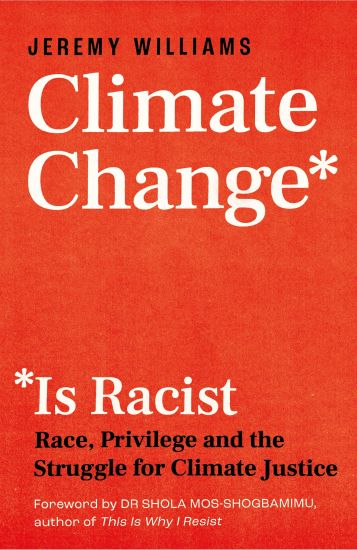
** LONGLISTED FOR THE JAMES CROPPER WAINWRIGHT PRIZE LONGLIST 2022 ** 'Really packs a punch' Aja Barber, author of Consumed: The Need for Collective Change: Colonialism, Climate Change, and Consumerism'Will open the minds of even the most ardent denier of climate change and/or systemic racism. If there's one book that will help you to be an effective activist for climate justice, it's this one' Dr Shola Mos-Shogbamimu'Accessible. Poignant. Challenging' Nnimmo Bassey, environmentalist and author of To Cook a Continent: Destructive Extraction and the Climate Crisis in AfricaWhen we talk about racism, we often mean personal prejudice or institutional biases. Climate change doesn't work that way. It is structurally racist, disproportionately caused by majority White people in majority White countries, with the damage unleashed overwhelmingly on people of colour. The climate crisis reflects and reinforces racial injustices.In this eye-opening book, writer and environmental activist Jeremy Williams takes us on a short, urgent journey across the globe - from Kenya to India, the USA to Australia - to understand how White privilege and climate change overlap. We'll look at the environmental facts, hear the experiences of the people most affected on our planet and learn from the activists leading the change.It's time for each of us to find our place in the global struggle for justice.'Climate Change Is Racist is a significant intervention in climate change studies and activism. Jeremy Williams crafts an accessible, intersectional analysis that is essential reading for those seeking to diversify climate change activism and confront historical, structural racism(s).' Professor Robert Beckford, Director of the Institute for Climate and Social Justice, University of Winchester
What do we want from economic growth? What sort of a society are we aiming for? In everyday economics, there is no such thing as enough, or too much, growth. Yet in the world’s most developed countries, growth has already brought unrivalled prosperity: we have ‘arrived’. More than that, through debt, inequality, climate change and fractured politics, the fruits of growth may rot before everyone has a chance to enjoy them. It’s high time to ask where progress is taking us, and are we nearly there yet? In fact, Trebeck and Williams claim in this ground-breaking book, the challenge is now to make ourselves at home with this wealth, to ensure, in the interests of equality, that everyone is included. They explore the possibility of ‘Arrival’, urging us to move from enlarging the economy to improving it, and the benefits this would bring for all.
This easy-to-follow guide presents the reader with all the information needed to become an expert canvas worker. Detailed instructions and advice on tools, materials and sewing techniques will soon give even a complete beginner the confidence to tackle one of nearly 30 money-saving projects, from a simple tool roll to sail bags, hatch covers and even a bo'sun's chair. An entertaining and informative introduction to canvas work.
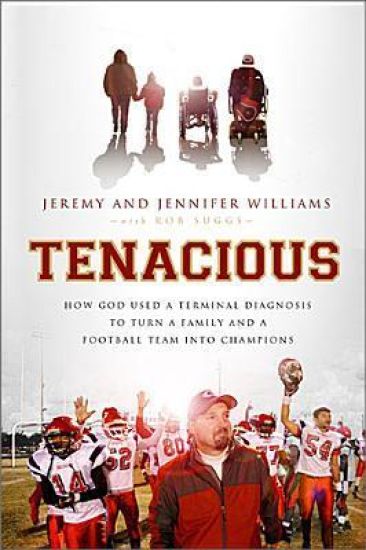
JeremyWilliams captured the nation’s imagination by coaching his high school footballteam to unprecedented heights while combating ALS and caring for a son withspina bifida. This is his family’s inspiring story.America firstmet Jeremy and Jennifer Williams when Extreme Makeover: Home Editionrebuilt their Depression-era farmhouse into a beautiful, handicapped-accessiblehaven. Friends, family, and neighbors from their west Georgia community—and allover the state—came together to support the ailing high school coach who hadwon their respect and their hearts. It made for compelling television but onlytold a little slice of the story. Tenacious gives you the rest—a tenderlove story, a thrilling sports story, and an unforgettable testimony to thepower of faith and grit in the face of almost overwhelming adversity. In Tenaciousyou’ll meet:The distraught parents learning their son would be born with spina bifida.The young father facing his own devastating diagnosis of ALS (Lou Gehrig’s disease) with matter-of-fact courage.The coach who guided his underdog team to a 10–0 Cinderella season—while struggling to walk, talk, and even breathe.Packed fullof faith, hope, love, and miracles, Tenacious is a story you don’t wantto miss.
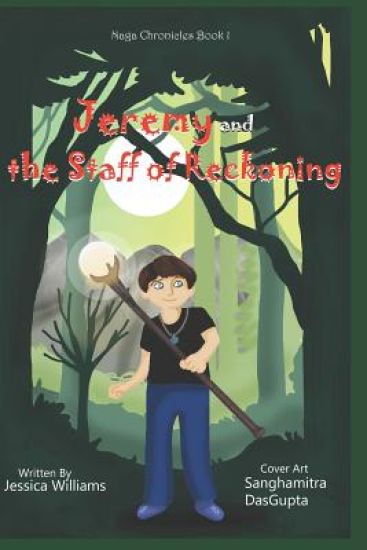
Dragons, witches, elves and magic, all in what was thought to be a dream. Crystals help him travel from his world to an alternate world, where he is supposed to be a hero. The only problem is... he's 10 years old. Jeremy can't be a hero. His mom won't even let him mow the yard yet. How is he supposed to stop an evil Prince? This book has action, adventure, magic, and mystery that will have young kids wanting to be the main character. His family is involved in his alternate world escapades. He learns from a high functioning autistic witch, who is a savant with magic. The realities of traveling by foot and camping out are not lost on the main character and he must learn a lot while on the go to his epic battle. The only question is; How is he supposed to save a world he knows nothing about?
Jeremy wants a puppy. He promises to take care of it, love it, and make sure the puppy is safe and happy.How many parents have heard their own children make this very same promise? It's easy to promise to do something, but much harder to follow through. And, as any parent would, Jeremy's parents hesitate because they wonder whether he will embrace the responsibility and keep his promise, not only to them, but to the puppy he wants to bring home.This lovely, illustrated children's book teaches the value of responsibility and trust and keeping promises no matter what obstacles might get in the way.
Jeremy wants a puppy. He promises to take care of it, love it, and make sure the puppy is safe and happy.How many parents have heard their own children make this very same promise? It's easy to promise to do something, but much harder to follow through. And, as any parent would, Jeremy's parents hesitate because they wonder whether he will embrace the responsibility and keep his promise, not only to them, but to the puppy he wants to bring home.This lovely, illustrated children's book teaches the value of responsibility and trust and keeping promises no matter what obstacles might get in the way.
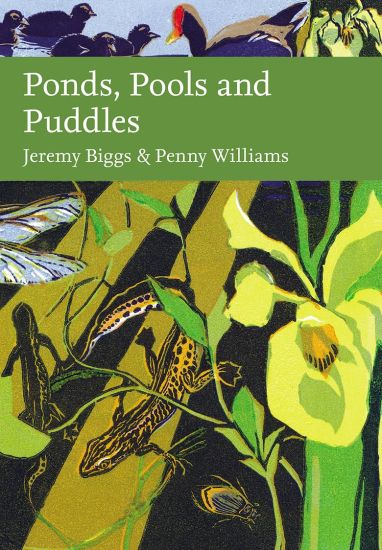
Ponds and pools are a common feature of our landscape – there are at least ten times as many ponds as lakes in the UK – and they are also important wildlife habitats. This book provides a comprehensive and detailed account of these freshwater habitats. The first chapter discusses what ponds, pools and puddles are, how they differ from rivers and lakes, their origin – natural or man-made, the different types of ponds and their abundance and distribution in Britain. A second chapter looks at ponds as ancient natural habitats that have existed for millennia on the earth’s surface. Ancient pond communities, as preserved in inter- and post-glacial sediments, are compared with modern pond communities. This chapter also examines the physical and chemical environment of ponds, covering aspects such as size, shape and depth, hydrology, oxygen and temperature. Ponds, pools and puddles are important wildlife habitats; they are as rich in species as rivers, and support rare and uncommon taxa including about half of Britain’s Red Data Book wetland plant and animal species. The authors give a comprehensive survey of the variety of plant and animal life for which ponds, pools and puddles are a habitat, with a chapter each on plants, invertebrates, amphibians, and fish, birds and mammals. The book discusses the importance of ponds to each of these groups and the ways in which the organisms exploit ponds, describing their habitats and major variations in life cycles. The pond ecosystem and colonisation and succession are discussed in two further chapters, before the final chapter, which is devoted to the subject of conservation and how best to protect and manage ponds and pond wildlife in Britain today. In spite of their evident importance, ponds have been largely ignored by freshwater biologists during this century. Ponds, Pools and Puddles makes an invaluable contribution to raising awareness of these popular, yet frequently underrated freshwater habitats, giving them the attention they rightly deserve.
Ponds and pools are a common feature of our landscape – there are at least ten times as many ponds as lakes in the UK – and they are also important wildlife habitats. This book provides a comprehensive and detailed account of these freshwater habitats. The first chapter discusses what ponds, pools and puddles are, how they differ from rivers and lakes, their origin – natural or man-made, the different types of ponds and their abundance and distribution in Britain. A second chapter looks at ponds as ancient natural habitats that have existed for millennia on the earth’s surface. Ancient pond communities, as preserved in inter- and post-glacial sediments, are compared with modern pond communities. This chapter also examines the physical and chemical environment of ponds, covering aspects such as size, shape and depth, hydrology, oxygen and temperature. Ponds, pools and puddles are important wildlife habitats; they are as rich in species as rivers, and support rare and uncommon taxa including about half of Britain’s Red Data Book wetland plant and animal species. The authors give a comprehensive survey of the variety of plant and animal life for which ponds, pools and puddles are a habitat, with a chapter each on plants, invertebrates, amphibians, and fish, birds and mammals. The book discusses the importance of ponds to each of these groups and the ways in which the organisms exploit ponds, describing their habitats and major variations in life cycles. The pond ecosystem and colonisation and succession are discussed in two further chapters, before the final chapter, which is devoted to the subject of conservation and how best to protect and manage ponds and pond wildlife in Britain today. In spite of their evident importance, ponds have been largely ignored by freshwater biologists during this century. Ponds, Pools and Puddles makes an invaluable contribution to raising awareness of these popular, yet frequently underrated freshwater habitats, giving them the attention they rightly deserve.
Ponds and pools are a common feature of our landscape – there are at least ten times as many ponds as lakes in the UK – and they are also important wildlife habitats. This book provides a comprehensive and detailed account of these freshwater habitats. The first chapter discusses what ponds, pools and puddles are, how they differ from rivers and lakes, their origin – natural or man-made, the different types of ponds and their abundance and distribution in Britain. A second chapter looks at ponds as ancient natural habitats that have existed for millennia on the earth’s surface. Ancient pond communities, as preserved in inter- and post-glacial sediments, are compared with modern pond communities. This chapter also examines the physical and chemical environment of ponds, covering aspects such as size, shape and depth, hydrology, oxygen and temperature. Ponds, pools and puddles are important wildlife habitats; they are as rich in species as rivers, and support rare and uncommon taxa including about half of Britain’s Red Data Book wetland plant and animal species. The authors give a comprehensive survey of the variety of plant and animal life for which ponds, pools and puddles are a habitat, with a chapter each on plants, invertebrates, amphibians, and fish, birds and mammals. The book discusses the importance of ponds to each of these groups and the ways in which the organisms exploit ponds, describing their habitats and major variations in life cycles. The pond ecosystem and colonisation and succession are discussed in two further chapters, before the final chapter, which is devoted to the subject of conservation and how best to protect and manage ponds and pond wildlife in Britain today. In spite of their evident importance, ponds have been largely ignored by freshwater biologists during this century. Ponds, Pools and Puddles makes an invaluable contribution to raising awareness of these popular, yet frequently underrated freshwater habitats, giving them the attention they rightly deserve.
In this study, Jeremy L. Williams interrogates the Book of Acts in an effort to understand how early Christian texts provide glimpses of the legal processes by which Roman officials and militarized police criminalized, prosecuted, and incarcerated people in the first and second centuries CE. Williams investigates how individuals and groups have been, and still are, prosecuted for specious reasons – because of stories and myths written against them, perceptions of alterity that render them subhuman or nonhuman, the collision of officials, and financial incentives that foster injustices, among them. Through analysis of criminalization in Acts, he demonstrates how Critical Race Theory, Black studies, and feminist rhetorical scholarship enables a reconstruction of ancient understandings of crime, judicial institutions, militarized police, punishment, and socio-political processes that criminalize. Williams' study highlights how the criminalization of Jesus followers as depicted in Acts enables connections with contemporary movements. It also presents the ancient text as a critique against the shortcomings of some contemporary understandings of justice and human rights.