Accounting for Decision Making and Control provides students and managers with an understanding appreciation of the strengths and limitations of an organization’s accounting system, thereby allowing them to be more intelligent users of these systems. The Ninth Edition demonstrates that managerial accounting is an integral part of the firm’s organizational architecture, not just an isolated set of computational topics. Managers in all organizations, throughout their professional careers, interact with their accounting systems as it is both a source of information for decision making and part of the organization’s control mechanisms.
Accounting for Decision Making and Control provides students and managers with an understanding appreciation of the strengths and limitations of an organizations accounting system, thereby allowing them to be more intelligent users of these systems. Zimmerman provides students with a framework for understanding accounting systems and a basis for analyzing proposed changes to these systems.Consistent with prior editions, the goal of the new 10th edition of Zimmerman strives to demonstrate to students that Managerial Accounting is an integral part of the firm’s organizational architecture, not just an isolated set of computational topics.
Accounting for Decision Making and Control provides students and managers with an understanding appreciation of the strengths and limitations of an organizations accounting system, thereby allowing them to be more intelligent users of these systems. Zimmerman provides students with a framework for understanding accounting systems and a basis for analyzing proposed changes to these systems.Consistent with prior editions, the goal of the new 10th edition of Zimmerman strives to demonstrate to students that Managerial Accounting is an integral part of the firm’s organizational architecture, not just an isolated set of computational topics.
This book contains a three-pronged strategy for boosting organizational performance - and shareholder value. As a business leader in today's increasingly competitive global race, you need more than fads and buzzwords. You need a focused, cross-functional organizational design, one that will foster intercompany communication and help you identify and resolve minor issues before they become major barriers to success."Designing Organizations to Create Value" draws on recent research as well as the authors' hands-on experience to outline an integrated framework for coordinating the three critical aspects of organizational architecture: assignment of decision-making authority; development of effective performance evaluation systems; and creation of a logical and motivating compensation structure; executives and senior-level decision makers must focus on the entirety of their organizations - as opposed to one particular facet such as strategy, quality, or logistics - to build an efficient and interconnected company.Let "Designing Organizations to Create Value" provide you with methods to systematically analyze all of your organizational issues and reconstruct your workforce into that of a balanced, functional, and battle-ready market leader. 'In today's environment, managers are under increasing pressure to address organizational issues and manage organizational change...The business literature to date has ...failed to provide managers with an integrated approach to identifying and solving organizational problems. Our book is designed to provide a systematic, comprehensive framework for analyzing organizational issues, one that can be consistently applied in addressing problems and structuring more effective organizations' - From the Preface.'Value creation' is more than just another buzz phrase; it is, in fact, the time-honored key to business success. "Designing Organizations to Create Value" is today's most top-to-bottom examination of the ever-elusive topic of value - how it is measured, how firms create and capture it, and how the drive for value impacts the strategy of the entire firm. Rather than focusing on one aspect or strategy, however, this comprehensive book details virtually every area that influences value creation, including: proven strategies for efficient deployment of knowledge throughout an organization; decentralization, and the necessity of implementing proper checks and balances.The essential and interwoven roles of institutional innovation, strategy, and dynamic leadership. By whatever name, in whatever era, value creation is a requisite for long-term organizational survival and success. "Designing Organizations to Create Value" combines decades of multidisciplinary research with case studies from market leaders such as General Electric, Honda, and Wal-Mart to illustrate the payoffs from effective organizational design - and provide a practical, sensible approach for creating value at every level and with every process of your organization.
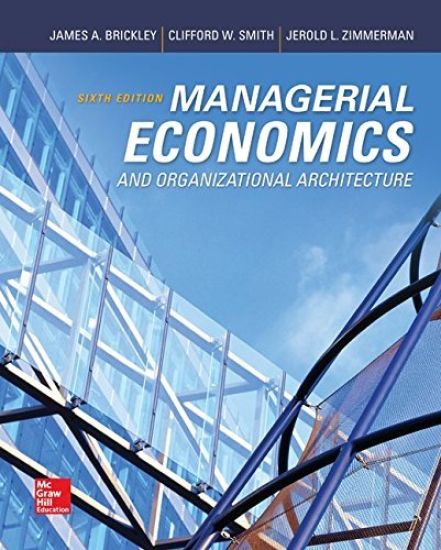
Managerial Economics and Organizational Architecture, 6e helps the student to gain an understanding of the basic tools of economics used to solve important business problems. It also provides an in-depth analysis of the firm and corporate governance topics. The Sixth Edition continues with a focus on decision-making and managerial applications within the structure of an organization. Managerial Economics and Organizational Architecture is thoroughly integrated with the adaptive digital tools available in McGraw-Hill’s LearnSmart Advantage Suite, proven to increase student engagement and success in the course.Connect is the only integrated learning system that empowers students by continuously adapting to deliver precisely what they need, when they need it, and how they need it, so that your class time is more engaging and effective.
Empower your students to solve today’s important business problems with the basic tools of economics and without overwhelming calculus. Ideal for MBA courses, Brickley focus on data-driven decision-making and managerial applications within the structure of an organization. Using multidisciplinary examples, students leverage the underlying economic framework to analyze a variety of problems managers face today. It also provides an in-depth analysis of the firm and corporate governance topics.Brickley paired with Connect Economics provides assignable,auto-gradable versions of test bank content. Assignable content is fully integrated with the eBook. Students are also able to search, highlight, and take notes within the ReadAnywhere eBook and complete adaptive reading assignments offline. Connect provides instructors with powerful reporting tools allowing them to plan, track, and analyze student performance across learning outcomes.
With two distinct objectives, this text's approach to managerial economics takes models from recent economics research and applies the research to the internal structure of a firm. After teaching basic applied economics, the authors look inside the firm and apply this analysis to management decision making. Authors Brickley, Smith, and Zimmerman contend that organizational architecture consists of three aspects of corporate organization: the assignment of decision rights within the company; methods of rewarding individuals; the structure of systems to evaluate the performance of both individuals and business units. These three components can be likened to a stool with three legs. If one of the legs is shorter, the stool is out of balance. These three elements must be in balance in the organization as well.
For over two decades, physics education research has been transforming physics teaching and learning. Now in this new algebra-based introductory physics text, Jerry Touger taps this work to support new teaching methodologies in physics. Introductory Physics: Building Understanding recognizes that students learn better in guided active learning environments, engages students in a conceptual exploration of the physical phenomena before mathematical formalisms, and offers explicit guidance in using qualitative thinking to inform quantitative problem solving.
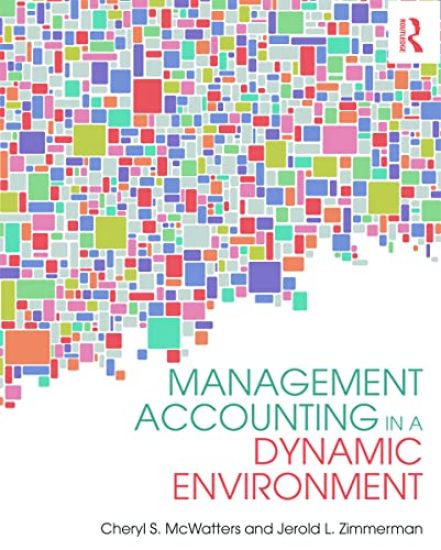
Whether students pursue a professional career in accounting or in other areas of management, they will interact with accounting systems. In all organizations, managers rely on management accounting systems to provide information to deal with changes in their operating environment. This book provides students and managers with an understanding and appreciation of the strengths and limitations of an organization’s accounting system, and enables them to be intelligent and critical users of the system.The text highlights the role of management accounting as an integral part of the organization’s strategy and not merely a set of individual concepts and computations. An analytical framework for organizational change is used throughout the book to underscore how organizations must adapt to create customer and organizational value. This framework provides a way to examine and analyze the organization’s accounting system, and as a basis for evaluating proposed changes to the system. With international examples that bring the current business environment to the forefront, problems and cases to promote critical thinking, and online support for students and instructors, Management Accounting in a Dynamic Environment is no mere introductory textbook. It prepares readers to use accounting systems intelligently to achieve organizational success.The authors have identified several cases to accompany each chapter in the textbook. These are available through Ivey Publishing:https://www.iveycases.com/CaseMateBookDetail.aspx?id=434
Whether students pursue a professional career in accounting or in other areas of management, they will interact with accounting systems. In all organizations, managers rely on management accounting systems to provide information to deal with changes in their operating environment. This book provides students and managers with an understanding and appreciation of the strengths and limitations of an organization’s accounting system, and enables them to be intelligent and critical users of the system.The text highlights the role of management accounting as an integral part of the organization’s strategy and not merely a set of individual concepts and computations. An analytical framework for organizational change is used throughout the book to underscore how organizations must adapt to create customer and organizational value. This framework provides a way to examine and analyze the organization’s accounting system, and as a basis for evaluating proposed changes to the system. With international examples that bring the current business environment to the forefront, problems and cases to promote critical thinking, and online support for students and instructors, Management Accounting in a Dynamic Environment is no mere introductory textbook. It prepares readers to use accounting systems intelligently to achieve organizational success.The authors have identified several cases to accompany each chapter in the textbook. These are available through Ivey Publishing:https://www.iveycases.com/CaseMateBookDetail.aspx?id=434
Describes the disadvantages of litigation, looks at what the American legal system suggests about our society, and discusses arbitration, mediation, and conciliation, alternatives to our adversary approach to justice
This book is a comprehensive introductory manual that guides beginners to a functional reading knowledge of late medieval and early modern Yiddish (c.1100-1750). It is the first such manual to exist for that language, whose early literary tradition comprises a range of genres as broad as other contemporary European literary traditions. The guide is organized as a series of progressively more complex lessons, focused on key texts of the literary corpus, which are presented in their authentic form as found in manuscripts and early printed books. The lessons seek to accommodate readers ranging from absolute beginners to those who might already know Hebrew, medieval German, or modern Yiddish. The focal texts are the Old Yiddish midrashic heroic lay,'Joseph the Righteous', from the earliest extant manuscript collection of Yiddish literature (1382), the Middle Yiddish romance adventure tale, 'Briyo and Zimro', from a later collection (1585), and a full canto of the Middle Yiddish epic, Pariz and Viene (1594), each with full glosses and a step-by-step introduction to the morphology, syntax, and phonology. Each lesson also includes a brief supplemental text that cumulatively demonstrates the broad cultural range of the corpus. In addition, several appendices of supplementary material round out the volume, including a collection of additional readings, a table of the manuscript hands and printing fonts employed in the volume, and a full end-glossary of all Yiddish words found in the texts.
This volume is the first comprehensive anthology of early Yiddish literature (from its beginnings in the twelfth century to the dawn of modern Yiddish in the mid-eighteenth century) for more than one hundred years. It includes the broad range of genres that define the corpus: Arthurian romance, heroic epic, satire, lyric, drama, biblical/midrashic epic, devotional literature, biblical translations, glosses, medicine, magic, legal texts, oaths, letters, legends, autobiography, travelogue, fables, riddles, and adventure tales. One hundred and thirty texts in the original Hebrew alphabet, edited anew from the earliest extant sources, are provided with introductory headnotes that include detailed information concerning sources, author (if known), the research literature, and the place of the text in the literary tradition.
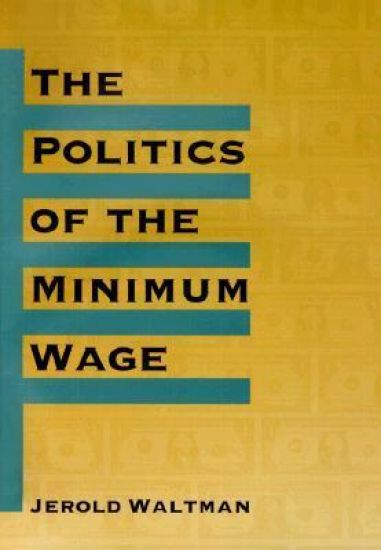
The minimum wage as a value of civic republicanism The minimum wage appears to be a standard economic regulatory measure, yet a politics of symbolism more than anything else defines the political contests that periodically erupt over it. Detractors abhor its corruption of market principles, while supporters see it as a measure of society's symbolic commitment to the poor. Tracing the history of the minimum wage and exposing its inherent contradictions as a political issue, Jerold Waltman proposes an alternative to the economic arguments that now dominate debates over it. Citing overwhelming public support for the minimum wage as evidence of an enduring civic consciousness and humanitarianism, Waltman advocates recasting the discussion in terms of a political economy of citizenship. Such a perspective would focus on the communal value of work, the need for citizens to have a stake in the community, and the effects of economic inequality on the bonds of common citizenship. Positioning the minimum wage as a fulcrum for the most basic conflict underlying America's unique combination of democracy and a market economy, The Politics of the Minimum Wage shows how a defense of the minimum wage built on a communal sense of responsibility rests on a strong tradition of civic republicanism and strengthens the hope for a truly democratic society.
While much early Yiddish literature belonged to pious genres, quasi-secular genres—epic, drama, and lyric—also developed. Jerold Frakes contends that the historical context of the emergence of Yiddish literature is an essential factor in any understanding of its cultural relevance in a time and place where Jewish life was defined by expulsions, massacres, and discriminatory legislation that profoundly altered European Judaism and shook the very foundations of traditional Jewish society.
Major League Baseball, alone among industries of its size in the United States, operates as an unregulated monopoly. This 20th-century regulatory anomaly has become known as the baseball anomaly. Major League Baseball developed into a major commercial enterprise without being subject to antitrust liability. Long after the interstate commercial character of baseball had been established and even recognized by the Supreme Court, baseball's monopoly remained free from federal regulation. Duquette explains the baseball anomaly by connecting baseball's regulatory status to the larger political environment, tracing the game's fate through four different regulatory regimes. The constellation of institutional, ideological, and political factors within each regulatory regime provides the context for the survival of the baseball anomaly.Duquette shows baseball's unregulated monopoly persists because of the confluence of institutional, ideological, and political factors which have prevented the repeal of baseball's antitrust exemption to date. However, both the institutional and ideological factors are fading fast. Baseball's owners can no longer claim special cultural significance in defense of their exemption. Nor can they credibly claim that the commissioner system approximates government regulation effectively. Both of these strategies have been discredited by the labor unrest of the 1980s and 1990s. Duquette provides a unique perspective on American regulatory politics, and by explaining a complicated story in comprehensive prose, he has given researchers, policy makers, and fans a fascinating look at the business of baseball.