Kirjojen hintavertailu. Mukana 11 342 296 kirjaa ja 12 kauppaa.

Kirjahaku

Etsi kirjoja tekijän nimen, kirjan nimen tai ISBN:n perusteella.

1000 tulosta hakusanalla Jerome T. Walsh

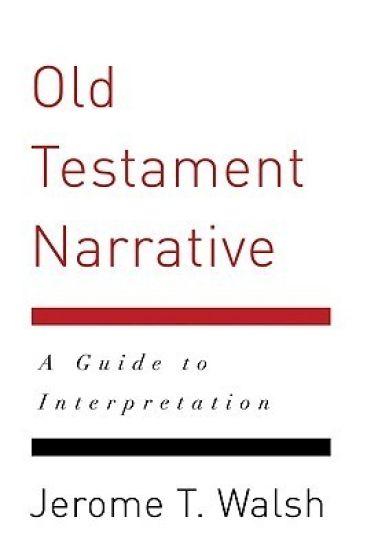
Old Testament Narrative

Old Testament Narrative

Jerome T. Walsh

Westminster/John Knox Press,U.S.
2010
nidottu
The Old Testament's stories are intriguing, mesmerizing, and provocative not only due to their ancient literary craft but also because of their ongoing relevance. In this volume, well suited to college and seminary use, Jerome Walsh explains how to interpret these narrative passages of Scripture based on standard literary elements such as plot, characterization, setting, pace, point of view, and patterns of repetition. What makes this book an exceptional resource is an appendix that offers practical examples of narrative interpretation- something no other book on Old Testament interpretation offers.
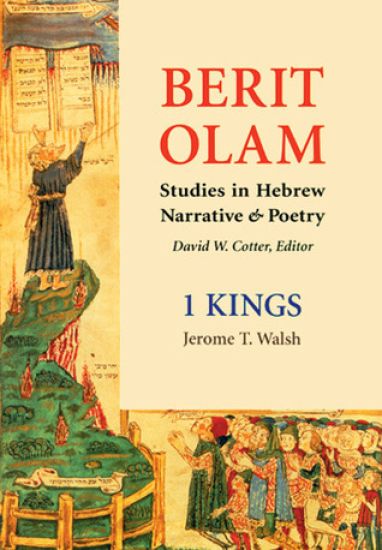
Berit Olam

Berit Olam

Jerome T. Walsh

Liturgical Press
1996
sidottu
The narratives of Solomon and Jeroboam, of Elijah and Ahab, have fascinated readers for millennia. Even apart from questions of historical authenticity, they are gripping stories of richly drawn characters caught up in the complex tale of God's dealings with Israel. This study explores the narrative world created by 1 Kings' ancient Israelite author: the people who inhabit it, the lives they live, the deeds they do, and the face of God who is revealed in their stories.An introduction explains the significance of 1 Kings as a historical narrative. Originally intended as a literal history, after centuries of writing and rewriting it is now as much a literary work as a historical one: The views of those who formed it can be discerned and studied. Walsh also explains how the rich traditions of Hebrew prose narrative and the Hebrew language itself affect our reading of 1 Kings.
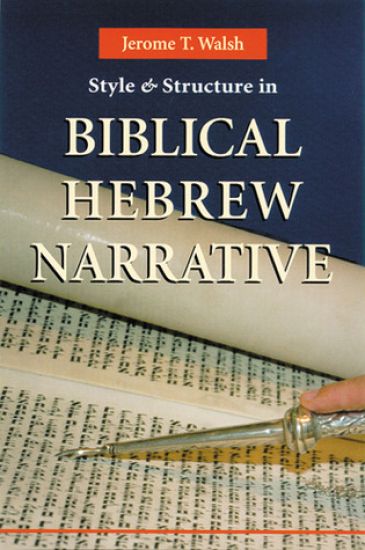
Style And Structure In Biblical Hebrew Narrative
The pages of the Hebrew Bible are filled with stories - short and long, funny and sad, histories, fables, and morality tales. The ancient narrators used a variety of stylistic devices to structure, to connect, and to separate their tales - and thus to establish contexts within which meaning comes to light. What are these devices, and how do they guide our reading and our understanding of the text? Style and Structure in Biblical Hebrew Narrative explores some of the answers and shows scriptural interpretation can be a matter of style." Part one of Style and Structure in Biblical Hebrew Narrative examines a wide variety of symmetrical patterns biblical Hebrew narrative uses to organize its units and subunits, and the interpretive dynamics those patterns can imply. Part two addresses the question of boundaries between literary units. Part three examines devices that biblical Hebrew narrative uses to connect consecutive literary units and subunits. Chapters in Part One: Structures of Organization are "Reverse Symmetry," "Forward Symmetry," "Alternating Repetition," "Partial Symmetry," "Multiple Symmetry," "Asymmetry." Chapters in Part Two: Structures of Disjunction are "Narrative Components," "Repetition," and "Narrative Sequence." Chapters in Part Three: Structures of Conjunction are "Threads," "Links: Examples," "Linked Threads: Examples," "Hinges: Examples," and "Double-Duty Hinges: Examples."Jerome T. Walsh, PhD, is a professor of theology and religious studies at the University of Botswana. He is the author of 1 Kings in the Berit Olam (The Everlasting Covenant) Studies in Hebrew Narrative and Poetry series for which he is also an associate editor."
Berit Olam

Berit Olam

Jerome T. Walsh

Liturgical Press
2021
pokkari
The narratives of Solomon and Jeroboam, of Elijah and Ahab, have fascinated readers for millennia. Even apart from questions of historical authenticity, they are gripping stories of richly drawn characters caught up in the complex tale of God's dealings with Israel. This study explores the narrative world created by 1 Kings' ancient Israelite author: the people who inhabit it, the lives they live, the deeds they do, and the face of God who is revealed in their stories.An introduction explains the significance of 1 Kings as a historical narrative. Originally intended as a literal history, after centuries of writing and rewriting it is now as much a literary work as a historical one: The views of those who formed it can be discerned and studied. Walsh also explains how the rich traditions of Hebrew prose narrative and the Hebrew language itself affect our reading of 1 Kings.
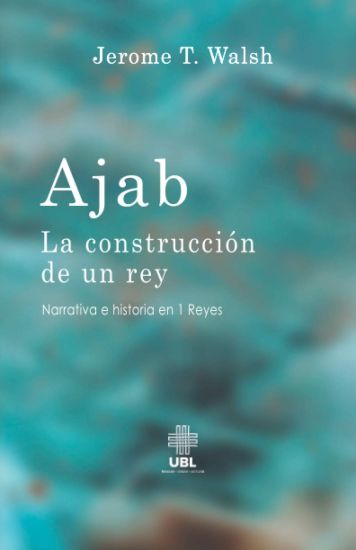
Ajab: La construcción de un rey

Ajab: La construcción de un rey

Jerome T. Walsh

Editorial Sebila
2020
nidottu
Ajab, la construcci n de un rey del Dr. Jerome T. Walsh es un estudio de 1 Reyes 17-22 que centra su atenci n en la figura deAjab, rey de Israel durante el siglo IX a.C. El relato b blico mismo, describe a este rey en t rminos poco elogiosos: "Acab hijo de Omr hizo lo que ofende al SE OR, m s que todos los reyes que lo precedieron" (1 Re 16,30), "y tambi n fabric una imagen de la diosa Aser . En fin, hizo m s para provocar la ira del SE OR, Dios de Israel, que todos los reyes de Israel que lo precedieron." (1 Re 16,33). Esta primera impresi n que el lector moderno recibe de este rey, se confirma a lo largo del relato b blico una y otra vez. El estudio de Walsh arroja nueva luz sobre este personaje, si bien no siempre en t rminos halagadores. Este estudio se basa en dos asuntos principales. Primero, una pregunta de cr tica narrativa: C mo representa el texto al rey Ajab? En otras palabras, Ajab el personaje narrativo c mo es? En segundo lugar, una pregunta de cr tica hist rica: C mo ha crecido y cambiado esta representaci n que se encuentra en nuestros textos, a medida que se ha transmitido de generaci n en generaci n? En otras palabras, cu nto del personaje hist rico de Ajab ha sobrevivido en el personaje narrativo y qu parte de este ltimo es producto de una elaboraci n posterior? El relato del rey Ajab comienza en 1 R 16,29 y termina en 1 R 22,40. Su presencia en estos seis cap tulos es bastante desigual. En los cap tulos 1 R 20-22, l es el personaje central; en los cap tulos 1 R 17-19, por el contrario, El as es mucho m s prominente que Ajab. De hecho, en los cap tulos 1 R 17 y 19, Ajab aparece solo en dos vers culos. Casi ning n otro rey despu s de Salom n, sin embargo, merece un relato de su reinado de tal extensi n. 1. La primera parte inicia con una breve presentaci n del Ajab de la historia. La informaci n que una investigaci nresponsable de la evidencia hist rica puede considerar confiable es limitada en extremo, raz n por la que el retratoresultante de Ajab es realmente un esbozo. Sin embargo, proporciona un punto de referencia para la comparaci ncon las otras dos partes m s largas del libro.2. La segunda parte examina los textos como los tenemos hoy en d a, para poner de relieve a Ajab, tal como lo describe lanarrativa. No es sorprendente que, dados los muchos m s datos con los que trabajar, la imagen del Ajab de la narrativa sea mucho m s compleja y detallada que la del Ajab de la historia. Lo que es sorprendente es la falta casi total de parecido entre los dos.3. En la tercera parte, finalmente, se propone una reconstrucci n de la historia de los textos acerca de Ajab, para determinar c mo se desarroll su retrato textual a lo largo del tiempo y si alguno de los rasgos que encontramos en el Ajab de la narrativa, puede considerarse plausiblemente original en el Ajab de la historia.El recorrido de esta investigaci n arranca en primer lugar con los datos que la historia y la arqueolog a nos ofrecen, paramostrarnos hasta d nde es posible reconstruir los hechos que conformaron su vida real. Luego dirige su atenci n hacia lasmismas narraciones y con una mirada aguda analiza sus detalles, sus relaciones de sentido, sus matices literarios, amparado en un detallado an lisis narrativo de los textos. Finalmente, se exploran lo que los m todos hist rico-cr ticos nos pueden decir sobre estos relatos. Con esta obra, Jerome Walsh demuestra tanto la investigaci n cr tica como los m todos b sicos de los estudios b blicos: la cr tica de las fuentes y de la redacci n, la cr tica textual y la narrativa.
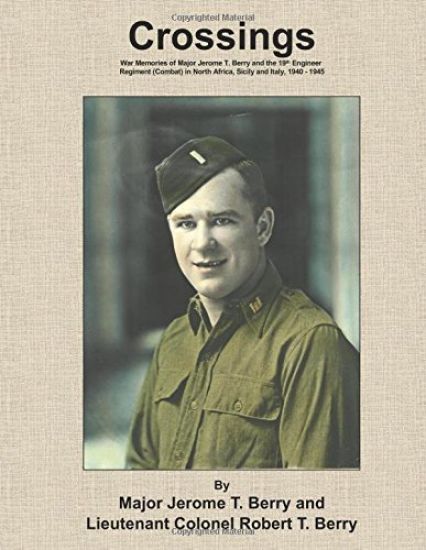
Crossings: War Memories of Major Jerome T. Berry and the 19th Engineer Regiment (Combat) in North Africa, Sicily and Italy, 1940 - 1945
Crossings is a pictorial account of the little-discussed war that took place in the belly of the Axis powers in North Africa, Sicily and Italy. The invasion of North Africa on November 8, 1942 marked the largest invasion by sea in the history of the world and established the Allied powers determination to beat back the Axis powers and to eventually regain control of Europe. The war in the southern theater was the training ground for some of the greatest generals of World War II, including Dwight D. Eisenhower who cut his combat teeth in North Africa. General George S. Patton commanded Allied forces who landed near Casablanca and later commanded II Corps in North Africa and Seventh Army in Sicily before becoming a legend in Europe. General Mark Clark went on a secret mission on the night before the invasion of North Africa and later commanded Fifth Army as it landed in Italy and fought up the Italian Peninsula. General Omar Bradley served as deputy commander of II Corps under Patton in North Africa and then commanded II Corps in North Africa and the Sicily campaign. General Bernard Montgomery commanded the British Eighth Army in North Africa and Sicily. On the other side, the Allies faced Field Marshal Erwin Rommel, General Herman Kesselring, General Von Sengar and the best that Hitler had to offer. During the southern campaign, the Allies defeated the Vichy French and then turned the French into a fighting force beside the Allies while they contributed fighting units from Morocco, Tunisia and Algeria. As Sicily fell, so did Mussolini while many Italians volunteered for fighting units to face retreating Axis armies. In the middle of the war in the south, the 19th Engineer Regiment (Combat) paved the way for thousands of Allied infantry and armor to press the fight. Men of the 19th cleared mine fields, rebuilt destroyed bridges, blew up obstacles, built pontoon bridges under ferocious fire and fought as infantry when necessary. The 19th were some of the few defenders of Kasserine Pass and was nearly obliterated by a ferocious German and Italian onslaught. Units of the 19th led the way in the initial landing in North Africa as well as Sicily and Italy. As they did so, men of the 19th fought and died. They died from exploding mines, from enemy bullets and from German artillery. When Allied armor columns were deployed to attack, men of the 19th were in front, building bridges and shoe-flies for them to go forward. When infantry units were poised for the offensive, the combat engineers lead the way through mine fields and across streams and rivers. Jerome T. Berry was one of the first officers assigned to the 19th when it was activated on July 1, 1942 in Fort Ord, California. He served the 19th as a second lieutenant, first lieutenant and captain throughout the southern campaign, from initial training at Fort Ord, to forward deployment in England and Ireland, to the invasion of Algeria, to the invasion and conquering of Sicily to the defeat of Germany and Italy up the Italian peninsula. Berry relives his three and a half years with the 19th through his son, Robert, in this delightful documentary. Included are hundreds of photos of the men of the 19th shown in combat, in rest, working and playing. "We cleared mines night and day. We cleared thousands and thousands of mines. As fast as we could beat back the Germans, they laid thousands of mines to slow our advance and we were the ones who had to take them out - usually under fire." So, the 19th Engineer Regiment crossed the United States, the Atlantic, the Mediterranean, North African deserts, the island of Sicily, the Italian peninsula and enabled hundreds of thousands of their comrades to cross mine fields, rivers, mountains, roads, passes, muddy fields, snow-covered valleys and defended hilltops.
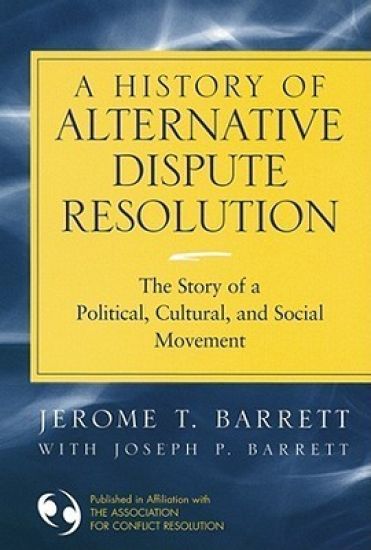
A History of Alternative Dispute Resolution

A History of Alternative Dispute Resolution

Jerome T. Barrett; Joseph Barrett

Jossey-Bass Inc.,U.S.
2004
sidottu
A History of Alternative Dispute Resolution offers a comprehensive review of the various types of peaceful practices for resolving conflicts. Written by Jerome Barrett—a longtime practitioner, innovator, and leading historian in the field of ADR—and his son Joseph Barrett, this volume traces the evolution of the ADR process and offers an overview of the precursors to ADR, including negotiation, arbitration, and mediation. The authors explore the colorful beginnings of ADR using illustrative examples from prehistoric Shaman through the European Law Merchant. In addition, the book offers the historical context for the use of ADR in the arenas of diplomacy and business.
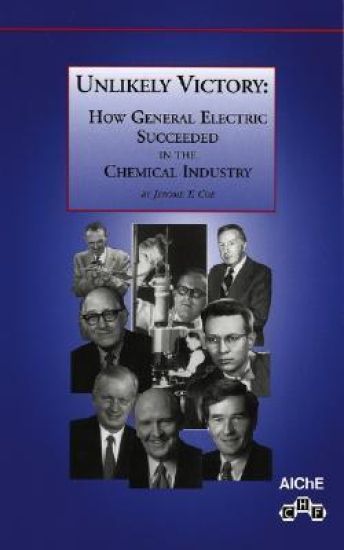
Unlikely Victory

Unlikely Victory

Jerome T. Coe

American Institute of Chemical Engineers
2005
sidottu
Many companies that stray too far from their core business fail. So how is it that General Electric, a major electrical manufacturing company, ended up as one of the top U.S. chemical producers—with 1998 sales of $6.6 billion? In Unlikely Victory, Jerome T. Coe, a retired 40-year career employee with General Electric, who spent more than 20 years as a manager of the company’s chemical businesses, suggests that it was a combination of necessity, forward-thinking of the engineers, and managers wise enough to give them breathing room. “Much of what they did (then) was counter to the prevailing GE culture,” he writes. “Today, it has become the corporate culture.” The book tells the whole story of this successful business model, from the early years of GE chemistry through the company’s successes with silicones, synthetic diamond, Lexan polycarbonate plastic, and other high-performance thermoplastics. It also profiles four scientists and five managers—including former CEO John F. Welch, Jr., a chemical engineer and a product of the GE plastic business—who made a significant difference in the company’s chemical success. The book is amply illustrated with photographs of the people, products, and plants that contributed to one of America’s most unusual corporate success stories.
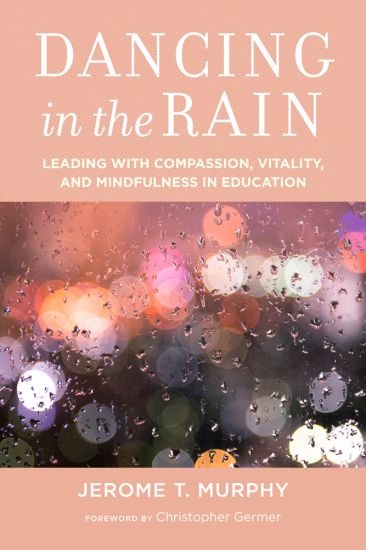
Dancing in the Rain

Dancing in the Rain

Jerome T. Murphy; Christopher Germer

Harvard Educational Publishing Group
2016
nidottu
Dancing in the Rain offers a lively and accessible guide aimed at helping education leaders thrive under pressure by developing the inner strengths of mindfulness and self-compassion, expressing emotions wisely, and maintaining a clear focus on the values that matter most. Jerome T. Murphy, a scholar and former dean who has written and taught about the inner life of education leaders, argues that the main barrier to thriving as leaders is not the outside pressures we face, but how we respond to them inside our minds and hearts.In this concise volume, Murphy draws on a combination of Eastern philosophy and Western psychology, as well as his own experience and research in the field of education leadership. He presents a series of exercises and activities to help educators take discomfort more in stride, savor the joys and satisfactions of leadership work, and thrive as effective leaders guided by heartfelt values.Every day, education leaders find themselves swamped in a maelstrom of pressures that add to the complex challenges of educating all students to a high level. With humor and compassion, Dancing in the Rain shows educators how to lead lives of consequence and purpose in the face of life's inescapable downpours.
Dancing in the Rain

Dancing in the Rain

Jerome T. Murphy; Christopher Germer

Harvard Educational Publishing Group
2016
sidottu
Dancing in the Rain offers a lively and accessible guide aimed at helping education leaders thrive under pressure by developing the inner strengths of mindfulness and self-compassion, expressing emotions wisely, and maintaining a clear focus on the values that matter most. Jerome T. Murphy, a scholar and former dean who has written and taught about the inner life of education leaders, argues that the main barrier to thriving as leaders is not the outside pressures we face, but how we respond to them inside our minds and hearts.In this concise volume, Murphy draws on a combination of Eastern philosophy and Western psychology, as well as his own experience and research in the field of education leadership. He presents a series of exercises and activities to help educators take discomfort more in stride, savor the joys and satisfactions of leadership work, and thrive as effective leaders guided by heartfelt values.Every day, education leaders find themselves swamped in a maelstrom of pressures that add to the complex challenges of educating all students to a high level. With humor and compassion, Dancing in the Rain shows educators how to lead lives of consequence and purpose in the face of life's inescapable downpours.
Biofilms in Bioelectrochemical Systems

Biofilms in Bioelectrochemical Systems

Haluk Beyenal; Jerome T. Babauta

John Wiley Sons Inc
2015
sidottu
This book serves as a manual of research techniques for electrochemically active biofilm research. Using examples from real biofilm research to illustrate the techniques used for electrochemically active biofilms, this book is of most use to researchers and educators studying microbial fuel cell and bioelectrochemical systems. The book emphasizes the theoretical principles of bioelectrochemistry, experimental procedures and tools useful in quantifying electron transfer processes in biofilms, and mathematical modeling of electron transfer in biofilms. It is divided into three sections: Biofilms: Microbiology and microbioelectrochemistry - Focuses on the microbiologic aspect of electrochemically active biofilms and details the key points of biofilm preparation and electrochemical measurementElectrochemical techniques to study electron transfer processes - Focuses on electrochemical characterization and data interpretation, highlighting key factors in the experimental procedures that affect reproducibilityApplications - Focuses on applications of electrochemically active biofilms and development of custom tools to study electrochemically active biofilms. Chapters detail how to build the reactors for applications and measure parameters
Interest-based Bargaining

Interest-based Bargaining

John O'Dowd; Jerome T. Barrett

Trafford Publishing
2005
pokkari
Interest-Based Bargaining: A User's Guide provides a detailed account of why it makes sense to negotiate on the basis of interests rather than positions. It provides a detailed set of guidelines for negotiators who wish to develop a cooperative, problem solving approach to their bargaining. It draws on the experiences of using interest-based approaches in the USA and Ireland. Interest-based bargaining is an approach to collective bargaining that is focused on understanding the interests of parties and on building solutions around these. It uses problem-solving tools such as brainstorming, flip charting and consensus decision-making. This book will be of particular value to management and union representatives who are already working in a cooperative way and who wish to deepen that cooperation.