Kirjojen hintavertailu. Mukana 11 244 527 kirjaa ja 12 kauppaa.

Kirjahaku

Etsi kirjoja tekijän nimen, kirjan nimen tai ISBN:n perusteella.

1000 tulosta hakusanalla Jerry L. Mashaw

Bureaucratic Justice

Bureaucratic Justice

Jerry L. Mashaw

Yale University Press
1985
pokkari
"Anyone interested in 'good government' should read Jerry Mashaw's new book on how the social Security Administration implements congressionally mandated policy for controlled consistent distribution of disability benefits. . . . He offers an important perspective on bureaucracy that must be considered when devising procedures for not only disability determinations but also other forms of administrative adjudication."—Linda A. O'Hare, American Bar Association Journal"A major contribution to the ongoing debate about administrative law and mass justice."—Lance Liebman and Richard B. Stewart, Harvard Law Review"Profound implications for the future of democratic government. . . . Practical, analytical policymaking for a complex decision system of great significance to many Americans."—Paul R. Verkuil, Yale Law Journal"An exceptionally valuable book for anyone who is concerned about the role of law in the administrative state. Mashaw manages to range broadly without becoming superficial, and to present a coherent and challenging theory in lively, readable prose. Bureaucratic Justice seems certain to become a standard reference work for administrative lawyers, and for anyone else who seeks the elusive goal of developing more humane and more effective public bureaucracies."—Barry Boyer, Michigan Law Review"Strongly recommended for use in graduate seminars in public policy or law. . . . If we are to develop a positive model of bureaucratic competence, we must answer the insightful questions rased in this cogent book."—David L. Martin, American Political Science Review"Mashaw provides an excellent analysis of middle range processes of decision making."—Gerald Turkel, Qualitative Sociology"Stimulating and provocative and . . . makes a contribution to the ongoing dialogue about due process in public administration.... It is tightly organized, cogently argued, and full of pithy historical illustrations. . . . One of the best such works in many years." —Annals of the American Academy of Political and Social Science"A thoughtful, challenging, and very useful book."—Choice"Inspires a new direction in administrative law scholarship."—A.I. Ogus, Oxford Journal of Legal Studies
Greed, Chaos, and Governance

Greed, Chaos, and Governance

Jerry L. Mashaw

Yale University Press
1999
pokkari
Public choice theory should be taken seriously—but not too seriously. In this thought-provoking book, Jerry Mashaw stakes out a middle ground between those who champion public choice theory (the application of the conventional methodology of economics to political science matters, also known as rational choice theory) and those who disparage it. He argues that in many cases public choice theory's reach has exceeded its grasp. In others, public choice insights have not been pursued far enough by those who are concerned with the operation and improvement of legal institutions. While Mashaw addresses perennial questions of constitutional law, legislative interpretation, administrative law, and the design of public institutions, he arrives at innovative conclusions. Countering the positions of key public choice theorists, Mashaw finds public choice approaches virtually useless as an aid to the interpretation of statutes, and he finds public choice arguments against delegating political decisions to administrators incoherent. But, using the tools of public choice analysts, he reverses the lawyers' conventional wisdom by arguing that substantive rationality review is not only legitimate but a lesser invasion of legislative prerogatives than much judicial interpretation of statutes. And, criticizing three decades of "law reform," Mashaw contends that pre-enforcement judicial review of agency rules has seriously undermined both governmental capacity and the rule of law.
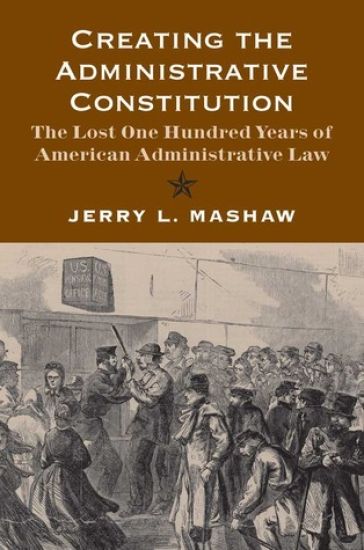
Creating the Administrative Constitution

Creating the Administrative Constitution

Jerry L. Mashaw

Yale University Press
2012
pokkari
This groundbreaking book is the first to look at administration and administrative law in the earliest days of the American republic. Jerry Mashaw demonstrates that from the very beginning Congress delegated vast discretion to administrative officials and armed them with extrajudicial adjudicatory, rulemaking, and enforcement authority. The legislative and administrative practices of the U.S. Constitution’s first century created an administrative constitution hardly hinted at in its formal text. This book, in the author’s words, will "demonstrate that there has been no precipitous fall from a historical position of separation-of-powers grace to a position of compromise; there is not a new administrative constitution whose legitimacy should be understood as not only contestable but deeply problematic."
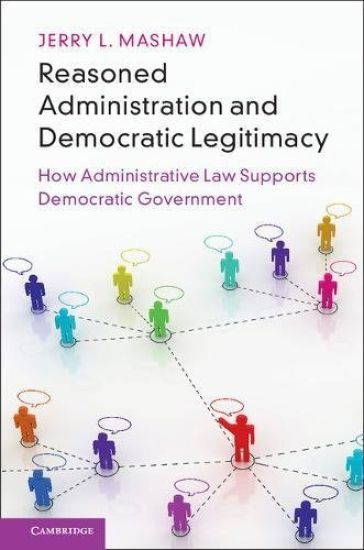
Reasoned Administration and Democratic Legitimacy

Reasoned Administration and Democratic Legitimacy

Jerry L. Mashaw

Cambridge University Press
2018
pokkari
Reasoned Administration and Democratic Legitimacy: How Administrative Law Supports Democratic Government explores the fundamental bases for the legitimacy of the modern administrative state. While some have argued that modern administrative states are a threat to liberty and at war with democratic governance, Jerry L. Mashaw demonstrates that in fact reasoned administration is more respectful of rights and equal citizenship and truer to democratic values than lawmaking by either courts or legislatures. His account features the law's demand for reason giving and reasonableness as the crucial criterion for the legality of administrative action. In an argument combining history, sociology, political theory and law, this book demonstrates how administrative law's demand for reasoned administration structures administrative decision-making, empowers actors within and outside the government, and supports a complex vision of democratic self-rule.
Reasoned Administration and Democratic Legitimacy

Reasoned Administration and Democratic Legitimacy

Jerry L. Mashaw

Cambridge University Press
2018
sidottu
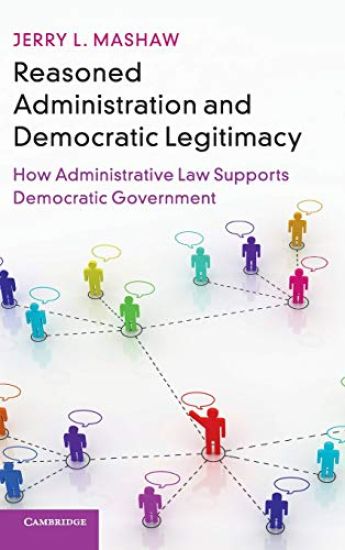
Reasoned Administration and Democratic Legitimacy: How Administrative Law Supports Democratic Government explores the fundamental bases for the legitimacy of the modern administrative state. While some have argued that modern administrative states are a threat to liberty and at war with democratic governance, Jerry L. Mashaw demonstrates that in fact reasoned administration is more respectful of rights and equal citizenship and truer to democratic values than lawmaking by either courts or legislatures. His account features the law's demand for reason giving and reasonableness as the crucial criterion for the legality of administrative action. In an argument combining history, sociology, political theory and law, this book demonstrates how administrative law's demand for reasoned administration structures administrative decision-making, empowers actors within and outside the government, and supports a complex vision of democratic self-rule.
Seasoned by Salt

Seasoned by Salt

Jerry L. Mashaw; Anne U. MacClintock

Sheridan House
2007
pokkari
Seasoned by Salt is the fascinating account of a one-year cruise, from Connecticut to Grenada and back, undertaken by a sailing couple. The book alternates throughout between their two complementary voices as they relive their journey. They are not your average tourists. Their story is brimming with humor and high adventure, and reflects a deep understanding of the history, people, and economy of the many islands that they visited. During their journey, they develop an understanding of the historical bond between North America and the Caribbean, particularly their intertwined colonial past and their shared legacy of slavery and racial division. This book is a romance, a comedy, a search for personal meaning, and above all a wonderful sailing story that finds subtle parallels between individuals' relationships and nations' and explores the crucial and continuing ties between the sea and history.
The Struggle for Auto Safety

The Struggle for Auto Safety

Jerry L Mashaw; David L Harfst

Harvard University Press
1990
sidottu
Combining superb investigative reporting with incisive analysis, Jerry Mashaw and David Harfst provide a compelling account of the attempt to regulate auto safety in America. Their penetrating look inside the National Highway Traffic Safety Administration (NHTSA) spans two decades and reveals the complexities of regulating risk in a free society. Hoping to stem the tide of rising automobile deaths and injuries, Congress passed the National Traffic and Motor Vehicle Safety Act in 1966. From that point on, automakers would build cars under the watchful eyes of the federal regulators at NHTSA. Curiously, however, the agency abandoned its safety mission of setting, monitoring, and enforcing performance standards in favor of the largely symbolic act of recalling defective autos. Mashaw and Harfst argue that the regulatory shift from rules to recalls was neither a response to a new vision of the public interest nor a result of pressure by the auto industry or other interest groups. Instead, the culprit was the legal environment surrounding NHTSA and other regulatory agencies such as the EPA, OSHA, and the Consumer Product Safety Commission. The authors show how NHTSA's decisions as well as its organization, processes, and personnel were reoriented in order to comply with the demands of a legal culture that proved surprisingly resistant to regulatory pressures. This broad-gauged view of NHTSA has much to say about political idealism and personal ambition, scientific commitment and professional competition, long-range vision and political opportunism. A fascinating illustration of America's ambivalence over whether government is a source of--or solution to--social ills, "The Struggle for Auto Safety" offers important lessons about the design and management of effective health and safety regulatory agencies today.
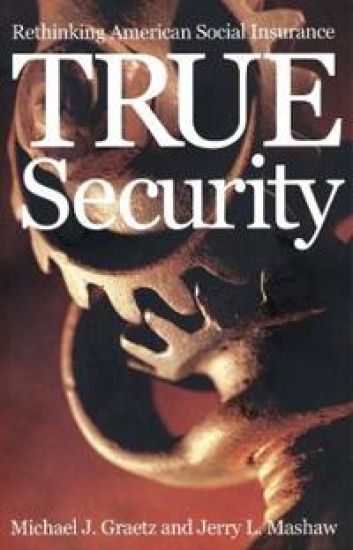
True Security

True Security

Michael J. Graetz; Jerry L. Mashaw

Yale University Press
1999
pokkari
Social insurance in the United States—including the Social Security Act of 1935 and the Medicare, Medicaid, and disability insurance programs that were added later—may be the greatest triumph of American domestic policy. But true security has not been achieved. As Michael J. Graetz and Jerry L. Mashaw show in this pathbreaking book, the nation's system of social insurance is riddled with gaps, inefficiencies, and inequities. Even the most popular and successful programs, Medicare and Social Security, face serious financial challenges from the coming retirement of the baby boom generation and the aging of the population. This book challenges the notion that American social insurance must remain inadequate, unaffordable, or both. In sharp contrast to policymakers and analysts who debate only one income security program at a time, Graetz and Mashaw examine social insurance whole to assess its crucial role in providing economic security in a dynamic market economy. They recognize that, notwithstanding a proper emphasis on individual freedom and responsibility, Americans share a common fate that binds them together in a common enterprise. The authors offer us a new vision of the social insurance contract and concrete proposals to make the nation's families more secure without increasing costs.
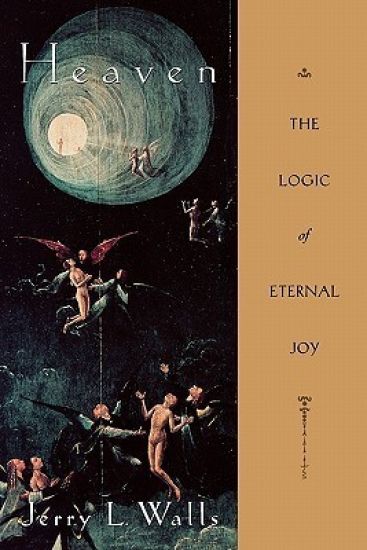
Heaven

Heaven

Jerry L. Walls

Oxford University Press Inc
2002
sidottu
The Christian doctrine of heaven has been a moral source of enormous power in western culture. It has provided a striking account of the ultimate good in life and has for two millennia animated the hope that our lives can be fully meaningful. Recently, however, the doctrine of heaven has lost much of its grip on the western imagination and has become a vague and largely ignored part of the Christian creed. Not only have our hopes been redefined as a result, but our very identity as human beings has been altered. In this book, Jerry L. Walls argues that the doctrine of heaven is ripe for serious reconsideration. He contends not only that the orthodox view of heaven can be defended from objections commonly raised against it, but also that heaven is a powerful resource for addressing persistent philosophical problems, not the least of which concern the ground of morality and the meaning of life. Walls shows how heaven is integrally related to central Christian doctrines, particularly those concerning salvation, and tackles the difficult problem of why faith in Christ is necessary to save us from our sins. In addition, heaven is shown to illumine thorny problems of personal identity and to be an essential component of a satisfactory theodicy. Walls goes on to examine data from near-death experiences from the standpoint of some important recent work in epistemology and argues that they offer positive evidence for heaven. He concludes that we profoundly need to recover the hope of heaven in order to recover our very humanity.
Heaven

Heaven

Jerry L. Walls

Oxford University Press Inc
2007
nidottu
In this book Jerry L. Walls argues that the doctrine of heaven is ripe for serious reconsideration. He contends not only that the orthodox view of heaven can be defended from objections commonly raised against it, but also that heaven is a powerful resource for addressing persistent philosophical problems, not the least of which concern the ground of morality and the meaning of life.
Purgatory

Purgatory

Jerry L. Walls

Oxford University Press Inc
2011
sidottu
This is a sequel to Walls's Heaven: the Logic of Eternal Joy (2002) and his earlier book Hell: The Logic of Eternal Damnation (1992). With Purgatory, Walls completes his examination of the Christian theology of the afterlife. He sketches the theological rationale for the doctrine of purgatory and traces its development in Roman Catholic theology. He examines Protestant objections to the doctrine - in particular the claims that it is not scriptural - and the Protestant Reformed and Wesleyan alternatives. As an intermediate state between death and resurrection, purgatory has traditionally assumed body-soul dualism, a concept called into question by much recent theology. Walls considers the impact of a monistic view of the human person on the doctrine of purgatory. In Catholic theology, purgatory has been understood as applying to persons who are already in a state of grace or salvation. In popular thought, however, it is sometimes understood as a "second chance" for the unconverted. Walls examines the doctrine in the light of "inclusive" theories of salvation that allow for repentance and conversion after death. He concludes with an examination of C.S. Lewis's writings on purgatory, and suggests that Lewis can be a model for evangelicals and other Protestants to engage the doctrine of purgatory in a way that is true to their theology.
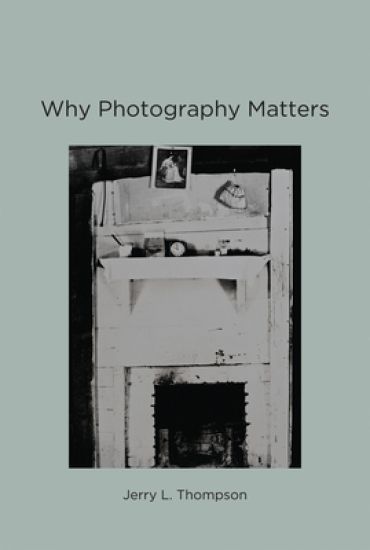
Why Photography Matters

Why Photography Matters

Jerry L. Thompson

MIT Press
2015
pokkari
A lucid and wide-ranging meditation on why photography is unique among the picture-making arts.Photography matters, writes Jerry Thompson, because of how it works-not only as an artistic medium but also as a way of knowing. With this provocative observation, Thompson begins a wide-ranging and lucid meditation on why photography is unique among the picture-making arts. He constructs an argument that moves with natural logic from Thomas Pynchon (and why we read him for his vision and not his command of miscellaneous facts) to Jonathan Swift to Plato to Emily Dickinson (who wrote "Tell all the Truth but tell it slant") to detailed readings of photographs by Eugene Atget, Garry Winogrand, Marcia Due, Walker Evans, and Robert Frank. Forcefully and persuasively, he argues for photography as a medium whose business is not constructing fantasies pleasing to the eye or imagination, but describing the world in the toughest and deepest way.
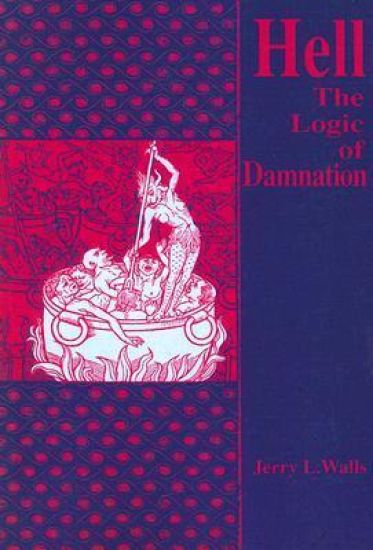
Hell

Hell

Jerry L. Walls

University of Notre Dame Press
1992
nidottu
Jerry L. Walls cogently argues that some traditional views of hell are still defensible and can be believed with intellectual and moral integrity. Focusing on the issues from the standpoint of philosophical theology, he explores the doctrine of hell in relation to both the divine nature and human nature. He argues, with respect to divine nature, that some versions of the doctrine are compatible not only with God's omnipotence and omniscience, but also with a strong account of His perfect goodness. The concept of divine goodness receives special attention since the doctrine of hell is most often rejected on moral grounds. In addition, Walls maintains that the doctrine of hell is intelligible from the standpoint of human freedom, since the idea of a decisive choice of evil is a coherent one.
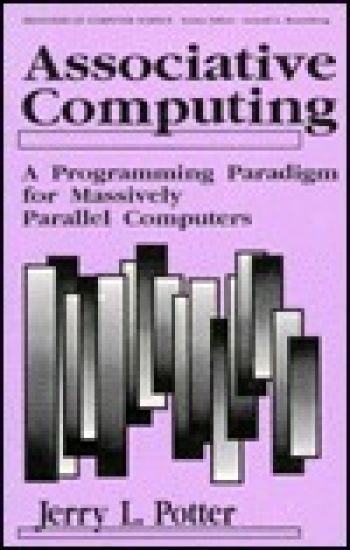
Associative Computing

Associative Computing

Jerry L. Potter

Kluwer Academic / Plenum Publishers
1992
sidottu
Integrating associative processing concepts with massively parallel SIMD technology, this volume explores a model for accessing data by content rather than abstract address mapping.
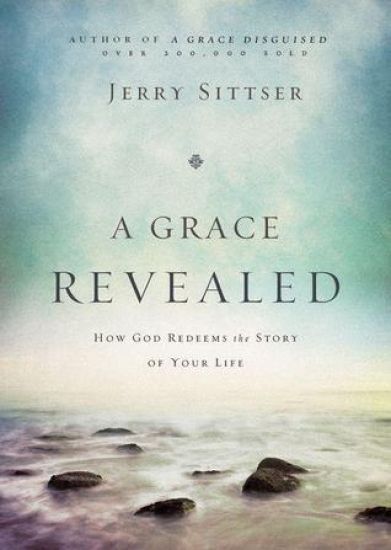
A Grace Revealed

A Grace Revealed

Jerry L. Sittser

Zondervan
2012
sidottu
Twenty years ago, Jerry Sittser lost his daughter, wife, and mother in a car accident. He chronicled that tragic experience in A Grace Disguised, a book that has become a classic on the topic of grief and loss.Now he asks: How do we live meaningfully, even fruitfully, in this world and at the same time long for heaven? How do we respond to the paradox of being a new creature in Christ even though we don’t always feel or act like one? How can we trust God is involved in our story when our circumstances seem to say he isn’t?While A Grace Disguised explored how the soul grows through loss, A Grace Revealed brings the story of Sittser’s family full circle, revealing God’s redeeming work in the midst of circumstances that could easily have destroyed them. As Sittser reminds us, our lives tell a good story after all. A Grace Revealed will helps us understand and trust that God is writing a beautiful story in our own lives.
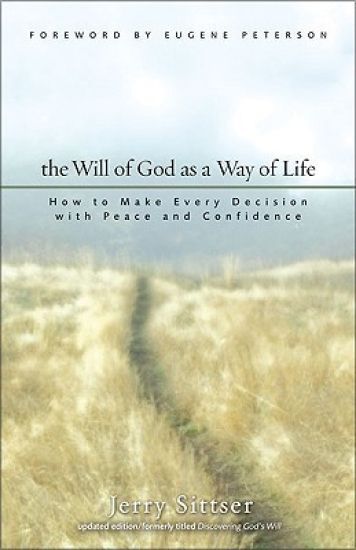
The Will of God as a Way of Life

The Will of God as a Way of Life

Jerry L. Sittser; Eugene Peterson

Zondervan
2004
nidottu
Practical help for understanding and following God's will for your life."God has a plan for our lives," but what does that mean in practical terms? How do we know God's will for important life decisions, like who to marry, what job to take, what church to join? How can we be free if God has a perfect plan for us? Does suffering mean we are off track? How exactly does God speak?Author Jerry Sittser explores these questions and offers a biblically based approach that is truly liberating. No matter what decisions we've already made, he points out that it is still possible to live out God's perfect will--even if we think we've married the wrong person, chosen the wrong career, or landed in some kind of serious trouble. This new edition includes study questions designed to help individuals or groups who are faced with decisions--large or small.
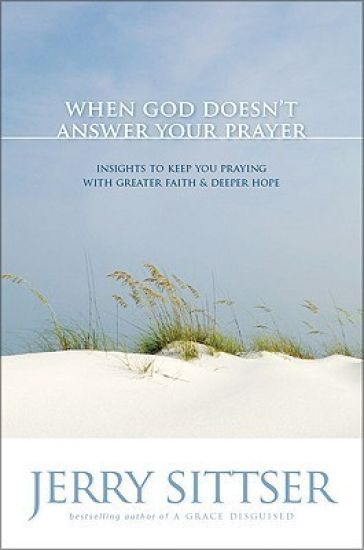
When God Doesn't Answer Your Prayer

When God Doesn't Answer Your Prayer

Jerry L. Sittser

Zondervan
2007
nidottu
More than a decade ago, Jerry Sittser prayed for the protection of his family, yet three of his loved ones--his daughter, his wife, and his mother--died in an automobile accident. What went wrong?"Why wasn't my prayer answered?" he asks. "It is no longer an abstract question to me. What should we do and how should we respond when our prayers--prayers that seem right and true and good--go unanswered?"In When God Doesn't Answer Your Prayer, Sittser continues exploring the issues he addressed in A Grace Disguised. He asks, "Why doesn't God answer our prayers? What, if anything, can we do about it?" Sittser is intensely committed to exploring the Christian faith, especially when it doesn't seem to "work." In this thoughtful and beautifully written book, he moves beyond easy answers and religious formulas to explore the goodness and greatness of a God who cannot be controlled but can be trusted.When God Doesn't Answer Your Prayer takes an honest and probing look at the problem of unanswered prayer. In doing so, it draws us ever deeper into a relationship with the God who is the end of all our prayers, the object of our faith, the one who fulfills our deepest longings.