Kirjahaku
Etsi kirjoja tekijän nimen, kirjan nimen tai ISBN:n perusteella.
1000 tulosta hakusanalla Jill Brock

What would you do for your best friend? Would you break the law, put yourself in danger, or put your own emotional and mental meltdown on hold? Odessa Wilkes is about to find out when she helps her best friend, Maggie Swift find her missing husband. Roger Swift is gone and emptied out the checking account. He's left his wife clueless and in near hysterics. Maggie comes to Odessa for help and she can't say no. She should say no, because she has problems of her own. Odessa, a lapsed African American Princess, has been dumped by her 'perfect' boyfriend, lost her six-figured advertising job, and is dealing with an anxiety disorder that turns her to Jell-O when anything gets too 'intense'. She has been reduced to making desserts at her family restaurant and working for her overbearing sister, Candace.Friends since high school, Maggie and Odessa go in search of Roger with Maggie's mischievous eight-year old son Rocket in tow and the family dog. Standing just over five feet tall and a dead ringer for a redheaded Tinker Bell, Maggie is determined to find Roger. Armed with a copy of 'An Idiot's Guide to Private Investigating' and Maggie's contagious enthusiasm, Odessa knows it's only a matter of time before they find trouble. Trouble comes in the form of an inept kidnapper, a valuable missing treasure, an ex-boyfriend, insurance fraud, and the improper use of pepper spray. Eventually, the two amateur detectives learn they are more than capable of finding Roger. More importantly, what Odessa finds is the way back to herself and the possibility of a new chance at love.

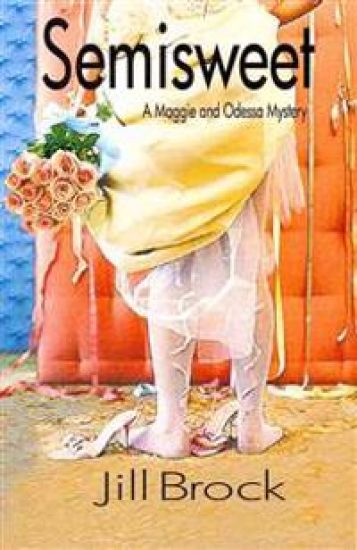
Semisweet: A Maggie and Odessa Mystery
Jill Brock
Createspace Independent Publishing Platform
2010
nidottu
Maggie Swift, wife, mother, and private eye in training wants to do her first solo case, unfortunately, that is news to her irascible boss, P.I. Frank McAvoy. He wants her to stick to filing and answering the phones. Maggie has other plans. With help from her best friend, dessert chef and sometimes reluctant sidekick, Odessa Wilkes, she takes on a case and her first client. The mother of a bride wants Maggie to find out the truth about the groom and her future son-in-law, who may be marrying his blushing bride for more than love. Maggie thinks there something hinky is going on when the rich and successful husband-to-be looks like a GQ cover model and his penniless fashion challenged fianc acts like the chairwoman of his fan club. As always, Odessa has problems of her own. A psycho bug exterminator wants to kill her, and she does not even know why. Her boyfriend wants a deeper commitment. She not sure she is ready, even though she's found the perfect wedding dress.

The Thursday Night Killers Book Club
Jill Brock
Createspace Independent Publishing Platform
2016
pokkari
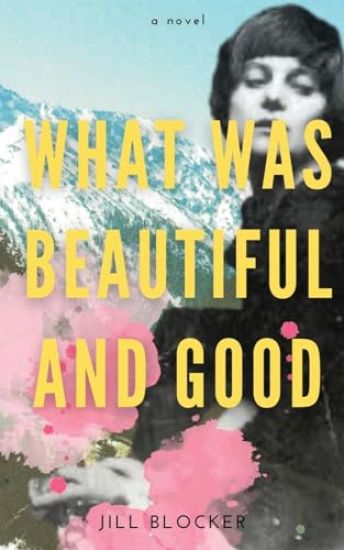
"You HAVE to know this 'century woman' from Switzerland." -BLICK.ch"Wonderfully written. The book gives new zest for life, a lot of hope and strength in this new 'war time, ' where old men are once again trying to destroy the world. Almost like 120 years ago." -PBW Klemann, authorA biographical novel about Emmy Ball Hennings and the beginnings of the Dada movementIn the midst of chaos and destruction, a young singer fights to find her voice. "What was Beautiful and Good" is an enthralling novel based on a true story, weaving together history, art, and a tale of resilience.Emmy Hennings, a free-spirited artist, revels in the beauty and excitement of Europe's most captivating cities. But when the First World War shatters her world, Emmy's life takes an unexpected tum. Unable to perform and separated from her friends who are drafted into the military, she finds herself imprisoned for trivial offenses and branded unpatriotic.As despair threatens to consume her, Emmy's fate takes a hopeful twist when a young man named Hugo Ball proposes an escape to Switzerland. In this sanctuary of peace, they discover a vibrant community, but surviving as a refugee comes with its own challenges.Driven to find purpose amidst the chaos, this remarkable novel transports readers to a turbulent era where art becomes a beacon of hope, defying the darkness of war and igniting a global artistic revolution named "Dada" that will remind generations to come of the true meaning behind what is beautiful and good.

One morning in the spring of 1958 I woke up in my room at the Hotel Alexandria with a paralyzing hangover (which was not unusual) and an idea for a book (which was). I sat in front of my typewriter, and within a few hours I had produced a chapter-by-chapter outline of a novel. I had all the characters sketched out and knew how they'd relate to one another, and how the rather elementary storyline would resolve itself. I even had a title: SHADOWS.At the time I was working as an editor at a shady literary agency, but I'd already arranged for my departure, as I'd be resuming college in the fall in Ohio. Sometime in May I gave up my room at the Alexandria and went home to Buffalo, where I turned that outline into a book. My agent sent it to Crest Books, then the country's premier publisher of lesbian fiction.They spent a couple of months reading it and thinking it over, during which time I wrote and sold several lesser books to Harry Shorten's Midwood Books. Then, a couple of months after I'd returned to Antioch and gone through a lot of sturm und drang that needn't concern us here, Crest accepted Shadows. They had some editorial suggestions, and the only one that bothered me was their insistence that I cut a chapter in which one character, Peggy, gets drunk after a love affair ends badly, and is raped on her way home. The editor thought it was extraneous, and for years it bothered me that I hadn't stood up for my auctorial rights.They changed my title to STRANGE ARE THE WAYS OF LOVE. They also changed my pen name. I'd known a lesbian novel ought to have a woman's name on it, and I picked Rhoda Moore. They decided on Leslie Evans instead, so it could be gender-neutral, and then switched it to Lesley Evans, which made it more specifically female. Welcome to publishing, young man. Or young woman, or whatever the hell you are...Okay. It's clear to me now, almost 60 years later, that the book ought to set sail under its original title, and since I'm republishing it myself, that's a decision I get to make. It's also clear to me that SHADOWS is in fact Jill Emerson's very first novel, as it's far more of a piece with WARM AND WILLING and ENOUGH OF SORROW than with anything else I've written. So that's how I'll publish it, right? As SHADOWS, dammit, by Jill Emerson-and while I'm at it, why not restore that missing chapter?So I started reading the book. I don't much like looking at my early work. Once, when a publisher was issuing a collection of my earliest magazine fiction, he asked if I'd reread the stories and write an introduction; "One or the other," was my reply. Reading SHADOWS was an experience, as there was so much I didn't remember. I'd put Jan in my first NYC apartment: 54 Barrow Street. I'd sent her to Caricatures, my favorite MacDougal Street coffeehouse. I remembered the lesbian bar, The Shadows; in real life it called itself Swing Rendezvous, and Jan wouldn't have had much trouble hooking up there.And the writing struck me as okay. "This kid can write," I said to myself, "and maybe someday he will."But here's the stunner. I was looking for the place where that Peggy chapter used to be, and what I found was...the chapter itself It had been hiding in plain sight for over half a century. All along I thought I'd let myself be talked out of it, and resented that editor while berating myself for knuckling under, and the damned chapter was right there.Go know. I'd been all set to recreate that chapter, matching my style to Jill's, and now I didn't have to. So I changed something else.. There are a couple of scenes in which Laura criticizes Peggy for her potty mouth, and it was hard to know why, as Peggy didn't say anything stronger than "pain in the ass" and "goddamned." Well, how could she, back in 1958? In print, that is to say? So I spiced up her speech a little and let her say the F word.

Warm and Willing
Jill Emerson; Lawrence Block
Createspace Independent Publishing Platform
2016
nidottu
Here's what someone wrote as the book description for an earlier edition of WARM AND WILLING: "An emotionally and sexually frustrated divorc e explores her mounting attraction to women. Rhoda's divorce has her thinking that romance is not for her. But maybe she just needs to look in a new direction. Megan is an attractive blonde who instantly sees what Rhoda's love life has been missing: a woman's touch. As Megan guides Rhoda into the sensuous - but hidden - world of women who love women, the two unlock a passion that may be too hot to contain. There are a lot of beautiful women in the Village, and Rhoda's just begun her adventure as a freewheeling lesbian."I guess that's fair. But these early books cry out for a stroll down Memory Lane, and there's a lot to remember about the beginnings of Jill Emerson.In 1958 I wrote my first book, a novel about a young woman's confusion about her sexual nature. It's recently been republished as SHADOWS, by Jill Emerson, but back then the publisher slapped a different title and pen name on it, because there was no Jill Emerson.Jill came out, as it were, six years later-by which time I'd acquired wife and children and had written close to a hundred books. Then in 1964 I broke with my agent and found myself stranded; my chief market was a closed shop, and I could no longer write for it. A brighter man than I would have been terrified, but I just figured things would work out.I decided I'd write a lesbian novel. That's what my first book had been, so it seemed a logical choice for a new beginning. Now I could have proposed such a book to Midwood Tower, Harry Shorten's operation, which was by no means a closed shop, and where they thought highly of me. But instead I chose to submit the book over the transom, under a pen name.Specifically, Jill Emerson. Now Jill already existed, because I'd enrolled her as a member of Daughters of Bilitis, a lesbian organization, so that she could subscribe to their magazine, The Ladder. I put her name on the manuscript of my new novel-I can't recall what I called it, but you can be damned sure it wasn't WARM AND WILLING-and wrote out a cover letter and mailed it off to John J. Plunkett, editor in chief at Midwood Tower.I'm not sure what I was trying to prove. But, astonishingly, I proved it. Mr. Plunkett sent a contract by return mail, and some day I'm going to publish our correspondence. He and Jill really hit it off nicely, and I think he may have had a slight crush on her. A hopeless one, of course, because Jill wasn't interested in anybody with a Y chromosome...Jill went on to write a second book for Midwood. I called it ENOUGH OF SORROW, taking the phrased from a Mary Carolyn Davies poem I've always liked, and I'll be damned if Midwood Tower didn't keep it. They stuck an award medallion on the cover, and included a quote-"A remarkably candid treatment of a particularly controversial theme..." The source of the quote is never revealed, and I can only assume it was either John J. Plunkett or another Midwood editor, Sandy Levine.Over the decades, I've come to regard Jill Emerson as rather more than a pen name. She would appear to be more an aspect of self. One way or another, donning her persona seems to liberate something within me, and to give me access to otherwise elusive parts of myself.But need we inquire all that closely? Probably not. This is, after all, just a book-a sensitive exploration of a young woman's sexual awakening.
Enough of Sorrow
Jill Emerson; Lawrence Block
Createspace Independent Publishing Platform
2016
nidottu
Here's what someone wrote as the book description for an earlier edition of ENOUGH OF SORROW: "From master storyteller Lawrence Block comes one girl's journey toward self-discovery and sexual freedom....Karen Winslow is starting over. But she's not sure how to move forward when her deepest secret haunts her and keeps her from enjoying her carefree youth. She's a sweet but troubled young thing, and not until she meets Rae, a confident young lesbian, does she realize what she's been missing. Meanwhile, she's also intrigued by a man and can't help but wonder if a normal life will put an end her sorrows for good."ENOUGH OF SORROW, I could add, is the third of mynovels as Jill Emerson, who seems to me to be rather more than a pen name. An aspect of self, perhaps. A distinct persona, if you will. My first novel, SHADOWS, originally bore a different pen name, but it's very much of a piece with Jill's work, and I don't think it's coincidental that I chose that theme and that persona for the first book I ever wrote, any more than I deem it coincidence that, when I split with my agent and had no place to sell my work, my first step toward recovery was an over-the-transom submission of WARM AND WILLING-another lesbian novel.I've written about that new beginning in the book description for WARM AND WILLING. After I turned it in, the editor at Midwood made it clear he'd like to publish more of Jill's work. (As far as he ever knew, the author was indeed a woman named Jill Emerson. I saw no reason to disabuse him of the notion, and in fact the game was half the fun.) And, thank God, it was a more innocent age, or at least a less cumbersome one. He sent me checks payable to Jill Emerson and I endorsed them in that name and cashed them through my bank account. It wouldn't be that simple nowadays.I don't know what I'd called WARM AND WILLING, but the title I slapped on the second book was ENOUGH OF SORROW, from the poem by Mary Carolyn Davies: I Sing of sorrowI sing of weepingI have no sorrowI only borrowFrom some tomorrowWhere it lies sleepingEnough of sorrowTo sing of weeping.A fine poet, Mary Carolyn Davies. Bernie Rhodenbarr's reading one of her verses in one of the books-I disremember which book, but the verse was "Smith, of the Third Oregon, Dies."I guess they liked Jill at Midwood. Their paperback sports an award sticker on the cover, proclaiming it the winer of some nonexistent contest. And, mirabile dictu, that didn't feel the need to change my title. I wonder why Jill never wrote more for them?Ah well. Let's be grateful for what we have.

THIRTY, as intensely erotic a book as I'd ever written, is what happened after I stopped writing erotica.Beginning with CARLA in 1958, I spent half a dozen years laboring in the vineyards of Midcentury Erotica, writing no end of books for Midwood, Nightstand, Beacon, et.al. It was a wonderful training ground, a comfortingly forgiving medium, and I've never regretted the timer I spent there, although for a time I wanted to disown the work I produced. (That changed with the passage of time, and now I've been eagerly reissuing much of that early work in my Collection of Classic Erotica. I like to tell myself this represents great progress in self-acceptance, but I have a hunch Ego and Avarice play a role here.)Never mind. I went on writing for Bill Hamling's Nightstand Books until a break with my agent deprived me of the market, andI can't regret that, either, because it's safe to say I'd stayed too long at the fair, and would have stayed longer still if given the chance. Instead, I took a job editing a numismatic magazine in Wisconsin and went on writing fiction in my free time. I placed some stories with Alfred Hitchcock's Mystery Magazine and THE GIRL WITH THE LONG GREEN HEART with Gold Medal, and then I wrote THE THIEF WHO COULDN'T SLEEP, which turned out to be the first of a series about a fellow named Evan Tanner.This was the first book in a voice that was uniquely mine, and the most satisfying work I'd ever done. I went on to write a total of seven books about Tanner (an eighth would follow after a 28-year interval) along with a couple of other crime novels, and then one day I got a call from my agent, Henry Morrison. Berkley Books wanted to launch a line of erotic novels, but on a different level from the old Midwood/Nightstand/Beacon ilk. It was 1968, censorship had essentially vanished, and American letters from top to bottom was embracing the sexual revolution and the new freedom. As Cole Porter might have put it, some authors who'd once been stuck with better words were now free to use four-letter words.Meanwhile, I was going through a period of discontent with the whole notion of fiction. I had nothing against the idea of making things up, but the artificiality of the novel suddenly rubbed me the wrong way. Narration, whether first person or third person, was a weird voice in one's ear. Who are you? Why are you telling me this? And why should I believe you?What appealed more were books that presented themselves as documents. Fictional diaries, fictional collections of letters, whatever. Yes, of course they were novels, we knew they were novels, but they took the form of actual documents.Thus THIRTY, which would take the form of a diary kept by a woman in her thirtieth year. I had just reached that age myself, and while I recognized it as a landmark, it seemed to me that turning thirty was rather a bigger deal for a woman than for a man, that it was very much a turning point. So I plunged in, and I strove throughout to write what Jan would have written in an actual diary, leaving things out, skipping days altogether, and letting characters come into and go out of her life, and events pile one on the other, the way they really do, with less pattern and logic than one typically demands of fiction.I just read the book prefatory to writing this book description, and I was surprised how much I liked it. (And how little of it I recalled.) I decided from the jump to put Jill Emerson's name on it, a name I'd shelved after WARM AND WILLING and ENOUGH OF SORROW. THIRTY is, to be sure, a creature of its time, as one knows when Jan whines about having to pay $375 a month for a Grove Street apartment. But I think the book holds up.In any event, Jill was back in business, and she'd go on to write two more books for Berkley's sexy new series, both of them pseudo-documents like THIRTY.
Jill Emerson, whose first three works were gentle explorations of the lesbian experience, took a sharp turn toward candor in THIRTY, her first book for Berkley. As I've explained in the book description for that novel, around the time Berkley came calling (via my agent) I'd become disenchanted with the whole notion of fiction recounted by some disembodied third- or first-person narrator. It struck me as artificial, and my response was to pile artifice upon artifice and produce a novel in the guise of an actual document.In THIRTY, the novel pretended to be a diary. That worked fine, and the resultant narrative proved at once challenging and effortless to sustain. I enjoyed writing it, Berkley enjoyed publishing it-and they wanted something else.What they got in THREESOME was a novel pretending to be a novel.The premise, as you'll see, is that the book has been written by its three main characters, Harry and Rhoda and Priss, in the form of a lightly fictionalized chronicle of their own life as a menage a trois. They set about writing alternate chapters-and, reading one another's work as they go along, they learn things they hadn't known, and one thing leads to another, and-I think the phrase we want is tour de force, and how nice to be able to use it in the same book description as menage a trois. The book was also about as much fun as I've ever had while sitting at a typewriter.I've written before about THREESOME, but there's something I've never recounted, and I'm old enough now to just go ahead and do it. Back in the early 1970s I had come in from rural New Jersey to hole up in a New York hotel and work on a book-this one-and after one evening after the day's work was done I drifted down to the Village and wound up in an establishment called the Kettle of Fish, on Macdougal Street. (It has since relocated to Christopher Street.) They serve strong drink there, and that night God knows they served more than enough of it to me. When I left I took a few steps and found myself in conversation with some folks in a car, a large station wagon, and they turned out to be six adolescent girls from the Convent of the Sacred Heart in Noroton, Connecticut, a very classy Catholic prep school. Their favorite teacher was driving, and the next thing I knew I was in the back of the vehicle with them.I guess they thought I was interestingly exotic, a drunk Bohemian writer indigenous to Greenwich Village. I in turn thought they were adorable. The teacher (an affable chap, but God only knows what he was about, and I'm sure in due course the school must have let him go) drove us back to Connecticut, and the rest of the evening was lost in nacht und nebel, as it were. I passed out on somebody's couch, woke up the next morning, and wound up taking the train back to the city with two of the young ladies. We went to my hotel room, where we may have smoked an illegal herb, and, um, necked a little.One of them saw my typewriter and asked what I was working on. I said it was a novel about a sexual relationship of two women and a man. Thoughtful pause. "I had no idea," she said, "that you researched these things so thoroughly."They left and I never saw them again, and if the incident rings a muted bell, it's probably because I used it as the opening of another novel, RONALD RABBIT IS A DIRTY OLD MAN, which masquerades as the collected correspondence of its protagonist. And which I'll be republishing fairly soon, but in the meantime we have THREESOME. It's a personal favorite of mine; that's no reason why you should like it, but I hope you do.
A Madwoman's Diary
Jill Emerson; Lawrence Block
Createspace Independent Publishing Platform
2016
pokkari
After spending her girlhood writing gentle and thoughtful novels of the lesbian experience (SHADOWS, WARM AND WILLING, ENOUGH OF SORROW), Jill Emerson reinvented herself in the early 1970s, just when contemporary literature was experiencing an enormous flowering of sexuality. Even as the whole culture rocked with the sexual revolution, popular fiction echoed this change with a flinging off of censorship and a surge of sexual candor.And Jill wrote three books for Berkley.The first, THIRTY, was in the form of a diary, piling incident upon incident as the diarist, a woman in her thirtieth year, fled her safe suburban marriage and went off in search of her real self.The second, THREESOME, took the form of a collaborative novel in which the three participants in a menage a trois wrote a book together to chronicle their own experience-an experience that continued to evolve as each read what the others had written.A MADWOMAN'S DIARY, you won't be surprised to learn, is a return to the diary form. Once again the diarist is a young woman, seeking a richer and more fulfilling life in and out of bed. But the book owes its storyline to more than Jill Emerson's imagination. Interestingly enough, it grows out of a psychosexual case history previously reported by John Warren Wells.Jill, having read JWW's book in manuscript, couldn't get one particular case out of her head. It was, she thought, a perfect springboard for fiction. And the next thing she knew she was typing away, entirely caught up in the woman's story as it spooled itself out of her typewriter.John Warren Wells was unlikely to object. He and Jill, always friends, occasionally lovers, were comfortable sharing their work, and not infrequently would dedicate their books to each other. And, even if JWW found Jill's decorous plagiarism unsettling, what could he possibly do about it?Both he and Jill are in fact pen names-or, if you prefer, alternate selves-of author Lawrence Block. So they have all the reason in the world to get along.

The Trouble With Eden
Jill Emerson; Lawrence Block
Createspace Independent Publishing Platform
2016
nidottu
In early 1969, I moved with my wife and daughters to an 18th century farmhouse on twelve rolling acres a mile east of the Delaware River. We kept a variety of animals and grew things in the garden, and this was as I'd expected. But there were two things I did not anticipate. One was that I would have to go away from there, all the way back to New York City, to get any work done. The other was that I'd open an art gallery.The art gallery was in New Hope, right across the river from Lambertville. New Hope had long had a reputation as an artists' colony and boasted a little theater and a batch of art galleries, along with bookstores and antique dealers and cute little shops to sell cute little things to tourists, most of whom were neither cute nor little. I found a store for rent and signed a year's lease. Nowadays it's hard to get me to go see a movie or buy a new shirt, but back then I'd embark on the wildest adventure on not much more than a whim.I knew nothing about business, but that was okay, because the gallery didn't do any. After a year, my lease was up and I was out of there. It was a learning experience, and what I learned was not to make that particular mistake again.And I did meet some interesting people, and hear some interesting stories. And, when it came time to write a big trashy commercial novel, I knew right where to set it.By this time I'd written three erotic novels for Berkley Books as Jill Emerson. Now I don't know who thought that Jill ought to write a big, juicy, trashy Peyton Place-type of book, but my agent brought the idea to me, and I thought Bucks Country would provide a good setting.The deal was an attractive one, with a hefty advance. Berkley was a division of Putnam, and the deal was hard/soft; the book would be first a Berkley hardcover, then a paperback.When we'd first moved to the country and I found I couldn't get any writing done there, I went into the city and wrote a book in a week. Soon after that Brian Garfield and I took a place together at 235 West End Avenue. We hosted a weekly poker game there, stayed over when one or the other of us had a late night in the city, and got some writing done. I believe Brian wrote most of Kolchak's Gold there. I wrote a batch of things, too, and one of them was The Trouble with Eden.Some of the characters were loosely based on people I'd known in and around New Hope. One was an actor who did in fact greatly resemble Benjamin Franklin. "Larry put me in a book," he told people. "But he's made me bisexual, for God's sake, and everybody knows I'm a plain and simple faggot. Do you think I could sue his publisher? Would I get anything? And would the publicity be good for the book? Because I wouldn't want to do it if it would get Larry in any kind of trouble . . ."Well, he didn't sue, which was just as well. Would the publicity of a lawsuit have helped? I don't think anything would have helped. Berkley never put any muscle into the book and didn't sell many copies.Reviewers overlooked it completely, with a single curious exception. A reviewer in Esquire launched into a lengthy discussion of a book he'd picked up a week earlier without great expectations. It looked like trash but turned out to be far more gripping and involving than he anticipated. Well-wrought characters, interesting plot developments-really pretty good.And then suddenly the review hung a U-turn, and its author said that further on the book turned out to be trash after all and, on balance, a big disappointment. I'll tell you, it was as though the reviewer read half the book, wrote half the review, ate a bad clam, finished the book, and went on to finish the review. I can't say I minded-it was, as they say at the Oscars, victory enough merely to be nominated-and I can't say I disagreed with its conclusion. But it was damn strange.Ah well. It's probably not a good book, but I have a warm spot for Eden. Like the curate's egg, I think parts of it are very good.
A Week as Andrea Benstock
Jill Emerson; Lawrence Block
Createspace Independent Publishing Platform
2016
pokkari
I can trace the origin of A Week as Andrea Benstock to two distinct sources. The first inspired my attempting the book, while the second inspired its form.Let me consider the second first. In 1949, the Belgian author Georges Simenon published a novel called-well, who knows what he called it, but the English translation bore the title-Four Days in a Lifetime. I must have read it sometime in the late 1950s because what I recall of the experience is that I was in my parents' house on Starin Avenue at the time.Besides its title, all I remember of the book is its structure. It consisted of four parts, each taking place entirely within a single day of its protagonist's life. And those four days were all you needed. They gave you the full picture of the man's existence . . . or, at least, all Simenon felt like giving you.I thought it was brilliant, and the device-if not the plot or characters-stayed in my mind.If Simenon gave me the structure of Andrea Benstock, a woman named Peggy Roth pointed me at the book's subject matter and at the same time made me believe I was good enough to write it.Peggy was a highly-placed editor at Dell Publishing. My own editor there, Bill Grose, reported to her, and on one occasion in the early 1970s the three of us had lunch together. I'd written a batch of sex fact books for Dell, but at the time I don't believe Dell had published any of my fiction. I don't remember much about our lunch except that we all had a lot to drink. The conversation wandered all over the place, and at one point Peggy asked me who my favorite writer was. I replied (and would very likely still reply) that it was John O'Hara."Oh, you're a much better writer than he ever was," Peggy Roth said.Now that could only have been the martinis talking, and I'm sure I knew it at the time and surely know it now. She couldn't possibly have believed it, and if she did, well, she was wrong.But her words, even if I recognized them as outrageous and alcohol-driven, nevertheless allowed me to believe that I might try to play in that league. I'd never get a Golden Glove or hit for the circuit, but I might be able to sit on the bench. Maybe pitch batting practice, say.Then Peggy asked me about my background, and I said I'd grown up in a middle-class Jewish family in Buffalo, New York. "Then that's what you should write about," she said.I don't think it had ever occurred to me that anyone would want to read a novel with such a setting or that I would want to write one. But Peggy Roth, a perceptive and intelligent woman, thought that was what I should write. That didn't send me rushing to my desk, but it was something to think about.Eventually I found I had a book in mind. Like Simenon's novel, it would consist of scattered days in a life-not four but seven of them, the titular week in the protagonist's life. And they'd be strewn over a decade, beginning with her wedding, when she takes her husband's name and becomes Andrea Benstock. The days chosen wouldn't necessarily be the days on which major events in her life happened but would rather be representative days. And there'd be no elaborate recapitulation of what had transpired in the months and years between one day and the next; we'd get that information, but only insofar as it would be apt to come to her mind at each present moment.I don't keep journals, so I can't say just when I started work on the book or even when I finished it. It took a while. Because of its utterly episodic structure, it was easy to put it aside between sections and turn to something else, something with the promise of immediate income. I was married to my first wife when I began the book, and that marriage ended in the summer of 1973. I moved into a studio apartment on West 58th Street, and that same year Peggy Roth died far too young of pneumonia. When I finished the book, she was one of its two dedicatees; the other was my stepfather, Joe Rosenberg.
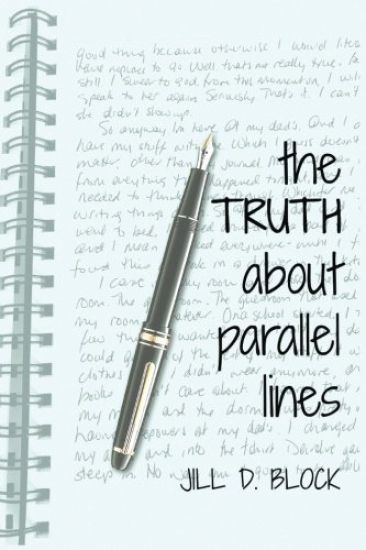
The Truth About Parallel Lines
Jill D. Block
Createspace Independent Publishing Platform
2018
nidottu
"The Group and The Best of Everything were the two books that made me want to be a writer. And here's Jill D. Block, clearly the long-lost bastard daughter of Mary McCarthy and Rona Jaffe, with The Truth About Parallel Lines. The story covers something like thirty years, and-just sayin'- I read it in one sitting." Jill Emerson It is 1981 in New York City. While celebrating her 18th birthday, Jenna Kessler tells a story that stays with her for the rest of her life. Growing up in the shadow of an over-protective mother, Chloe Toberman finds freedom in the secrets that she keeps. Deirdre Schein is a doctor, struggling to find her place in her family. Her quiet and stable life is both challenged and made richer by the demands of her flamboyant and unpredictable twin brother. The Truth About Parallel Lines takes place over more than 30 years. It is the story of three women, love after loss, triumph over tragedy, and the friendships that sustain them. "Charming and utterly engaging, Jill Block's debut The Truth About Parallel Lines will make you laugh and cry as her characters follow their dreams and then entice you to meditate on the intersection of truth and fiction in your own life." Nina Solomon
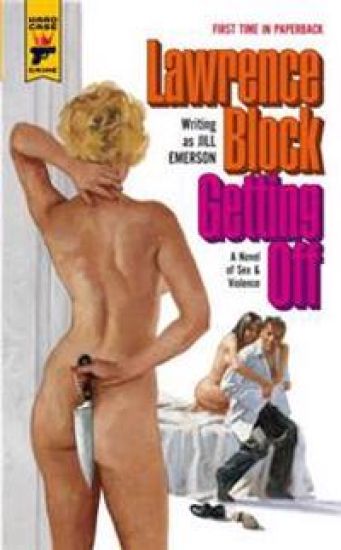
SO THIS GIRL WALKS INTO A BAR......and when she walks out there's a man with her. She goes to bed with him, and she likes that part. Then she kills him, and she likes that even better. On her way out, she cleans out his wallet. She keeps moving, and has a new name for each change of address. She's been doing this for a while, and she's good at it. And then a chance remark gets her thinking of the men who got away, the lucky ones who survived a night with her. She starts writing down names. And now she's a girl with a mission. Picking up their trails. Hunting them down. Crossing them off her list...

Here's what someone wrote as the book description for an earlier edition of ENOUGH OF SORROW: "From master storyteller Lawrence Block comes one girl's journey toward self-discovery and sexual freedom....Karen Winslow is starting over. But she's not sure how to move forward when her deepest secret haunts her and keeps her from enjoying her carefree youth. She's a sweet but troubled young thing, and not until she meets Rae, a confident young lesbian, does she realize what she's been missing. Meanwhile, she's also intrigued by a man and can't help but wonder if a normal life will put an end her sorrows for good."ENOUGH OF SORROW, I could add, is the third of my novels as Jill Emerson, who seems to me to be rather more than a pen name. An aspect of self, perhaps. A distinct persona, if you will. My first novel, SHADOWS, originally bore a different pen name, but it's very much of a piece with Jill's work, and I don't think it's coincidental that I chose that theme and that persona for the first book I ever wrote, any more than I deem it coincidence that, when I split with my agent and had no place to sell my work, my first step toward recovery was an over-the-transom submission of WARM AND WILLING-another lesbian novel.I've written about that new beginning in the book description for WARM AND WILLING. After I turned it in, the editor at Midwood made it clear he'd like to publish more of Jill's work. (As far as he ever knew, the author was indeed a woman named Jill Emerson. I saw no reason to disabuse him of the notion, and in fact the game was half the fun.) And, thank God, it was a more innocent age, or at least a less cumbersome one. He sent me checks payable to Jill Emerson and I endorsed them in that name and cashed them through my bank account. It wouldn't be that simple nowadays.I don't know what I'd called WARM AND WILLING, but the title I slapped on the second book was ENOUGH OF SORROW, from the poem by Mary Carolyn Davies.
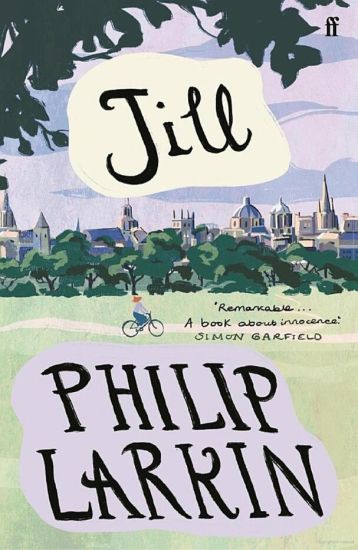
Michaelmas term, 1940. 18-year-old John Kemp has come down from Lancashire to Oxford University to begin his scholarship studying English. But when he invents an imaginary sister to win the attention of a rich but unreliable 'friend', and then falls in love for real, undergraduate life becomes its own strange world .'Absolutely contemporary - perhaps even prophetic.' Joyce Carol Oates'Remarkable . A book about innocence.' Simon Garfield'A cryptic literary manifesto [about] discovering a literary personality, and the consolation art can provide.' Andrew Motion