Die Arbeit untersucht den Werdegang, die Wirkung und Verehrung der Volksheiligen Therese Neumann von Konnersreuth. Die Untersuchung will primar den Phanomenen des Heiligen in Person, Leben, Werk und Wirkung der "Resl" nachspuren, um den Werdegang einer living saint scharfer in den Blick zu bekommen. Therese Neumann war nicht nur eine Respektsperson und eine moralische Instanz in Konnersreuth selbst, sondern wurde zu einer Kraftquelle fur zahlreiche Menschen in aller Welt. Unter diesem Aspekt moegen die der Therese Neumann nachgesagten koerperlich manifesten und rein geistigen Charismen nebensachlich erscheinen. Viele Menschen im In- und Ausland wenden sich auch heute noch in ihren seelischen Noeten an die "Resl" mit der Bitte um Hilfe und Furbitte.
Die Arbeit, die als Dissertation von der Katholischen Universitat Nimwegen angenommen wurde, versucht die Biographie des Dominikaners Gordian Landwehr zu rekonstruieren. Es soll die Wirkungsgeschichte eines beispielhaften Glaubensmutes nachgezeichnet werden. Es war ein grosser Verdienst von Pater Gordian, vor allem ein atheistisch gesteuertes Volk dem christlichen Glauben wieder naher zu bringen. Pater Gordian wird als vernehmbare Stimme gegen Unrecht und Unterdruckung bezeichnet. Er gehoert schliesslich zu den beharrlichen Wegbereitern der friedlichen Revolution des Herbstes 1989 in der DDR und ist sozusagen geistiger Wegbereiter dieser Wende.
A fascinating, influential musician of the late nineteenth century, Joachim Andersen was the founding principal flutist of the Berlin Philharmonic Orchestra, a renowned virtuoso and composer of flute music, and a leader in Scandinavian musical life. Every flutist plays his etudes, but few know anything about his intriguing life, his role as an entrepreneur, or his music beyond the devilishly difficult studies. This book is the definitive resource for Andersen's life and music and brings together his story--told through accounts of the founding of the Berlin Philharmonic and the development of musical life in Denmark at the turn of the twentieth century--with a well-crafted study of his compositions. Authors Kyle Dzapo, András Adorján, and William Wilsen track the intriguing life of Andersen, who rose to fame as a founding member of the Berlin Philharmonic in 1882. He was selected as soloist for the orchestra's inaugural concert and remained its favourite virtuoso for many years, while also serving as assistant conductor during its first decade. The book recounts how a mysterious tongue malady forced the end of his flute-playing career, causing Andersen to return to Copenhagen. There, he became a strong-willed, controversial, entrepreneurial conductor who worked indefatigably to advance the musical life of his native city. As a champion of challenging music, Andersen was the first conductor in Denmark to follow the example of Hans von Bülow and direct his attention to the musicians, thereby turning his back to the audience. Because of this chance, he became an enigma to them and the target of Danish cartoonists. The authors also interweave accounts of an equally compelling figure, his brother Vigo. A virtuoso flutist and strikingly handsome showman, Vigo immigrated to America, performed as soloist and member of Gilmore's Band, and then became founding principal flutist of the Chicago Symphony Orchestra, a position he held until his suicide in January 1895. Delving into never-published biographical material gleaned from thirty years of research, this book offers a full portrait of Joachim Andersen alongside a comprehensive thematic catalogue of his compositions and a revealing study of his etudes and other compositions.
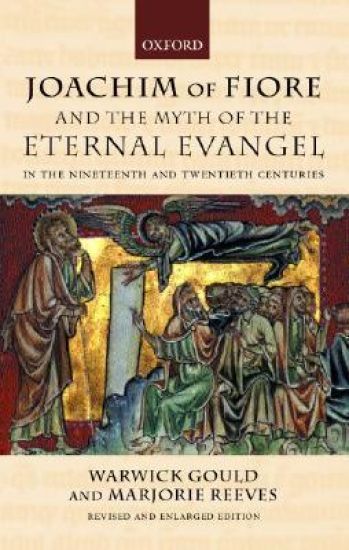
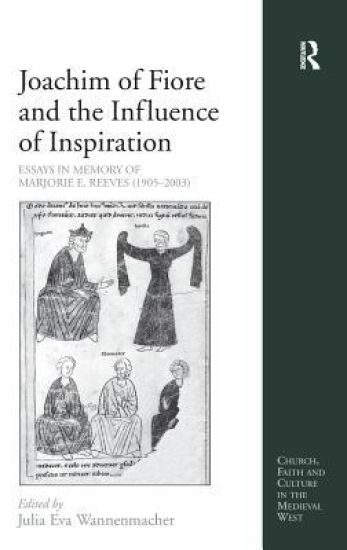
In the twelfth century Joachim of Fiore (c.1132-1202) developed a powerful and original theology of history. In the twentieth century, particularly after the Second World War, much interest was focused on the influence of his ideas, with the result that large and sometimes exaggerated claims were made for his impact on nineteenth- and twentieth-century thought. The first version of this book (Clarendon Press, 1987) sought to distinguish between the precise, documented evidence of Joachim's influence in the modern period and the vaguer assertions which had appeared in histories of ideas. A surprising, and until now virtually unchronicled, story emerged. French romantic visionaries, English literary writers, fin de siecle figures dabbling in the occult, a Czech poet involved in resurgent nationalism - all, to a greater or lesser degree, had taken this medieval abbot as a prophet of the `new religion of humanity' which they had sought. The `Eternal Evangel' (the radical form of Joachim's doctrine) was evidently a symbol of the `new spirit' of the future for such figures as Michelet, Quinet, Leroux, Sand, Mazzini, Renan, Matthew Arnold, George Eliot, Pater, Huysmans, W. B. Yeats, and Vrchlicky. In this process, of course, the genuine thought of the medieval biblical exegete was largely lost, but the myth became a powerful inspiration. This radically revised study has been augmented with further prophetic voices and symbols from the past. Extended by more than 100 pages, it not only confirms the deep structures of visions of the future, but demonstrates and questions the persistence of Joachimist themes in the twentieth-century fin de siecle.
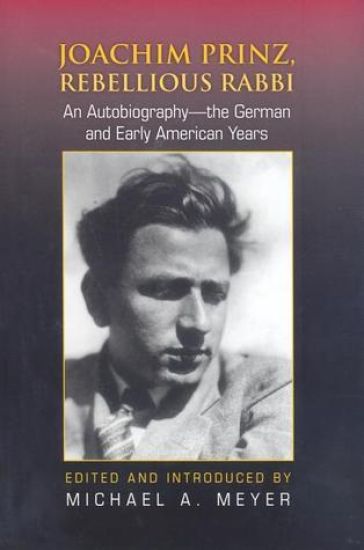
Joachim Prinz (1902–1988) was one of the most extraordinary and innovative figures in modern Jewish history. Never one for conformity, Prinz developed and modeled a new rabbinical role that set him apart from his colleagues in Weimar Germany. Provocative, strikingly informal and determinedly anti-establishment, he repeatedly stirred up controversy. During the Hitler years, Prinz strove to preserve the self-respect and dignity of a Jewish community that was vilified on a daily basis by Nazi propaganda. After immigrating to the United States in 1937, he soon became a prominent rabbi in New Jersey, drawing thousands to his unpredictable sermons. Prinz's autobiography, superbly introduced and annotated by Michael A. Meyer, offers a fascinating glimpse into the life and personality of this unconventional and influential rabbi.
Joachim of Fiore and the Influence of Inspiration. Essays in Memory of Marjorie E. Reeves (1905-2003) is a title that is deliberately reminiscent of the title of Marjorie Reeves’ opus magnum: her book ’The Influence of Prophecy in the Later Middle Ages’ has been fundamental in the field of Joachimist studies from its publication in 1969 right up until today. The present volume is inspired both by Joachim of Fiore’s lasting influence, which can be found in many places from the early thirteenth century until postmodern times, and by Marjorie Reeves’s unsurpassed scholarly achievements and her inspiring personality. British, Continental and American scholars of several generations, from different academic disciplines, follow the paths she has opened, try to answer questions she was the first to ask, offer new insights and new texts in state of the art editions, immersing themselves deeply into materials Marjorie Reeves had provided us with in the field of Joachimism and the influence of prophecy. The volume is divided into three parts. In the first, the studies shed new light on different aspects of Joachim of Fiore’s life and work. The second and third parts are dedicated to Joachim’s afterlife -- with the contemporary and late medieval reception of Joachim’s thought in the Iberian Peninsula, England, and Provence, and then on on Joachim’s Wirkungsgeschichte in early modern England and Germany.
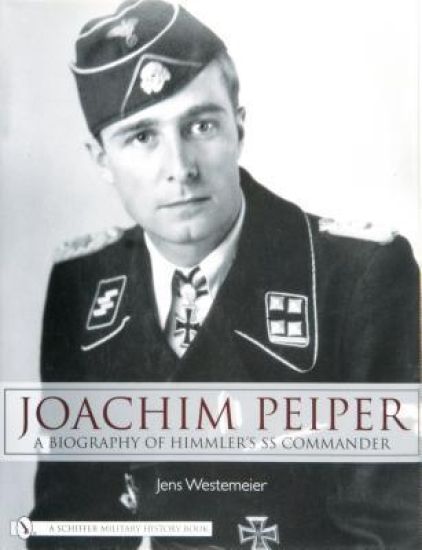
In this new historical investigation, German historian Jens Weste-meier portrays the rise and fall of an SS war criminal, and demolishes persistent myths of a Nazi icon. The picture revealed here is at odds with the popular Peiper mythology created by wartime and contemporary National Socialist propaganda, novels, motion pictures, and right-wing Peiper biographies. Using primary sources and personal interviews, a compelling image of the SS colonel emerges. The result is a highly readable and scholarly account with the first complete picture of Joachim Peiper. Now, a previously little understood Waffen-SS icon comes to life in a book that is at once an important contribution for our understanding of World War II history, as well as the place of the Waffen-SS in Hitler's Third Reich.
Saints are real-life heroes and heroines of faith who inspire us by their virtues to become more like Christ. In this series of beautifully illustrated early reader books, these real stories come to life and connect with a today's children, ages 4 to 9. Saints Joachim and Anne were Mary's parents and Jesus' grandparents. They were a devout and loving couple who welcomed each member of their family with great longing and joy. As heads of their domestic church, they taught the generations below them how to love and follow God. Saints Joachim and Anne are the patron saints of grandparents and their feast day is July 26. THEME: HAPPINESS
To the Reader: This little book, reader, that we give you now has at once the taste of gall and honey mixed with salt. If it pleases your palate, come as a guest. This feast has been prepared for you. If not, please go away. I did not mean to invite you to the feast. Joachim du Bellay (1522-60) was one of the most important poets of the Renaissance and remains a cornerstone of the French literary tradition. In this monumental bilingual edition Richard Helgerson collects The Regrets and The Antiquities of Rome, two sonnet sequences du Bellay wrote during the more than four years he spent in Rome and that he published immediately on his return to France in 1558, along with three Latin elegies he also wrote in Rome and The Defense and Enrichment of the French Language, his earlier manifesto for the new poetry he and his friend Pierre de Ronsard were then about to launch. The Regrets is a vibrant, often moving, and by turns nostalgic and satiric account of du Bellay's stay at the papal court. The Antiquities is also concerned with Rome, but in a very different way: not as a quotidian record of the poet's experience of the modern city but as a profound meditation on the ruin of an ancient empire. In imitation of Petrarch, sonnet sequences were a prime marker of the new poetry all over Europe. But there are no other sequences like du Bellay's, none that leave love aside and express such a varied range of emotions and ideas. And du Bellay's Defense is in its own way no less remarkable and no less preoccupied with the classical heritage and its Rome: a bold call for a new French poetry that would rival and even surpass that of antiquity.
The Dutch artist Joachim Wtewael (1566-1638) was a history painter especially admired for his astonishing small paintings on copper. The Getty's Museum's Mars and Venus Surprised by Vulcan is one of his finest works in this unusually demanding medium. Though only eight inches high, this Mannerist paintings contains eleven figures in three different spaces, captured in a dramatically complex moment from the famous story told by Ovid in his Metamorphoses. Another contribution to the Getty Museum Studies on Art series, this book features a discussion of Wtewael's painting as well as a detailed analysis of the broader context in which the work was created.